bamboo door mat
CN → US| HS Code | Tariff Rate | Origin | Destination | Doc |
|---|---|---|---|---|
| 5705002090 | 38.3% | CN | US | Official Doc |
| 4421919880 | 38.3% | CN | US | Official Doc |
| 4602114500 | 41.6% | CN | US | Official Doc |
| 4602110700 | 35.0% | CN | US | Official Doc |
| 4421999880 | 38.3% | CN | US | Official Doc |
Product Images
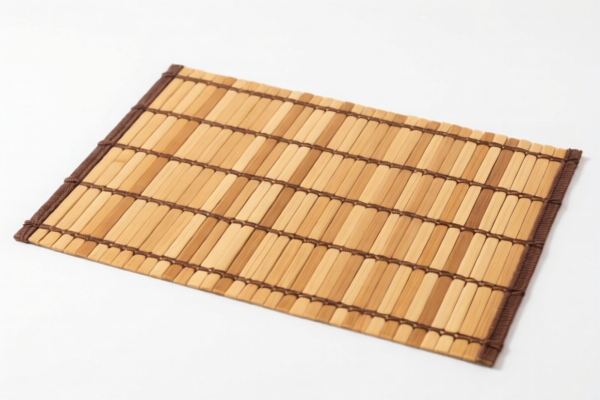
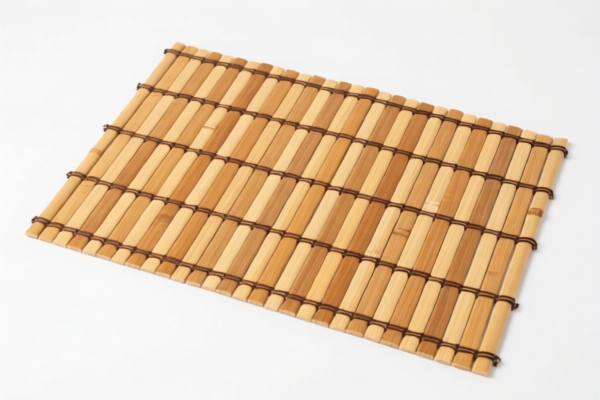
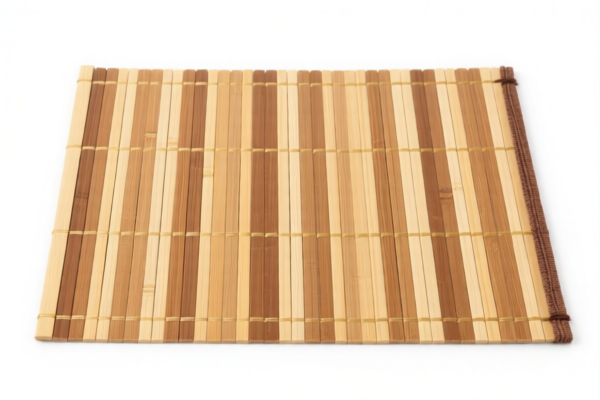
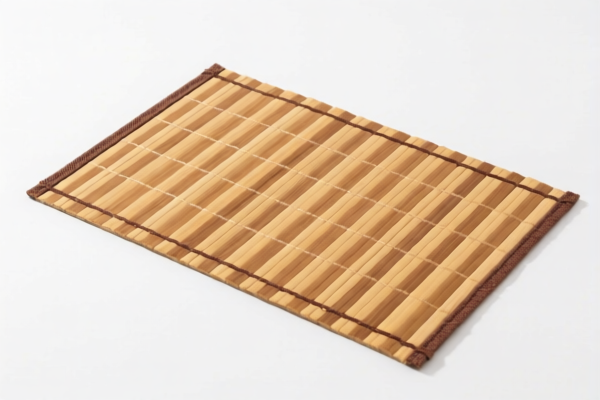
AI Analysis
🎋 Bamboo Door Mat (竹制门口地垫)
🌐 HS Code Reference & Customs Clearance Guide | 2026 Latest Tariff Analysis | Professional Entry Strategy
📌 I. Product Definition & Classification: Do You Really Understand "Bamboo Door Mats"?
Bamboo door mats are versatile entrance accessories made from natural bamboo fibers or strips. In international trade, their classification depends heavily on material composition and manufacturing form. They fall into three main categories:
- Textile/Floor Coverings: If the mat is woven from bamboo fibers (similar to carpets/rugs) and primarily functions as a floor covering.
- Wooden/Bamboo Articles: If the mat is made from solid bamboo slats, strips, or solid bamboo plates.
- Woven Basketry/Bamboo Products: If the mat is woven into a specific basket-like or mesh structure, treated as bamboo craft products.
⚠️ Key Distinction Points:
- If it’s a woven fiber mat (soft, carpet-like) → Goes to Chapter 57 (Textiles)
- If it’s a solid bamboo/slat mat (hard, wooden-like) → Goes to Chapter 44 (Wood/Bamboo)
- If it’s a woven craft mat (basket-weave structure) → Goes to Chapter 46 (Bamboo/Rattan Wickerwork)
📦 II. HS Code Classification Details (2026 Latest Tariff Authority Reference)
| HS Code | Product Description | Application Scenario | Material/Form |
|---|---|---|---|
5705.00.20.90 |
Other floor coverings of textile materials | Woven bamboo fiber mats, rug-like mats | ✅ Textile/Fiber Floor Covering |
4421.91.98.80 |
Other articles of bamboo | Bamboo strip mats, solid bamboo door mats | ✅ Bamboo/Wooden Articles |
4602.11.45.00 |
Woven articles of bamboo (other than matting) | Woven bamboo craft mats, basket-weave style | ✅ Bamboo Wickerwork |
4602.11.07.00 |
Baskets, basketware, and other woven articles | Mats treated as basketry/craft items | ✅ Woven Bamboo Products |
4421.99.98.80 |
Other wooden/bamboo articles (miscellaneous) | Bamboo mats that don’t fit specific bamboo subcategories | ✅ Wooden/Bamboo General Articles |
🔍 Key Reminder:
- Textile vs. Wood: If the mat is flexible, woven from thin fibers, and feels like a rug → HS 5705.
- If it is rigid, made of slats, or solid bamboo → HS 4421 or 4602.
- Misclassification Risk: Declaring a solid bamboo mat as a textile mat (5705) to avoid higher tariffs is a common red flag for customs audits.
💰 III. 2026 Latest Tariff Rate Breakdown (Including Surtaxes & Policy Add-ons)
✅ Applicable Country: United States (US)
✅ Origin: China (CN)
✅ Effective Date: November 10, 2025 (including subsequent imports)
🎯 1. 5705.00.20.90 – Other Textile Floor Coverings (Bamboo Fiber Mat)
| Item | Content |
|---|---|
| Base Tariff | 3.3% (ad valorem) |
| Section 301 Surtax | +25.0% |
| Section 122 Tariff | +10.0% |
| Total Tariff | 38.3% |
| Tax Calculation | CIF Value × 38.3% |
| De Minimis Exemption? | ❌ No (deny_de_minimis) |
| Legal Basis Path | Section 301: 9903.88.01 → Section 122: 9903.01.24 → USITC: 5705.00.20.90 |
📌 Explanation:
- Section 301 (25%): Standard surtax for Chinese goods under US Trade Act Section 301.
- Section 122 (10%): Additional tariff on certain textile/apparel imports from China.
- Total 38.3%: High cost for textile-style bamboo mats.
🎯 2. 4421.91.98.80 – Other Articles of Bamboo (Solid Bamboo Mat)
| Item | Content |
|---|---|
| Base Tariff | 3.3% |
| Section 301 Surtax | +25.0% |
| Section 122 Tariff | +10.0% |
| Total Tariff | 38.3% |
| Tax Calculation | CIF Value × 38.3% |
| De Minimis Exemption? | ❌ No |
| Legal Basis Path | Section 301: 9903.88.01 → Section 122: 9903.01.24 → USITC: 4421.91.98.80 |
📌 Note:
- Same total rate as textile mats due to broad Section 301 application on Chinese bamboo/wood products.
- Applies to rigid bamboo slat mats, bamboo weave boards, etc.
🎯 3. 4602.11.45.00 – Woven Bamboo Articles (Craft/Basket Style)
| Item | Content |
|---|---|
| Base Tariff | 6.6% |
| Section 301 Surtax | +25.0% |
| Section 122 Tariff | +10.0% |
| Total Tariff | 41.6% |
| Tax Calculation | CIF Value × 41.6% |
| De Minimis Exemption? | ❌ No |
| Legal Basis Path | Section 301: 9903.88.01 → Section 122: 9903.01.24 → USITC: 4602.11.45.00 |
📌 Warning:
- Highest base tariff among bamboo classifications (6.6%).
- Often applies if the mat is classified as "woven basketry" rather than floor covering or general wood/bamboo article.
🎯 4. 4602.11.07.00 – Other Woven Bamboo Articles (Basketware)
| Item | Content |
|---|---|
| Base Tariff | 0.0% |
| Section 301 Surtax | +25.0% |
| Section 122 Tariff | +10.0% |
| Total Tariff | 35.0% |
| Tax Calculation | CIF Value × 35.0% |
| De Minimis Exemption? | ❌ No |
| Legal Basis Path | Section 301: 9903.88.01 → Section 122: 9903.01.24 → USITC: 4602.11.07.00 |
📌 Advantage:
- Lowest Total Tariff (35.0%) among all options.
- Applies if the mat can be legitimately classified as "basketware" or "woven article" under Chapter 46, and the base duty is 0%.
- Caution: Must not be misclassified. If it’s clearly a floor covering, customs may reclassify to 5705 or 4421.
🎯 5. 4421.99.98.80 – Other Wooden/Bamboo Articles (Miscellaneous)
| Item | Content |
|---|---|
| Base Tariff | 3.3% |
| Section 301 Surtax | +25.0% |
| Section 122 Tariff | +10.0% |
| Total Tariff | 38.3% |
| Tax Calculation | CIF Value × 38.3% |
| De Minimis Exemption? | ❌ No |
| Legal Basis Path | Section 301: 9903.88.01 → Section 122: 9903.01.24 → USITC: 4421.99.98.80 |
📌 Note:
- Catch-all category for bamboo articles not specifically listed elsewhere.
- Same rate as4421.91.98.80due to identical surtax structure.
🛠️ IV. Customs Clearance Practical Advice (Real-World Pitfall Avoidance)
✅ 1. Required Documentation Checklist (None Can Be Omitted)
| Document | Must Provide | Description |
|---|---|---|
| ✅ Product Specification Sheet | ✔️ | Dimensions, material (bamboo fiber vs. solid bamboo), weaving type, usage |
| ✅ Product Photos (Including Label) | ✔️ | Clear view of texture, weave pattern, brand, model number |
| ✅ Commercial Invoice | ✔️ | Describe as "Bamboo Door Mat" with precise material breakdown |
| ✅ Packing List | ✔️ | Include quantity, weight, packaging type |
| ✅ Certificate of Origin (CO) | ✔️ | If not from China, may qualify for lower duties |
| ✅ Third-Party Test Report (If Applicable) | ✔️ | For safety, flammability, or material composition if disputed |
✅ 2. Declaration Tips (Key Mnemonic)
🔥 "Material Defines Chapter, Form Defines Heading, Surtax Applies to All!"
| Scenario | Correct Declaration | Incorrect Practice |
|---|---|---|
| Woven fiber mat (rug-like) | 5705.00.20.90 |
Declaring as 4421 → Risk of penalty |
| Solid bamboo slat mat | 4421.91.98.80 |
Declaring as 4602 → Misclassification |
| Woven craft mat (basket style) | 4602.11.07.00 (Lowest Tax) |
Declaring as 5705 → Higher tax |
| Mixed material mat | Declare accurately per dominant material | Vague description "Mat" → Customs detention |
✅ 3. Special Case Handling
| Scenario | Handling Advice |
|---|---|
| OEM Custom Mats | Provide client order + design drawings to confirm classification |
| Mat with Non-Bamboo Parts | Declare only the bamboo portion; non-bamboo parts may have different HS codes |
| Bamboo Fiber vs. Solid Bamboo | Critical Distinction: Fiber = Textile (5705); Solid = Wood/Bamboo (4421/4602) |
| Small Samples under $800 | ❌ De Minimis Does NOT Apply for Chinese bamboo/textile goods due to Section 301/122 |
🌍 V. Global Market Clearance Comparison (2026 Latest)
| Country/Region | Recommended HS Code | Tariff (China Origin) | Certification Requirements | Notes |
|---|---|---|---|---|
| 🇺🇸 USA | 4602.11.07.00 |
35.0% | None specific | Highest cost due to surtaxes |
| 🇨🇳 China | 4602.11.07.00 |
0% (Base) + Local Taxes | None | Low base duty |
| 🇪🇺 EU | 4602.11.07.00 |
0% (If FSC Certified) | FSC/PEFC | Eco-labels help clearance |
| 🇦🇺 Australia | 4602.11.07.00 |
5.0% | None | Lower overall cost |
| 🇯🇵 Japan | 4602.11.07.00 |
0% | None | Favorable for bamboo crafts |
📌 Conclusion:
- USA has the highest effective tariff burden due to Section 301 + Section 122.
- Chapter 46 (4602.11.07.00) offers the lowest US tariff (35.0%) if the mat can be legitimately classified as woven bamboo basketware.
- China, EU, Australia, Japan have much lower base tariffs, making US export the most challenging.
📌 VI. Common Errors & Pitfall Guide (Lessons Learned)
❌ Error 1: Declaring a solid bamboo slat mat as a "textile floor covering" (5705)
👉 Consequence: Customs may reclassify to 4421 or 4602 → Delay + Penalties
❌ Error 2: Using "Mat" as the only description without material detail
👉 Consequence: Customs cannot determine chapter → Hold for Inspection
❌ Error 3: Assuming De Minimis ($800) applies to Chinese bamboo mats
👉 Consequence: All shipments subject to 35%-41.6% tariffs, regardless of value
❌ Error 4: Misclassifying woven bamboo craft mats as "wooden articles" (4421) when they fit 4602
👉 Consequence: Overpaying tariffs (4602.11.07.00 is 35%, while 4421 is 38.3%)
✅ Correct Practice:
“Woven Bamboo Door Mat, 100% Natural Bamboo Strips, Hand-Woven Craft Style, Model BM-101, Origin: China”
🎯 VII. Conclusion: Professional Declaration, Save Time & Money!
🎯 Remember the Mnemonic:
🔹 "Woven Basket Wins (35%), Solid Bamboo Costs (38.3%), Textile Mats Taxed High (38.3%)!"
🔹 "HS Code Decides Tax, Surtax is Inescapable, Declare Accurately to Avoid Delays!"
📌 Pro Tip:
- If your bamboo mats are originating from Vietnam, Thailand, or Malaysia, you may qualify for Section 301/122 exemptions → Tariffs drop to 0%~5%.
- Consider applying for Advance Rulings from US Customs to confirm classification before bulk shipping.
📣 Immediate Action:
📞 Contact a Professional Customs Broker + Provide Product Photos + Apply for HS Code Advance Ruling
🚀 Ensure your bamboo mats clear customs smoothly, minimize costs, and maximize profit margins!
✨ Professional Clearance Starts with Accurate Classification!
💼 Every Dollar Saved Matters in Global Trade!
Customer Reviews
About HS Code Classification
The Harmonized System (HS) is an internationally standardized nomenclature developed by the World Customs Organization (WCO) to classify traded products. Over 200 countries use the HS system as the basis for customs tariffs, trade statistics, and import/export regulations.
Each HS code follows a hierarchical structure:
- Chapter (2 digits) — Broad category of goods (e.g., Chapter 84: Machinery and Mechanical Appliances)
- Heading (4 digits) — More specific grouping within the chapter
- Subheading (6 digits) — Internationally standardized breakdown, used by all WCO member countries
- National subdivisions (8-10 digits) — Country-specific extensions for further classification, such as US HTSUS 10-digit codes
Correct HS code classification is essential for smooth customs clearance, accurate duty payment, and compliance with trade regulations. Misclassification can lead to customs delays, overpayment of duties, or penalties.
When importing from CN to US, the applicable tariff rates may include:
- Most-Favored-Nation (MFN) rate — The standard duty rate applied to WTO members
- General rate — Applied to countries without trade agreements
- Trade remedy duties — Additional tariffs such as Section 301 (anti-dumping), Section 232 (national security), or countervailing duties
The information provided on this page is for reference purposes only. For official classification, please consult with your local customs authority or a licensed customs broker.