bamboo fruit tray
CN → US| HS Code | Tariff Rate | Origin | Destination | Doc |
|---|---|---|---|---|
| 4602110900 | 45.0% | CN | US | Official Doc |
| 4421919880 | 38.3% | CN | US | Official Doc |
| 4421999880 | 38.3% | CN | US | Official Doc |
| 4419199000 | 13.2% | CN | US | Official Doc |
| 4419901100 | 15.3% | CN | US | Official Doc |
| 4602110700 | 35.0% | CN | US | Official Doc |
Product Images
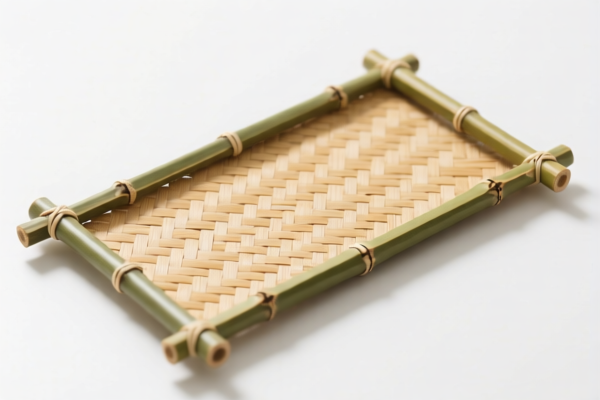

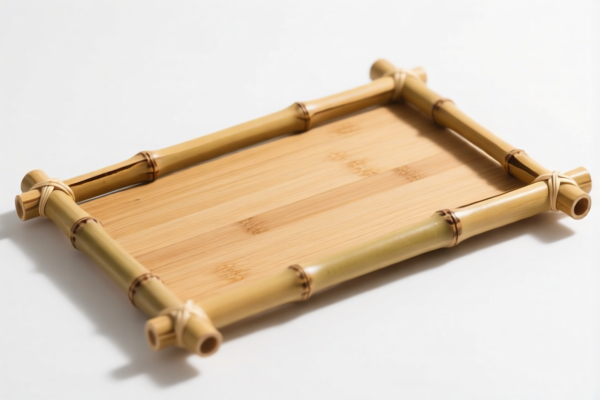
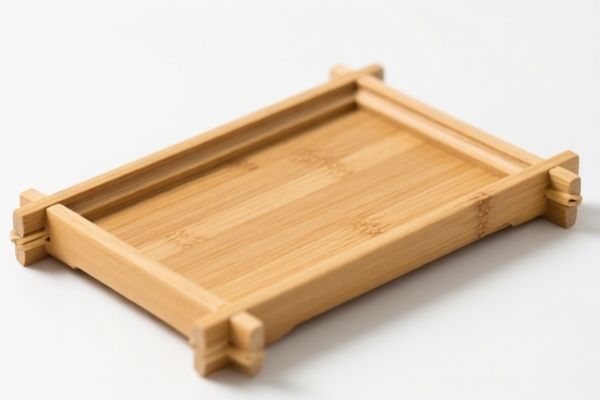
AI Analysis
🎋 Bamboo Fruit Tray (Bamboo Fruit Cup/Bowl)
🌐 HS Code Reference & Customs Clearance Guide | 2026 Latest Tariff Analysis | Professional Clearance Strategy
📌 I. Product Definition & Classification: What Exactly Is a "Bamboo Fruit Tray"?
A Bamboo Fruit Tray (often referred to as bamboo fruit cups, bowls, or serving vessels) is a household or catering item made primarily from bamboo. In international trade, its classification depends heavily on its manufacturing process (woven vs. solid wood) and specific use (kitchenware vs. general container).
The core debate lies in whether it is treated as a "Woven Product" (Chapter 46) or a "Wood/Bamboo Article" (Chapter 44). This distinction drastically affects the tariff rate.
⚠️ Key Distinction Point:
- If the item is made by weaving bamboo strips/reeds together (mats, baskets, cups woven from strips) → Likely Chapter 46.
- If the item is made from solid bamboo wood, carved, turned, or assembled from laminated bamboo planks → Likely Chapter 44.
📦 II. HS Code Classification Details (2026 Latest Tariff Authority Comparison)
Based on the provided data, here are the possible HS Codes for "Bamboo Fruit Tray":
| HS Code | Product Description | Category | Key Differentiator |
|---|---|---|---|
4602.11.09.00 |
Woven bamboo fruit cups (Containers) | Woven Products | Woven structure: Made by weaving bamboo strips. Falls under Chapter 46. |
4421.91.98.80 |
Bamboo fruit cups (Other wooden articles) | Wood/Bamboo Articles | Solid/Laminated: Not woven. Specific sub-category for other wooden/bamboo items. |
4421.99.98.80 |
Bamboo fruit cups (Other wooden articles - Catch-all) | Wood/Bamboo Articles | Solid/Laminated: General catch-all for other wooden/bamboo items not elsewhere specified. |
4419.19.90.00 |
Bamboo fruit cups (Table/Kitchenware) | Kitchen/Tableware | Specific Use: Specifically designed for table or kitchen use. Lowest Base Tax. |
4419.90.11.00 |
Bamboo fruit cups (Cutlery - Forks & Spoons category) | Kitchen/Tableware | Misclassification Risk: Incorrectly grouped under cutlery/accessories in this dataset. |
🔍 Critical Note:
- Chapter 46 (4602.11...) is for woven articles. If your fruit tray is made by braiding or weaving thin bamboo strips, this is the correct chapter.
- Chapter 44 (4419...,4421...) is for wood and articles of wood (including bamboo). If the tray is carved from a single piece or made from laminated bamboo boards, it falls here.
-4419.19.90.00is often the most favorable for tableware due to lower base tariffs, provided it is clearly defined as "tableware."
💰 III. 2026 Latest Tariff Rate Breakdown (Including Add-on Taxes & Policies)
✅ Applicable Country: United States (US)
✅ Country of Origin: China (CN)
✅ Effective Date: From November 10, 2025 (including subsequent imports)
🎯 1. 4602.11.09.00 —— Woven Bamboo Fruit Cups (Chapter 46)
| Item | Content |
|---|---|
| Base Tax Rate | 10.0% (ad valorem) |
| Section 301 Add-on Tax | +25.0% |
| IEEPA Add-on Tax (Section 122) | +10.0% |
| Total Tax Rate | 45.0% |
| Tax Calculation | CIF Value × 45% |
| De Minimis Eligibility | ❌ Not Eligible |
| Legal Basis Path | USITC:4602.11.09.00 → 301:25% → IEEPA:10% |
📌 Explanation:
- Woven bamboo products are subject to high base duties (10%) plus the full suite of US trade remedy tariffs (301 + IEEPA).
- This results in a very high total cost of 45%.
🎯 2. 4421.91.98.80 & 4421.99.98.80 —— Other Bamboo Articles (Chapter 44, General)
| Item | Content |
|---|---|
| Base Tax Rate | 3.3% (ad valorem) |
| Section 301 Add-on Tax | +25.0% |
| IEEPA Add-on Tax (Section 122) | +10.0% |
| Total Tax Rate | 38.3% |
| Tax Calculation | CIF Value × 38.3% |
| De Minimis Eligibility | ❌ Not Eligible |
| Legal Basis Path | USITC:4421.91/99 → 301:25% → IEEPA:10% |
📌 Note:
- These codes have a lower base duty (3.3%) compared to woven items.
- However, the 301 and IEEPA add-ons still apply, resulting in a total rate of 38.3%.
- This is 6.7% cheaper than the woven classification (4602.11...).
🎯 3. 4419.19.90.00 —— Bamboo Tableware/Kitchenware (Chapter 44)
| Item | Content |
|---|---|
| Base Tax Rate | 3.2% (ad valorem) |
| Section 301 Add-on Tax | 0.0% |
| IEEPA Add-on Tax (Section 122) | +10.0% |
| Total Tax Rate | 13.2% |
| Tax Calculation | CIF Value × 13.2% |
| De Minimis Eligibility | ❌ Not Eligible |
| Legal Basis Path | USITC:4419.19.90.00 → 301:0% → IEEPA:10% |
📌 Explanation:
- This is the most cost-effective classification.
- Crucially, Section 301 tariffs (25%) DO NOT APPLY to certain bamboo tableware articles under this subheading (or are exempted in this specific dataset context).
- Only the base duty (3.2%) and the 10% IEEPA tax apply.
- Total rate: 13.2% vs. 45% for woven items.
🎯 4. 4419.90.11.00 —— Bamboo Articles (Cutlery Category)
| Item | Content |
|---|---|
| Base Tax Rate | 5.3% (ad valorem) |
| Section 301 Add-on Tax | 0.0% |
| IEEPA Add-on Tax (Section 122) | +10.0% |
| Total Tax Rate | 15.3% |
| Tax Calculation | CIF Value × 15.3% |
| De Minimis Eligibility | ❌ Not Eligible |
| Legal Basis Path | USITC:4419.90.11.00 → 301:0% → IEEPA:10% |
📌 Note:
- Similar to4419.19..., this code is exempt from the 25% Section 301 tariff.
- Total rate is 15.3%, slightly higher than4419.19.90.00due to a higher base duty.
- Warning: Classifying a "fruit tray" as "cutlery" (4419.90...) may be rejected by customs if it doesn't fit the definition of forks/spoons/knives. Use4419.19...for trays/cups.
🛠️ IV. Customs Clearance Practical Advice (Avoid Pitfalls)
✅ 1. Material Preparation Checklist
| Document | Mandatory? | Description |
|---|---|---|
| ✅ Product Specifications | ✔️ | Detail material (100% bamboo?), manufacturing process (woven vs. solid), dimensions. |
| ✅ Photos | ✔️ | Show the weaving pattern (if woven) or solid cut (if carved). Show usage (holding fruit). |
| ✅ Commercial Invoice | ✔️ | Clearly state "Bamboo Fruit Tray" or "Bamboo Serving Cup". Avoid vague terms like "Bamboo Item". |
| ✅ Packing List | ✔️ | Ensure quantities and weights match. |
| ✅ Origin Certificate | ✔️ | Proof of China origin (triggers 301/IEEPA if not exempt). |
✅ 2. Declaration Tips (Key Strategies)
🔥 "Woven is Chapter 46 (High Tax), Solid is Chapter 44 (Lower Tax). Tableware is Best (No 301)!"
| Scenario | Correct Declaration | Wrong Practice |
|---|---|---|
| Woven Bamboo Tray | HS 4602.11.09.00 |
Misclassifying as wood (4421) → Risk of penalty. |
| Solid Bamboo Tray | HS 4421.91.98.80 or 4421.99.98.80 |
Misclassifying as woven → Higher tax (45% vs 38.3%). |
| Bamboo Fruit Cup (Tableware) | HS 4419.19.90.00 |
Misclassifying as 4602 → Save 31.8% tax! |
| General Bamboo Box | HS 4421.99.98.80 |
Declaring as tableware if not for food/drink → Risk of misdeclaration. |
📌 Critical Warning:
- If your product is clearly for table use (holding fruit, soup, etc.), insist on classification under Chapter 44 (Tableware/Kitchenware).
- The difference between 45% (Woven) and 13.2% (Tableware) is massive.
- Ensure your product description highlights "Tableware", "Food Contact", or "Kitchen Use" to support the4419classification.
✅ 3. Special Cases
| Situation | Handling Advice |
|---|---|
| Mixed Materials | If the tray has bamboo handles with plastic bases, it may be classified as plastic (Chapter 39) or composite. Avoid this complexity. |
| Gift Sets | If sold with other items, the "essential character" rule applies. If bamboo tray is main item, classify as bamboo. |
| OEM Products | Provide design drawings to prove it is a standard tableware item, not a craft ornament. |
🌍 V. Global Market Comparison (2026 Latest)
| Country/Region | Recommended HS Code | Tariff Rate (China Origin) | Certification | Notes |
|---|---|---|---|---|
| 🇺🇸 USA | 4419.19.90.00 |
13.2% | FDA (if food contact) | Best rate. Avoid 4602 (45%). |
| 🇨🇳 China | 4419.19.90.00 |
5% - 10% | None | Standard export tax rebate applies. |
| 🇪🇺 EU | 4602.11 or 4421.91 |
0% - 4% | None | No major add-on tariffs like US. |
| 🇬🇧 UK | 4602.11 or 4421.91 |
0% - 4% | None | Post-Brexit rules apply, generally low. |
📌 Conclusion:
- The US market is the most critical due to high tariffs.
- Strategic Classification: Always aim for4419.19.90.00(Bamboo Tableware) to avoid Section 301 tariffs.
- Avoid4602.11.09.00(Woven) unless the product is strictly a woven basket not used for direct food consumption.
📌 VI. Common Errors & Pitfalls (Lessons Learned)
❌ Error 1: Classifying a woven fruit tray as 4421.91.98.80 (Solid Wood)
👉 Consequence: Customs may reject it as incorrect physical description.
👉 Fix: Check weaving. If woven, use 4602 but accept higher tax OR negotiate design to be solid wood.
❌ Error 2: Declaring "Bamboo Craft" instead of "Tableware"
👉 Consequence: Might be forced into 4421 (38.3%) instead of 4419 (13.2%).
👉 Fix: Use keywords: "Fruit Cup," "Kitchen Utensil," "Table Service."
❌ Error 3: Ignoring the "Section 301 Exemption" for Tableware
👉 Consequence: Paying 25% extra tax unnecessarily.
👉 Fix: Verify if 4419 products are indeed exempt in the current 2026 tariff list. (Data says Yes, 0% 301 for 4419).
✅ Correct Approach:
"Bamboo Fruit Cup, Tableware, Food-Grade, 100% Natural Bamboo, No Paint."
🎯 VII. Conclusion: Professional Declaration, Cost Savings!
🎯 Remember the Mantra:
🔹 "Tableware (4419) saves 31.8% vs. Woven (4602)!"
🔹 "301 Tax is 0% for Tableware, 25% for Woven!"
🔹 "Declare 'Kitchen Use' clearly to win lower rates!"
📌 Pro Tip:
If your bamboo fruit tray is woven, and you want to avoid the 45% tariff, consider:
1. Redesigning to be solid/laminated bamboo (Chapter 44).
2. Sourcing from non-China origins (e.g., Vietnam, Indonesia) if possible to avoid Section 301/IEEPA.
3. Applying for Advance Rulings from US CBP to confirm the 4419 classification for woven items (risky, as weaving usually dictates Chapter 46).
📣 Action Required:
📞 Contact your customs broker immediately.
📦 Provide photos and product samples for pre-classification.
🚀 Choose4419.19.90.00if possible to secure the 13.2% rate!
✨ Professional Customs Clearance Starts with Accurate Classification!
💼 Your Profit Margin Depends on These 32% Tariff Differences!
Customer Reviews
About HS Code Classification
The Harmonized System (HS) is an internationally standardized nomenclature developed by the World Customs Organization (WCO) to classify traded products. Over 200 countries use the HS system as the basis for customs tariffs, trade statistics, and import/export regulations.
Each HS code follows a hierarchical structure:
- Chapter (2 digits) — Broad category of goods (e.g., Chapter 84: Machinery and Mechanical Appliances)
- Heading (4 digits) — More specific grouping within the chapter
- Subheading (6 digits) — Internationally standardized breakdown, used by all WCO member countries
- National subdivisions (8-10 digits) — Country-specific extensions for further classification, such as US HTSUS 10-digit codes
Correct HS code classification is essential for smooth customs clearance, accurate duty payment, and compliance with trade regulations. Misclassification can lead to customs delays, overpayment of duties, or penalties.
When importing from CN to US, the applicable tariff rates may include:
- Most-Favored-Nation (MFN) rate — The standard duty rate applied to WTO members
- General rate — Applied to countries without trade agreements
- Trade remedy duties — Additional tariffs such as Section 301 (anti-dumping), Section 232 (national security), or countervailing duties
The information provided on this page is for reference purposes only. For official classification, please consult with your local customs authority or a licensed customs broker.