bamboo pulp for packaging boxes
CN → US| HS Code | Tariff Rate | Origin | Destination | Doc |
|---|---|---|---|---|
| 4703190000 | 35.0% | CN | US | Official Doc |
| 4703290020 | 35.0% | CN | US | Official Doc |
| 4819100020 | 35.0% | CN | US | Official Doc |
| 4819100040 | 35.0% | CN | US | Official Doc |
Product Images
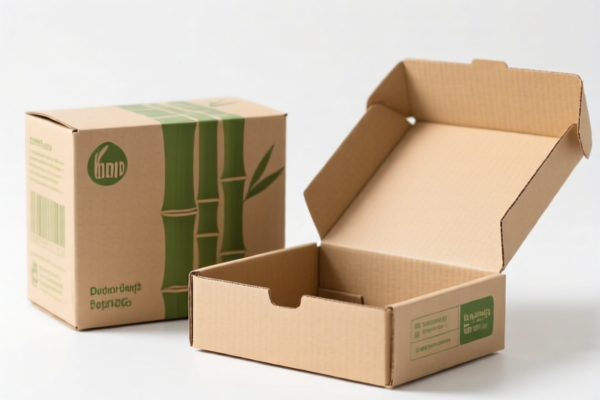
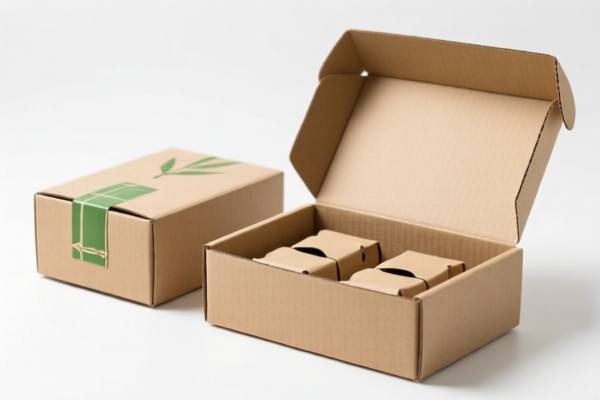
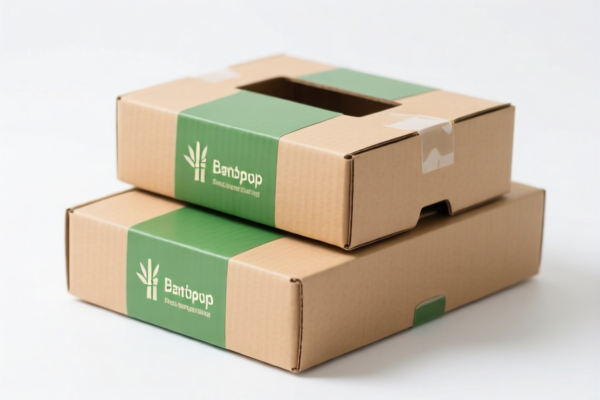
AI Analysis
🎋 Bamboo Pulp for Packaging Boxes
🌐 HS Code Reference & Clearance Guide | 2026 Latest Tariff Analysis | Professional Customs Strategy
📌 1. Product Definition & Classification: Is It "Wood" Pulp?
Bamboo is botanically a grass, but in international trade and customs classification, bamboo pulp is generally treated similarly to chemical wood pulp unless specified otherwise. For the purpose of packaging boxes, the key distinction lies in the bleaching process and fiber type (coniferous vs. non-coniferous).
⚠️ Critical Distinction:
- If the bamboo is chemically processed into pulp for papermaking → Classified under HS 4703 (Chemical Wood Pulp).
- If the final product is packaging boxes made from this pulp → Classified under HS 4819 (Paper Packaging).
- Crucial Note: The term "Nonconiferous" in HS 4703 includes bamboo, as bamboo is not a conifer (pine, spruce, etc.).
📦 2. HS Code Classification Details (2026 Latest Tariff Alignment)
| HS Code | Product Description | Applicable Scenario | Key Identifier |
|---|---|---|---|
4703.19.00.00 |
Chemical woodpulp, soda or sulfate, other than dissolving grades: Unbleached: Nonconiferous | Raw bamboo pulp, dark brown/black, unbleached, ready for papermaking | ✅ Unbleached, Non-coniferous (Bamboo) |
4703.29.00.20 |
Chemical woodpulp, soda or sulfate, other than dissolving grades: Semibleached or bleached: Nonconiferous Semibleached | Bamboo pulp, slightly processed (lighter color), not fully white | ✅ Semibleached, Non-coniferous |
4819.10.00.20 |
Cartons, boxes, cases, bags... of paper...: Sanitary food and beverage containers | Final packaging boxes made from bamboo pulp, used for food/drink | ✅ End-product, Food-grade packaging |
4819.10.00.40 |
Cartons, boxes, cases, bags... of paper...: Other | Final packaging boxes made from bamboo pulp, non-food use | ✅ End-product, General packaging |
🔍 Key Insight:
- Raw Material vs. Finished Good:
- If you are importing pulp to manufacture boxes locally → Use HS 4703.
- If you are importing finished boxes made from bamboo pulp → Use HS 4819.
- Bamboo = Nonconiferous: In HS 4703, bamboo pulp is classified under "Nonconiferous" because it is not a softwood/conifer.
💰 3. 2026 Latest Tariff Rate Breakdown (With Additional Taxes)
✅ Applicable Country: United States (US)
✅ Country of Origin: China (CN)
✅ Effective Date: 2025-11-10 onwards (for subsequent imports)
🎯 1. 4703.19.00.00 – Chemical Woodpulp, Unbleached, Nonconiferous (Bamboo Pulp)
| Item | Details |
|---|---|
| Base Tariff | 0% (ad valorem) |
| USITC Additional Duty | +25% (under USITC Footnote 9903.88.01) |
| Total Tax Rate | 25.0% |
| Tax Calculation | CIF Value × 25% |
| De Minimis Eligibility | ❌ Not Eligible (deny_de_minimis) |
| Legal Basis | USITC:4703.19.00.00 → FOOTNOTE:9903.88.01 |
📌 Explanation:
- Although the base tariff is 0%, the 25% additional duty applies due to Section 301 tariffs on Chinese imports.
- Total effective rate: 25%.
- This applies to unbleached bamboo pulp (raw material).
🎯 2. 4703.29.00.20 – Chemical Woodpulp, Semibleached, Nonconiferous (Bamboo Pulp)
| Item | Details |
|---|---|
| Base Tariff | 0% (ad valorem) |
| USITC Additional Duty | +25% (under USITC Footnote 9903.88.01) |
| Total Tax Rate | 25.0% |
| Tax Calculation | CIF Value × 25% |
| De Minimis Eligibility | ❌ Not Eligible (deny_de_minimis) |
| Legal Basis | USITC:4703.29.00.20 → FOOTNOTE:9903.88.01 |
📌 Note:
- Semibleached bamboo pulp faces the same 25% additional duty as unbleached.
- The key difference is the color/processing state, not the tax rate.
🎯 3. 4819.10.00.20 – Packaging Boxes, Sanitary/Food Grade (Bamboo Pulp Based)
| Item | Details |
|---|---|
| Base Tariff | 0% (ad valorem) |
| USITC Additional Duty | +25% (under USITC Footnote 9903.88.01) |
| Total Tax Rate | 25.0% |
| Tax Calculation | CIF Value × 25% |
| De Minimis Eligibility | ❌ Not Eligible (deny_de_minimis) |
| Legal Basis | USITC:4819.10.00.20 → FOOTNOTE:9903.88.01 |
📌 Explanation:
- Finished packaging boxes made from bamboo pulp are subject to the same 25% additional duty.
- Whether it’s sanitary food containers or general boxes, the tax rate remains 25%.
🎯 4. 4819.10.00.40 – Packaging Boxes, Other (Bamboo Pulp Based)
| Item | Details |
|---|---|
| Base Tariff | 0% (ad valorem) |
| USITC Additional Duty | +25% (under USITC Footnote 9903.88.01) |
| Total Tax Rate | 25.0% |
| Tax Calculation | CIF Value × 25% |
| De Minimis Eligibility | ❌ Not Eligible (deny_de_minimis) |
| Legal Basis | USITC:4819.10.00.40 → FOOTNOTE:9903.88.01 |
📌 Note:
- General packaging boxes (non-food) also incur the 25% additional duty.
- No difference in tax rate between food-grade and non-food-grade packaging boxes made from bamboo pulp.
🛠️ 4. Customs Clearance Practical Advice (Avoid Pitfalls)
✅ 1. Required Documentation Checklist
| Document | Mandatory? | Notes |
|---|---|---|
| ✅ Product Specification Sheet | ✔️ | Must specify: Bamboo origin, chemical process (soda/sulfate), bleaching status |
| ✅ Material Safety Data Sheet (MSDS) | ✔️ | Required for chemical pulp to ensure safe handling |
| ✅ Commercial Invoice | ✔️ | Clearly state "Bamboo Pulp" or "Packaging Boxes (Bamboo-based)" |
| ✅ Packing List | ✔️ | Detail weight, volume, and packaging type |
| ✅ Certificate of Origin (CO) | ✔️ | If applicable, to verify Chinese origin |
| ✅ Third-Party Inspection Report | ✔️ | Confirm pulp quality or box durability if required by buyer |
✅ 2. Declaration Tips (Key Mnemonic)
🔥 "Pulp vs. Box, Bleach or Not, 25% Tax Hit, Don't Forget It!"
| Scenario | Correct HS Code | Incorrect Action |
|---|---|---|
| Importing raw bamboo pulp (unbleached) | 4703.19.00.00 |
Misdeclare as "paper" → 4819 → Still 25%, but wrong description |
| Importing semibleached bamboo pulp | 4703.29.00.20 |
Misdeclare as "woodpulp" → Still 25%, but "nonconiferous" is key |
| Importing finished food boxes | 4819.10.00.20 |
Misdeclare as "general boxes" → 4819.10.00.40 → Same tax, but wrong specificity |
| Importing finished general boxes | 4819.10.00.40 |
Misdeclare as "pulp" → 4703 → Wrong product type, possible rejection |
✅ 3. Special Case Handling
| Case | Advice |
|---|---|
| Bamboo vs. Wood Pulp | Clearly state "Bamboo" in description to avoid confusion with coniferous pulp |
| Mixed Packaging | If boxes contain both bamboo pulp and other materials, declare based on principal material |
| Food Contact | For 4819.10.00.20, provide FDA compliance or equivalent food safety certificates |
| OEM Custom Boxes | Provide customer design specs to prove "packaging" intent, not raw material |
🌍 5. Global Market Clearance Comparison (2026 Latest)
| Country/Region | Recommended HS Code | Tariff | Certification | Notes |
|---|---|---|---|---|
| 🇺🇸 USA | 4703.19.00.00 / 4819.10.00.20 |
25% | None specific for pulp, FDA for food boxes | 25% additional duty applies |
| 🇨🇳 China | 4703.19.00.00 / 4819.10.00.20 |
0-5% | CCC (if applicable) | No additional duties |
| 🇪🇺 EU | 4703.19.00.00 / 4819.10.00.20 |
0-6% | CE (for food contact) | No additional duties |
| 🇦🇺 Australia | 4703.19.00.00 / 4819.10.00.20 |
5% | RCM | No additional duties |
| 🇯🇵 Japan | 4703.19.00.00 / 4819.10.00.20 |
0-3% | PSE | No additional duties |
📌 Conclusion:
- USA is the only market imposing a 25% additional duty on bamboo pulp and packaging boxes from China.
- China, EU, Australia, and Japan have significantly lower or zero tariffs.
- Consider supply chain diversification if targeting the US market heavily.
📌 6. Common Mistakes & Pitfalls (Lessons Learned)
❌ Mistake 1: Declaring bamboo pulp as "wood pulp" without specifying "nonconiferous"
👉 Consequence: Customs may reject or delay for clarification → 25% tax still applies, but delay costs money
❌ Mistake 2: Mixing "pulp" and "boxes" in one shipment without clear separation
👉 Consequence: Misclassification risk → Potential penalties or re-inspection
❌ Mistake 3: Ignoring FDA requirements for food-grade packaging (4819.10.00.20)
👉 Consequence: Shipment held at border → Return or destruction
❌ Mistake 4: Assuming "bamboo" is exempt from Section 301 tariffs
👉 Consequence: 25% additional duty still applies → Unexpected costs
✅ Correct Approach:
"Bamboo Pulp, Chemical, Soda Process, Unbleached, Nonconiferous, HS 4703.19.00.00, Origin: China"
"Food-Grade Packaging Boxes, Bamboo Pulp Based, HS 4819.10.00.20, Origin: China"
🎯 7. Conclusion: Precise Classification Saves Money!
🎯 Key Takeaways:
🔹 "Bamboo = Nonconiferous" in HS 4703.
🔹 "Pulp vs. Box" determines HS 4703 vs. 4819.
🔹 "25% Additional Duty" applies to all these codes from China to US.
🔹 "Food-Grade" requires FDA compliance for4819.10.00.20.
📌 Pro Tip:
If your bamboo pulp or packaging boxes are originating from Vietnam, Thailand, or Malaysia, you may qualify for lower or zero tariffs in the US.
Recommendation: Apply for Advance Ruling to confirm HS code and tariff eligibility.
📣 Immediate Action:
📞 Contact a licensed customs broker + Provide product specs + Request HS Code Advance Ruling
🚀 Ensure smooth clearance, avoid 25% surprises, and optimize your supply chain for the US market!
✨ Professional Clearance Starts with Accurate Classification!
💼 Every 25% Counting Matters – Know Your Tariffs!
Customer Reviews
About HS Code Classification
The Harmonized System (HS) is an internationally standardized nomenclature developed by the World Customs Organization (WCO) to classify traded products. Over 200 countries use the HS system as the basis for customs tariffs, trade statistics, and import/export regulations.
Each HS code follows a hierarchical structure:
- Chapter (2 digits) — Broad category of goods (e.g., Chapter 84: Machinery and Mechanical Appliances)
- Heading (4 digits) — More specific grouping within the chapter
- Subheading (6 digits) — Internationally standardized breakdown, used by all WCO member countries
- National subdivisions (8-10 digits) — Country-specific extensions for further classification, such as US HTSUS 10-digit codes
Correct HS code classification is essential for smooth customs clearance, accurate duty payment, and compliance with trade regulations. Misclassification can lead to customs delays, overpayment of duties, or penalties.
When importing from CN to US, the applicable tariff rates may include:
- Most-Favored-Nation (MFN) rate — The standard duty rate applied to WTO members
- General rate — Applied to countries without trade agreements
- Trade remedy duties — Additional tariffs such as Section 301 (anti-dumping), Section 232 (national security), or countervailing duties
The information provided on this page is for reference purposes only. For official classification, please consult with your local customs authority or a licensed customs broker.