bamboo rectangular tray
CN → US| HS Code | Tariff Rate | Origin | Destination | Doc |
|---|---|---|---|---|
| 4419110000 | 13.2% | CN | US | Official Doc |
| 4419199000 | 13.2% | CN | US | Official Doc |
| 9403820030 | 35.0% | CN | US | Official Doc |
| 9403820015 | 35.0% | CN | US | Official Doc |
| 4602110900 | 45.0% | CN | US | Official Doc |
Product Images
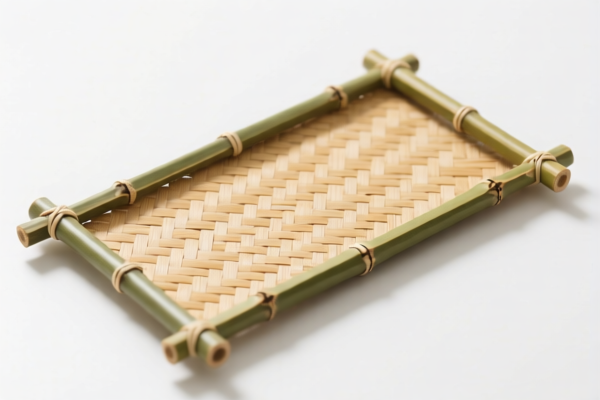

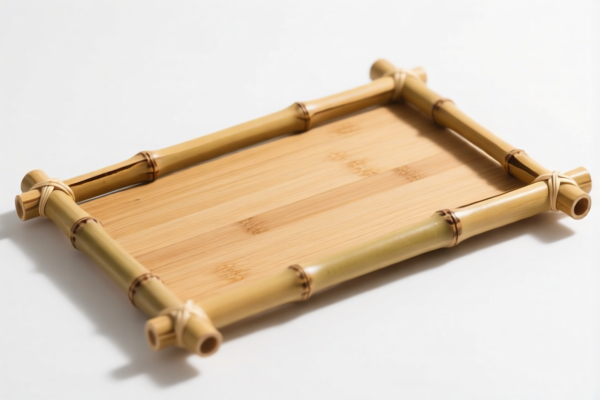
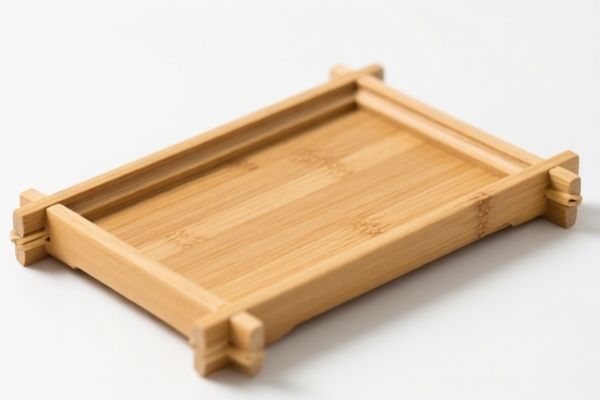
AI Analysis
🎋 Bamboo Rectangular Tray
🌐 HS Code Reference & Customs Clearance Guide | 2026 Latest Tariff Analysis | Professional Clearance Strategy
📌 I. Product Definition & Classification: Do You Really Understand the "Bamboo Rectangular Tray"?
A Bamboo Rectangular Tray is typically used for serving food, drinks, or decorative items. In international trade, its classification depends strictly on its intended use and functional characteristics. It is not a single category but splits into two main paths:
- Kitchen/Cutlery Use: If used primarily for serving food in a dining or kitchen context (e.g., breakfast trays, cheese boards, serving platters).
- General Container Use: If used as a general basket, carrier, or woven storage container.
- Furniture Use: Rare, but if it is a large, fixed structural component of a table or shelf, it might be considered furniture.
⚠️ Key Distinction:
- If it is a serving vessel/plate → It falls under Chapter 44 (Articles of Wood/Bamboo) as Cutlery/Tableware.
- If it is a woven basket/crate → It falls under Chapter 46 (Vegetable Plaiting Materials) as Baskets.
- If it is a structural part of a chair/table → It falls under Chapter 94 (Furniture).
📦 II. HS Code Classification Details (2026 Latest Tariff Reference)
Based on the provided data, here are the applicable HS Codes for Bamboo Rectangular Trays:
| HS Code | Product Description | Typical Application | Tax Rate |
|---|---|---|---|
4419.11.00.00 |
Table and kitchenware and parts thereof, of bamboo | Serving trays, cutting boards, chopstick rests, food containers | 13.2% |
4419.19.90.00 |
Other table and kitchenware of bamboo | Non-standard serving trays, decorative plates, large platters | 13.2% |
9403.82.00.30 |
Other furniture of bamboo | Trays integrated into furniture (e.g., built-in side table trays) | 35.0% |
9403.82.00.15 |
Household furniture of bamboo | Small decorative trays functioning as household furniture components | 35.0% |
4602.11.09.00 |
Baskets and other woven articles of bamboo | Woven carrier baskets, rectangular woven baskets for transport/storage | 45.0% |
🔍 Critical Note:
- Most standard "Bamboo Rectangular Trays" used for serving food belong to4419.11.00.00or4419.19.90.00(13.2% Total).
- Do NOT classify them as furniture (9403) unless they are structurally part of a larger furniture piece.
- Do NOT classify them as woven baskets (4602) if they are solid plates/trays; reserve4602for actual woven mesh baskets.
💰 III. 2026 Latest Tariff Rate Breakdown (Including Surtaxes)
✅ Applicable Country: United States (US)
✅ Origin: China (CN)
✅ Effective Date: Includes subsequent imports under current trade policies
🎯 1. 4419.11.00.00 & 4419.19.90.00 — Table/Kitchenware (Most Common for Trays)
| Item | Content |
|---|---|
| Base Tariff | 3.2% |
| Surtax (Section 301) | 0.0% |
| 122 Clause Tariff | +10.0% |
| Total Effective Rate | 13.2% |
| Calculation Method | CIF Value × 13.2% |
| De Minimis Exemption | ❌ Not Eligible (Deny de minimis) |
| Legal Basis Path | Base Rate: 3.2% + Section 122: 10% |
📌 Explanation:
- The 13.2% total tax is relatively moderate compared to other categories.
- The 10% "122 Clause Tariff" is a specific additional duty applicable to certain bamboo/wood articles.
- No Section 301 (25%) tariff applies to these subheadings, making them cost-effective for importers.
🎯 2. 9403.82.00.30 & 9403.82.00.15 — Furniture of Bamboo (Incorrect Classification Risk)
| Item | Content |
|---|---|
| Base Tariff | 0.0% |
| Surtax (Section 301) | +25.0% |
| 122 Clause Tariff | +10.0% |
| Total Effective Rate | 35.0% |
| Calculation Method | CIF Value × 35.0% |
| De Minimis Exemption | ❌ Not Eligible |
| Legal Basis Path | Section 301: 25% + 122 Clause: 10% |
📌 Warning:
- If you mistakenly classify a simple serving tray as "Furniture," you will pay 35%, which is more than double the correct rate (13.2%).
- Ensure the product is clearly identified as "Tableware" or "Kitchenware," not "Furniture."
🎯 3. 4602.11.09.00 — Baskets of Bamboo (High Risk Category)
| Item | Content |
|---|---|
| Base Tariff | 10.0% |
| Surtax (Section 301) | +25.0% |
| 122 Clause Tariff | +10.0% |
| Total Effective Rate | 45.0% |
| Calculation Method | CIF Value × 45.0% |
| De Minimis Exemption | ❌ Not Eligible |
| Legal Basis Path | Base Rate: 10% + Section 301: 25% + 122 Clause: 10% |
📌 Warning:
- This is the highest tax category (45%).
- Only use this code if the item is a woven basket (open mesh, handles, used for carrying laundry, picnic items, etc.).
- A solid bamboo tray should NEVER be classified here to avoid severe overpayment.
🛠️ IV. Customs Clearance Practical Advice (Real-World Pitfall Guide)
✅ 1. Required Documentation Checklist
| Document | Mandatory? | Description |
|---|---|---|
| ✅ Product Specifications | ✔️ | Dimensions, material (100% Bamboo or Bamboo Composite), usage (Kitchen/Home) |
| ✅ Product Photos | ✔️ | Clear images showing the tray’s shape, handles (if any), and lack of weaving mesh |
| ✅ Commercial Invoice | ✔️ | Must specify "Bamboo Serving Tray" or "Bamboo Kitchenware," NOT "Bamboo Basket" or "Bamboo Table" |
| ✅ Packing List | ✔️ | Include weight, dimensions, and quantity |
| ✅ Certificate of Origin | ✔️ | To prove origin (China) and apply correct tariff rates |
✅ 2. Declaration Tips (Key Mnemonic)
🔥 “Solid = Kitchenware (13.2%), Woven = Basket (45%), Furniture = 35%!”
| Scenario | Correct HS Code | Error Consequence |
|---|---|---|
| Solid bamboo tray for serving food | 4419.11.00.00 |
If misclassified as Basket → 45% Tax (Loss of 31.8%) |
| Hollow/woven bamboo carrier basket | 4602.11.09.00 |
If misclassified as Kitchenware → 13.2% Tax (Underpayment + Penalty) |
| Tray built into a sofa/table | 9403.82.00.30 |
If misclassified as Kitchenware → 13.2% Tax (Underpayment + Penalty) |
✅ 3. Special Handling Scenarios
| Situation | Recommendation |
|---|---|
| Mixed Materials | If the tray has wooden handles or metal accents, the principal character (bamboo) dictates the classification under 4419. |
| Gift Sets | If the tray is part of a gift set (e.g., tray + cups), the basket/box might change the classification. Ensure the tray is the main item. |
| OEM Custom Designs | Provide design drawings to prove it is not a "woven basket" if you are claiming 4419. |
| Small Sample Imports | Even for samples, declare correctly. Misclassification can trigger audits on future commercial shipments. |
🌍 V. Global Market Clearance Comparison (2026 Latest)
| Country/Region | Recommended HS Code | Tariff Rate | Certification | Notes |
|---|---|---|---|---|
| 🇺🇸 USA | 4419.11.00.00 |
13.2% | None Specific | Avoid 4602 (45%) and 9403 (35%) |
| 🇨🇳 China | 4419.11.00.00 |
5% | None | Low import duty for domestic sourcing |
| 🇪🇺 EU | 4419.11.00.00 |
0% | None | No additional surtaxes |
| 🇬🇧 UK | 4419.11.00.00 |
0% | None | Post-Brexit trade deal may apply |
| 🇦🇺 Australia | 4419.11.00.00 |
5% | None | No surtaxes |
📌 Conclusion:
- USA is the only market with significant surtaxes for bamboo products.
- For bamboo trays,4419.11.00.00(13.2%) is the optimal classification.
- Avoid4602(45%) at all costs unless it is a true woven basket.
📌 VI. Common Errors & Pitfall Guide (Lessons Learned)
❌ Error 1: Calling a solid serving tray a "Basket"
👉 Consequence: Paying 45% tax instead of 13.2%. Loss: 31.8%!
❌ Error 2: Calling a serving tray "Furniture"
👉 Consequence: Paying 35% tax instead of 13.2%. Loss: 21.8%!
❌ Error 3: Vague Description "Bamboo Item"
👉 Consequence: Customs will assign the highest default rate or request additional documentation, causing delays.
❌ Error 4: Confusing "Kitchenware" with "Utensils"
👉 Consequence: Ensure it is declared as "Tableware" (4419), not "Cutlery" (8211), if it is purely bamboo.
✅ Correct Declaration:
"Rectangular Bamboo Serving Tray, Solid Wood, For Kitchen/Table Use, No Handles, Model XYZ"
🎯 VII. Conclusion: Accurate Classification Saves Money!
🎯 Remember the Mantra:
🔹 "Solid Tray = Kitchenware (13.2%)! Woven Basket = 45%! Furniture = 35%!"
🔹 "Choose4419.11.00.00for serving trays to minimize costs!"
📌 Pro Tip:
- If your bamboo tray is part of a set (e.g., with ceramic bowls), ensure the basket/container is not the primary item.
- Consider applying for an Advance Ruling if you are unsure about the distinction between "Kitchenware" and "Woven Basket."
📣 Take Action Now:
📞 Contact your customs broker + Provide Product Photos + Declare as
4419.11.00.00
🚀 Clear Customs Efficiently, Reduce Tariff Costs, Maximize Profit!
✨ Professional Clearance Starts with Accurate Classification!
💼 Every Percent Saved is Pure Profit!
Customer Reviews
About HS Code Classification
The Harmonized System (HS) is an internationally standardized nomenclature developed by the World Customs Organization (WCO) to classify traded products. Over 200 countries use the HS system as the basis for customs tariffs, trade statistics, and import/export regulations.
Each HS code follows a hierarchical structure:
- Chapter (2 digits) — Broad category of goods (e.g., Chapter 84: Machinery and Mechanical Appliances)
- Heading (4 digits) — More specific grouping within the chapter
- Subheading (6 digits) — Internationally standardized breakdown, used by all WCO member countries
- National subdivisions (8-10 digits) — Country-specific extensions for further classification, such as US HTSUS 10-digit codes
Correct HS code classification is essential for smooth customs clearance, accurate duty payment, and compliance with trade regulations. Misclassification can lead to customs delays, overpayment of duties, or penalties.
When importing from CN to US, the applicable tariff rates may include:
- Most-Favored-Nation (MFN) rate — The standard duty rate applied to WTO members
- General rate — Applied to countries without trade agreements
- Trade remedy duties — Additional tariffs such as Section 301 (anti-dumping), Section 232 (national security), or countervailing duties
The information provided on this page is for reference purposes only. For official classification, please consult with your local customs authority or a licensed customs broker.