bamboo seat cushion
CN → US| HS Code | Tariff Rate | Origin | Destination | Doc |
|---|---|---|---|---|
| 4602113500 | 35.0% | CN | US | Official Doc |
| 9403820015 | 35.0% | CN | US | Official Doc |
| 9403820030 | 35.0% | CN | US | Official Doc |
| 9401520000 | 35.0% | CN | US | Official Doc |
| 4602114500 | 41.6% | CN | US | Official Doc |
Product Images
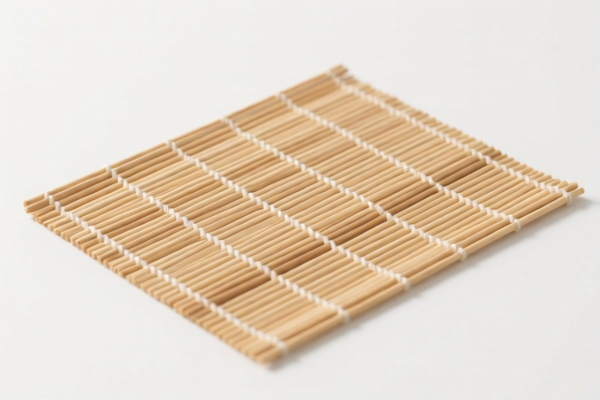
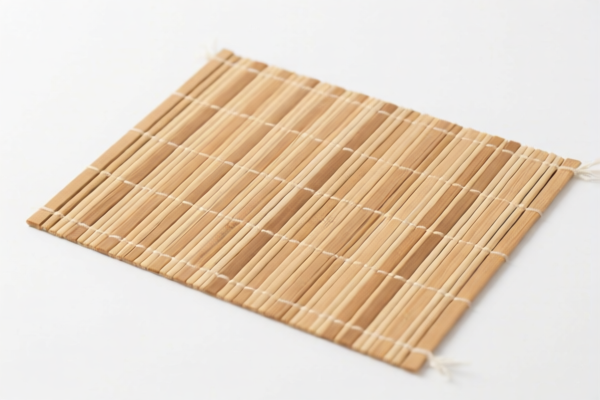
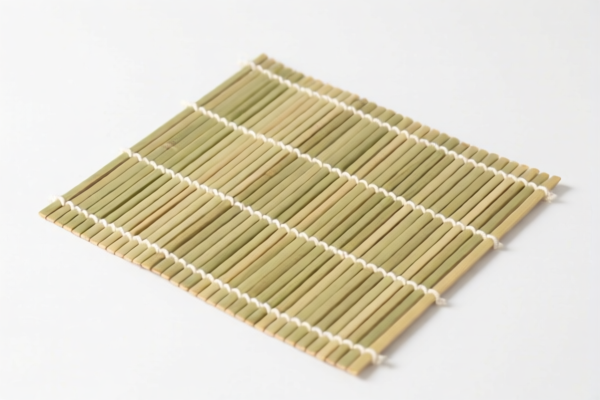
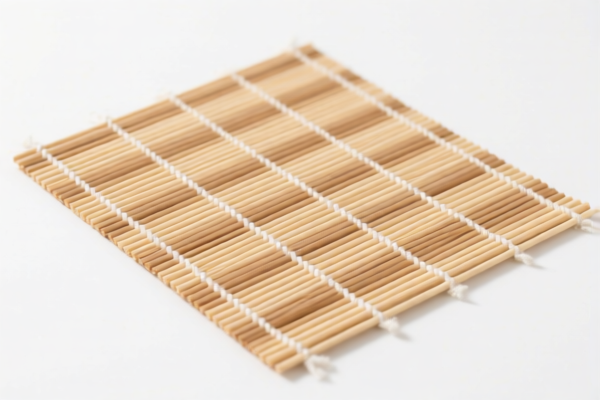
AI Analysis
🎋 Bamboo Seat Cushion (Bamboo Bead Chair Mat)
🌐 HS Code Reference & Clearance Guide | 2026 Latest Tariff Analysis | Professional Customs Strategy
📌 I. Product Definition & Classification: Is it "Woven" or "Furniture"?
A Bamboo Seat Cushion (often composed of small bamboo beads or slices sewn together) sits in a unique legal gray area in international trade. Its classification depends entirely on how it is constructed and what function it serves.
In the eyes of customs, there are two distinct paths: 1. Woven Bamboo Product (Chapter 46): If the beads are knitted, woven, or plaited together using thread/wire to form a flexible mat. It is treated as a "work of basketry." 2. Bamboo Furniture/Furnishing (Chapter 94): If it is considered an accessory to a seat, or a rigid structure intended for sitting. It is treated as part of the furniture ecosystem.
⚠️ Critical Distinction Point:
- Flexible, woven mats/beads → Often fall under Chapter 46 (Woven products).
- Rigid or semi-rigid seat attachments → Fall under Chapter 94 (Furniture).
- Note on US Trade Policy: Both categories are heavily targeted by Section 301 and IEEPA tariffs due to their bamboo origin (agricultural/forestry product from China).
📦 II. HS Code Classification Details (2026 Latest Tariff Alignment)
Based on the provided data, the following HS Codes are applicable. Note that while Chapter 46 and Chapter 94 are distinct, US importers often struggle with the boundary between "woven mats" and "furniture parts."
| HS Code | Product Description | Key Criteria | Primary Classification Logic |
|---|---|---|---|
4602.11.35.00 |
Bamboo Seats, Material: Bamboo, Form: Woven Products | Beads woven/knitted together; no rigid frame. | Classified as Basketry/Woven Works (Chapter 46). Focuses on the material processing (weaving). |
4602.11.45.00 |
Bamboo Woven Products, Form: Seat | Similar to above, but potentially different sub-classification within woven bamboo. | Also Chapter 46. Often used for specific woven seat mats that don't fit the "35" subheading precisely. |
9403.82.00.15 |
Bamboo Household Furniture, Use: Seat | Includes bamboo stools, chairs, or fixed seat components. | Classified as Furniture (Chapter 94). Focuses on the function (sitting) and use (household). |
9403.82.00.30 |
Bamboo Other Furniture, Use: Seat | Bamboo items classified as "other furniture" used for sitting. | Chapter 94. A broader "other furniture" category for bamboo seating that doesn't fit specific chair/stool definitions. |
9401.52.00.00 |
Bamboo Seats, Compliant with Material & Form Limits | Specific bamboo seating products meeting strict material/form definitions. | Chapter 94 (Seats). Directly addresses "Seats" (Part 9401), emphasizing the object rather than just the weaving technique. |
🔍 Key Insight:
- Chapter 46 (4602.11.xx): Customs looks at construction method. If it’s just beads tied together like a mat, it’s woven.
- Chapter 94 (9403/9401): Customs looks at end-use. If it’s sold as a "seat" or "furniture," it’s furniture.
- Risk: Misclassifying a "woven mat" as "furniture" (or vice versa) can lead to detention, as the duty calculation and legal footnotes differ slightly in interpretation, though the tariff rate here is identical (see below).
💰 III. 2026 Latest Tariff Rate Breakdown (Including Surcharges & Policy Add-ons)
✅ Applicable Country: United States (US)
✅ Origin: China (CN)
✅ Effective Date: Current and ongoing under Section 301 and IEEPA regulations.
🎯 1. The "Bamboo Tax" Reality Check
For ALL the HS Codes listed above (4602.11.35.00, 9403.82.00.15, 9403.82.00.30, 9401.52.00.00), the tariff structure is IDENTICAL:
| Component | Rate | Source / Legal Basis |
|---|---|---|
| Basic MFN Rate | 0.0% | Most-Favored-Nation rate for these subheadings is often 0%. |
| Section 301 Surcharge | +25.0% | USITC Footnote: Section 301 Tariffs on Chinese Goods. |
| IEEPA Section 122 Tariff | +10.0% | International Emergency Economic Powers Act (often referred to as "122 Clause" in trade data). |
| TOTAL CUMULATIVE RATE | 35.0% | 0% + 25% + 10% |
📌 Explanation:
- The 0% base rate might tempt importers to think it's cheap, but the 35% total is the real cost.
- No De Minimis Exemption: These goods do NOT qualify for the $800 de minimis exemption (Section 321) if they are part of a larger commercial shipment or if specific restrictions apply. Note: Data indicatesdeny_de_minimisis likely implied for these strategic/agricultural categories under current IEEPA enforcement.
🎯 2. The Exception: 4602.11.45.00
| Component | Rate | Source / Legal Basis |
|---|---|---|
| Basic MFN Rate | 6.6% | This specific subheading may carry a higher base MFN rate. |
| Section 301 Surcharge | +25.0% | Section 301 Tariffs. |
| IEEPA Section 122 Tariff | +10.0% | IEEPA Tariffs. |
| TOTAL CUMULATIVE RATE | 41.6% | 6.6% + 25% + 10% |
📌 Warning:
- If your bamboo cushion is classified under4602.11.45.00(perhaps due to a specific binding style or product definition difference), your duty jumps from 35% to 41.6%.
- This is a 6.6% penalty purely due to subheading classification. Precision in description is critical!
🛠️ IV. Customs Clearance Practical Advice (Avoiding Pitfalls)
✅ 1. Documentation Checklist (Non-Negotiable)
| Document | Requirement | Why It Matters |
|---|---|---|
| Product Specification Sheet | ✔️ Must Detail: "Bamboo Beads," "Thread Type," "Size," "Weight." | Proves whether it's a "woven good" (Ch 46) or "furniture" (Ch 94). |
| High-Resolution Photos | ✔️ Show the backing material and connection method. | If it has a rigid plastic base, it's Ch 94. If it's just fabric backing with beads, it's likely Ch 46. |
| Commercial Invoice | ✔️ Clear description: "Bamboo Bead Seat Cushion, Woven, for Chair Use." | Avoid vague terms like "Chair Part" or just "Cushion." Be specific. |
| Packing List | ✔️ Unit weight and net weight. | Required for IEEPA valuation verification. |
| Country of Origin Certificate | ✔️ Must state "Made in China." | Triggers the 35%/41.6% tariffs. |
✅ 2. Classification Strategy & Tips
🔥 "Describe the Construction, Not Just the Function"
| Scenario | Recommended HS Code | Reasoning |
|---|---|---|
| Soft, flexible mat made of woven bamboo beads | 4602.11.35.00 |
Clearly a "woven product" (Basketry). Lowest risk of being reclassified as furniture. |
| Rigid bamboo stool/chair with cushion | 9401.52.00.00 or 9403.82.00.15 |
It's a "seat" or "furniture." The cushion is just an accessory. |
| Bamboo cushion with a non-woven backing (e.g., foam/glue) | 9403.82.00.30 |
May not qualify as "woven" if glued/pressed, pushing it into "other furniture." |
Avoid 4602.11.45.00 |
❌ Do Not Use Unless Certain | Higher tax rate (41.6%). Only use if specific subheading rules force it. |
✅ 3. Special Situation Handling
| Situation | Advice |
|---|---|
| Product has a plastic/metal frame | Must be classified under Chapter 94 (9403 or 9401). It is no longer a pure "woven product." |
| Sold as a set (Chair + Cushion) | Declare the Chair as the principal item (HS 9401/9403). The cushion is an accessory. Do not split the shipment to avoid "part-of" classification errors. |
| Bamboo Source Verification | Ensure bamboo is sustainably sourced if importing to EU/Canada (though US focuses on tariff, supply chain audits are growing). |
| IEEPA 10% Tariff | This is non-negotiable for Chinese goods. Do not attempt to misdeclare origin (e.g., as "Vietnam-made") without proof of substantial transformation. Customs will detain and fine. |
🌍 V. Global Market Comparison (2026)
| Country/Region | Recommended HS Code | Estimated Total Duty | Notes |
|---|---|---|---|
| 🇺🇸 USA | 4602.11.35.00 or 9401.52.00.00 |
35% | High tariffs due to Section 301 + IEEPA. |
| 🇨🇳 China | 4602.11.35.00 |
~5-10% | Import tax for re-export. |
| 🇪🇺 EU | 4602.11.30 / 9403.82 |
~4-6% | No Section 301 equivalent. VAT applies separately. |
| 🇬🇧 UK | 4602.11.30 / 9403.82 |
~4-6% | Post-Brexit tariffs are lower than US. |
| 🇨🇦 Canada | 4602.11.30 |
~0-6% | CPTPP may offer 0% for some bamboo items if origin rules met. |
📌 Conclusion for US Importers:
The 35% duty is a major cost driver.
- Mitigation Strategy: Ensure the product is classified under the 0% base MFN (4602.11.35.00or9403.82.00.15) rather than the 6.6% base (4602.11.45.00).
- Optimization: If possible, design the product to clearly fit the "Woven Product" definition (Chapter 46) to avoid "Furniture" scrutiny, though both are 35% total. The key is avoiding the 41.6% trap.
📌 VI. Common Errors & Pitfalls (Lessons Learned)
❌ Error 1: Declaring "Bamboo Cushion" under 9404.90 (Mattress/Bedding)
👉 Consequence: Incorrect classification. Seat cushions are Ch 46 or Ch 94. 9404 is for beds/mattresses. May result in audit.
❌ Error 2: Ignoring the IEEPA 10% Tariff
👉 Consequence: Underpayment of duties. CBP will assess back-taxes + interest + penalties.
❌ Error 3: Using 4602.11.45.00 without justification
👉 Consequence: Paying 41.6% instead of 35%. A direct loss of 6.6% margin.
✅ Correct Practice:
"Bamboo Bead Mat, Woven, For Chair Use, 18x18 inches, No Rigid Frame."
HS Code:4602.11.35.00
Total Duty: 35%
🎯 VII. Conclusion: Precision Saves Money
🎯 Key Takeaway:
🔹 "Woven Beads = Ch 46 (35%)"
🔹 "Furniture Seat = Ch 94 (35%)"
🔹 "Wrong Subheading = 41.6%"🔹 "Never forget the 10% IEEPA tax on Chinese bamboo."
📌 Pro Tip:
Always request a Pre-Ruling from CBP if your product is borderline between "woven" and "furniture." A $500 ruling fee can save you thousands in potential duty errors and delays.
✨ Professional clearance starts with accurate classification.
💼 Every 1% of duty saved is pure profit.
Customer Reviews
About HS Code Classification
The Harmonized System (HS) is an internationally standardized nomenclature developed by the World Customs Organization (WCO) to classify traded products. Over 200 countries use the HS system as the basis for customs tariffs, trade statistics, and import/export regulations.
Each HS code follows a hierarchical structure:
- Chapter (2 digits) — Broad category of goods (e.g., Chapter 84: Machinery and Mechanical Appliances)
- Heading (4 digits) — More specific grouping within the chapter
- Subheading (6 digits) — Internationally standardized breakdown, used by all WCO member countries
- National subdivisions (8-10 digits) — Country-specific extensions for further classification, such as US HTSUS 10-digit codes
Correct HS code classification is essential for smooth customs clearance, accurate duty payment, and compliance with trade regulations. Misclassification can lead to customs delays, overpayment of duties, or penalties.
When importing from CN to US, the applicable tariff rates may include:
- Most-Favored-Nation (MFN) rate — The standard duty rate applied to WTO members
- General rate — Applied to countries without trade agreements
- Trade remedy duties — Additional tariffs such as Section 301 (anti-dumping), Section 232 (national security), or countervailing duties
The information provided on this page is for reference purposes only. For official classification, please consult with your local customs authority or a licensed customs broker.