bamboo tableware storage box
CN → US| HS Code | Tariff Rate | Origin | Destination | Doc |
|---|---|---|---|---|
| 4421999880 | 38.3% | CN | US | Official Doc |
| 4421919880 | 38.3% | CN | US | Official Doc |
| 9403820015 | 35.0% | CN | US | Official Doc |
| 9403820030 | 35.0% | CN | US | Official Doc |
| 4602110700 | 35.0% | CN | US | Official Doc |
Product Images
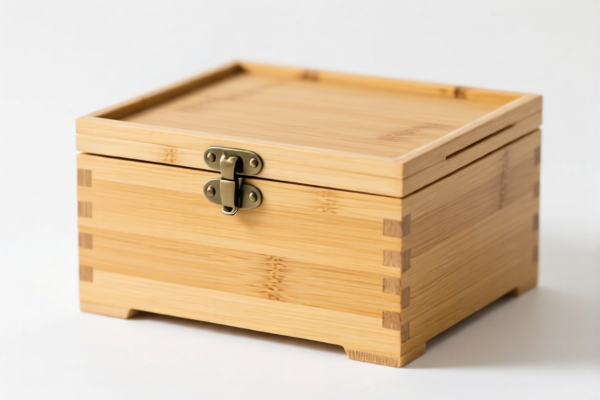
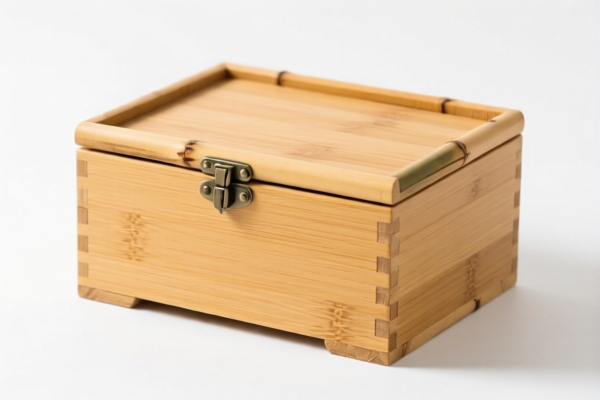
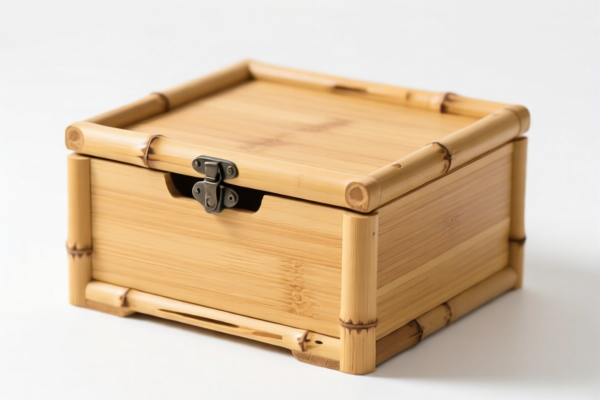
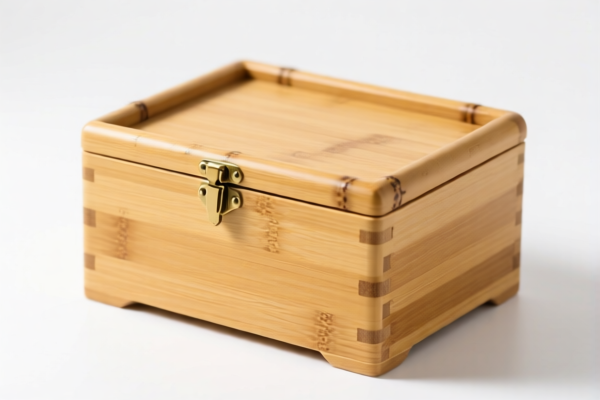
AI Analysis
🎋 Bamboo Tableware Storage Box: The Ultimate HS Code & Customs Clearance Guide
🌐 HS Code Reference & Customs Clearance Strategy | 2026 Latest Tariff Analysis | Expert-Level Duty Optimization
📌 One Product, Four Classifications: Why Your Bamboo Box Pays Different Duties
A "Bamboo Tableware Storage Box" seems simple, but in the world of international trade, material classification and functional definition create significant tax disparities. Is it a woven basket? A piece of furniture? Or a wooden accessory? The answer determines your Total Tax Rate (35% vs. 38.3%).
Below is the definitive breakdown based on the latest 2026 data.
📦 一、HS Code Classification Matrix (Detailed Breakdown)
Here are the four valid HS Codes for a Bamboo Tableware Storage Box, categorized by their legal definition. Note: The difference lies in whether it is classified as "Wood," "Bamboo Product," "Furniture," or "Woven Basket."
| HS Code | Product Description | Classification Logic | Total Tax Rate |
|---|---|---|---|
| 4421.99.98.80 | Other Wooden Articles | Classified as a "Wooden Product" (Bamboo is often grouped under Chapter 44 in some contexts if not strictly defined as bamboo weaving). | 38.3% |
| 4421.91.98.80 | Other Bamboo Articles | Classified specifically as a "Bamboo Product." This is the most direct material-based classification for bamboo items not covered by Chapter 46. | 38.3% |
| 9403.82.00.15 | Other Furniture / Household Items | Classified as "Other Household Furniture." If the box is rigid, standalone, and used for storage in a home, it may be viewed as furniture. | 35.0% |
| 9403.82.00.30 | Other Furniture | Classified broadly under "Other Wooden Furniture." Similar to above, applies if deemed a furniture component or standalone unit. | 35.0% |
| 4602.11.07.00 | Woven Baskets & Bags | Classified as "Bamboo/Straw Woven Articles." If the box is constructed via weaving (basketry style), it falls here. | 35.0% |
⚠️ Key Distinction:
- Materials vs. Function: Chapters 44/46 focus on Material (Wood/Bamboo/Woven). Chapter 94 focuses on Function (Furniture).
- Tax Impact: Furniture/Woven categories (35.0%) are 0.3% cheaper than Article/Wood categories (38.3%). While small per unit, this matters for high-volume shipments.
💰 二、2026 Tariff Structure Deep Dive (USA Import from China)
✅ Destination: United States (US)
✅ Origin: China (CN)
✅ Effective Date: Post-November 2025 (Current Policy)
All categories below include the standard Section 301 and Section 122 tariffs.
🎯 Category A: The "Article/Wood" Class (HS 4421.99 / 4421.91)
HS Codes: 4421.99.98.80, 4421.91.98.80
Summary: Bamboo/Wooden Tableware Storage Box
| Tax Component | Rate | Legal Basis |
|---|---|---|
| Base Duty | 3.3% | Standard Most Favored Nation (MFN) rate |
| Section 301 Tariff | 25.0% | USITC Footnote 9903.88.01 (Trade Action) |
| Section 122 Tariff | 10.0% | IEEPA Executive Order on Strategic Goods |
| TOTAL RATE | 38.3% | High Duty Bracket |
📌 Explanation:
- These codes are often used when the item is seen as a generic "wood/bamboo good" rather than furniture or woven craft.
- Risk: Customs may scrutinize if "weaving" is evident. If woven, claiming4421instead of4602could lead to a reclassification audit, potentially resulting in penalties or delayed clearance.
🎯 Category B: The "Furniture/Woven" Class (HS 9403 / 4602)
HS Codes: 9403.82.00.15, 9403.82.00.30, 4602.11.07.00
Summary: Bamboo Tableware Storage Box (Furniture or Woven)
| Tax Component | Rate | Legal Basis |
|---|---|---|
| Base Duty | 0.0% | MFN rate for Furniture/Woven Basketry is often 0% |
| Section 301 Tariff | 25.0% | USITC Footnote 9903.88.01 |
| Section 122 Tariff | 10.0% | IEEPA Executive Order |
| TOTAL RATE | 35.0% | Optimized Duty Bracket |
📌 Explanation:
- 9403 (Furniture): If the box is rigid, has legs, or is designed to stand independently as a storage unit, it fits here.
- 4602 (Woven): If the box is made of woven bamboo strips, it fits here.
- Benefit: The 0% base duty saves you 3.3% compared to the 4421 codes. This is the most tax-efficient classification if the physical construction supports it.
🛠️ 三、Customs Clearance Strategy & Pitfall Avoidance
✅ 1. Documentation Checklist (Mandatory for US Clearance)
| Document | Requirement | Why It Matters |
|---|---|---|
| Commercial Invoice | Must clearly state: "Bamboo Tableware Storage Box" and HS Code. | Ambiguous descriptions like "Wooden Box" trigger audits. |
| Product Photos | High-res images showing material texture (smooth wood vs. woven strands) and structure (glued panels vs. woven walls). | Customs officers need to verify if it's "Woven" (4602) or "Solid" (9403/4421). |
| Bill of Lading | Consistent description with Invoice. | Mismatches lead to holds. |
| Certificate of Origin | Required for Section 301 tariff determination. | Confirms China origin, triggering the 35% or 38.3% rate. |
| Structural Diagram | Optional but helpful. | Proves if it’s a "woven basket" (4602) or "furniture" (9403). |
✅ 2. Classification Strategy: How to Choose?
| Scenario | Recommended HS Code | Reason |
|---|---|---|
| Box is made of woven bamboo strips | 4602.11.07.00 | Matches "Woven Basketry." Lowest base duty (0%). |
| Box is solid bamboo panels, looks like a shelf/stand | 9403.82.00.15 | Matches "Household Furniture." Lowest base duty (0%). |
| Box is solid bamboo, simple container, no legs | 4421.91.98.80 | Safe fallback for "Other Bamboo Articles." Higher base duty (3.3%). |
| Uncertain Material Processing | 4421.99.98.80 | Broad "Wood/Bamboo" category. Use only if other classifications are rejected. |
🔥 Pro Tip:
"Woven beats Solid, Furniture beats Article."
If your bamboo box is woven, always try to classify under 4602. If it’s solid but sturdy, try 9403. Avoid 4421 unless you have no other choice, as it carries a higher base duty.
✅ 3. Common Mistakes to Avoid
❌ Mistake 1: Calling it "Wooden Storage Box" when it’s Bamboo.
👉 Risk: Customs may reject it as misclassified, as bamboo has specific subheadings.
👉 Fix: Use "Bamboo" in the description.
❌ Mistake 2: Classifying a Woven Basket as "Furniture" (9403).
👉 Risk: If the box is small and portable, it may not be considered "Furniture."
👉 Fix: If it’s a small portable tray/box, 4602 is safer than 9403.
❌ Mistake 3: Ignoring Section 122 Tariff.
👉 Risk: Forgetting the 10% IEEPA tariff leads to underpayment.
👉 Fix: Always calculate Base + 25% + 10%.
🌍 四、Global Market Comparison (Quick Reference)
| Market | HS Code Focus | Approx. Total Duty | Note |
|---|---|---|---|
| 🇺🇸 USA | 4421 or 9403 or 4602 | 35.0% - 38.3% | High tariffs due to Section 301 & 122. |
| 🇨🇳 China | 4602 or 4421 | 0% - 10% | Import duties vary; VAT applies. |
| 🇪🇺 EU | 4602 or 9403 | 0% - 6% | Often duty-free for bamboo woven goods. |
| 🇯🇵 Japan | 4602 or 9403 | 0% - 8% | Favorable for bamboo products. |
📌 Conclusion:
- USA is the most expensive market for bamboo storage boxes due to multiple layers of tariffs.
- EU and Japan are more tariff-friendly, especially for woven items (4602).
📌 五、Action Plan for Exporters
- Inspect Your Product: Is it woven or solid? Is it furniture-like?
- Choose the Lowest Base Duty: Aim for 4602 or 9403 (0% base) over 4421 (3.3% base).
- Document Clearly: Use "Bamboo Woven Storage Box" or "Bamboo Household Storage Unit" in invoices.
- Calculate Total Landed Cost: Include 35.0% or 38.3% in your pricing model.
- Pre-Ruling Consideration: For large volumes, apply for an Advance Ruling from CBP to confirm the HS Code and avoid retroactive penalties.
🎯 Final Word: Precision Saves Profits
🔹 "Woven is 35%, Solid is 38.3%. The difference is 3.3% – don’t let it slip through the cracks."
🔹 "Furniture (9403) and Woven (4602) offer 0% base duty. Use them wisely."
📣 Immediate Action:
📞 Consult your customs broker with photos of the bamboo construction.
🚀 Optimize your HS Code to 4602.11.07.00 or 9403.82.00.15 for maximum savings.
✨ Expert Customs Clearance Starts with the Right HS Code!
💼 Don’t overpay taxes. Classify correctly.
Customer Reviews
About HS Code Classification
The Harmonized System (HS) is an internationally standardized nomenclature developed by the World Customs Organization (WCO) to classify traded products. Over 200 countries use the HS system as the basis for customs tariffs, trade statistics, and import/export regulations.
Each HS code follows a hierarchical structure:
- Chapter (2 digits) — Broad category of goods (e.g., Chapter 84: Machinery and Mechanical Appliances)
- Heading (4 digits) — More specific grouping within the chapter
- Subheading (6 digits) — Internationally standardized breakdown, used by all WCO member countries
- National subdivisions (8-10 digits) — Country-specific extensions for further classification, such as US HTSUS 10-digit codes
Correct HS code classification is essential for smooth customs clearance, accurate duty payment, and compliance with trade regulations. Misclassification can lead to customs delays, overpayment of duties, or penalties.
When importing from CN to US, the applicable tariff rates may include:
- Most-Favored-Nation (MFN) rate — The standard duty rate applied to WTO members
- General rate — Applied to countries without trade agreements
- Trade remedy duties — Additional tariffs such as Section 301 (anti-dumping), Section 232 (national security), or countervailing duties
The information provided on this page is for reference purposes only. For official classification, please consult with your local customs authority or a licensed customs broker.