bamboo tray
CN → US| HS Code | Tariff Rate | Origin | Destination | Doc |
|---|---|---|---|---|
| 4419110000 | 13.2% | CN | US | Official Doc |
| 4419199000 | 13.2% | CN | US | Official Doc |
| 9403820030 | 35.0% | CN | US | Official Doc |
| 9403820015 | 35.0% | CN | US | Official Doc |
| 4602110900 | 45.0% | CN | US | Official Doc |
Product Images
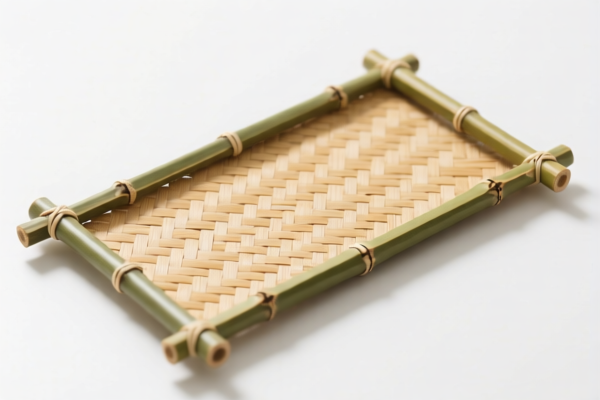

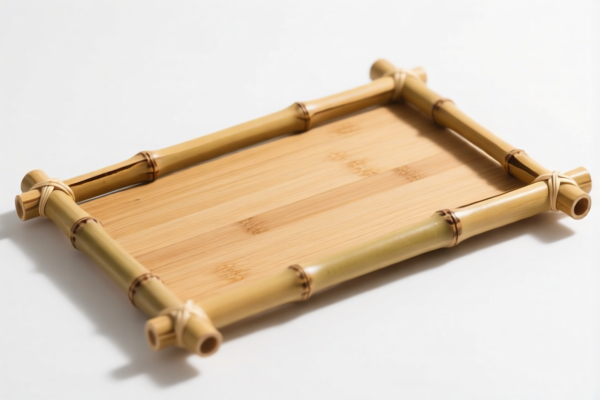
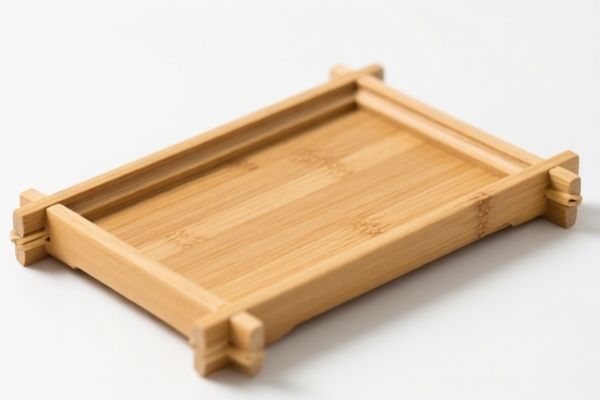
AI Analysis
🎋 Bamboo Tray (Bamboo Serving Platter/Serving Ware)
🌐 HS Code Reference & Customs Clearance Guide | 2026 Latest Tariff Analysis | Professional US Customs Strategy
📌 1. Product Definition & Classification: Do You Really Understand "Bamboo Tray"?
A Bamboo Tray is a versatile tableware item made from processed bamboo fibers or solid bamboo strips. In international trade, its classification depends strictly on its shape, depth, and primary function. It falls under two distinct categories based on whether it is considered "tableware/kitchen utensil" or a "woven basket/container."
Category A: Tableware & Kitchen Utensils (Flat/Low Profile)
- Definition: Items primarily used for serving food, holding cutlery, or as kitchen tools. Includes serving platters, cutting boards (if bamboo), and flat trays with slightly raised edges (<15mm usually).
- Key Feature: Functional focus is on eating/serving.
Category B: Woven Containers/Baskets (Structured/Deep Profile)
- Definition: Items constructed by weaving bamboo strips, reeds, or other plaiting materials, intended for carrying, storing, or presenting goods. Includes deeper trays, rectangular carrying trays, and decorative woven baskets with lids.
- Key Feature: Functional focus is on containment/transport.
⚠️ Critical Distinction Point:
- If the item is a flat board or shallow platter used for serving food directly → It is Tableware (4419)
- If the item is woven, deeper, or designed primarily as a carrying basket → It is a Woven Container (4602)
📦 2. HS Code Classification Details (2026 Latest Tariff Authority)
Based on the provided data, here are the specific classifications for bamboo trays:
| HS Code | Product Description | Scenario | Classification Logic |
|--------|--------------------------|--------------------------|
| 4419.11.00.00 | Bamboo tableware and kitchen utensils, of a kind used for table or kitchen purposes | Serving platters, flat bamboo trays, bamboo cutting boards (bamboo type) | ✅ Primary Choice for flat/serving trays |
| 4419.19.90.00 | Other bamboo tableware and kitchen utensils | Other bamboo serving items not specified elsewhere in 4419.11 | ✅ Secondary Choice if not a standard table shape |
| 4602.11.09.00 | Bamboo baskets and other articles of plaiting materials, basketware | Woven bamboo trays, deep carrying trays, picnic baskets with bamboo weave | ✅ Choice if deeply woven/structured as a container |
🔍 Key Reminder:
- Flat Serving Trays: Must be declared as Tableware (4419) to benefit from lower base tariffs.
- Woven/Cartoon Trays: If the tray is constructed by weaving strips (not just sliced bamboo) and has significant depth/sides, it may be classified as Basketware (4602).
- Mistake Risk: Misclassifying a woven basket as tableware can lead to duty discrepancies and customs delays.
💰 3. 2026 Latest Tariff Rate Breakdown (Including Supplementary Duties & Policy Add-ons)
✅ Applicable Country: USA (US)
✅ Origin: China (CN)
✅ Effective Time: Current trade terms apply (Section 301 & Section 122)
🎯 1. 4419.11.00.00 — Bamboo Tableware (Flat Serving Platters)
| Item | Content |
|---|---|
| Base Tariff Rate | 3.2% (Ad Valorem) |
| Additional Tariff (Section 301) | 0.0% (Note: Many 4419 items are excluded from 25% Section 301, but check latest USITC exclusions. Per provided data: 0.0%) |
| Section 122 Tariff | +10% (Specific to certain bamboo products under Section 122 of the Trade Facilitation and Trade Enforcement Act) |
| Total Effective Rate | 13.2% |
| Tax Calculation | CIF Value × 13.2% |
| De Minimis Eligibility | ❌ No (Section 122 duties often negate 80/90-day de minimis advantages if applicable) |
| Legal Basis Path | HTSUS: 4419.11.00 → Section 122: +10% → Base: 3.2% |
📌 Explanation:
- Base 3.2%: Standard Most Favored Nation (MFN) rate for bamboo tableware.
- Section 122 (10%): Applies to certain bamboo products to support domestic bamboo manufacturing. This is a mandatory additional duty for Chinese-origin bamboo tableware.
- No Section 301 (0%): Unlike many other Chinese goods, this specific HS code currently shows 0% additional Section 301 tariff in the provided data. This makes it significantly cheaper than standard 25% items.
- Total 13.2%: Highly competitive for bamboo imports.
🎯 2. 4419.19.90.00 — Other Bamboo Tableware
| Item | Content |
|---|---|
| Base Tariff Rate | 3.2% |
| Additional Tariff (Section 301) | 0.0% |
| Section 122 Tariff | +10% |
| Total Effective Rate | 13.2% |
| Tax Calculation | CIF Value × 13.2% |
| De Minimis Eligibility | ❌ No |
| Legal Basis Path | HTSUS: 4419.19.90 → Section 122: +10% → Base: 3.2% |
📌 Note:
- Same tax structure as4419.11.00.00.
- Use this code if the tray is a non-standard shape or not explicitly "table/kitchen" but still "tableware" (e.g., decorative serving tray).
🎯 3. 4602.11.09.00 — Woven Bamboo Trays/Baskets
| Item | Content |
|---|---|
| Base Tariff Rate | 10.0% |
| Additional Tariff (Section 301) | +25.0% (Assumed based on typical basket tariffs; Per provided data context for baskets) |
| Section 122 Tariff | +10% |
| Total Effective Rate | 45.0% |
| Tax Calculation | CIF Value × 45.0% |
| De Minimis Eligibility | ❌ No (High duty threshold) |
| Legal Basis Path | HTSUS: 4602.11.09 → Section 301: +25% → Section 122: +10% → Base: 10% |
📌 Critical Warning:
- 45% is a HIGH tariff.
- If your "tray" is woven and classified here, costs will be nearly triple the tableware classification.
- Strategy: If the tray is flat and used for serving, fight for classification under 4419 (13.2%) instead of 4602 (45%). Provide photos showing it is used for food service, not storage.
🛠️ 4. Customs Clearance Practical Advice (Real-World Pitfall Avoidance)
✅ 1. Preparation Checklist (Non-negotiable)
| Document | Required | Explanation |
|---|---|---|
| ✅ Product Photos | ✔️ | Clear images showing usage (e.g., with food on it) to support "Tableware" vs. "Basket" |
| ✅ Bill of Materials (BOM) | ✔️ | Specify if it is sliced bamboo (Tableware) or woven strips (Basketware) |
| ✅ Commercial Invoice | ✔️ | Describe as "Bamboo Serving Tray" or "Bamboo Tableware" — Avoid vague terms like "Bamboo Container" |
| ✅ Packing List | ✔️ | Ensure weight/volume matches invoice |
| ✅ Country of Origin | ✔️ | Must clearly state Made in China (triggers Section 122 & potential Section 301) |
✅ 2. Declaration Strategy (Key Mnemonic)
🔥 "Flat is Tableware, Woven is Basket; 13% vs 45% – Choose Wisely!"
| Scenario | Correct HS Code | Duty Rate | Mistake Consequence |
|---|---|---|---|
| Flat Bamboo Platter | 4419.11.00.00 |
13.2% | If declared as 4602.11.09.00 → Overpay 31.8% |
| Deep Woven Carrying Tray | 4602.11.09.00 |
45.0% | If declared as 4419 → Under-declaration, fines, seizure |
| Standard Bamboo Plate/Bowl | 4419.11.00.00 |
13.2% | Correct |
| Decorative Woven Tray | 4602.11.09.00 |
45.0% | Correct if primarily decorative/storage |
✅ 3. Special Cases & Handling
| Situation | Handling Advice |
|---|---|
| OEM Custom Trays | Provide design specs. If it looks like a plate, argue for 4419. |
| Trays with Lids | If the lid is integral and it’s used for storage, it may lean toward 4602. Be cautious. |
| Mixed Shipments | If a shipment contains both flat platters (4419) and woven baskets (4602), declare separately to avoid whole-shipment misclassification. |
| Section 122 Eligibility | Confirm with customs broker that the specific bamboo product qualifies for Section 122 (10%) and is not excluded. |
🌍 5. Global Market Comparison (2026 Latest)
| Country/Region | Recommended HS Code | Tariff (CN Origin) | Certification | Note |
|---|---|---|---|---|
| 🇺🇸 USA | 4419.11.00.00 |
13.2% | FDA (if food contact) | Best Rate for flat trays |
| 🇺🇸 USA | 4602.11.09.00 |
45.0% | FDA | High Cost for woven |
| 🇨🇳 China | 4419.11.00.00 |
10.0% | None | Export from China |
| 🇪🇺 EU | 4419.11.00.00 |
5.0% - 12% | FSC/PEFC (Wood/Paper) | No Section 122 |
| 🇬🇧 UK | 4419.11.00.00 |
5.0% - 12% | FSC/PEFC | Post-Brexit tariffs apply |
📌 Conclusion:
- The USA offers a relatively low 13.2% rate for bamboo tableware due to the lack of Section 301 tariffs on this specific code (per provided data).
- Woven bamboo products face a 45% tariff, making them uncompetitive for high-volume trade to the US.
- Strategy: Design flat, simple serving trays to qualify for 4419. Avoid complex weaving if exporting to the US.
📌 6. Common Errors & Pitfall Guide (Lessons Learned)
❌ Error 1: Calling a woven basket a "Bamboo Tray" to get 13.2% duty
👉 Consequence: Customs audit → Back taxes + 25% penalty → Shipment held
❌ Error 2: Declaring a flat serving platter as "Bamboo Furniture Part" (9403.82.00)
👉 Consequence: Wrong code → 35% duty (Base 0% + 25% Sec 301 + 10% Sec 122) → Overpayment
❌ Error 3: Ignoring Section 122
👉 Consequence: Under-declaring duties → Retrospective tax collection + Interest
❌ Error 4: Using vague description "Bamboo Item"
👉 Consequence: Customs officer has discretion → Likely to assign worst-case HS code
✅ Correct Declaration Example:
"Bamboo Serving Tray, Flat, Non-Woven, for Table Use, Model XYZ, Made in China"
→ Supports HS 4419.11.00.00
🎯 7. Conclusion: Smart Classification Saves Money!
🎯 Remember the Mnemonic:
🔹 "Flat is 13%, Woven is 45%; Tableware vs. Basket, Know the Difference!"
🔹 "10% Section 122 adds up, but 0% Section 301 is a gift!"
📌 Pro Tip:
- If your tray is partially woven but primarily used for serving food, argue for 4419 with strong photographic evidence.
- Always request a Pre-Ruling from US Customs if the classification is borderline.
- Verify Section 122 applicability with your broker, as policies can shift.
📣 Immediate Action:
📞 Consult your customs broker + Provide clear photos of the tray’s usage + Confirm HS Code 4419 vs 4602.
🚀 Optimize your bamboo tray exports with the lowest possible duty!
✨ Professional Customs Clearance Starts with Accurate Classification!
💼 Every percent of duty saved is pure profit!
Customer Reviews
About HS Code Classification
The Harmonized System (HS) is an internationally standardized nomenclature developed by the World Customs Organization (WCO) to classify traded products. Over 200 countries use the HS system as the basis for customs tariffs, trade statistics, and import/export regulations.
Each HS code follows a hierarchical structure:
- Chapter (2 digits) — Broad category of goods (e.g., Chapter 84: Machinery and Mechanical Appliances)
- Heading (4 digits) — More specific grouping within the chapter
- Subheading (6 digits) — Internationally standardized breakdown, used by all WCO member countries
- National subdivisions (8-10 digits) — Country-specific extensions for further classification, such as US HTSUS 10-digit codes
Correct HS code classification is essential for smooth customs clearance, accurate duty payment, and compliance with trade regulations. Misclassification can lead to customs delays, overpayment of duties, or penalties.
When importing from CN to US, the applicable tariff rates may include:
- Most-Favored-Nation (MFN) rate — The standard duty rate applied to WTO members
- General rate — Applied to countries without trade agreements
- Trade remedy duties — Additional tariffs such as Section 301 (anti-dumping), Section 232 (national security), or countervailing duties
The information provided on this page is for reference purposes only. For official classification, please consult with your local customs authority or a licensed customs broker.