bamboo woven pen holder
CN → US| HS Code | Tariff Rate | Origin | Destination | Doc |
|---|---|---|---|---|
| 4602110700 | 35.0% | CN | US | Official Doc |
| 4602110900 | 45.0% | CN | US | Official Doc |
| 4421919880 | 38.3% | CN | US | Official Doc |
| 4414900000 | 21.4% | CN | US | Official Doc |
| 4421999880 | 38.3% | CN | US | Official Doc |
Product Images

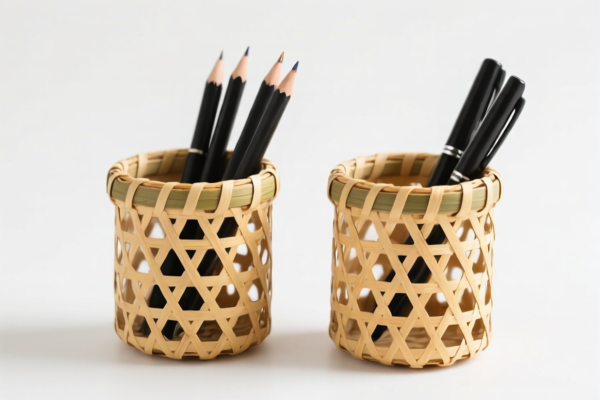

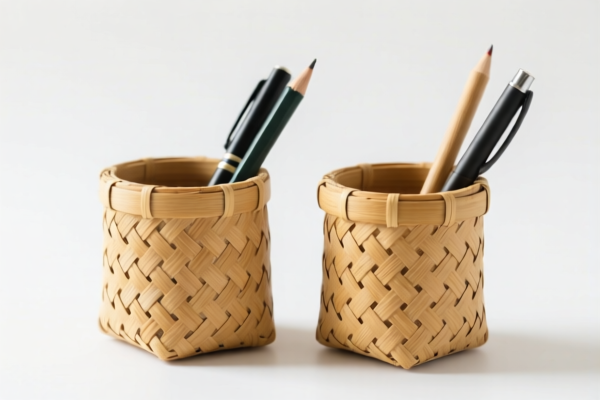
AI Analysis
🎋 Bamboo Woven Pen Holder (笔筒/收纳盒)
🌐 HS Code Reference & Customs Clearance Guide | 2026 Latest Tariff Analysis | Professional Entry Strategy
📌 I. Product Definition & Classification: What Exactly is a "Bamboo Woven Pen Holder"?
A bamboo pen holder is typically a small container used on desks or offices to store writing instruments. In international trade, its classification depends heavily on manufacturing technique (woven vs. solid) and specific form.
Key Distinction: - Woven Items: Made by interlacing bamboo strips (like basketry). Falls under Chapter 46. - Solid/Plaited but not Woven: If it is made of solid bamboo segments cut and shaped, it falls under Chapter 44 (Wood and Articles of Wood).
⚠️ Critical Decision Point:
- If the item is clearly woven (interlaced strands) → Look at Chapter 46 (4602).
- If the item is solid bamboo or just "plaited" but not technically "woven" in the textile sense → Look at Chapter 44 (4421or4414).
- Note: The data provided below covers the most common classifications for bamboo goods entering the US market.
📦 II. HS Code Classification Matrix (2026 Latest Tariff Authority)
| HS Code | Product Description | Applicable Scenario | Tax Rate |
|---|---|---|---|
4602.11.07.00 |
Bamboo woven articles, woven form, general definition | General woven bamboo baskets/items | 35.0% |
4602.11.09.00 |
Bamboo woven articles, other woven items (containers/bags) | Woven containers, storage baskets | 45.0% |
4421.91.98.80 |
Other wooden articles, bamboo material, cylindrical form | Solid bamboo pen holders, cups, or tubes | 38.3% |
4414.90.00.00 |
Bamboo frames/decorative components | Bamboo frames, decorative holders, structural parts | 21.4% |
4421.99.98.80 |
Other wooden/bamboo articles, residual category | Fallback category for undefined bamboo items | 38.3% |
🔍 Key Insight:
- Woven vs. Solid: This is the biggest risk. If you declare a woven pen holder as a "wooden article" (4421), customs may reject it. If you declare a solid pen holder as "woven" (4602), you face higher duties. - Container vs. General: Woven containers (4602.11.09) attract the highest tariff due to specific trade remedies.
💰 III. 2026 Detailed Tariff Breakdown (US Market)
✅ Target Country: USA
✅ Origin: China (CN)
✅ Effective Date: Post-Nov 2025 regimes applied
🎯 1. 4602.11.07.00 —— Bamboo Woven Articles (General)
| Item | Details |
|---|---|
| Base Duty | 0.0% |
| Section 301 Add-on | +25.0% |
| 122-Clause Tariff | +10.0% |
| Total Rate | 35.0% |
| De Minimis Exemption | ❌ NO (Denied) |
| Legal Path | USITC:4602.11.07.00 → SEC:301 → SEC:122 |
📌 Explanation:
- This is the "standard" rate for generic woven bamboo goods that don't fit specific container exclusions.
- 35% is the baseline high-cost entry for woven bamboo.
🎯 2. 4602.11.09.00 —— Bamboo Woven Containers/Bags
| Item | Details |
|---|---|
| Base Duty | 10.0% |
| Section 301 Add-on | +25.0% |
| 122-Clause Tariff | +10.0% |
| Total Rate | 45.0% |
| De Minimis Exemption | ❌ NO (Denied) |
| Legal Path | USITC:4602.11.09.00 → SEC:301 → SEC:122 |
📌 Warning:
- Pen holders are considered "containers".
- If classified under4602.11.09.00, you pay 45%. This is the most expensive scenario.
- Strategy: Avoid this code if possible by arguing the item is a "general woven article" (4602.11.07.00) or a "solid bamboo product" (4421).
🎯 3. 4421.91.98.80 —— Solid Bamboo Articles (Cylindrical)
| Item | Details |
|---|---|
| Base Duty | 3.3% |
| Section 301 Add-on | +25.0% |
| 122-Clause Tariff | +10.0% |
| Total Rate | 38.3% |
| De Minimis Exemption | ❌ NO (Denied) |
| Legal Path | USITC:4421.91.98.80 → SEC:301 → SEC:122 |
📌 Strategy:
- If your pen holder is made of solid bamboo tubes (not woven strips), this code applies.
- 38.3% is slightly better than the 45% woven container rate, but still high.
🎯 4. 4414.90.00.00 —— Bamboo Frames/Decorative
| Item | Details |
|---|---|
| Base Duty | 3.9% |
| Section 301 Add-on | +7.5% |
| 122-Clause Tariff | +10.0% |
| Total Rate | 21.4% |
| De Minimis Exemption | ❌ NO (Denied) |
| Legal Path | USITC:4414.90.00.00 → SEC:301 → SEC:122 |
📌 Optimization Opportunity:
- If the pen holder has a distinctive frame structure or is primarily decorative (e.g., a bamboo lattice frame holding inserts), try to classify under4414.
- 21.4% is the lowest tax rate in the dataset.
- Risk: Must prove it is a "frame" or "decorative component," not a simple container.
🎯 5. 4421.99.98.80 —— Other Bamboo Articles (Fallback)
| Item | Details |
|---|---|
| Base Duty | 3.3% |
| Section 301 Add-on | +25.0% |
| 122-Clause Tariff | +10.0% |
| Total Rate | 38.3% |
| De Minimis Exemption | ❌ NO (Denied) |
| Legal Path | USITC:4421.99.98.80 → SEC:301 → SEC:122 |
📌 Explanation:
- Used when the item doesn't fit other specific bamboo categories in Chapter 44.
- Same rate as4421.91, so no advantage over the cylindrical code.
🛠️ IV. Customs Clearance Practical Advice
✅ 1. Preparation Checklist (Non-Negotiable)
| Document | Required | Purpose |
|---|---|---|
| Product Photos | ✔️ | Show close-up of weave vs. solid structure |
| Specifications Sheet | ✔️ | Detail material (bamboo species), dimensions, manufacturing process |
| Commercial Invoice | ✔️ | Accurate description: "Bamboo Pen Holder" vs. "Woven Basket" |
| Origin Certificate | ✔️ | Proof of Chinese origin for 301/122 clause application |
| Packing List | ✔️ | Ensure packaging doesn't mislead classification (e.g., don't pack as "craft basket") |
✅ 2. Declaration Strategy (The "How-To")
🔥 "Weave vs. Solid, Frame vs. Container"
| Scenario | Recommended HS Code | Estimated Tax | Risk Level |
|---|---|---|---|
| Solid Bamboo Tube Pen Holder | 4421.91.98.80 |
38.3% | 🟢 Low |
| Decorative Bamboo Frame Holder | 4414.90.00.00 |
21.4% | 🟡 Medium (Requires proof of frame structure) |
| Woven Bamboo Strip Holder | 4602.11.07.00 |
35.0% | 🟡 Medium (Argue against "container" classification) |
| Woven Bamboo Basket-like Holder | 4602.11.09.00 |
45.0% | 🔴 High (Avoid if possible) |
📌 Key Argument for Lower Tax:
- If the pen holder is woven, argue it is a "general woven article" (4602.11.07) rather than a "container/basket" (4602.11.09) to save 10%.
- If the pen holder is decorative/frame-based, push for4414.90to save 14%+ compared to woven options.
✅ 3. Special Considerations
| Issue | Advice |
|---|---|
| De Minimis (Section 321) | ❌ NOT APPLICABLE. All these HS codes are excluded from the $800 de minimis exemption. Duties must be paid. |
| 122-Clause | ✅ Always Applied. 10% is added regardless of origin (if from China). |
| Section 301 | ✅ Always Applied. 25% (or 7.5% for 4414) is applied to Chinese goods. |
| Material Proof | Ensure customs knows it is Bamboo, not generic "wood," to avoid incorrect Chapter 44 sub-codes. |
🌍 V. Global Market Comparison (2026)
| Market | Recommended HS Code | Est. Duty (China Origin) | Notes |
|---|---|---|---|
| 🇺🇸 USA | 4602.11.07.00 / 4421.91.98.80 |
35% - 38.3% | High tariffs due to 301 & 122 clauses. |
| 🇪🇺 EU | 4602.11.00 / 4421.99 |
~5% - 6% | No Section 301 equivalent, but anti-dumping may apply. |
| 🇨🇳 China | 4602.11.00 / 4421.99 |
0% - 5% | Low duty, but export controls may apply. |
| 🇯🇵 Japan | 4602.11.00 / 4421.99 |
~5% - 8% | CPTPP benefits if origin is ASEAN, not China. |
📌 Conclusion:
- The USA is the most expensive market for bamboo pen holders due to layered tariffs.
- Optimization is key: Use4414.90(21.4%) if structurally possible, or argue for4602.11.07(35%) over4602.11.09(45%).
📌 VI. Common Mistakes & Pitfalls (Lessons Learned)
❌ Mistake 1: Classifying a woven pen holder as 4602.11.09 (Container)
👉 Result: Pay 45% instead of 35%.
👉 Fix: Argue it is a "general woven article" (4602.11.07) because it is not a typical "basket" or "bag."
❌ Mistake 2: Declaring a solid bamboo holder as "Woven"
👉 Result: Customs inspection reveals solid structure, reclassifies to 4421, potential penalty for misdeclaration.
👉 Fix: Clearly state "Solid Bamboo" in description.
❌ Mistake 3: Ignoring the 122-Clause Tariff
👉 Result: Underpayment by 10%.
👉 Fix: Always include +10% in cost calculations for China-origin goods.
❌ Mistake 4: Assuming De Minimis applies
👉 Result: Package seized or held for duties.
👉 Fix: Budget for full duty payment. No $800 exemption.
🎯 VII. Conclusion: Smart Classification Saves Money!
🎯 Memory Hook:
🔹 "Weave is 35, Container is 45, Solid is 38, Frame is 21!"
🔹 "122-Clause is 10%, 301 is 25%, De Minimis is DEAD!"
📌 Pro Tip:
- For high-volume shipments, consider applying for an Advance Ruling from US Customs (CBP) to lock in the HS Code and avoid unexpected audits.
- If using 4414.90.00.00, ensure your product design clearly shows a "frame" or "decorative lattice" structure to justify the lower 21.4% rate.
📣 Take Action Now:
📞 Contact your freight forwarder to verify the exact physical structure (woven vs. solid).
📝 Draft your invoice with precise language: "Bamboo Pen Holder, [Woven/Solid], Decorative Use."
🚀 Calculate your landed cost using the highest applicable rate (45%) as a safety margin, then optimize to 35% or 21.4% if eligible.
✨ Precision in Classification = Profit in Your Pocket!
💼 Don't let 10-20% tax difference erase your margin!
Customer Reviews
About HS Code Classification
The Harmonized System (HS) is an internationally standardized nomenclature developed by the World Customs Organization (WCO) to classify traded products. Over 200 countries use the HS system as the basis for customs tariffs, trade statistics, and import/export regulations.
Each HS code follows a hierarchical structure:
- Chapter (2 digits) — Broad category of goods (e.g., Chapter 84: Machinery and Mechanical Appliances)
- Heading (4 digits) — More specific grouping within the chapter
- Subheading (6 digits) — Internationally standardized breakdown, used by all WCO member countries
- National subdivisions (8-10 digits) — Country-specific extensions for further classification, such as US HTSUS 10-digit codes
Correct HS code classification is essential for smooth customs clearance, accurate duty payment, and compliance with trade regulations. Misclassification can lead to customs delays, overpayment of duties, or penalties.
When importing from CN to US, the applicable tariff rates may include:
- Most-Favored-Nation (MFN) rate — The standard duty rate applied to WTO members
- General rate — Applied to countries without trade agreements
- Trade remedy duties — Additional tariffs such as Section 301 (anti-dumping), Section 232 (national security), or countervailing duties
The information provided on this page is for reference purposes only. For official classification, please consult with your local customs authority or a licensed customs broker.