bamboo woven storage boxes
CN → US| HS Code | Tariff Rate | Origin | Destination | Doc |
|---|---|---|---|---|
| 4421999880 | 38.3% | CN | US | Official Doc |
| 4421919880 | 38.3% | CN | US | Official Doc |
| 9403820015 | 35.0% | CN | US | Official Doc |
| 9403820030 | 35.0% | CN | US | Official Doc |
| 4602110700 | 35.0% | CN | US | Official Doc |
Product Images
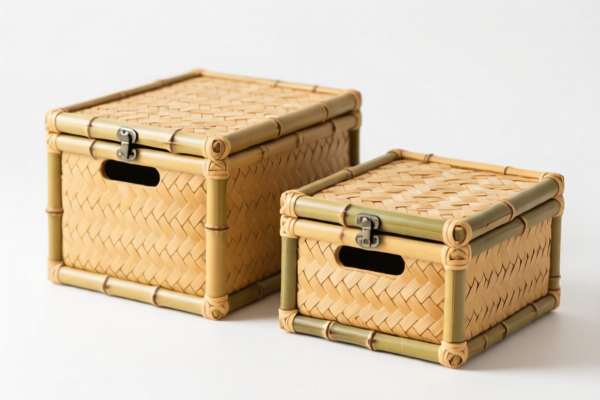
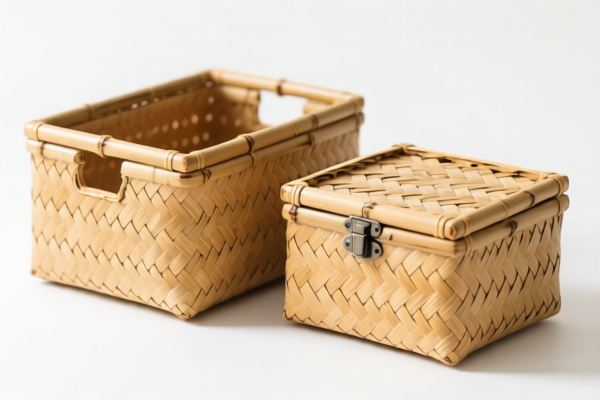
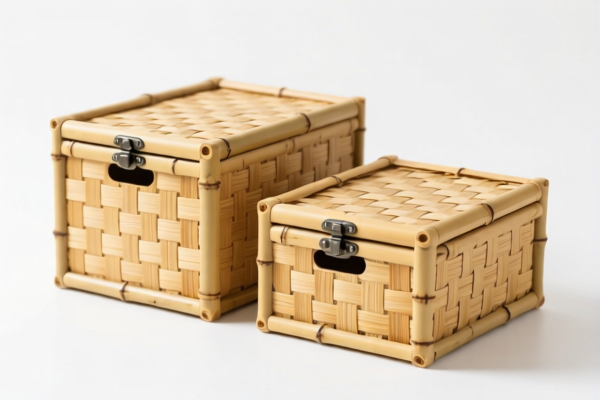
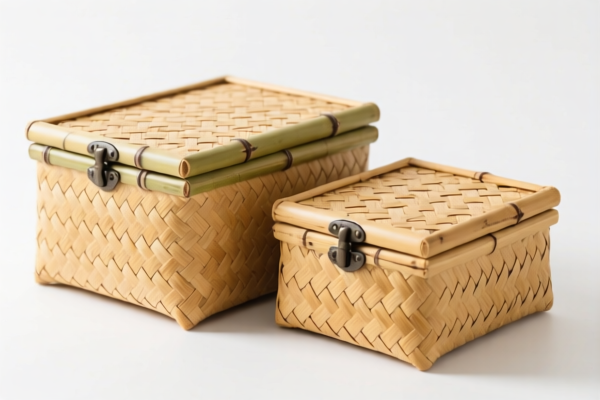
AI Analysis
🎋 Bamboo Woven Storage Boxes: HS Code Classification & Customs Clearance Guide 2026
🌐 HS Code Reference & Customs Clearance Strategy | Latest 2026 Tariff Analysis | Professional Clearance Solutions
📌 I. Product Definition & Classification: Do You Really Understand "Bamboo Storage"?
Bamboo woven storage boxes are versatile household items used for organizing clothes, documents, toys, or groceries. In international trade, their classification depends heavily on material perception and functional use. They generally fall into two main categories:
- Bamboo Products (Chapter 46): If the item is strictly defined as a woven product made from strips of bamboo (similar to basketry).
- Wood/Bamboo Furniture or Other Wood Articles (Chapter 44 or 94): If the item is perceived as rigid furniture (like a small chest) or other manufactured wood/bamboo articles.
⚠️ Key Distinction Point:
- If it is primarily a woven basket/box structure without rigid furniture joints →归入 Chapter 46 or Chapter 44 (Other Wood Articles).
- If it is considered household furniture (e.g., a rigid storage chest with drawers or a fixed shape) →归入 Chapter 94.
- Note on Material: While bamboo is technically a grass, for tariff purposes, many bamboo products are classified under Chapter 44 (Wood and articles of wood) or Chapter 46 (Basketweaving products) depending on the specific manufacturing process and structure.
📦 II. HS Code Classification Details (2026 Latest Tariff Authority Comparison)
Based on the provided data, here are the 5 possible HS Code classifications for Bamboo Woven Storage Boxes:
| HS Code | Product Description | Summary | Applicable Scenario |
|---|---|---|---|
4421.99.98.80 |
Other wood articles (Bamboo classified as wood) | Bamboo storage box classified as other wood articles | Generic bamboo storage, rigid structure, not strictly furniture |
4421.91.98.80 |
Other bamboo products | Bamboo storage box classified as bamboo products | Strictly defined as bamboo product under Ch. 44 |
9403.82.00.15 |
Other wooden furniture (Bamboo) | Bamboo storage box classified as other household bamboo furniture | Used as household furniture (e.g., clothes organizer chest) |
9403.82.00.30 |
Other furniture (Bamboo) | Bamboo storage box classified as other bamboo furniture | General furniture classification for bamboo storage units |
4602.11.07.00 |
Woven baskets and bags (Bamboo) | Bamboo storage box classified as bamboo woven baskets/bags | Classic woven basket style, flexible or semi-rigid weave |
🔍 Critical Reminder:
- If the box is rigid and functional as furniture (e.g., a clothes storage chest), customs may lean towards Chapter 94 (Furniture).
- If it is a simple woven container (like a laundry hamper or document box), Chapter 46 or Chapter 44 is more appropriate.
- Misclassification Risk: Declaring a rigid furniture piece as a "basket" (Ch. 46) may trigger scrutiny if the construction is not clearly woven basketry.
💰 III. 2026 Latest Tariff Rate Details (Including Surcharges & Policy Add-ons)
✅ Applicable Country: United States (US)
✅ Origin: China (CN)
✅ Effective Time: Current trade policy (Section 301 & IEEPA surcharges apply)
🎯 1. 4421.99.98.80 & 4421.91.98.80 —— Other Wood/Bamboo Articles
| Item | Content |
|---|---|
| Base Tariff Rate | 3.3% |
| Section 301 Surcharge | +25.0% |
| Section 122 Tariff | +10.0% |
| Total Tax Rate | 38.3% |
| Tax Calculation | CIF Value × 38.3% |
| De Minimis Eligibility | ❌ Not Applicable (De Minimis does not apply to goods subject to Section 301/IEEPA surcharges above certain thresholds, and generally not for this category) |
| Legal Basis Path | HTSUS:4421.99/4421.91 → Section 301: Footnote 9903.88.01 → Section 122: IEEPA Add-on |
📌 Explanation:
- The Base Tariff is low (3.3%) for generic wood/bamboo articles.
- However, the Section 301 Surcharge (25%) is significant.
- Section 122 Tariff (10%) is an additional add-on for certain goods from China.
- Total Effective Rate: 38.3%. This is a high tariff category. Must be factored into cost models.
🎯 2. 9403.82.00.15 & 9403.82.00.30 —— Other Bamboo Furniture
| Item | Content |
|---|---|
| Base Tariff Rate | 0.0% |
| Section 301 Surcharge | +25.0% |
| Section 122 Tariff | +10.0% |
| Total Tax Rate | 35.0% |
| Tax Calculation | CIF Value × 35.0% |
| De Minimis Eligibility | ❌ Not Applicable |
| Legal Basis Path | HTSUS:9403.82 → Section 301: Footnote 9903.88.01 → Section 122: IEEPA Add-on |
📌 Note:
- Although the Base Tariff is 0%, the surcharges remain the same.
- Total Effective Rate: 35.0%.
- This is 3.3% cheaper than the "Other Wood Articles" classification due to the lower base rate.
- Strategy: If the product can be legally justified as Furniture (e.g., "Household Storage Cabinet"), this classification saves 3.3%.
🎯 3. 4602.11.07.00 —— Bamboo Woven Baskets & Bags
| Item | Content |
|---|---|
| Base Tariff Rate | 0.0% |
| Section 301 Surcharge | +25.0% |
| Section 122 Tariff | +10.0% |
| Total Tax Rate | 35.0% |
| Tax Calculation | CIF Value × 35.0% |
| De Minimis Eligibility | ❌ Not Applicable |
| Legal Basis Path | HTSUS:4602.11 → Section 301: Footnote 9903.88.01 → Section 122: IEEPA Add-on |
📌 Explanation:
- Basketry products (Chapter 46) often have a 0% base tariff.
- Total Effective Rate: 35.0%.
- Crucial Condition: The product must genuinely be a woven basket (flexible or semi-rigid weave). If it is a rigid box with nailed joints, it may be rejected for this code.
- Risk: High risk of misclassification if the box is structurally rigid furniture.
🛠️ IV. Customs Clearance Practical Advice (Battle-Tested Pitfall Avoidance Guide)
✅ 1. Document Checklist (All Required)
| Document | Mandatory? | Description |
|---|---|---|
| ✅ Product Specifications | ✔️ | Dimensions, weight, material composition (100% Bamboo?), weave type |
| ✅ Product Photos | ✔️ | Clear images showing construction: woven weave vs. rigid furniture joints |
| ✅ Commercial Invoice | ✔️ | Must describe item accurately (e.g., "Bamboo Woven Storage Basket" vs. "Bamboo Storage Cabinet") |
| ✅ Packing List | ✔️ | Detailed breakdown of contents |
| ✅ Certificate of Origin (CO) | ✔️ | If claiming any preferential treatment (though unlikely for China to US currently) |
| ✅ Structure Diagram | ✔️ | Critical! Shows if it's woven (Ch. 46) or assembled/furniture (Ch. 94/44) |
✅ 2. Declaration Tips (Key Mantra)
🔥 "Structure Defines Code: Woven=46, Furniture=94, Other=44. Name It Right, Save 3.3%!"
| Scenario | Correct Declaration | Wrong Practice |
|---|---|---|
| Woven Basket-Style Box | 4602.11.07.00 (35%) |
Misdeclare as "Furniture" → Higher scrutiny or wrong code |
| Rigid Storage Cabinet/Chest | 9403.82.00.15 or .30 (35%) |
Misdeclare as "Basket" → Customs may reclassify as Ch. 44 (38.3%) or fine |
| Generic Bamboo Box (Non-Furniture, Non-Basket) | 4421.91.98.80 or .80 (38.3%) |
N/A |
📌 Recommendation:
- If the box is woven and looks like a traditional basket, use4602.11.07.00.
- If it is a rigid chest for clothes, use9403.82.00.15(0% base + 35% total).
- Avoid4421codes (38.3%) if you can justify4602or9403(35%), as it saves 3.3% on CIF value.
✅ 3. Special Cases Handling
| Scenario | Handling Advice |
|---|---|
| Mixed Materials (Bamboo + Wood) | Declare based on essential character. If bamboo is primary, use Bamboo codes. If mixed, consult expert. |
| Bamboo + Fabric Lining | Still classified as Bamboo Product. Fabric lining does not change HS Code to Textile. |
| Bamboo + Metal Hinges | If hinges are minor, still Bamboo. If major structural component, may change classification. |
| Sample vs. Bulk | Samples may still be subject to tariffs if commercially similar. Declare accurately. |
🌍 V. Global Market Customs Comparison (2026 Latest)
| Country/Region | Recommended HS Code | Tariff (China Origin) | Certification Requirement | Notes |
|---|---|---|---|---|
| 🇺🇸 USA | 4602.11.07.00 or 9403.82.00.15 |
35.0% - 38.3% | No specific certs, but accurate description critical | High tariffs due to Section 301 & IEEPA |
| 🇨🇳 China | 4602.11.07.00 |
Varies (Import Duty) | CCC if applicable | Not applicable for export from China |
| 🇪🇺 EU | 4602.11.00 |
0% - 5% | CE (if applicable), FSC Certification recommended | Low tariffs, strong sustainability focus |
| 🇬🇧 UK | 4602.11.00 |
0% - 5% | Similar to EU | Post-Brexit tariffs may vary slightly |
| 🇦🇺 Australia | 4602.11.00 |
5% - 10% | Phytosanitary Certificate Required | Strict biosecurity laws for bamboo/plant products |
📌 Conclusion:
- USA has the highest effective tariff (35-38.3%) due to trade wars.
- EU/UK/Australia have much lower tariffs but stricter biosecurity/sustainability requirements (e.g., FSC certification, phytosanitary checks).
- China Origin goods to US face significant cost penalties.
📌 VI. Common Errors & Pitfall Guide (Lessons from Tears)
❌ Error 1: Declaring a rigid bamboo cabinet as a "Bamboo Basket" (4602.11.07.00)
👉 Consequence: Customs may reclassify as 9403 or 4421. If already declared as 35%, no change, but if reclassified to 4421 (38.3%), you owe 3.3% extra + potential penalties.
❌ Error 2: Not providing structure photos for a woven box
👉 Consequence: Customs cannot verify if it's "woven basketry" or "furniture". Delayed clearance, requests for additional info, possible demurrage fees.
❌ Error 3: Using generic terms like "Home Decor" in Commercial Invoice
👉 Consequence: Customs cannot determine HS Code. High risk of audit or penalty.
❌ Error 4: Ignoring Section 122 Tariff
👉 Consequence: Underpaying tax by 10%. Leads to back-taxes, interest, and potential fines.
✅ Correct Practice:
"Bamboo Woven Storage Basket, 12x12x6 inches, 100% Natural Bamboo, Flexible Weave, For Household Use, Model XYZ"
🎯 VII. Conclusion: Professional Declaration, Save Time & Money!
🎯 Remember the Mantra:
🔹 "Woven=46 (35%), Furniture=94 (35%), Other=44 (38.3%). Choose wisely!"
🔹 "Base Tariff 0% is a trap if Surcharges Apply. Total is what matters!"
📌 Pro Tip:
- For US Imports, always calculate Total Tax Rate (Base + 301 + 122).
- Consider Advanced Ruling (ACE) from CBP if your product structure is ambiguous.
- Ensure Phytosanitary Certificate is ready for bamboo products, even for US (may be required for plant materials).
📣 Immediate Action:
📞 Contact your customs broker with product photos and structure diagrams.
🚀 Declare accurately, clear efficiently, protect your margins!
✨ Professional Customs Clearance Starts with Precise Classification!
💼 Every percent saved is profit earned!
Customer Reviews
About HS Code Classification
The Harmonized System (HS) is an internationally standardized nomenclature developed by the World Customs Organization (WCO) to classify traded products. Over 200 countries use the HS system as the basis for customs tariffs, trade statistics, and import/export regulations.
Each HS code follows a hierarchical structure:
- Chapter (2 digits) — Broad category of goods (e.g., Chapter 84: Machinery and Mechanical Appliances)
- Heading (4 digits) — More specific grouping within the chapter
- Subheading (6 digits) — Internationally standardized breakdown, used by all WCO member countries
- National subdivisions (8-10 digits) — Country-specific extensions for further classification, such as US HTSUS 10-digit codes
Correct HS code classification is essential for smooth customs clearance, accurate duty payment, and compliance with trade regulations. Misclassification can lead to customs delays, overpayment of duties, or penalties.
When importing from CN to US, the applicable tariff rates may include:
- Most-Favored-Nation (MFN) rate — The standard duty rate applied to WTO members
- General rate — Applied to countries without trade agreements
- Trade remedy duties — Additional tariffs such as Section 301 (anti-dumping), Section 232 (national security), or countervailing duties
The information provided on this page is for reference purposes only. For official classification, please consult with your local customs authority or a licensed customs broker.