basket and wicker products
CN → US| HS Code | Tariff Rate | Origin | Destination | Doc |
|---|---|---|---|---|
| 4602110700 | 35.0% | CN | US | Official Doc |
| 4602121600 | 40.0% | CN | US | Official Doc |
Product Images
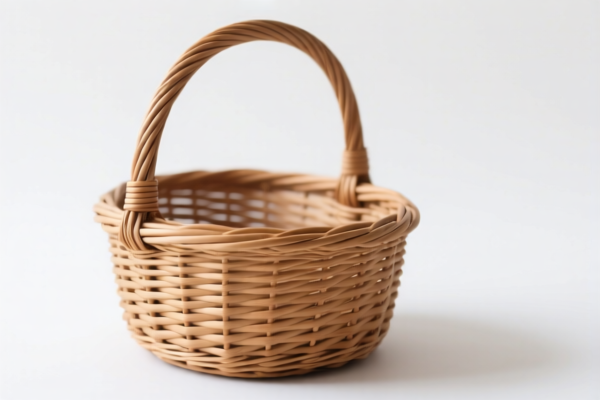
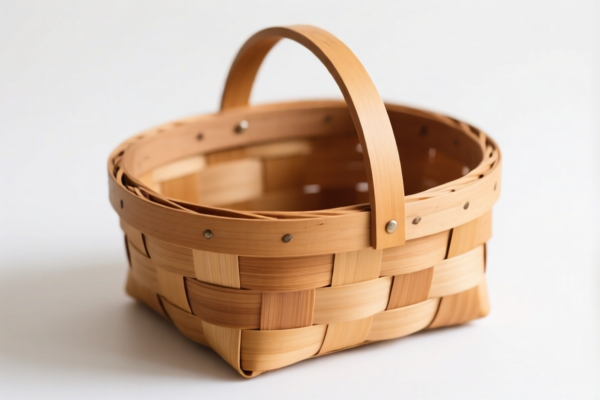
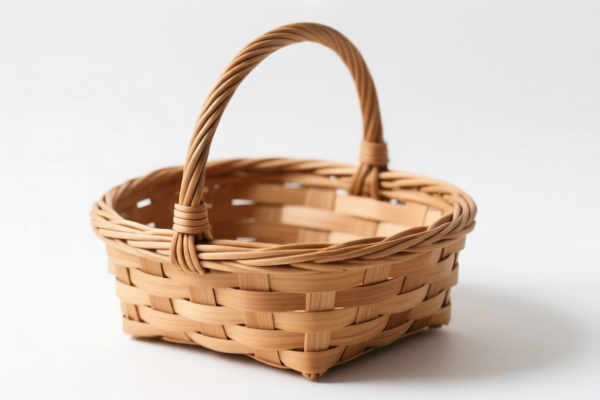
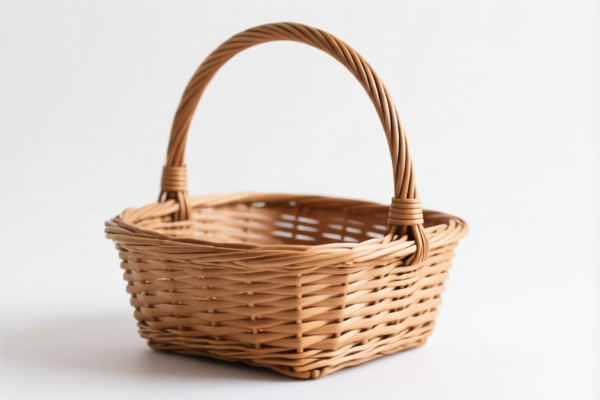
AI Analysis
🧺 Basket & Wicker Products: Strategic HS Code Classification & 2026 Tariff Guide
🌐 HS Code Reference & Customs Clearance Guide | 2026 Latest Tariff Analysis | Professional-Level Clearance Strategy
📌 I. Product Definition & Classification: Do You Really Know "Baskets"?
Basketry, wickerwork, and other articles made directly to shape from plaiting materials, or made up from articles of heading 4601; articles of loofah. In international trade, these products are strictly categorized by material and form.
1. Vegetable Materials (The Core Category): * Bamboo (Of bamboo): Rigid, linear plaiting; often used for rigid baskets, crates, or structured bags. * Rattan (Of rattan): Flexible, jointed stems; traditionally used for woven furniture, flexible bags, and intricate wickerwork.
2. Form & Structure: * "Made directly to shape": Items woven into their final 3D form (e.g., a round basket woven from base to rim). * "Made up from articles of 4601": Items assembled from pre-woven mats or strips (e.g., a basket with a detachable liner or assembled parts).
⚠️ Key Distinction Point:
- If the material is Bamboo and it is a basket/bag → Look at 4602.11.xx
- If the material is Rattan and it is a basket/bag → Look at 4602.12.xx
- Note: "Loofah" is excluded from this specific data set but falls under Heading 4602 generally.
📦 II. HS Code Classification Details (2026 Latest Tariff Authority)
| HS Code | Product Description | Material | Specific Category | Tax Breakdown |
|---|---|---|---|---|
4602.11.07.00 |
Other baskets and bags, whether or not lined: Wickerwork | Bamboo | Of vegetable materials: Of bamboo | Total Tax: 25.0% (Base: 0% + Additional: 25%) |
4602.12.16.00 |
Other baskets and bags, whether or not lined: Other | Rattan | Of vegetable materials: Of rattan | Total Tax: 30.0% (Base: 5% + Additional: 25%) |
🔍 Critical Reminder:
- Bamboo items fall under sub-heading 4602.11. The specific code4602.11.07.00applies to "Other baskets and bags... Wickerwork" made of bamboo. - Rattan items fall under sub-heading 4602.12. The specific code4602.12.16.00applies to "Other baskets and bags... Other" made of rattan. - Misclassification Risk: Declaring a Rattan basket as Bamboo (or vice versa) will result in a 5% duty differential plus potential penalties.
💰 III. 2026 Latest Tariff Rate Breakdown (Detailed Tax Clauses)
✅ Applicable Jurisdiction: United States (US)
✅ Origin: China (CN)
✅ Effective Time: Current 2026 Tariff Schedule
🎯 1. 4602.11.07.00 – Bamboo Baskets & Bags (Wickerwork)
| Item | Content |
|---|---|
| Base Tariff Rate | 0% (Ad Valorem) |
| Additional Tariff (Section 301) | +25.0% |
| Total Tariff Rate | 25.0% |
| Tax Calculation | CIF Value × 25% |
| De Minimis Exemption | ❌ Not Eligible (Due to Section 301 tariffs) |
| Legal Basis | USITC Tariff Schedule → Heading 4602 → Subheading 4602.11 |
📌 Explanation:
- Although the Base Duty for many wicker/basket items is often low or zero under normal trade terms, the 25% Additional Duty is applied specifically under Section 301 of the Trade Act of 1974, targeting Chinese-origin goods in this category. - This rate is fixed. There are no temporary exemptions for standard bamboo wickerwork baskets.
🎯 2. 4602.12.16.00 – Rattan Baskets & Bags (Other)
| Item | Content |
|---|---|
| Base Tariff Rate | 5.0% (Ad Valorem) |
| Additional Tariff (Section 301) | +25.0% |
| Total Tariff Rate | 30.0% |
| Tax Calculation | CIF Value × 30% |
| De Minimis Exemption | ❌ Not Eligible (Due to Section 301 tariffs) |
| Legal Basis | USITC Tariff Schedule → Heading 4602 → Subheading 4602.12 |
📌 Explanation:
- Rattan, being a distinct vegetable material from bamboo, carries a 5% Base Duty. - Like bamboo, it is subject to the 25% Additional Duty. - Total Cost Impact: 30% is significantly higher than the 25% for bamboo. Material sourcing choice directly impacts landed cost.
🛠️ IV. Customs Clearance Practical Advice (Field Guide)
✅ 1. Document Checklist (Non-Negotiable)
| Document | Required? | Purpose |
|---|---|---|
| ✅ Product Specification Sheet | ✔️ | Must clearly state Material Composition (e.g., "100% Bamboo" or "Natural Rattan"). Vague terms like "Woven Plant Fiber" will cause delays. |
| ✅ Photographs | ✔️ | Clear images showing the weave pattern, structure, and any lining materials. Helps customs distinguish between Bamboo and Rattan. |
| ✅ Commercial Invoice | ✔️ | Must accurately describe the item as "Basket" or "Bag" and specify the material. |
| ✅ Packing List | ✔️ | Weight and dimensions. Note: If bags are shipped with rigid liners, declare as "Baskets." |
| ✅ Material Certification | ✔️ | If claiming "Biodegradable" or "Eco-friendly" status for marketing, keep records, but it does not exempt duties. |
✅ 2. Classification Strategy (Key Mnemonic)
🔥 "Material First, Then Form: Bamboo is 25%, Rattan is 30%!"
| Scenario | Correct HS Code | Tax Rate | Wrong Approach |
|---|---|---|---|
| Bamboo Basket (Rigid, woven) | 4602.11.07.00 |
25% | Misclassifying as Rattan → Overpaying |
| Rattan Basket (Flexible, woven) | 4602.12.16.00 |
30% | Misclassifying as Bamboo → Underpayment (Penalty Risk) |
| Loofah Sponge | Not in Data | N/A | Do not use 4602.11/12 codes for Loofah |
| Synthetic Wicker (Plastic) | Not in Data | N/A | Must classify under Chapter 39 or 94, not 4602 |
📌 Key Warning:
- "Wickerwork" is a technique, not a material. It can be made of Bamboo, Rattan, Reed, or Plastic. - HS Code 4602 ONLY applies to Vegetable Materials. - If your product is made of Plastic/Wicker-style, it likely falls under Chapter 39 (Plastics) or 94 (Furniture), which have different tax rates. Do not use 4602 for synthetic products.
✅ 3. Special Situations & Risk Management
| Situation | Handling Advice |
|---|---|
| Mixed Materials | If a basket is Bamboo with a Rattan Handle, classify based on the essential character (usually the body material). Document this clearly. |
| Lined Baskets | "Whether or not lined" means the lining (fabric, plastic) does not change the HS Code from 4602, provided the outer structure is vegetable material. |
| Gift Sets | If a basket is sold with food inside, the basket is classified separately. Do not let the contents dictate the basket's HS Code. |
| Plastic "Rattan" | If made of PVC/PE woven to look like rattan, it is NOT vegetable material. It is likely 3926.90 (Plastic articles). Check tax rates for Chapter 39. |
🌍 V. Global Market Comparison (2026)
| Country/Region | Recommended HS Code | Base Duty | US Section 301 | Total (CN Origin) | Notes |
|---|---|---|---|---|---|
| 🇺🇸 USA | 4602.11.07.00 (Bamboo) |
0% | +25% | 25% | High barrier due to additional tariffs. |
| 🇺🇸 USA | 4602.12.16.00 (Rattan) |
5% | +25% | 30% | Rattan is more expensive to import to US. |
| 🇨🇳 China | Same HS Codes | 0-10% | N/A | Low | Domestic trade has no additional tariffs. |
| 🇪🇺 EU | 4602.11 / 4602.12 | 0% | N/A | 0% | Generally duty-free for natural baskets. |
📌 Conclusion:
- USA is the most challenging market for these products due to the 25-30% total tariff. - EU and other markets are more favorable, often having 0% duty. - Cost Optimization: Consider sourcing bamboo products if possible, as they have a 5% lower tax burden than rattan in the US market.
📌 VI. Common Mistakes & Pitfalls (Lessons Learned)
❌ Mistake 1: Using "Wicker" as the material description without specifying "Bamboo" or "Rattan."
👉 Result: Customs will ask for clarification, causing 7-14 day delays.
✅ Fix: Always specify "100% Bamboo Wicker" or "Natural Rattan Wicker."
❌ Mistake 2: Declaring Plastic Wicker as Vegetable Material.
👉 Result: Misclassification penalty. Plastic wicker is not HS 4602.
✅ Fix: Verify material. If synthetic, use Chapter 39 codes.
❌ Mistake 3: Ignoring the "Additional Duty" in cost calculation.
👉 Result: Profit margins wiped out by the 25% surcharge.
✅ Fix: Include 25% (Bamboo) or 30% (Rattan) in your landed cost model for US exports.
🎯 VII. Conclusion: Precision in Classification Saves Money
🎯 Remember This Mantra:
🔹 "Bamboo = 25% Total. Rattan = 30% Total. Plastic = Not 4602!"
🔹 "Specify Material. Separate from Contents. Avoid US Penalty."
📌 Pro Tip:
If you are exporting Plastic Wicker (synthetic), do NOT use HS Code 4602. It likely falls under 3926.90 (Other articles of plastic). Check the specific tariff for Chapter 39, which may have different (potentially lower or higher) rates and no Section 301 additional duty if classified correctly. Always verify the material composition.
📣 Immediate Action:
📞 Contact your customs broker with photos and material specs.
🚀 Apply for an Advance Ruling if you are unsure whether your product is Bamboo, Rattan, or Plastic.
💡 Optimize your BOM (Bill of Materials) to clearly identify the primary structural material.
✨ Professional Clearance Starts with Accurate Classification!
💼 Your Profit Margin Depends on the 5% Difference Between Bamboo and Rattan!
Customer Reviews
About HS Code Classification
The Harmonized System (HS) is an internationally standardized nomenclature developed by the World Customs Organization (WCO) to classify traded products. Over 200 countries use the HS system as the basis for customs tariffs, trade statistics, and import/export regulations.
Each HS code follows a hierarchical structure:
- Chapter (2 digits) — Broad category of goods (e.g., Chapter 84: Machinery and Mechanical Appliances)
- Heading (4 digits) — More specific grouping within the chapter
- Subheading (6 digits) — Internationally standardized breakdown, used by all WCO member countries
- National subdivisions (8-10 digits) — Country-specific extensions for further classification, such as US HTSUS 10-digit codes
Correct HS code classification is essential for smooth customs clearance, accurate duty payment, and compliance with trade regulations. Misclassification can lead to customs delays, overpayment of duties, or penalties.
When importing from CN to US, the applicable tariff rates may include:
- Most-Favored-Nation (MFN) rate — The standard duty rate applied to WTO members
- General rate — Applied to countries without trade agreements
- Trade remedy duties — Additional tariffs such as Section 301 (anti-dumping), Section 232 (national security), or countervailing duties
The information provided on this page is for reference purposes only. For official classification, please consult with your local customs authority or a licensed customs broker.