basketry and wicker products
CN → US| HS Code | Tariff Rate | Origin | Destination | Doc |
|---|---|---|---|---|
| 4602110700 | 35.0% | CN | US | Official Doc |
| 4602121600 | 40.0% | CN | US | Official Doc |
Product Images
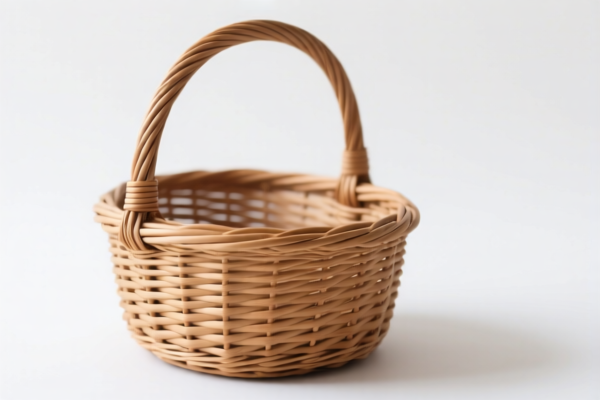
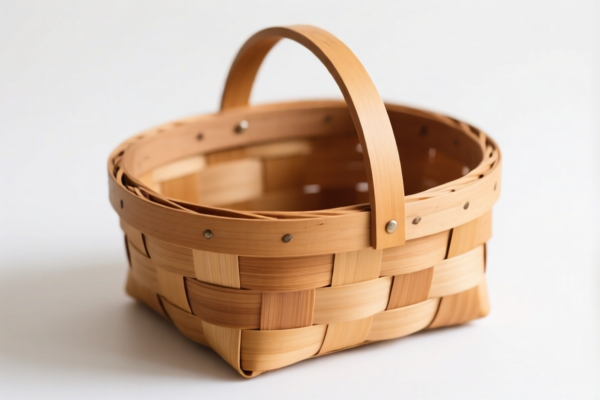
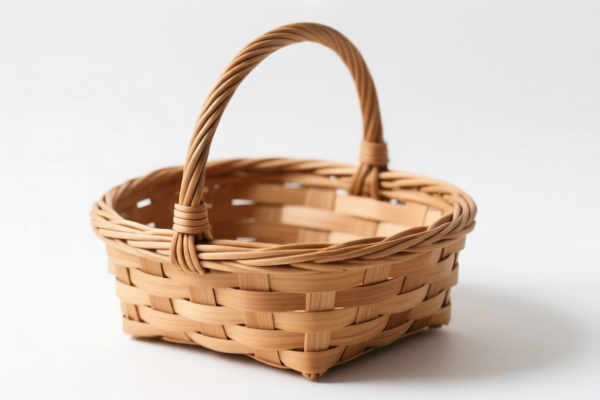
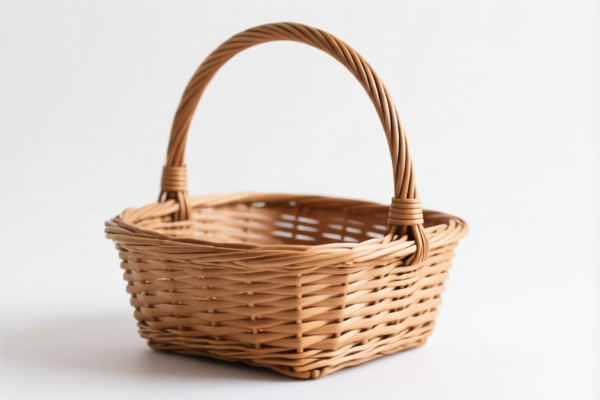
AI Analysis
🧺 Basketry & Wicker Products (Natural Fiber Crafts)
🌐 HS Code Reference & Customs Clearance Guide | 2026 Latest Tariff Analysis | Professional Entry Strategy 📌 I. Product Definition & Classification: Are You Confusing "Bamboo" with "Rattan"?
Basketry and wickerwork are traditionally crafted goods made from plaiting materials or loose weaving strands. In international trade, the distinction between Bamboo (竹子) and Rattan (藤条) is critical, as it dictates entirely different HS codes and tax liabilities under US Customs regulations.
1. Bamboo Articles (Of Vegetable Materials: Of Bamboo) These are items made directly to shape from plaiting materials of bamboo or made up from articles of heading 4601. They are rigid, often featuring structured frames.
2. Rattan Articles (Of Vegetable Materials: Of Rattan) These are similar basketry items but specifically made from Rattan. Rattan is more flexible and often used for furniture or flexible bags.
⚠️ Key Distinction: - If the primary material is Bamboo strips or slats → Go to 4602.11.xx - If the primary material is Rattan vines/strands → Go to 4602.12.xx - Note: Other vegetable materials (like reed, straw, willow) fall under different subheadings not listed in this specific dataset.
📦 II. HS Code Classification Details (2026 Latest Tariff Authority Comparison)
| HS Code | Product Description | Applicable Scenario | Material Type |
|---|---|---|---|
4602.11.07.00 |
Other baskets and bags, whether or not lined: Wickerwork (Of vegetable materials: Of bamboo) |
Bamboo baskets, bamboo storage containers, bamboo picnic sets, bamboo wicker-style items made from bamboo strips. | 🎋 Bamboo |
4602.12.16.00 |
Other baskets and bags, whether or not lined: Other (Of vegetable materials: Of rattan) |
Rattan baskets, rattan shopping bags, rattan storage boxes, flexible rattan crafts. | 🌿 Rattan |
🔍 Critical Reminder: - "Wickerwork" in HS Code context often refers to the method or style, but the material determines the code. - If the item is described as "Wicker Basket" but made of Bamboo, it must be declared as Bamboo. Misdeclaring Bamboo as Rattan (or vice versa) can lead to customs audits. - Both codes fall under "Other baskets and bags," meaning they are not specifically shaped chairs or tables (which might fall under Furniture chapters, e.g., Chapter 94).
💰 III. 2026 Latest Tariff Rate Breakdown (Detailed Tax Clauses)
✅ Applicable Country: United States (US) ✅ Origin: China (CN) ✅ Effective Time: Current section 301/IEEPA regulations apply.
🎯 1. 4602.11.07.00 — Bamboo Baskets & Wickerwork (Of Vegetable Materials)
| Item | Content |
|---|---|
| Base Tariff Rate | 0.0% (Ad Valorem) |
| Additional Section 301 Tariff | +25.0% |
| Total Tax Rate | 25.0% |
| Tax Calculation | CIF Value × 25% |
| De Minimis Exemption (Section 321) | ❌ NOT Eligible (deny_de_minimis) |
| Legal Basis Path | USITC:4602.11.07.00 → FOOTNOTE:301_Chapter_46 → 25% Surcharge |
📌 Explanation: - Base Rate (0%): Bamboo basketry enjoys a zero base duty under the Harmonized Tariff Schedule (HTSUS). - Section 301 Surcharge (+25%): This is the crucial cost driver. Products of China in HS Chapter 46 (Prepared Animal Vegetable Materials; Articles of Plaiting Materials) are subject to a 25% additional duty due to trade tensions. - No De Minimis: Packages under $800 cannot bypass this tax. Every shipment, regardless of value, is subject to the 25% tariff.
🎯 2. 4602.12.16.00 — Other Rattan Baskets & Bags
| Item | Content |
|---|---|
| Base Tariff Rate | 5.0% (Ad Valorem) |
| Additional Section 301 Tariff | +25.0% |
| Total Tax Rate | 30.0% |
| Tax Calculation | CIF Value × 30% |
| De Minimis Exemption (Section 321) | ❌ NOT Eligible (deny_de_minimis) |
| Legal Basis Path | USITC:4602.12.16.00 → FOOTNOTE:301_Chapter_46 → 25% Surcharge |
📌 Explanation: - Base Rate (5%): Rattan articles have a higher base duty (5%) compared to bamboo (0%). - Section 301 Surcharge (+25%): Same 25% additional duty applies to Chinese-origin rattan products. - Higher Total Burden: Even before shipping costs, the landed cost is 5% higher than bamboo equivalents due to the base tariff.
🛠️ IV. Customs Clearance Practical Advice (Real-World Pitfall Avoidance)
✅ 1. Preparation Checklist (Non-negotiable)
| Document | Mandatory? | Explanation |
|---|---|---|
| ✅ Material Composition Statement | ✔️ | Must explicitly state "100% Bamboo" or "100% Rattan". Vague terms like "Natural Fiber" will cause delays. |
| ✅ Product Photos (Clear View) | ✔️ | Show the weave pattern and material texture to prove it's not plastic or metal. |
| ✅ Commercial Invoice | ✔️ | Must list "Bamboo Basket" or "Rattan Bag" clearly. Do NOT use generic terms like "Home Decor Item." |
| ✅ Packing List | ✔️ | Detail weight and dimensions. |
| ✅ HTS Code Declaration | ✔️ | Explicitly declare 4602.11.07.00 or 4602.12.16.00 to avoid classifier disputes. |
✅ 2. Declaration Tips (Key Mantra)
🔥 "Material First, Code Second, No De Minimis!"
| Scenario | Correct Declaration | Wrong Practice | Consequence |
|---|---|---|---|
| Bamboo Basket | 4602.11.07.00 (Bamboo) |
Declared as 4602.12.xx (Rattan) |
Potential misclassification penalty; tax difference (0% vs 5% base) may trigger audit. |
| Rattan Bag | 4602.12.16.00 (Rattan) |
Declared as "Plastic Wicker" | Incorrect HS Code; base tariff might differ, plus false origin/material claim. |
| Small Gift (<$800) | Declare & Pay 25%/30% | Assume "De Minimis Exempt" | SEIZURE OR DELAY. Chapter 46 goods from China are explicitly denied de minimis entry. |
✅ 3. Special Cases
| Case | Handling Advice |
|---|---|
| Mixed Materials | If the basket is Bamboo but has a Cotton lining or Leather handle, the primary material (Bamboo) usually dictates the classification under Chapter 46. |
| "Wicker" Style but Bamboo | Many Western buyers call bamboo products "Wicker." In customs, Wicker is a technique, not a material. Ensure the declaration specifies the vegetable material (Bamboo). |
| Loofah Articles | The dataset mentions "articles of loofah" in the heading description but does not provide specific HS codes in the output. Ensure these are NOT mixed with bamboo/rattan in the same shipment if their classification differs. |
🌍 V. Global Market Comparison (2026 Latest)
| Country/Region | Recommended HS Code | Tariff (China Origin) | Certification | Notes |
|---|---|---|---|---|
| 🇺🇸 USA | 4602.11.07.00 / 4602.12.16.00 |
25% (Bamboo) 30% (Rattan) |
None specific for basketry | Strict 301 Enforcement. No de minimis. |
| 🇨🇳 China | 4602.11.07.00 / 4602.12.16.00 |
5% / 10% | None | Import duty into China is lower than export from China to US. |
| 🇪🇺 EU | 4602.11 / 4602.12 |
5% | CE (if applicable) | No specific "China surcharge" like US Section 301. |
| 🇬🇧 UK | 4602.11 / 4602.12 |
5% | UKCA (if applicable) | Post-Brexit tariffs align closely with EU base rates. |
| 🇯🇵 Japan | 4602.11 / 4602.12 |
10% | JIS (if applicable) | No major punitive tariffs on basketry. |
📌 Conclusion: - The USA is the most expensive market for these goods due to the flat 25% surcharge on top of base rates. - Rattan is more expensive to import into the US than Bamboo (30% total vs 25% total).
📌 VI. Common Mistakes & Pitfalls (Lessons Learned)
❌ Mistake 1: Using "De Minimis" Shipping (e.g., via US Postal Service < $800) 👉 Consequence: Package Retained. Chapter 46 goods are explicitly listed as non-eligible for Section 321 de minimis. You will be billed for the tariff + handling fees, or the package will be returned.
❌ Mistake 2: Vague Description "Wicker Basket" 👉 Consequence: Customs may assign a default code with higher duty or demand a formal binding ruling. Always specify "Bamboo" or "Rattan."
❌ Mistake 3: Confusing "Bamboo" with "Wood" (Chapter 44) 👉 Consequence: Basketry (Chapter 46) is distinct from wooden furniture/parts (Chapter 44). Misclassifying as wood can lead to different valuation methods and delays.
✅ Correct Approach:
"Bamboo Storage Basket, Hand-woven, Natural Finish, No Plastic Components. HTS: 4602.11.07.00."
🎯 VII. Conclusion: Professional Declaration, Cost Control!
🎯 Remember the Mantra:
🔹 "Bamboo is 25%, Rattan is 30%, No De Minimis for China!" 🔹 "Specify Material, Not Just 'Wicker'!"
📌 Pro Tip:
If your basketry products are originating from Vietnam, Indonesia, or Malaysia, you may avoid the 25% Section 301 surcharge. However, ensure Substantial Transformation has occurred. Simple assembly in these countries may not suffice. Apply for a Certificate of Origin and consider an Advance Ruling from CBP to confirm eligibility.
📣 Immediate Action:
📞 Consult a licensed Customs Broker 📸 Provide high-res photos of the material texture 📝 Declare Exact HTS Code:
4602.11.07.00or4602.12.16.00🚀 Clear the Customs Hurdle, Protect Your Margins, Expand Your Basketry Business Globally!
✨ Precision Classification Starts Here! 💼 Every Percent Counts in Cross-Border Trade!
Customer Reviews
About HS Code Classification
The Harmonized System (HS) is an internationally standardized nomenclature developed by the World Customs Organization (WCO) to classify traded products. Over 200 countries use the HS system as the basis for customs tariffs, trade statistics, and import/export regulations.
Each HS code follows a hierarchical structure:
- Chapter (2 digits) — Broad category of goods (e.g., Chapter 84: Machinery and Mechanical Appliances)
- Heading (4 digits) — More specific grouping within the chapter
- Subheading (6 digits) — Internationally standardized breakdown, used by all WCO member countries
- National subdivisions (8-10 digits) — Country-specific extensions for further classification, such as US HTSUS 10-digit codes
Correct HS code classification is essential for smooth customs clearance, accurate duty payment, and compliance with trade regulations. Misclassification can lead to customs delays, overpayment of duties, or penalties.
When importing from CN to US, the applicable tariff rates may include:
- Most-Favored-Nation (MFN) rate — The standard duty rate applied to WTO members
- General rate — Applied to countries without trade agreements
- Trade remedy duties — Additional tariffs such as Section 301 (anti-dumping), Section 232 (national security), or countervailing duties
The information provided on this page is for reference purposes only. For official classification, please consult with your local customs authority or a licensed customs broker.