bathing soap
CN → US| HS Code | Tariff Rate | Origin | Destination | Doc |
|---|---|---|---|---|
| 3401111000 | 35.0% | CN | US | Official Doc |
| 3401115000 | 35.0% | CN | US | Official Doc |
Product Images
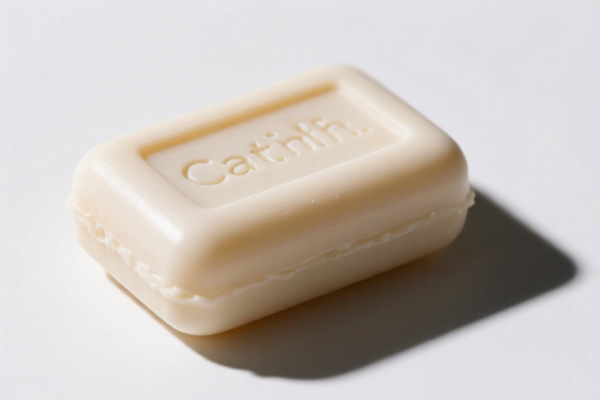
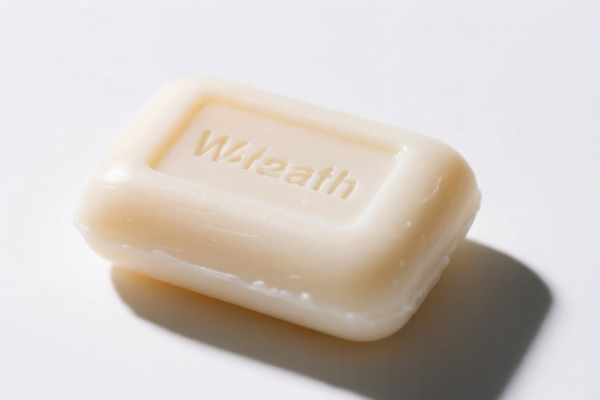
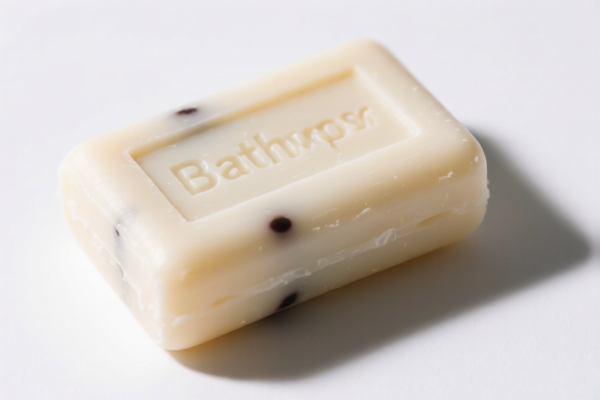
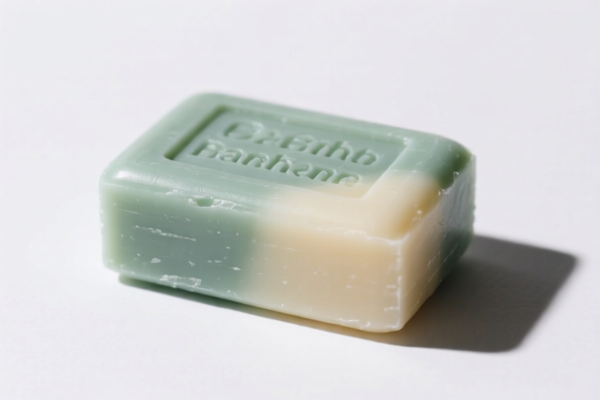
AI Analysis
🧼 Bathing Soap: HS Code Classification & US Customs Clearance Guide (2026)
🌐 HS Code Reference & Customs Strategy | 2026 Latest Tariff Analysis | Professional Entry Strategy
📌 I. Product Definition & Classification: Do You Really Understand "Bathing Soap"?
Bathing soap, in the context of international trade and US Customs regulations, is not a single monolithic category. It is strictly divided based on form (solid vs. liquid/cream) and packaging (retail vs. bulk), as well as composition (soap content vs. synthetic surfactants).
Solid Forms (Bars, Cakes, Molded Pieces): Includes traditional soap bars, castile soap, and molded shapes. This category also includes paper, wadding, felt, and non-wovens impregnated with soap.
Liquid/Cream Forms (Retail Only): Includes liquid hand soaps, body washes, and creams put up for retail sale.
⚠️ Key Distinction Point:
- If the product is a solid bar/cake (including molded pieces) used for toilet purposes (including medicated) → It falls under 3401.11.
- If the product is a liquid or cream put up for retail sale → It falls under a different subheading (not listed in the provided , but generally 3401.20).
- Crucial Note: The provided only covers Solid Forms (Bars, Cakes, Molded) and Impregnated Materials. Liquid soaps in retail packaging are excluded from the specific HS codes listed in the data below.
📦 II. HS Code Classification Details (Based on Provided Data)
| HS Code | Product Description | Applicable Scenario | Form/Packaging |
|---|---|---|---|
3401.11.10.00 |
Castile Soap | Traditional olive oil-based soaps, often used for delicate skin or specific cosmetic applications. | Solid Bars/Cakes/Molded Pieces |
3401.11.50.00 |
Other Soaps | Most common toilet soaps, medicated bars, beauty bars, and impregnated paper/felt/nw. | Solid Bars/Cakes/Molded Pieces |
🔍 Focus Reminder:
- Both codes apply to solid forms (bars, cakes, molded pieces) or impregnated materials (paper, wadding, felt, nonwovens).
- Both are for toilet use (including medicated products).
- Liquid body wash or shampoo in bottles DO NOT use these codes.
💰 III. 2026 Latest Tariff Rate Breakdown (Detailed Analysis)
✅ Applicable Country: United States (US)
✅ Origin: China (CN) (Implied by the 25% Additional Duty)
✅ Effective Time: Current Rates Apply (Subject to 301 Tariff List)
🎯 1. 3401.11.10.00 —— Castile Soap (Solid Form)
| Item | Content |
|---|---|
| Base Tariff Rate | 0.0% |
| Additional Duty (Section 301) | 0.0% |
| Total Tariff Rate | 0.0% |
| Tax Calculation | No duty charged on CIF value |
| De Minimis Eligibility | ✅ Yes (if applicable for small shipments) |
| Legal Basis | HTSUS Chapter 34, Note 1 to Section IV |
📌 Explanation:
- Castile Soap is classified under a specific subheading that enjoys a 0% total duty rate.
- This is a major cost advantage compared to other soap categories.
- Ensure the product is explicitly Castile soap (traditionally olive oil-based) to qualify. Generic "olive oil soap" may be scrutinized.
🎯 2. 3401.11.50.00 —— Other Soaps (Solid Form)
| Item | Content |
|---|---|
| Base Tariff Rate | 0.0% |
| Additional Duty (Section 301) | +25.0% |
| Total Tariff Rate | 25.0% |
| Tax Calculation | CIF Value × 25% |
| De Minimis Eligibility | ❌ No (Subject to Section 301 exclusions review) |
| Legal Basis | HTSUS Chapter 34, Note 1 to Section IV; USITC Footnotes |
📌 Explanation:
- "Other Soaps" includes the vast majority of commercial toilet soaps, medicated bars, and impregnated hygiene products.
- While the base tariff is 0%, the 25% Additional Duty applies due to Section 301 measures on Chinese goods.
- Total Effective Rate: 25%. This is a significant cost factor for importers.
🛠️ IV. Customs Clearance Practical Advice (Real-World Pitfall Guide)
✅ 1. Documentation Checklist (Non-negotiable)
| Document | Required | Explanation |
|---|---|---|
| ✅ Product Specification Sheet | ✔️ | Must specify: "Solid Bar Soap," "Toilet Use," "Castile or Other," Ingredients (especially % of soap content). |
| ✅ Commercial Invoice | ✔️ | Clearly state: "Castile Soap, Solid Bars" OR "Other Toilet Soap, Solid Cakes." Avoid vague terms like "Cosmetics." |
| ✅ Certificate of Origin | ✔️ | Essential for determining eligibility for additional duties. |
| ✅ Composition Analysis | ✔️ | Critical for distinguishing Castile (0%) from Other (25%). Must prove olive oil content or traditional formulation if claiming 3401.11.10.00. |
| ✅ Ingredient List | ✔️ | To verify if it contains synthetic surfactants that might change classification (though solid bars are generally covered). |
✅ 2. Declaration Tips (Key Mnemonics)
🔥 “Solid Bars, Not Liquids; Castile vs. Other, Rates Vary!”
| Scenario | Correct Declaration | Incorrect Practice |
|---|---|---|
| Olive Oil-Based Solid Bar | 3401.11.10.00 (Castile) |
Mislabeling as "Other Soap" → 25% Duty |
| Medicated Soap Bar | 3401.11.50.00 (Other) |
Mislabeling as "Cosmetic Cream" → Wrong Chapter |
| Liquid Body Wash | Not Covered in this data | Using 3401.11.xx → Misclassification Risk |
| Impregnated Paper/Towelettes | 3401.11.50.00 (Other) |
Using "Paper Products" chapter → Wrong Classification |
| Bulk Soap (Not Retail) | Not Covered in this data | Assuming retail packaging requirement is unnecessary for solids |
📌 Note on Packaging:
- The HS Code3401.11covers soaps "whether or not containing soap" and implies retail-ready forms (bars/cakes).
- If the soap is impregnated into paper, felt, or nonwovens, it also falls under3401.11.50.00(Other).
✅ 3. Special Cases & Risk Management
| Scenario | Handling Advice |
|---|---|
| Claiming "Castile" for 0% Duty | Must provide ingredient analysis proving traditional Castile formulation (high olive oil content). Customs may reject if it's just "olive oil-scented" synthetic soap. |
| Medicated Soaps | Classified as "Other" (3401.11.50.00). Ensure "Toilet Use" is declared. If claimed as "Drug," FDA approval may be needed. |
| Solid vs. Liquid Confusion | If the product is a cream or liquid (e.g., pump bottle), it does not fall under 3401.11. It likely falls under 3401.20 (not in data). Misclassification leads to penalties. |
| Impregnated Hygiene Products | Paper towels or wipes soaked in soap also use 3401.11.50.00. Ensure the primary characteristic is "soap/ detergent impregnation." |
🌍 V. Global Market Comparison (2026)
| Country/Region | Recommended HS Code | Tariff (China Origin) | Notes |
|---|---|---|---|
| 🇺🇸 USA | 3401.11.10.00 (Castile) |
0% | Best for olive oil soaps |
| 🇺🇸 USA | 3401.11.50.00 (Other) |
25% | Standard for most bar soaps |
| 🇨🇳 China | 3401.11.10.00 |
~5-8% | Export duty may apply |
| 🇪🇺 EU | 3401.11.10.00 |
0-4% | Generally low tariffs |
| 🇬🇧 UK | 3401.11.10.00 |
0-4% | Post-Brexit rules apply |
📌 Conclusion:
- USA is unique in applying 25% additional duty on "Other" soaps from China.
- Castile Soap is the only solid soap variant in the data with 0% total duty.
- Liquids/Creams are excluded from this data and require separate classification.
📌 VI. Common Errors & Pitfall Guide (Lessons Learned)
❌ Error 1: Declaring Liquid Body Wash as 3401.11.50.00
👉 Consequence: Misclassification. Liquids are not "bars/cakes/molded pieces." Penalty + Back Duties.
❌ Error 2: Calling a Synthetic Detergent Bar "Castile" to avoid 25% duty
👉 Consequence: Customs audit. If ingredient analysis shows low olive oil content, it will be reclassified to 3401.11.50.00 + penalties.
❌ Error 3: Ignoring Impregnated Products
👉 Consequence: Soap-impregnated paper towels or wipes are also subject to the 25% duty under 3401.11.50.00. Not just "paper products."
❌ Error 4: Assuming All Solids are "Castile"
👉 Consequence: Only traditional Castile soaps get 0%. Most commercial bars are "Other" and incur 25%.
✅ Correct Approach:
"Solid Bar, Toilet Soap, Castile (Olive Oil Based)" →
3401.11.10.00(0%)
"Solid Bar, Toilet Soap, Glycerin/Medicinal, Not Castile" →3401.11.50.00(25%)
🎯 VII. Conclusion: Precision Classification Saves Money!
🎯 Remember the Rules:
🔹 “Castile is Zero, Other is Twenty-Five!”
🔹 “Solid Bars Only, Liquids are Not!”
🔹 “Impregnated Paper? Still Twenty-Five!”
📌 Pro Tip:
If you import large volumes of standard bar soap, consider:
1. Reformulating as Castile (if feasible) to access 0% duty.
2. Applying for a Section 301 Exclusion if available (check USITC database).
3. Using Pre-Ruling: Request a binding ruling from US Customs for complex formulations.
📣 Immediate Action:
📞 Verify Ingredient Profile → Check Form (Solid vs. Liquid) → Select Correct HS Code
🚀 Avoid the 25% Pitfall → Optimize Your Customs Costs
✨ Professional Classification Starts Here!
💼 Every Percent of Duty Saved is Profit Added!
Customer Reviews
About HS Code Classification
The Harmonized System (HS) is an internationally standardized nomenclature developed by the World Customs Organization (WCO) to classify traded products. Over 200 countries use the HS system as the basis for customs tariffs, trade statistics, and import/export regulations.
Each HS code follows a hierarchical structure:
- Chapter (2 digits) — Broad category of goods (e.g., Chapter 84: Machinery and Mechanical Appliances)
- Heading (4 digits) — More specific grouping within the chapter
- Subheading (6 digits) — Internationally standardized breakdown, used by all WCO member countries
- National subdivisions (8-10 digits) — Country-specific extensions for further classification, such as US HTSUS 10-digit codes
Correct HS code classification is essential for smooth customs clearance, accurate duty payment, and compliance with trade regulations. Misclassification can lead to customs delays, overpayment of duties, or penalties.
When importing from CN to US, the applicable tariff rates may include:
- Most-Favored-Nation (MFN) rate — The standard duty rate applied to WTO members
- General rate — Applied to countries without trade agreements
- Trade remedy duties — Additional tariffs such as Section 301 (anti-dumping), Section 232 (national security), or countervailing duties
The information provided on this page is for reference purposes only. For official classification, please consult with your local customs authority or a licensed customs broker.