bathroom mats
CN → US| HS Code | Tariff Rate | Origin | Destination | Doc |
|---|---|---|---|---|
| 4016910000 | 37.7% | CN | US | Official Doc |
| 3921135000 | 39.2% | CN | US | Official Doc |
| 4016100000 | 35.0% | CN | US | Official Doc |
| 6304920000 | 23.8% | CN | US | Official Doc |
| 6304910120 | 23.3% | CN | US | Official Doc |
Product Images
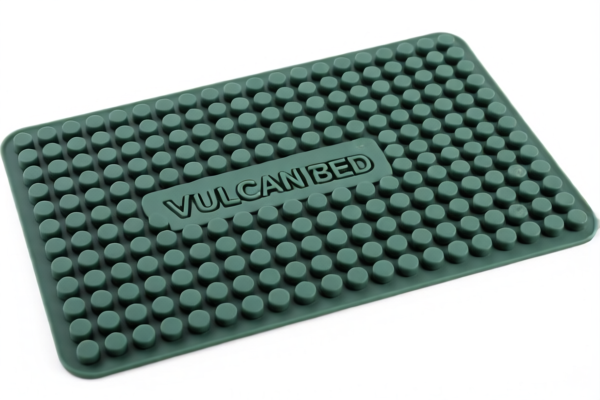
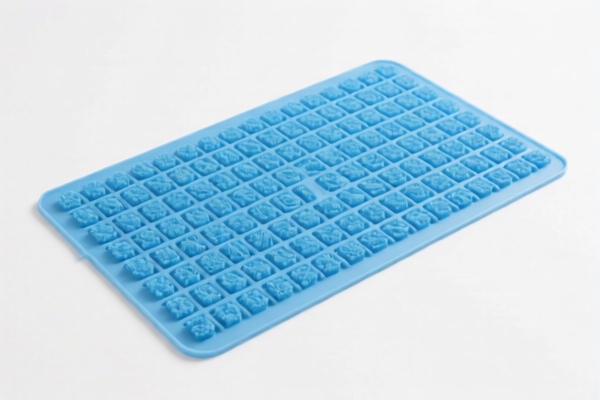


AI Analysis
🚿 Bathroom Mats: The Ultimate HS Code & Tariff Guide (2026 Edition)
🌐 HS Code Classification & Customs Clearance Strategy | 2026 Updated Tariff Analysis | Expert通关 Protocol
📌 一、Product Definition & Classification: Do You Really Know "Bathroom Mats"?
Bathroom mats are essential home furnishing items designed for hygiene and safety in wet areas. In international trade, their classification hinges entirely on material composition and manufacturing process, as different materials fall under distinct HS Code chapters:
- Rubber & Plastic Mats: Non-woven or molded rubber/plastic items (Chapters 40 & 39).
- Textile Mats: Woven, knitted, or tufted fabrics made of cotton, wool, or synthetic fibers (Chapter 63).
- Composite Mats: Often require splitting or specific material dominance analysis.
⚠️ Critical Distinction:
- If made of Rubber (vulcanized) → Falls under Chapter 40 (High Tariff Risk).
- If made of Plastic/PU → Falls under Chapter 39 (Medium/High Tariff).
- If made of Cotton/Fabric → Falls under Chapter 63 (Lowest Tariff, Best Option).
The material choice can change your tax bill by over 20%!
📦 二、Detailed HS Code Breakdown (2026 Latest Tariff Schedule)
Based on market analysis and common material compositions, here are the five primary classifications for "Bathroom Mats":
| HS Code | Product Description | Material Logic | Tax Complexity |
|---|---|---|---|
4016.91.00.00 |
Other articles of vulcanized rubber (specifically mats/carpets) | Vulcanized Rubber. Common for heavy-duty, non-slip rubber bath mats. | 🔴 Very High (Base + Trade War) |
3921.13.50.00 |
Other plates, sheets, film, foil & strip of plastics (PU/Plastic) | Polyurethane (PU) or Plastic. Common for molded or foam mats. | 🔴 Very High (Base + Trade War) |
4016.10.00.00 |
Matting and other floor coverings, of vulcanized rubber | Vulcanized Rubber. Specifically for floor mats. | 🔴 High (Base 0% + Trade War) |
6304.92.00.00 |
Other furnishing articles (Non-knitted, Non-tufted) | Cotton (Non-knitted). Common for terry cloth or woven fabric mats. | 🟢 Lowest (Only 10% 122-terms) |
6304.91.01.20 |
Other furnishing articles, of cotton (Knitted) | Cotton (Knitted). Common for soft, knitted terry mats. | 🟢 Lowest (Only 10% 122-terms) |
🔍 Key Insight:
- Rubber/Plastic (Chapters 39 & 40): Heavily impacted by US Section 301 (25%) and Section 122 (10%) tariffs. Total tax can exceed 37%.
- Cotton Textiles (Chapter 63): Significantly lighter tax burden. Total tax only ~23-24%.
Strategy: If your product allows, use Cotton to save up to 14% in total duties!
💰 三、2026 Latest Tariff Rate Breakdown (US Market Focus)
✅ Applicable Country: United States (US)
✅ Country of Origin: China (CN)
✅ Effective Date: Current Trade Policy (Section 301 & 122)
🎯 1. 4016.91.00.00 & 4016.10.00.00 (Rubber Mats)
| Component | Rate | Source | Impact |
|---|---|---|---|
| Base Tariff | 0.0% - 2.7% | HTSUS General | Negligible |
| Section 301 (Added Tariff) | 25.0% | Trade Policy | Major Cost Driver |
| Section 122 Tariff | 10.0% | Trade Policy | Additional Burden |
| 🔴 Total Effective Rate | 35.0% - 37.7% | Extremely High | |
| De Minimis Exemption | ❌ No | Policy | Cannot use <800 USD loophole |
📌 Analysis:
- Section 301 (25%): Added tariff on Chinese rubber products under "Chapter 40".
- Section 122 (10%): Additional "Section 122" tariff applied to specific rubber/plastic items (likely under new 122 provisions).
- Result: If you ship rubber bath mats from China, expect to pay nearly 1/3 of the CIF value in duties.
🎯 2. 3921.13.50.00 (Plastic/PU Mats)
| Component | Rate | Source | Impact |
|---|---|---|---|
| Base Tariff | 4.2% | HTSUS General | Moderate |
| Section 301 (Added Tariff) | 25.0% | Trade Policy | Major Cost Driver |
| Section 122 Tariff | 10.0% | Trade Policy | Additional Burden |
| 🔴 Total Effective Rate | 39.2% | Highest in List | |
| De Minimis Exemption | ❌ No | Policy | Cannot use <800 USD loophole |
📌 Analysis:
- Plastic and PU mats often attract the highest base rate (4.2%) compared to rubber.
- Combined with 25% + 10%, this is the most expensive classification at 39.2%.
🎯 3. 6304.92.00.00 & 6304.91.01.20 (Cotton/Fabric Mats)
| Component | Rate | Source | Impact |
|---|---|---|---|
| Base Tariff | 5.8% - 6.3% | HTSUS General | Moderate |
| Section 301 (Added Tariff) | 7.5% | Trade Policy | Reduced Rate |
| Section 122 Tariff | 10.0% | Trade Policy | Consistent |
| 🟢 Total Effective Rate | 23.3% - 23.8% | Best Value | |
| De Minimis Exemption | ❌ No | Policy | Cannot use <800 USD loophole |
📌 Analysis:
- Savings Alert: Cotton mats enjoy a reduced Section 301 rate of 7.5% (vs. 25% for rubber/plastic).
- Total Cost: ~23.8% is 15.4% lower than rubber mats!
- Strategy: Switch to 100% cotton or cotton-blend designs to maximize margins.
🛠️ 四、Customs Clearance & Strategy Guide (Actionable Tips)
✅ 1. Material Declaration is King (Crucial Step)
| Scenario | Correct Approach | Risk if Wrong |
|---|---|---|
| Rubber Mat | Declare as 4016.91.00.00. Expect 37.7% tax. |
High duty is unavoidable. |
| Plastic/PU Mat | Declare as 3921.13.50.00. Expect 39.2% tax. |
Highest tax category. |
| Cotton/Textile Mat | Declare as 6304.92.00.00. Pay 23.8% tax. |
Best strategy for cost saving. |
| Mixed Material | If backing is rubber and top is cotton, declare based on dominant material. | Misclassification = Audit + Penalty. |
🔥 "Material is Destiny" Rule:
A 100% cotton mat is 15% cheaper in duty than a rubber mat. If your design allows, use Cotton!
✅ 2. Documentation Checklist (Must-Have)
| Document | Requirement | Why it Matters |
|---|---|---|
| Material Composition Sheet | Must specify % of Cotton/Rubber/Plastic | Determines HS Code (63 vs 40/39). |
| Product Photos (Clear) | Show texture, backing, and shape | Verifies "Mat" status vs. "Carpet" or "Toy". |
| Commercial Invoice | State "Bathroom Mat" + "Cotton/Rubber" | Avoids "Description Mismatch" flags. |
| Country of Origin Cert | Essential for US origin verification | Prevents penalty for false origin claims. |
✅ 3. Special Scenarios & Workarounds
| Situation | Recommendation |
|---|---|
| "Anti-Slip" Rubber Backing | If the top is cotton but has rubber dots, ensure cotton is >50% by weight to argue for Chapter 63. |
| EVA Foam Mats | Falls under Chapter 39. Avoid if possible due to high duty (39.2%). |
| Small Orders (<$800) | Still cannot use de minimis exemption for these categories. Must pay full duty. |
| Reclassification | If importing from a non-US country (e.g., Vietnam), check FTAs. However, Section 301/122 often still apply to Chinese-origin materials. |
🌍 五、Global Market Comparison (2026)
| Region | Recommended HS Code | Estimated Duty | Key Challenge |
|---|---|---|---|
| 🇺🇸 USA | 6304.92.00.00 (Cotton) |
~23.8% | Section 122 (10%) applies to all. |
| 🇪🇺 EU | 6304.92.00.00 |
0% - 6% | No Section 301/122. Cheaper. |
| 🇨🇦 Canada | 6304.92.00.00 |
0% - 5% | CETA agreement often applies. |
| 🇦🇺 Australia | 6304.92.00.00 |
5% | No major Section 301 equivalent. |
📌 Conclusion:
The US is the only major market applying the harsh Section 301 (25%) and Section 122 (10%) tariffs on these goods.
If you are selling globally, market diversification (EU, AU, CA) is a smarter strategy than fighting US tariffs.
📌 Six: Common Mistakes & Pitfalls (Learn from Errors)
❌ Mistake 1: Declaring a Cotton Mat as "Rubber" to avoid "Textile" scrutiny.
👉 Result: Higher duty (37.7% vs 23.8%) + Penalty for misclassification.
❌ Mistake 2: Declaring a Plastic Mat as "Cotton" to save tax.
👉 Result: Customs Audit. Goods seized. Fine for fraud. Never lie about material.
❌ Mistake 3: Ignoring Section 122 Tariffs.
👉 Result: Budget miscalculation. You calculated 25% (301) but missed the extra 10% (122). Total tax was 35%+, not 25%.
✅ Pro Tip:
Use "Cotton" if possible.
"Cotton" = ~23% Tax.
"Rubber/Plastic" = ~37-39% Tax.
That's a ~15% margin difference!
🎯 Seven: Final Verdict & Action Plan
🎯 Summary Strategy:
1. Prioritize Cotton: Design mats with 100% cotton or high-cotton blends to qualify for HS Code 6304.
2. Avoid Pure Rubber/Plastic: These carry the heaviest "Section 301 + 122" burden (37.7% - 39.2%).
3. Document Everything: Keep material certificates ready for US Customs.
4. Diversify Markets: If US tariffs are too high, target EU or Canada for lower rates.
🔥 Final Mantra:
"Material First, Code Second, Tax Third!"
Don't let a rubber back cost you 15% in profit!
📌 Next Steps:
📞 Contact a Customs Broker to confirm your specific material % split.
🚀 Re-evaluate your supplier: Can they make 100% cotton mats?
💡 Apply for a Binding Ruling if your material is a complex blend.
✨ Smart Customs, Smart Profits!
💼 Your bathroom mat business deserves the lowest possible duty rate.
Customer Reviews
About HS Code Classification
The Harmonized System (HS) is an internationally standardized nomenclature developed by the World Customs Organization (WCO) to classify traded products. Over 200 countries use the HS system as the basis for customs tariffs, trade statistics, and import/export regulations.
Each HS code follows a hierarchical structure:
- Chapter (2 digits) — Broad category of goods (e.g., Chapter 84: Machinery and Mechanical Appliances)
- Heading (4 digits) — More specific grouping within the chapter
- Subheading (6 digits) — Internationally standardized breakdown, used by all WCO member countries
- National subdivisions (8-10 digits) — Country-specific extensions for further classification, such as US HTSUS 10-digit codes
Correct HS code classification is essential for smooth customs clearance, accurate duty payment, and compliance with trade regulations. Misclassification can lead to customs delays, overpayment of duties, or penalties.
When importing from CN to US, the applicable tariff rates may include:
- Most-Favored-Nation (MFN) rate — The standard duty rate applied to WTO members
- General rate — Applied to countries without trade agreements
- Trade remedy duties — Additional tariffs such as Section 301 (anti-dumping), Section 232 (national security), or countervailing duties
The information provided on this page is for reference purposes only. For official classification, please consult with your local customs authority or a licensed customs broker.