battery handle
CN → US| HS Code | Tariff Rate | Origin | Destination | Doc |
|---|---|---|---|---|
| 8506900000 | 37.7% | CN | US | Official Doc |
| 8507904000 | 38.5% | CN | US | Official Doc |
| 8507908000 | 38.4% | CN | US | Official Doc |
| 8506800090 | 37.7% | CN | US | Official Doc |
Product Images
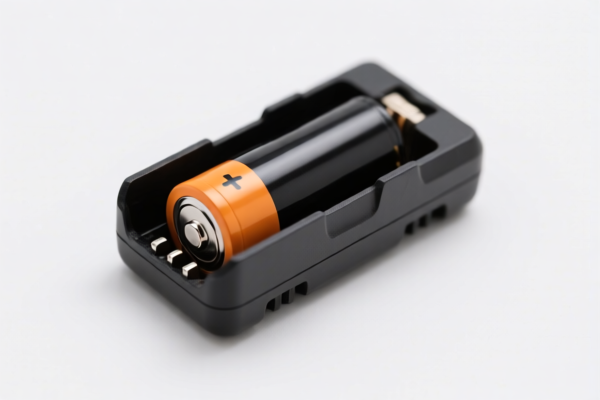
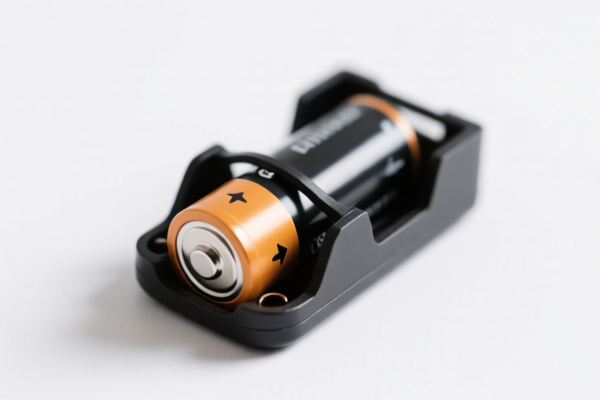
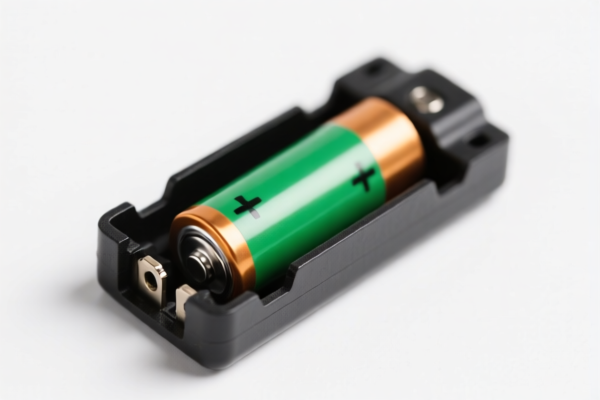
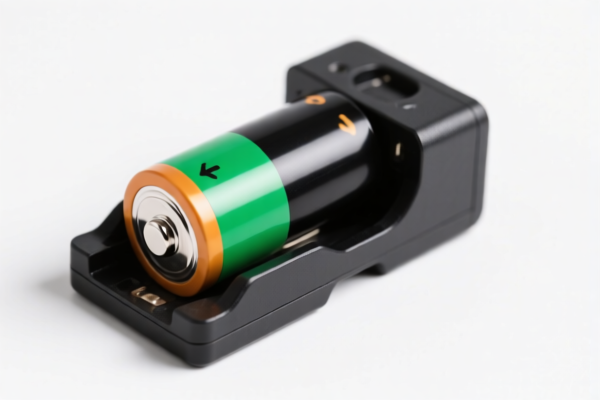
AI Analysis
🔋 Battery Handle: HS Code Classification, Tax Analysis & Clearance Strategy (2026 US Import Guide)
🌐 HS Code Reference & Clearance Guide | 2026 Latest Tariff Analysis | Professional Entry Strategy
📌 I. Product Definition: What Exactly is a "Battery Handle"?
A Battery Handle is typically an ergonomic accessory or structural component designed to facilitate the carrying, handling, or integration of battery packs (commonly for power tools, industrial equipment, or medical devices). In international trade, its classification depends heavily on whether it is viewed as a part of the battery itself or a separate accessory.
⚠️ Critical Distinction:
- If the handle is integral to the battery pack’s structure/function → It is classified as a Part of the Battery.
- If it is a separate, generic carrying accessory → It might be classified elsewhere, but usually, customs views it as a component of the power source system.
📦 II. HS Code Classification Details (2026 Official Harmonized System)
Based on the provided data, here are the four possible HS Code classifications for "Battery Handle," along with the reasoning for each.
| HS Code | Product Description | Summary & Reasoning | Total Tax Rate (US-China) |
|---|---|---|---|
8506.90.00.00 |
Parts of Primary Cells/Batteries | Considered a part/component of primary (non-rechargeable) batteries. Fits the "Parts and Accessories" category under Chapter 85. No material conflict. | 37.7% |
8507.90.40.00 |
Parts of Accumulators (Rechargeable) | Classified based on functional keyword matching. Treated as a component of rechargeable batteries (accumulators). Default part classification applies. | 38.5% |
8507.90.80.00 |
Other Parts of Accumulators | Viewed as a support/control component for rechargeable batteries. Falls under "Other Parts" in the accumulator section. No material conflict. | 38.4% |
8506.80.00.90 |
Other Primary Batteries (Catch-all) | Inferred as a battery component falling into the catch-all category for primary batteries. Handle is linked to battery function, deemed compliant in absence of material conflict. | 37.7% |
🔍 Key Insight:
- The difference between8506(Primary/Non-rechargeable) and8507(Accumulator/Rechargeable) is crucial.
- Most modern battery handles are for rechargeable tools, making8507codes more likely than8506.
- The slight tax difference (37.7% vs 38.5%) stems from the Base Duty (2.7% vs 3.5%).
💰 III. 2026 Detailed Tariff Breakdown (Including Additional Taxes)
✅ Country of Import: United States (US)
✅ Country of Origin: China (CN)
✅ Effective Date: November 10, 2025 (and ongoing)
🎯 1. HS Code 8506.90.00.00 & 8506.80.00.90 (Primary Battery Parts)
| Item | Detail |
|---|---|
| Base Duty | 2.7% |
| Section 301 Duty | +25.0% (USITC Footnote 9903.88.01) |
| IEEPA Surcharge | +10.0% (Against China/HK, effective Nov 10, 2025) |
| Total Effective Rate | 37.7% |
| Tax Calculation | CIF Value × 37.7% |
| De Minimis Exemption | ❌ NOT Applicable (deny_de_minimis) |
| Legal Basis Path | IEEPA:9903.01.25 → USITC:8506.90.00.00 → FOOTNOTE:9903.88.01 |
📌 Explanation:
- The 25% Section 301 duty applies to all Chinese-made battery parts.
- The 10% IEEPA surcharge is a new/additional layer targeting specific Chinese imports.
- Total 37.7% is a high-cost barrier.
🎯 2. HS Code 8507.90.40.00 (Accumulator Parts - Specific)
| Item | Detail |
|---|---|
| Base Duty | 3.5% |
| Section 301 Duty | +25.0% |
| IEEPA Surcharge | +10.0% |
| Total Effective Rate | 38.5% |
| Tax Calculation | CIF Value × 38.5% |
| De Minimis Exemption | ❌ NOT Applicable |
| Legal Basis Path | IEEPA:9903.01.25 → USITC:8507.90.40.00 → FOOTNOTE:9903.88.01 |
📌 Explanation:
- Slightly higher base duty (3.5% vs 2.7%) results in a 0.8% higher total tax.
- This code is often used when the handle is specifically identified as a rechargeable battery part.
🎯 3. HS Code 8507.90.80.00 (Accumulator Parts - Other)
| Item | Detail |
|---|---|
| Base Duty | 3.4% |
| Section 301 Duty | +25.0% |
| IEEPA Surcharge | +10.0% |
| Total Effective Rate | 38.4% |
| Tax Calculation | CIF Value × 38.4% |
| De Minimis Exemption | ❌ NOT Applicable |
| Legal Basis Path | IEEPA:9903.01.25 → USITC:8507.90.80.00 → FOOTNOTE:9903.88.01 |
📌 Explanation:
- 38.4% is the middle ground for accumulator parts.
- Used for handles that don’t fit into the more specific8507.90.40subheading.
🛠️ IV. Practical Clearance Advice (Avoiding Pitfalls)
✅ 1. Required Documentation Checklist
| Document | Mandatory? | Purpose |
|---|---|---|
| Product Specifications | ✔️ | Confirm if it’s for primary (8506) or rechargeable (8507) batteries. |
| Material Composition | ✔️ | Confirm no conflict with battery materials (e.g., plastic vs metal). |
| Product Photos | ✔️ | Show handle attached to battery or as a standalone part. |
| Commercial Invoice | ✔️ | Clearly state: "Handle for Rechargeable Battery Pack" or "Part of Battery Unit". |
| Packing List | ✔️ | Indicate if sold separately or with the battery. |
| FCC/CE Certificates | ✔️ | If the battery handle is part of an electronic device, safety certs may be required. |
✅ 2. Declaration Strategy (Key Mantras)
🔥 "Specify the Battery Type: Primary vs. Accumulator!"
- If you declare "Battery Handle" without specifying the battery type, Customs may choose the highest tax rate (8507.90.40.00at 38.5%) or request additional info, causing delays.
| Scenario | Recommended HS Code | Tax Rate | Risk |
|---|---|---|---|
| Handle for Rechargeable Tool Battery | 8507.90.40.00 or 8507.90.80.00 |
38.4%–38.5% | Low (if correctly described) |
| Handle for Non-Rechargeable Battery | 8506.90.00.00 |
37.7% | Low |
| Generic Handle (Not Battery-Specific) | ❌ High Risk | May be classified as Plastic Part (3926) or Misc. (9403) |
High Risk of Re-classification & Penalties |
✅ 3. Special Cases
| Situation | Advice |
|---|---|
| OEM Custom Handle | Provide design drawings and customer PO to prove it’s a custom part, not a generic accessory. |
| Sold with Battery | Declare as "Part of Battery" under the battery’s HS code if possible (but usually, parts are separated). |
| Sold Separately | Must declare as a standalone part with clear HS Code. Do not hide it under the battery’s HS code. |
| Material Conflict | If the handle contains materials not compatible with battery parts (e.g., specific metals), re-evaluate classification. |
🌍 V. Global Market Comparison (2026)
| Country/Region | Recommended HS Code | Estimated Duty (China Origin) | Notes |
|---|---|---|---|
| 🇺🇸 United States | 8507.90.40.00 / 8506.90.00.00 |
37.7% – 38.5% | High due to 301 + IEEPA tariffs. |
| 🇨🇳 China (Import) | 8507.90.40.00 |
~3.5% | No additional tariffs. |
| 🇪🇺 European Union | 8507.90.40.00 |
~3.5% | No 301/IEEPA equivalents. |
| 🇬🇧 United Kingdom | 8507.90.40.00 |
~3.5% | Post-Brexit, aligned with EU. |
| 🇯🇵 Japan | 8507.90.40.00 |
~3.0% | Favorable tariff rates. |
📌 Conclusion:
- The US is the most expensive market for battery handles due to Section 301 (25%) and IEEPA (10%) tariffs.
- Total landed cost can increase by ~38% compared to duty-free origins.
📌 VI. Common Errors & Pitfalls (Lessons Learned)
❌ Error 1: Declaring as "Plastic Handle" (3926.90)
👉 Consequence: Customs may re-classify as battery part → Back taxes + Penalties.
❌ Error 2: Declaring as "Battery" (8507.30) instead of Part
👉 Consequence: Incorrect valuation → Audit risk. Handles are parts, not batteries.
❌ Error 3: Ignoring IEEPA 10% Surcharge
👉 Consequence: Underpaying taxes → Customs seizure or fines.
❌ Error 4: Using De Minimis ($800) for Small Shipments
👉 Consequence: Deny De Minimis for China-origin battery parts → Tax due on every shipment.
✅ Correct Approach:
"Battery Handle, Plastic, for Rechargeable Power Tool Battery, Model XYZ, Made in China"
→ Declare under8507.90.40.00or8507.90.80.00with full documentation.
🎯 VII. Conclusion: Smart Classification Saves Money
🎯 Key Takeaway:
🔹 "Primary vs. Rechargeable: Choose Wisely!"
🔹 "37.7% vs. 38.5%: Every Cent Counts!"
🔹 "No De Minimis for China: Plan Your Shipments!"
📌 Pro Tip:
- If you are importing large volumes, consider Advance Rulings from US Customs (CBP) to secure a binding classification.
- Explore supply chain diversification (e.g., Vietnam, Mexico) to potentially avoid US-China tariffs if eligible under USMCA or other FTAs.
📣 Action Required:
📞 Contact a Customs Broker: Verify HS Code with product samples.
📄 Prepare Documents: Specifications, Photos, Invoices.
💰 Budget for Taxes: Include 37.7%–38.5% in your cost model.
✨ Professional Clearance Starts with Accurate Classification!
💼 Your Bottom Line Depends on It!
Customer Reviews
About HS Code Classification
The Harmonized System (HS) is an internationally standardized nomenclature developed by the World Customs Organization (WCO) to classify traded products. Over 200 countries use the HS system as the basis for customs tariffs, trade statistics, and import/export regulations.
Each HS code follows a hierarchical structure:
- Chapter (2 digits) — Broad category of goods (e.g., Chapter 84: Machinery and Mechanical Appliances)
- Heading (4 digits) — More specific grouping within the chapter
- Subheading (6 digits) — Internationally standardized breakdown, used by all WCO member countries
- National subdivisions (8-10 digits) — Country-specific extensions for further classification, such as US HTSUS 10-digit codes
Correct HS code classification is essential for smooth customs clearance, accurate duty payment, and compliance with trade regulations. Misclassification can lead to customs delays, overpayment of duties, or penalties.
When importing from CN to US, the applicable tariff rates may include:
- Most-Favored-Nation (MFN) rate — The standard duty rate applied to WTO members
- General rate — Applied to countries without trade agreements
- Trade remedy duties — Additional tariffs such as Section 301 (anti-dumping), Section 232 (national security), or countervailing duties
The information provided on this page is for reference purposes only. For official classification, please consult with your local customs authority or a licensed customs broker.