battery pile head
CN → US| HS Code | Tariff Rate | Origin | Destination | Doc |
|---|---|---|---|---|
| 7326908605 | 87.9% | CN | US | Official Doc |
| 7326908688 | 87.9% | CN | US | Official Doc |
| 8538908180 | 38.5% | CN | US | Official Doc |
| 8538908140 | 38.5% | CN | US | Official Doc |
Product Images
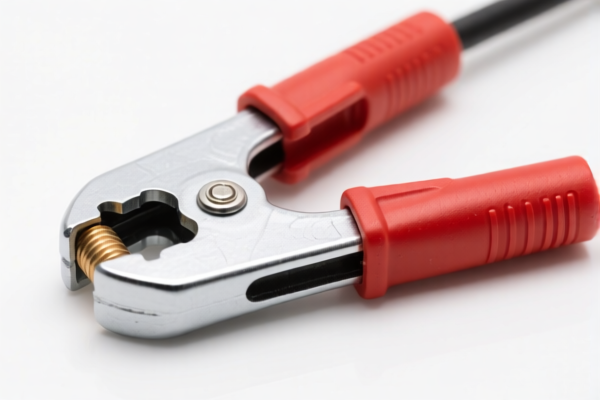
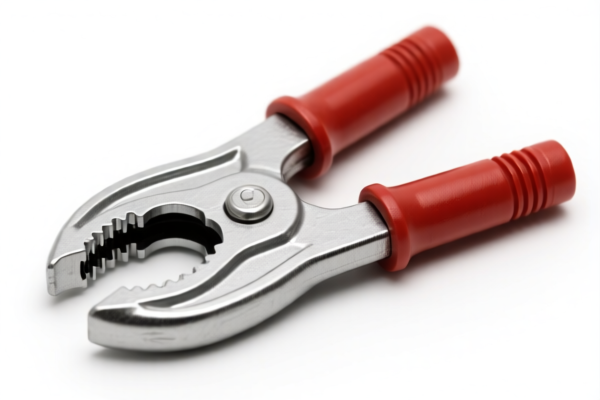
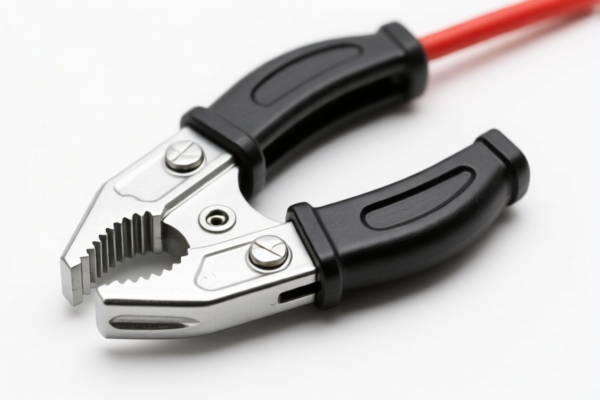
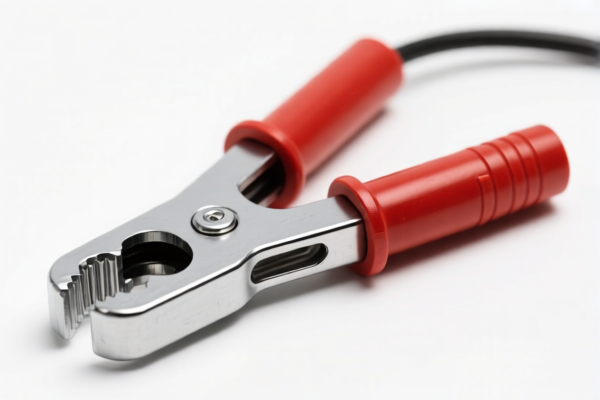
AI Analysis
🔋 Battery Terminal Posts (Battery Pile Heads)
🌐 HS Code Reference & Customs Clearance Guide | 2026 Latest Tariff Analysis | Professional Clearance Strategy
📌 I. Product Definition & Classification: What Exactly Is a "Battery Terminal Post"?
Battery terminal posts, often referred to as "battery pile heads" in direct translations, are critical metallic connection components used in automotive, industrial, and marine lead-acid batteries. In international trade, they are generally classified based on two main criteria: 1. Material Nature: Primarily made of metal (Copper or Lead). 2. Function: They serve as either generic metallic hardware (classified under steel/iron articles) or as specific parts for electrical equipment (classified under electrical parts).
⚠️ Key Distinction Point:
- If classified as generic metal hardware (Steel/Iron/Copper articles) → Fall under Chapter 73 (87.9% Total Tax).
- If classified as electrical equipment parts (Specific to batteries/electrical circuits) → Fall under Chapter 85 (38.5% Total Tax).
- Critical Note: The material is metal (Copper/Lead), but the functional context determines the Chapter. Misclassification can lead to massive tariff differences!
📦 II. HS Code Classification Details (2026 Latest Tariff Authority Comparison)
| HS Code | Product Description | Applicable Scenario | Material/Function |
|---|---|---|---|
7326.90.86.05 |
Other articles of iron or steel; Battery posts as metallic hardware | Generic metal connection components; classified under "Other" metallic articles | ✅ Metal (Iron/Steel/Copper context) |
7326.90.86.88 |
Other articles of iron or steel; Fallback category for metallic battery posts | Metallic posts not specifically listed elsewhere in Ch 73 | ✅ Metal (Metallic nature dominant) |
8538.90.81.80 |
Parts suitable for use solely or principally with apparatus of Ch 85; Electrical connection parts | Electrical connectors; metallic parts specifically for electrical apparatus | ✅ Electrical Component |
8538.90.81.40 |
Parts suitable for use solely or principally with apparatus of Ch 85; Battery spare parts | Dedicated battery accessories; metallic posts for batteries | ✅ Electrical/Battery Part |
🔍 Key Reminder:
- Chapter 73 Items (7326.90.86.05/7326.90.86.88): Viewed as general metallic articles. The description emphasizes "metal material" and "connection component" broadly.
- Chapter 85 Items (8538.90.81.80/8538.90.81.40): Viewed as electrical parts. The description emphasizes "electrical connection component" or "battery spare part."
- Tax Impact: Chapter 85 codes are significantly cheaper (38.5% vs. 87.9%). Proving the item is an electrical part rather than just a metal piece is crucial for cost saving!
💰 III. 2026 Latest Tariff Rate Details (Including Surcharges & Policy Add-ons)
✅ Applicable Country: United States (US)
✅ Origin: China (CN)
✅ Effective Time: 2025 November 10 onwards (including subsequent imports)
🎯 1. 7326.90.86.05 & 7326.90.86.88 —— Metallic Articles (Iron/Steel Category)
| Item | Content |
|---|---|
| Base Tariff | 2.9% |
| Section 301 Surcharge | +25.0% |
| Section 122 Tariff | +10% (Specific to Steel/Aluminum/Copper products under Section 122) |
| Additional Section 122 Surcharge | +50% (For Steel/Aluminum/Copper products) |
| Total Tax Rate | 87.9% |
| Tax Calculation | CIF Value × 87.9% |
| De Minimis Exemption | ❌ Not Eligible (High tax rate excludes de minimis benefits) |
| Legal Basis Path | Base Tariff: 2.9% → 301 Tariff: 25.0% → 122 Tariff: 10% → 122 Surcharge: 50% |
📌 Explanation:
- The 87.9% rate is extremely high. It combines the standard Section 301 tariff (25%), Section 122 tariffs (10% base + 50% additional for copper/steel/aluminum items).
- This classification treats the battery post as a raw metal hardware item subject to heavy trade restrictions on steel/aluminum/copper.
- Warning: If declared under Chapter 73, you will pay nearly 88% in taxes.
🎯 2. 8538.90.81.80 & 8538.90.81.40 —— Electrical Parts (Chapter 85 Category)
| Item | Content |
|---|---|
| Base Tariff | 3.5% |
| Section 301 Surcharge | +25.0% |
| Section 122 Tariff | +10% (Applies to certain electrical components under specific interpretations, though often lower for pure electrical parts) |
| Total Tax Rate | 38.5% |
| Tax Calculation | CIF Value × 38.5% |
| De Minimis Exemption | ❌ Not Eligible (Section 301 applies) |
| Legal Basis Path | Base Tariff: 3.5% → 301 Tariff: 25.0% → 122 Tariff: 10% |
📌 Explanation:
- The 38.5% rate is significantly lower than the Chapter 73 rate.
- It includes the Base Tariff (3.5%), Section 301 Surcharge (25%), and Section 122 Tariff (10%).
- Strategy: To achieve this lower rate, the declaration must clearly state the item is an "electrical part" or "battery accessory" and not just a "metal connector."
🛠️ IV. Customs Clearance Practical Advice (Real-World Pitfall Avoidance Guide)
✅ 1. Preparation Checklist (Essential Documents)
| Document | Required | Explanation |
|---|---|---|
| ✅ Product Specification Sheet | ✔️ | Must clearly state: "Battery Terminal Post," "For Lead-Acid Battery," Material (Copper/Lead), Dimensions. |
| ✅ Circuit Diagram/Structure Image | ✔️ | To prove it is an electrical connection point, not just a metal bolt. |
| ✅ Product Photos (Labeled) | ✔️ | Show the item installed on a battery or in an electrical context. |
| ✅ Commercial Invoice | ✔️ | Must use precise language: "Electrical Connection Part for Battery" or "Battery Spare Part," NOT just "Metal Connector." |
| ✅ Packing List | ✔️ | List quantity, weight, and HS Code. |
| ✅ Origin Certificate | ✔️ | Standard CO to verify China origin (subject to surcharges). |
✅ 2. Declaration Tips (Key Mnemonics)
🔥 “Functional Identity, Lower Rate! Metallic Look, Don’t Hide!”
| Scenario | Correct Declaration Approach | Wrong Approach |
|---|---|---|
| Intended for Battery/Electrical Use | Use 8538.90.81.xx. Describe as "Electrical Part" or "Battery Terminal." |
Describing as "Metal Connector" or "Steel Post" → Triggers 87.9% tax. |
| Generic Metal Hardware (No Electrical Context) | Use 7326.90.86.xx. Describe as "Iron/Steel Article." |
(Only if truly generic and not for electrical systems, but rare for battery posts). |
| Mixed Shipment | Separate by function. Electrical parts go to Ch 85. Pure metal hardware to Ch 73. | Mixing them → Risk of full shipment being audited and reassessed. |
✅ 3. Special Case Handling
| Situation | Handling Advice |
|---|---|
| OEM Battery Terminals | Provide the battery manufacturer’s spec sheet. Prove it is a specific part for a battery system. This supports Ch 85 classification. |
| Copper vs. Lead Material | Both can fall under Ch 85 if used as electrical parts. However, Copper attracts the Section 122 50% additional surcharge if misclassified as raw metal. Under Ch 85, the structure is Base+301+122 (38.5%), avoiding the extra 50%. |
| Customs Inquiry | If asked "Is this a metal article or electrical part?", answer: "It is a terminal post specifically designed for electrical current transmission in battery systems (Electrical Part)." |
🌍 V. Global Market Comparison (2026 Latest)
| Country/Region | Recommended HS Code | Tariff Rate | Certification/Remarks |
|---|---|---|---|
| 🇺🇸 USA | 8538.90.81.40 / .80 |
38.5% (Best Case) | Avoid 7326 (87.9%). Prove electrical function. |
| 🇨🇳 China | 8538.90.90 |
~5-10% | Standard import tariff for electrical parts. |
| 🇪🇺 EU | 8536.90 |
0-2.7% | CE marking may apply if part of larger apparatus. |
| 🇦🇺 Australia | 8538.90 |
5% | No Section 301 or 122 surcharges. |
| 🇯🇵 Japan | 8538.90 |
0-3% | Low tariffs for electrical components. |
📌 Conclusion:
- The USA is the only major market imposing these complex, high surcharges (301 + 122).
- Critical Strategy for USA: Always aim for HS Code8538.90.81.xxto save ~49.4% in taxes compared to the metallic classification.
- Documentation is Key: Your commercial invoice and product description must explicitly state "Electrical Part" or "Battery Terminal" to justify the Ch 85 classification.
📌 VI. Common Errors & Pitfall Guide (Lessons Learned)
❌ Error 1: Declaring Battery Posts as "Metal Connectors" or "Steel Posts"
👉 Consequence: Classified under 7326.90.86.xx → 87.9% Tax. Loss of ~49% profit margin.
❌ Error 2: Declaring as "General Purpose Electrical Connector" without battery context
👉 Consequence: Customs may still accept Ch 85, but risk of audit if no supporting docs. Better to specify "For Lead-Acid Battery."
❌ Error 3: Ignoring Section 122 Copper/Steel Surcharges
👉 Consequence: Even under Ch 85, Section 122 10% applies. But under Ch 73, the extra 50% kicks in. Always verify material classification.
❌ Error 4: Using vague terms like "Hardware" or "Fittings"
👉 Consequence: Ambiguity leads to manual review, delays, and potential misclassification.
✅ Correct Practice:
"Battery Terminal Post, Copper Core, Lead Coated, For Use in 12V Lead-Acid Batteries, Part Number XYZ, Electrical Connection Component"
🎯 VII. Conclusion: Professional Classification Saves Money!
🎯 Remember the Mnemonic:
🔹 "Electrical Part = 38.5% | Metal Hardware = 87.9% | Choose Wisely!"
🔹 "Describe Function, Not Just Material! Save $0.49 per $1.00!"
📌 Pro Tip:
If your battery terminals are sourced from Vietnam, Mexico, or Thailand, check for IEEPA Exemptions or lower Section 301 rates.
For US Imports, always request an Advance Ruling from CBP if the shipment value is high, to lock in the 38.5% rate for 8538.90.81.xx.
📣 Immediate Action:
📞 Contact your customs broker with the product spec sheet.
📝 Ensure your Invoice says "Electrical Battery Part", not "Metal Hardware."
🚀 Clearance Success, Cost Efficiency, and Profit Protection!
✨ Professional Customs Clearance Starts with Precise Classification!
💼 Every Cent Counts in International Trade!
Customer Reviews
About HS Code Classification
The Harmonized System (HS) is an internationally standardized nomenclature developed by the World Customs Organization (WCO) to classify traded products. Over 200 countries use the HS system as the basis for customs tariffs, trade statistics, and import/export regulations.
Each HS code follows a hierarchical structure:
- Chapter (2 digits) — Broad category of goods (e.g., Chapter 84: Machinery and Mechanical Appliances)
- Heading (4 digits) — More specific grouping within the chapter
- Subheading (6 digits) — Internationally standardized breakdown, used by all WCO member countries
- National subdivisions (8-10 digits) — Country-specific extensions for further classification, such as US HTSUS 10-digit codes
Correct HS code classification is essential for smooth customs clearance, accurate duty payment, and compliance with trade regulations. Misclassification can lead to customs delays, overpayment of duties, or penalties.
When importing from CN to US, the applicable tariff rates may include:
- Most-Favored-Nation (MFN) rate — The standard duty rate applied to WTO members
- General rate — Applied to countries without trade agreements
- Trade remedy duties — Additional tariffs such as Section 301 (anti-dumping), Section 232 (national security), or countervailing duties
The information provided on this page is for reference purposes only. For official classification, please consult with your local customs authority or a licensed customs broker.