batton exchange device
CN → USProduct Images
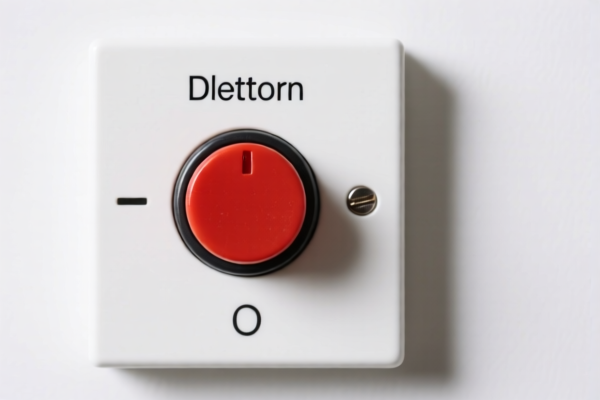
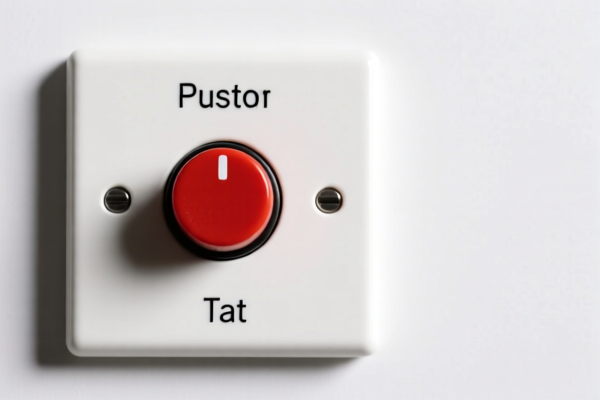
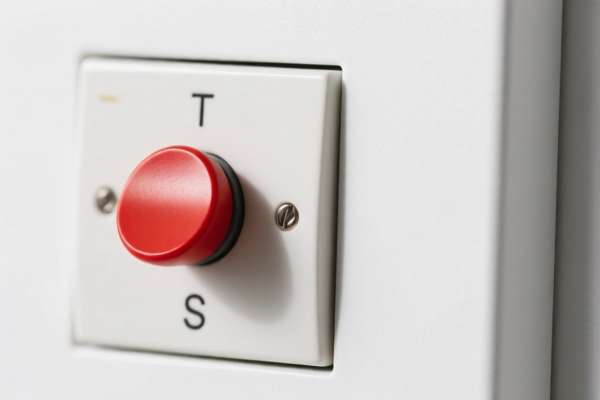
AI Analysis
🔌 Batton Exchange Device (Port Switch/Hub) | The Unsung Hero of Network Connectivity
🌐 HS Code Reference & Clearance Guide | 2026 Latest Tariff Analysis | Professional Customs Strategy
📌 I. Product Definition & Classification: Do You Really Know a "Batton Exchange Device"?
In the world of networking, a "Batton Exchange Device" (often referred to as a Port Switch, Network Hub, or Patch Panel with Active Switching) is a critical component for connecting multiple devices within a Local Area Network (LAN). It facilitates data transmission between computers, servers, printers, and IoT devices.
In international trade, these devices are strictly categorized based on their functionality and technical capabilities:
1. Active Switches (Intelligent):
- Devices that read MAC addresses, route data packets intelligently, and prevent network collisions.
- Common in office, industrial, and data center environments.
- Key Feature: Has processing chips/CPU.
2. Passive Hubs/Patch Panels (Dumb):
- Simple connectors that broadcast data to all ports without intelligent routing.
- Key Feature: No processing capability, just electrical connectivity.
⚠️ Critical Distinction Point:
- If the device actively processes data (switches packets) → Classified under 8517.12.
- If the device is a passive connector (hub/patch panel) or part of a larger machine → May fall under 8517.62 or 9031.
- Most common commercial "Exchange Devices" are Active Switches.
📦 II. HS Code Classification Details (2026 Latest Tariff Authority Comparison)
| HS Code | Product Description | Application Scenario | Intelligent Routing? |
|---|---|---|---|
8517.12.00.00 |
Telephonic Switching and Routing Apparatus (Network Switches) | Ethernet Switches, PoE Switches, Industrial Network Switches | ✅ Yes |
8517.62.00.00 |
Machines for the Reception, Conversion, and Transmission or Generation of Voice, Images or Other Data | Broadband Access Routers, Modems, Combined Router/Switch Units | ✅ Yes (if combined) |
8517.19.00.00 |
Other telephone sets and apparatus for the transmission/reception of voice, images, or other data | Legacy hubs, simple repeaters, non-IP devices | ❌ Partially |
9031.80.80.00 |
Measuring or Checking Instruments (Network Analyzers) | Test equipment, not for data transmission | ❌ No |
8536.90.90.00 |
Other Connectors/Ports (Passive) | Passive patch panels, RJ45 jacks without switching | ❌ No |
🔍 Key Reminder:
- 8517.12.00.00 is the standard for most modern Ethernet Switches (8-port, 24-port, 48-port).
- If the device is a Router (connects different networks/LANs to WAN/Internet), it often falls under 8517.62.00.00.
- Do not misclassify an active switch as a "part" of a computer (Chapter 84) or a passive cable (Chapter 85.44).
💰 III. 2026 Latest Tariff Rate Details (Including Surcharges & Policy Add-ons)
✅ Applicable Country: United States (US)
✅ Country of Origin: China (CN)
✅ Effective Date: From November 10, 2025 (including subsequent imports)
🎯 1. 8517.12.00.00 —— Telephonic Switching and Routing Apparatus (Active Network Switches)
| Item | Content |
|---|---|
| Base Tariff Rate | 0% (ad valorem) |
| USITC Surcharge | +25% (from USITC Footnote 9903.88.01 under Section 301) |
| IEEPA Surcharge | +10% (Targeted at China/Hong Kong products, effective from Nov 10, 2025) |
| Total Tariff Rate | 35% |
| Tax Calculation | CIF Value × 35% |
| De Minimis Eligibility | ❌ Not Eligible (deny_de_minimis) |
| Legal Basis Path | IEEPA:9903.01.25 → IEEPA:9903.01.24 → USITC:8517.12.00.00 → FOOTNOTE:9903.88.01 |
📌 Explanation:
- "USITC Surcharge 25%" comes from the Section 301 investigation on Chinese ICT products.
- "IEEPA 10%" is an additional emergency economic power surcharge on Chinese telecom/networking gear.
- Total 35% is a high tariff, significantly impacting profit margins. Must be factored into pricing strategies!
🎯 2. 8517.62.00.00 —— Machines for Reception, Conversion, Transmission, or Generation of Data (Routers/Modems)
| Item | Content |
|---|---|
| Base Tariff Rate | 0% |
| USITC Surcharge | +25% |
| IEEPA Surcharge | +10% |
| Total Tariff Rate | 35% |
| Tax Calculation | CIF × 35% |
| De Minimis Eligibility | ❌ Not Eligible |
| Legal Basis Path | IEEPA:9901.25 → IEEPA:9903.01.24 → USITC:8517.62.00.00 → FOOTNOTE:9903.88.01 |
📌 Note:
- If your "Batton Exchange Device" is a Router (with NAT, firewall, WAN port), it falls here.
- Even if it’s a "Switch-Router" combo, it often follows the higher-value classification of 8517.62.
- Same 35% tariff burden.
🛠️ IV. Customs Clearance Practical Advice (Real-World Pitfall Avoidance Guide)
✅ 1. Required Documentation Checklist (All are Mandatory)
| Document | Must Provide | Description |
|---|---|---|
| ✅ Product Spec Sheet | ✔️ | Includes port count (8/24/48), speed (1G/10G), PoE support, power input. |
| ✅ Circuit Diagram/Block Diagram | ✔️ | Proves presence of switching chips (MCU/FPGA) vs. passive wiring. |
| ✅ Product Photos (Including Label) | ✔️ | Clear view of model number, brand, input voltage, and FCC ID (if US-bound). |
| ✅ Third-Party Test Reports | ✔️ | FCC (US), CE (EU), RoHS, UL (if applicable). |
| ✅ Commercial Invoice | ✔️ | Clearly state "Network Switch" or "Data Router", NOT generic "Connector". |
| ✅ Origin Certificate (CO) | ✔️ | If not from China, apply for preferential rates (e.g., USMCA, RCEP). |
| ✅ Packing List | ✔️ | Detail internal/external packaging, including power adapters and cables. |
✅ 2. Declaration Tips (Key Mantra)
🔥 "Intelligent Switch, 8517; Passive Hub, 8536. Name it right, save 35%!"
| Scenario | Correct Declaration | Wrong Practice |
|---|---|---|
| Active Ethernet Switch (Has CPU, MAC learning) | 8517.12.00.00 |
Misclassified as "Cable Accessory" → 35% penalty |
| Router (WAN + LAN ports, NAT function) | 8517.62.00.00 |
Misclassified as "Switch" → Potential classification error |
| Passive Patch Panel (No power, no chips) | 8536.90.90.00 or 8517.69 |
Misclassified as "Switch" → Unnecessary high tax audit |
| PoE Switch (Power over Ethernet) | 8517.12.00.00 |
Split declaration (Switch + Power Supply) → 89.5% tax on parts |
✅ 3. Special Case Handling
| Case | Handling Advice |
|---|---|
| OEM/ODM Switches | Provide client design specs to prove it’s not a generic low-cost item, but still subject to 35% tariff. |
| Industrial Switches | May qualify for "special use" if certified for hazardous environments (ATEX/UL Class Div 1), but tariff remains high. |
| Fiber Optic Switches | Still 8517.12.00.00 if active. Ensure spec sheet mentions "SFP/SFP+" ports. |
| Smart Home Hubs | If primarily for IoT control (Zigbee/Z-WiFi) + Ethernet, classify as 8517.62.00.00. |
🌍 V. Global Major Market Clearance Comparison (2026 Latest)
| Country/Region | Recommended HS Code | Tariff | Certification Requirements | Notes |
|---|---|---|---|---|
| 🇺🇸 USA | 8517.12.00.00 |
35% (China Origin) | FCC Part 15 + RoHS | High tariff barrier. Consider Vietnam/Mexico sourcing for exemption. |
| 🇨🇳 China | 8517.12.00.00 |
0% | CCC + RoHS | No additional surcharges. |
| 🇪🇺 EU | 8517.12.00.00 |
0% | CE + ErP + WEEE | No additional surcharges. Strict EMF compliance. |
| 🇬🇧 UK | 8517.12.00.00 |
0% | UKCA | Post-Brexit standards apply. |
| 🇦🇺 Australia | 8517.12.00.00 |
5% | RCM | Moderate tariff. |
| 🇯🇵 Japan | 8517.12.00.00 |
0% | PSE + METI | No surcharges. |
📌 Conclusion:
- USA is the only major market with a 35% tariff burden on Chinese networking switches.
- For US market, supply chain relocation (Vietnam, Malaysia, Mexico) or HS Code optimization (if passive) is critical.
- EU/UK/AU/Japan offer 0-5% tariffs, making them more favorable for Chinese exports.
📌 VI. Common Errors & Pitfall Guide (Lessons Learned)
❌ Error 1: Declaring an Active Switch as a "Cable Assembly" or "Connector"
👉 Consequence: Customs detects switching chips via X-ray or spec review → Referral for audit + 35% back taxes + fines!
❌ Error 2: Splitting declaration for a PoE Switch + Power Adapter
👉 Consequence: Adapter classified separately at high rates → Total tax exceeds 100%!
👉 Correct: Declare as "PoE Switch with Integrated Power Supply" under 8517.12.00.00.
❌ Error 3: Using vague terms like "Network Device" or "Exchange Unit" on Invoice
👉 Consequence: Customs requests clarification, causing 3-7 days delay.
👉 Correct: Use precise terms: "24-Port Gigabit Ethernet Switch with PoE+ Function".
❌ Error 4: Ignoring FCC ID for US-bound devices
👉 Consequence: Seizure of goods at US border if no FCC registration number is visible on the device/invoice.
✅ Correct Practice Example:
"24-Port Gigabit Ethernet PoE Switch, Model XYZ, FCC ID: ABC123, Input: 100-240V AC, With Built-in Power Supply, For Data Center Use"
🎯 VII. Conclusion: Precision Classification Saves 35%!
🎯 Remember the Mantra:
🔹 "Active Switch = 8517.12; Passive Hub = 8536.90."
🔹 "35% Tariff Shock for China→US; Avoid it with Smart Sourcing or Accurate Declaring."
🔹 "One Declaration, One Product, One HS Code. Never Split PoE Switches!"
📌 Pro Tip:
If your switches are originally from Vietnam, Malaysia, Thailand, or Mexico, you may be eligible for IEEPA Exemptions or Zero Tariff under FTAs (like USMCA).
Recommendation: Apply for an Advance Ruling from US Customs (CBP) if the product features are complex (e.g., Smart Managed Switches).
📣 Take Action Now:
📞 Contact Professional Freight Forwarder + Provide Datasheet + Apply for FCC ID
🚀 Ensure your Batton Exchange Devices clear customs Smoothly, Quickly, and Profitably!
✨ Professional Clearance Starts with Precise Classification!
💼 Every Percent of Tariff Saved is Pure Profit!
Customer Reviews
About HS Code Classification
The Harmonized System (HS) is an internationally standardized nomenclature developed by the World Customs Organization (WCO) to classify traded products. Over 200 countries use the HS system as the basis for customs tariffs, trade statistics, and import/export regulations.
Each HS code follows a hierarchical structure:
- Chapter (2 digits) — Broad category of goods (e.g., Chapter 84: Machinery and Mechanical Appliances)
- Heading (4 digits) — More specific grouping within the chapter
- Subheading (6 digits) — Internationally standardized breakdown, used by all WCO member countries
- National subdivisions (8-10 digits) — Country-specific extensions for further classification, such as US HTSUS 10-digit codes
Correct HS code classification is essential for smooth customs clearance, accurate duty payment, and compliance with trade regulations. Misclassification can lead to customs delays, overpayment of duties, or penalties.
When importing from CN to US, the applicable tariff rates may include:
- Most-Favored-Nation (MFN) rate — The standard duty rate applied to WTO members
- General rate — Applied to countries without trade agreements
- Trade remedy duties — Additional tariffs such as Section 301 (anti-dumping), Section 232 (national security), or countervailing duties
The information provided on this page is for reference purposes only. For official classification, please consult with your local customs authority or a licensed customs broker.