bbq basket
CN → US| HS Code | Tariff Rate | Origin | Destination | Doc |
|---|---|---|---|---|
| 3924103000 | 22.8% | CN | US | Official Doc |
| 7323915020 | 15.3% | CN | US | Official Doc |
| 7323930035 | 62.0% | CN | US | Official Doc |
| 3924104000 | 13.4% | CN | US | Official Doc |
| 7615103015 | 70.6% | CN | US | Official Doc |
Product Images
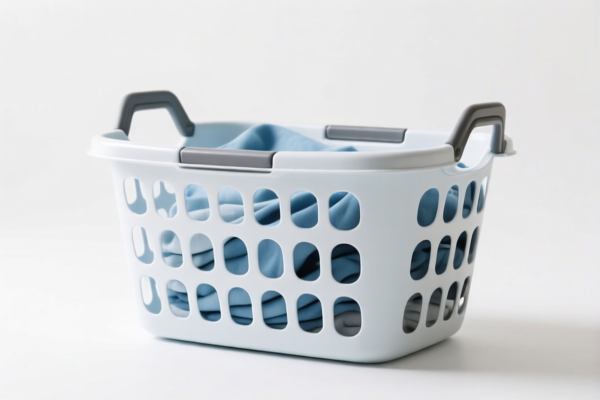

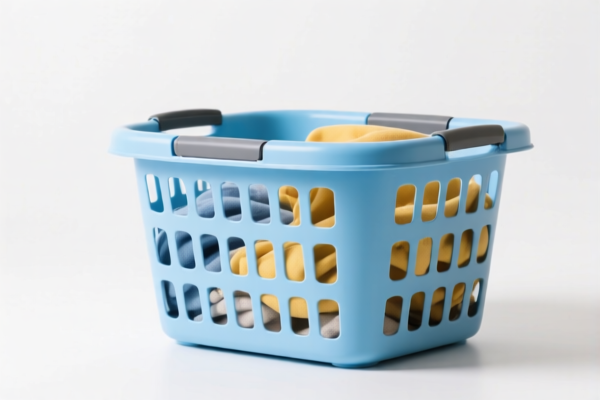

AI Analysis
🍖 BBQ Basket (Grill Basket)
🌐 HS Code Reference & Customs Clearance Guide | 2026 Latest Tariff Analysis | Professional Clearance Strategy
📌 I. Product Definition & Classification: Do You Really Understand the "BBQ Basket"?
A BBQ basket (also known as a grilling basket or grill grate basket) is a versatile kitchen utensil used for cooking small or chopped foods (like vegetables, shrimp, or minced meat) on a grill without them falling through the grates. In international trade, its classification depends entirely on its material and specific form. Since the material is the primary determinant of the HS Code, there are five distinct classifications provided below. Misclassification can lead to massive tariff differences (from ~13% to over 70%)!
⚠️ Key Distinction Point:
- Plastic/Nylon/Heat-Resistant Polymer: Falls under Chapter 39 (Plastics).
- Cast Iron: Falls under Chapter 73 (Iron & Steel), specifically wrought iron/steel articles.
- Stainless Steel: Falls under Chapter 73, but note the specific "steel" subheading vs. general "other metal."
- Aluminum: Falls under Chapter 76 (Aluminum), which often attracts higher surcharges due to specific trade rules.
📦 II. HS Code Classification Details (2026 Latest Tariff Authority Comparison)
| HS Code | Product Description | Applicable Scenario | Material |
|---|---|---|---|
3924.10.30.00 |
Kitchenware, tableware, and household articles of plastics (Other) | Default/Unspecified Material. If the basket is made of heat-resistant plastic or nylon and no specific metal type is declared. | Plastic/Nylon |
7323.91.50.20 |
Cast iron household articles | Cast Iron BBQ Basket. Specifically for baskets made of cast iron, used for home kitchen baking/cooking. | Cast Iron |
7323.93.00.35 |
Other stainless steel household articles | Stainless Steel BBQ Basket. For baskets made of stainless steel or iron. Note: High tariff due to specific steel/aluminum copper surcharge. | Stainless Steel/Iron |
3924.10.40.00 |
Kitchenware, tableware, and household articles of plastics (Other) | Plastic BBQ Basket. Specifically classified under "Other" plastics for kitchen/cooking utensils. | Plastic |
7615.10.30.15 |
Aluminum household articles | Aluminum BBQ Basket. For baskets made of aluminum. Note: This category carries the highest combined tariff. | Aluminum |
🔍 Key Reminder:
- Material is King: You must declare the exact material. If you declare a stainless steel basket as "plastic," customs will reclassify it and apply the higher steel tariff plus penalties.
- General Clause: If the material is unclear, customs may default to3924.10.30.00(Plastics) as a fallback, but this is risky if inspected physically.
- Aluminum Surcharge: Aluminum products face additional Section 122/Steel/Aluminum/Copper tariffs, making7615.10.30.15the most expensive option.
💰 III. 2026 Latest Tariff Rate Details (Including Surcharges & Policy Add-ons)
✅ Applicable Country: United States (US)
✅ Origin: China (CN)
✅ Effective Date: 2025/2026 (Subject to current IEEPA & USITC rules)
🎯 1. 3924.10.30.00 —— Plastic/Nylon BBQ Basket (Fallback Category)
| Item | Content |
|---|---|
| Base Tariff | 5.3% |
| Section 301 (Trump Tariff) | +7.5% |
| Section 122 Tariff | +10% |
| Total Tariff | 22.8% |
| Tax Calculation | CIF Value × 22.8% |
| De Minimis Exemption | ❌ No (Likely subject to high scrutiny or excluded from 800/861 low-value exemptions depending on current enforcement) |
| Legal Path | USITC:3924.10.30.00 → Section 301: 7.5% → Section 122: 10% |
📌 Explanation:
- This is the safest bet if material is unknown, but still carries a significant 22.8% burden.
- The 7.5% is the standard Section 301 rate for many plastic goods from China.
- The 10% Section 122 tariff applies to specific categories, often enforced on importations that might circumvent other rules.
🎯 2. 7323.91.50.20 —— Cast Iron BBQ Basket
| Item | Content |
|---|---|
| Base Tariff | 5.3% |
| Section 301 (Trump Tariff) | 0.0% |
| Section 122 Tariff | +10% |
| Total Tariff | 15.3% |
| Tax Calculation | CIF Value × 15.3% |
| De Minimis Exemption | ❌ No |
| Legal Path | USITC:7323.91.50.20 → Section 122: 10% |
📌 Note:
- Lowest Tariff Option! Cast iron baskets enjoy 0% Section 301 surcharge in this specific subheading.
- Only the 10% Section 122 tariff applies.
- Recommendation: If you sell cast iron baskets, ensure the description explicitly states "Cast Iron" to qualify for this lower rate.
🎯 3. 7323.93.00.35 —— Stainless Steel BBQ Basket
| Item | Content |
|---|---|
| Base Tariff | 2.0% |
| Section 301 (Trump Tariff) | 0.0% |
| Section 122 Tariff | +10% |
| Steel/Aluminum/Copper Surcharge | +50% |
| Total Tariff | 62.0% |
| Tax Calculation | CIF Value × 62.0% |
| De Minimis Exemption | ❌ No |
| Legal Path | USITC:7323.93.00.35 → Section 122: 10% → Steel/Al/Cu Surcharge: 50% |
📌 Warning:
- HIGHEST Tariff! The 50% "Steel, Aluminum, Copper" surcharge makes this category extremely expensive.
- Even though the base rate is low (2%), the additional 50% surcharge dominates.
- Strategy: Avoid importing stainless steel BBQ baskets from China unless you have a specific exemption or are prepared for high costs.
🎯 4. 3924.10.40.00 —— Plastic BBQ Basket (Specific Plastic Subheading)
| Item | Content |
|---|---|
| Base Tariff | 3.4% |
| Section 301 (Trump Tariff) | 0.0% |
| Section 122 Tariff | +10% |
| Total Tariff | 13.4% |
| Tax Calculation | CIF Value × 13.4% |
| De Minimis Exemption | ❌ No |
| Legal Path | USITC:3924.10.40.00 → Section 122: 10% |
📌 Note:
- Best Tariff for Plastic! This subheading has a 0% Section 301 rate.
- Only 3.4% base + 10% Section 122 = 13.4%.
- Recommendation: If your product is plastic/nylon, ensure it fits this specific subheading description rather than the generic3924.10.30.00to save ~9.4%.
🎯 5. 7615.10.30.15 —— Aluminum BBQ Basket
| Item | Content |
|---|---|
| Base Tariff | 3.1% |
| Section 301 (Trump Tariff) | +7.5% |
| Section 122 Tariff | +10% |
| Steel/Aluminum/Copper Surcharge | +50% |
| Total Tariff | 70.6% |
| Tax Calculation | CIF Value × 70.6% |
| De Minimis Exemption | ❌ No |
| Legal Path | USITC:7615.10.30.15 → Section 301: 7.5% → Section 122: 10% → Steel/Al/Cu Surcharge: 50% |
📌 Warning:
- EXTREMELY HIGH! Aluminum faces the 50% surcharge PLUS Section 301 (7.5%) PLUS Section 122 (10%).
- Total 70.6% is prohibitive for most low-margin goods.
- Strategy: Strongly consider switching material to Cast Iron or Plastic if targeting the US market.
🛠️ IV. Customs Clearance Practical Advice (Battle-Proven Pitfall Avoidance Guide)
✅ 1. Documentation Checklist (Non-Negotiable)
| Document | Required | Description |
|---|---|---|
| ✅ Product Spec Sheet | ✔️ | Must clearly state MATERIAL (e.g., "Cast Iron," "Stainless Steel 304," "BPA-Free Plastic"). |
| ✅ Product Photos | ✔️ | Clear images showing texture, markings, and usage (grill vs. oven). |
| ✅ Commercial Invoice | ✔️ | Explicitly describe as "BBQ Grill Basket" or "Grill Utensil," not just "Kitchen Tool." |
| ✅ Packing List | ✔️ | Weight and dimensions for accurate valuation. |
| ✅ Material Certificate | ✔️ | For steel/aluminum, a mill certificate may be required to verify alloy type and avoid misclassification. |
✅ 2. Declaration Tips (Key Mantra)
🔥 “Material First, Tariff Changes, Cast Iron Wins, Aluminum Dies!”
| Scenario | Correct Declaration | Wrong Practice | Consequence |
|---|---|---|---|
| Plastic Basket | 3924.10.40.00 (Plastic) |
Declare as 3924.10.30.00 |
Pay 22.8% instead of 13.4% → Overpaid Tax |
| Cast Iron Basket | 7323.91.50.20 (Cast Iron) |
Declare as 7323.93.00.35 (Steel) |
Pay 15.3% vs 62.0% → Huge Savings if Correct |
| Stainless Steel | 7323.93.00.35 |
Declare as Plastic |
Seized/Fined for Misclassification → 62% Tax + Penalty |
| Aluminum | 7615.10.30.15 |
Ignore surcharge | Pay 70.6% → Margin Erased |
✅ 3. Special Circumstances Handling
| Situation | Advice |
|---|---|
| Mixed Material Basket (e.g., Plastic Handle + Steel Mesh) | Declare based on the principal material (Steel) or the part that gives essential character. Often leads to Steel tariff (62%). |
| OEM/Private Label | Ensure the supplier provides clear material specs. Generic "Metal Basket" is a red flag for customs. |
| Drop Shipping | Ensure the commercial invoice matches the product exactly. Mismatched descriptions cause delays. |
| Section 122 Exemptions | Check if your specific entry qualifies for any temporary exclusions, though rare for kitchenware. |
🌍 V. Global Market Comparison (2026 Latest)
| Country/Region | Recommended HS Code | Tariff (China Origin) | Certification | Notes |
|---|---|---|---|---|
| 🇺🇸 USA | Varies by Material (See Above) | 15.3% (Cast Iron) - 70.6% (Aluminum) | FDA (for food contact) | High tariffs due to Section 301/122/Al-Cu Surcharge. |
| 🇨🇳 China | Varies by Material | 5-13% | CCC (if applicable) | No surcharges. Lower export tax burden. |
| 🇪🇺 EU | 7323.93.90 or 7615.19 |
0-6.5% | LFGB/Food Contact Safe | No Section 122/301 equivalents. Much cheaper. |
| 🇬🇧 UK | 7323.93.90 |
0-6.5% | UKCA/Food Safe | Post-Brexit rules apply, but generally lower than US. |
📌 Conclusion:
- The US market is the most expensive for BBQ baskets due to layered tariffs (Base + 301 + 122 + Al/Cu Surcharge).
- Cast Iron (7323.91.50.20) and Plastic (3924.10.40.00) are the only competitive options for the US market.
- Stainless Steel and Aluminum are financially unviable from China to the US unless priced significantly higher.
📌 VI. Common Errors & Pitfall Guide (Lessons from Blood & Tears)
❌ Error 1: Declaring a Stainless Steel basket as "Plastic" to avoid the 50% surcharge.
👉 Consequence: Customs inspection reveals metal → Reclassification to 62% + Penalties + Storage Fees.
❌ Error 2: Using "Kitchen Utensil" as a generic description.
👉 Consequence: Customs uses the fallback 3924.10.30.00 (22.8%) even if it's Cast Iron, causing overpayment.
❌ Error 3: Ignoring the "Steel/Aluminum/Copper" surcharge for Aluminum products.
👉 Consequence: Budgeting for 10% tariff, but paying 70.6% → Profit Margin Negative.
❌ Error 4: Failing to specify "Food Grade" or "BPA-Free" for plastic baskets.
👉 Consequence: FDA hold at port → Delays and potential destruction if not compliant.
✅ Correct Approach:
"Cast Iron BBQ Grill Basket, 10-inch, for Outdoor Cooking, Model XYZ"
"Stainless Steel Vegetable Grill Basket, 304 Grade, Mesh Size 5mm"
🎯 VII. Conclusion: Professional Classification Saves Money!
🎯 Remember the Mantra:
🔹 "Cast Iron is King (15.3%), Plastic is Prince (13.4%), Steel/Aluminum is Death (62-70.6%)."
🔹 "Declare Material Clearly, Avoid the 50% Surcharge Trap."
📌 Pro Tip:
If you are importing Plastic or Cast Iron baskets, apply for an Advance Ruling from US Customs (CBP) if you are doing large volumes. This provides legal certainty and protects you from retroactive reclassification.
📣 Immediate Action:
📞 Consult your customs broker with product samples.
🚀 Choose Cast Iron or Plastic for the US market to minimize tariff costs.
💰 Optimize your landed cost by selecting the right HS Code from day one.
✨ Professional Clearance Starts with Accurate Classification!
💼 Your Margin Depends on Your HS Code!
Customer Reviews
About HS Code Classification
The Harmonized System (HS) is an internationally standardized nomenclature developed by the World Customs Organization (WCO) to classify traded products. Over 200 countries use the HS system as the basis for customs tariffs, trade statistics, and import/export regulations.
Each HS code follows a hierarchical structure:
- Chapter (2 digits) — Broad category of goods (e.g., Chapter 84: Machinery and Mechanical Appliances)
- Heading (4 digits) — More specific grouping within the chapter
- Subheading (6 digits) — Internationally standardized breakdown, used by all WCO member countries
- National subdivisions (8-10 digits) — Country-specific extensions for further classification, such as US HTSUS 10-digit codes
Correct HS code classification is essential for smooth customs clearance, accurate duty payment, and compliance with trade regulations. Misclassification can lead to customs delays, overpayment of duties, or penalties.
When importing from CN to US, the applicable tariff rates may include:
- Most-Favored-Nation (MFN) rate — The standard duty rate applied to WTO members
- General rate — Applied to countries without trade agreements
- Trade remedy duties — Additional tariffs such as Section 301 (anti-dumping), Section 232 (national security), or countervailing duties
The information provided on this page is for reference purposes only. For official classification, please consult with your local customs authority or a licensed customs broker.