bbq gloves
CN → US| HS Code | Tariff Rate | Origin | Destination | Doc |
|---|---|---|---|---|
| 4015191150 | 38.0% | CN | US | Official Doc |
| 4015195100 | 49.0% | CN | US | Official Doc |
| 6216002600 | 24.5% | CN | US | Official Doc |
| 6216000800 | 18.3% | CN | US | Official Doc |
| 6216009000 | 21.3% | CN | US | Official Doc |
Product Images
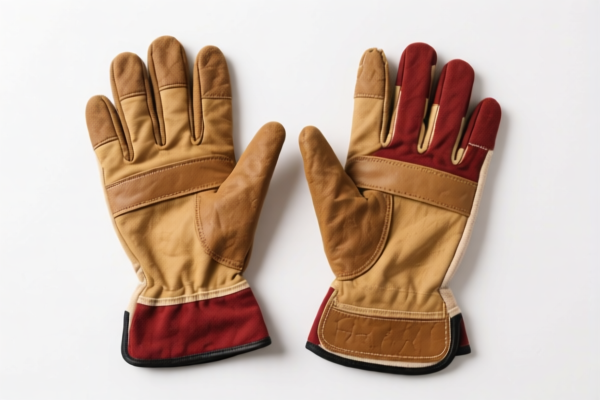

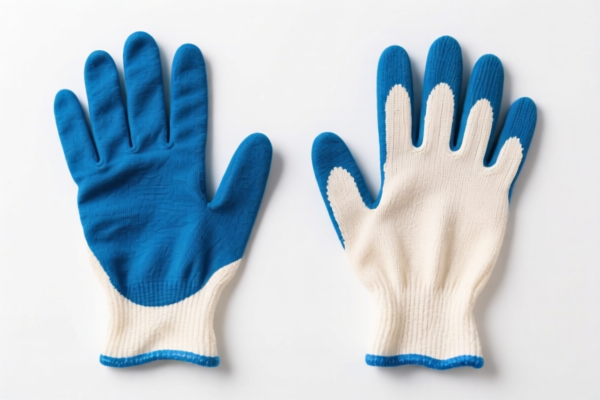
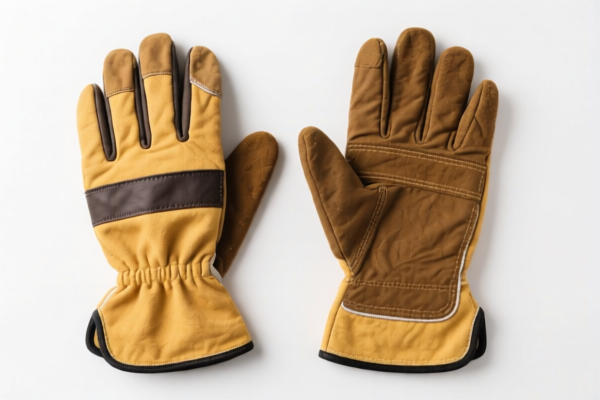
AI Analysis
🧤 BBQ Gloves (BBQ Heat-Resistant Gloves)
🌐 HS Code Reference & Customs Clearance Guide | 2026 Latest Tariff Analysis | Professional Compliance Strategy
📌 I. Product Definition & Classification: Do You Really Understand "BBQ Gloves"?
BBQ Gloves, often referred to as heat-resistant gloves in industrial or kitchenware contexts, are specialized protective gear designed to handle high temperatures. In international trade, they are categorized based on material composition and manufacturing process. The critical distinction lies in whether they are made from rubber (Chapter 40) or textiles/plastics (Chapter 62).
Sulfur-Cured Rubber Gloves: Made primarily from vulcanized rubber, offering superior chemical and heat resistance. Typically classified under Chapter 40.
Textile/Plastic-Coated Gloves: Made from fabric substrates that are impregnated, coated, or covered with plastic or rubber. Typically classified under Chapter 62.
⚠️ Key Distinction Point:
- If the glove is primarily vulcanized rubber (homogeneous material) → Classify under 4015.
- If the glove is a textile base with a surface coating/impregnation → Classify under 6216.
- If it is a generic household item with no specific technical specification → May fall under 6216.90 as a "catch-all" other glove.
📦 II. HS Code Classification Details (2026 Latest Tariff Authority Mapping)
| HS Code | Product Description | Application Scenario | Material/Process Key Feature |
|---|---|---|---|
4015.19.11.50 |
Heat-resistant gloves, based on vulcanized rubber or similar protective rubber | Industrial chemical handling, high-heat rubber processing | ✅ Vulcanized Rubber (Homogeneous) |
4015.19.51.00 |
Other heat-resistant gloves, based on vulcanized rubber or non-metal/hard rubber | Specialized hard-rubber protective gear | ✅ Vulcanized Rubber (Alternative subtype) |
6216.00.26.00 |
Gloves impregnated, coated, or covered with plastic or rubber | General kitchen use, food prep, moderate heat resistance | ✅ Textile Base + Surface Coating |
6216.00.08.00 |
Gloves for hand protection, impregnated/coated with plastic/rubber | Specific protective handwear, ergonomic design | ✅ Textile Base + Surface Coating |
6216.00.90.00 |
Baking gloves, based on fabric or silicone common materials | Household baking, general kitchen use, fallback category | ✅ Generic Fabric/Silicone (Catch-all) |
🔍 Important Reminder:
- Do not misclassify rubber gloves as textile gloves if the primary value and function come from the rubber material (Chapter 40).
- Silicone gloves are often treated as rubber products, but if marketed as "kitchen fabric with silicone tips," customs may accept 6216.00.90.00.
- Accuracy depends on the Bill of Materials (BOM) and manufacturing specs.
💰 III. 2026 Latest Tariff Rate Breakdown (Including Surtaxes & Policy Add-ons)
✅ Applicable Country: United States (US)
✅ Origin: China (CN)
✅ Effective Date: November 10, 2025 onwards (for subsequent imports)
🎯 1. 4015.19.11.50 —— Vulcanized Rubber Heat-Resistant Gloves
| Item | Details |
|---|---|
| Basic Tariff | 3.0% (ad valorem) |
| Section 301 Surcharge | +25.0% |
| Section 122 Tariff | +10.0% |
| Total Tariff Rate | 38.0% |
| Tax Calculation | CIF Value × 38.0% |
| De Minimis Exemption? | ❌ No (deny_de_minimis) |
| Legal Path | Section 301 → Section 122 → USITC:4015.19.11.50 |
📌 Explanation:
- This is a high-duty classification due to the rubber origin and US trade policies.
- The 25% Section 301 tariff is standard for many Chinese rubber products.
- The 10% Section 122 tariff further increases the cost, making this option expensive for importers.
🎯 2. 4015.19.51.00 —— Other Vulcanized Rubber Heat-Resistant Gloves
| Item | Details |
|---|---|
| Basic Tariff | 14.0% |
| Section 301 Surcharge | +25.0% |
| Section 122 Tariff | +10.0% |
| Total Tariff Rate | 49.0% |
| Tax Calculation | CIF Value × 49.0% |
| De Minimis Exemption? | ❌ No (deny_de_minimis) |
| Legal Path | Section 301 → Section 122 → USITC:4015.19.51.00 |
📌 Note:
- This is the most expensive classification. Avoid if possible unless the product strictly fits the "hard rubber" or specific non-standard rubber definition.
- High basic tariff (14%) + 25% + 10% = 49%. This severely impacts profit margins.
🎯 3. 6216.00.26.00 —— Impregnated/Coated Gloves (Non-Fingered Separation)
| Item | Details |
|---|---|
| Basic Tariff | 7.0% |
| Section 301 Surcharge | +7.5% |
| Section 122 Tariff | +10.0% |
| Total Tariff Rate | 24.5% |
| Tax Calculation | CIF Value × 24.5% |
| De Minimis Exemption? | ❌ No (deny_de_minimis) |
| Legal Path | Section 301 → Section 122 → USITC:6216.00.26.00 |
📌 Explanation:
- This is a more competitive rate. If the glove is made of fabric with a plastic/rubber coating, this is the likely correct code.
- The Section 301 rate is lower (7.5% vs 25%) for certain textile/plastic composite goods.
🎯 4. 6216.00.08.00 —— Gloves for Hand Protection (Impregnated/Coated)
| Item | Details |
|---|---|
| Basic Tariff | 0.8% |
| Section 301 Surcharge | +7.5% |
| Section 122 Tariff | +10.0% |
| Total Tariff Rate | 18.3% |
| Tax Calculation | CIF Value × 18.3% |
| De Minimis Exemption? | ❌ No (deny_de_minimis) |
| Legal Path | Section 301 → Section 122 → USITC:6216.00.08.00 |
📌 Note:
- This is one of the most advantageous classifications for heat-resistant gloves.
- It requires the product to be clearly defined as "for hand protection" and made via impregnation/coating.
- Ensure marketing materials emphasize "protective function" to support this classification.
🎯 5. 6216.00.90.00 —— Baking Gloves (Generic/Fabric/Silicone)
| Item | Details |
|---|---|
| Basic Tariff | 3.8% |
| Section 301 Surcharge | +7.5% |
| Section 122 Tariff | +10.0% |
| Total Tariff Rate | 21.3% |
| Tax Calculation | CIF Value × 21.3% |
| De Minimis Exemption? | ❌ No (deny_de_minimis) |
| Legal Path | Section 301 → Section 122 → USITC:6216.00.90.00 |
📌 Explanation:
- This is a fallback category ("Other gloves"). It is useful if the product doesn't fit neatly into the specific "impregnated/coated" definitions.
- Commonly used for household silicone or fabric gloves that are not technically "industrial protective gear."
- Lower risk of audit if the product is simple and consumer-oriented.
🛠️ IV. Customs Clearance Practical Advice (Avoid Pitfalls)
✅ 1. Required Documentation Checklist (Mandatory)
| Document | Must Provide | Explanation |
|---|---|---|
| ✅ Product Specification Sheet | ✔️ | Must detail material composition (e.g., "65% Cotton, 35% Silicone Coating"). |
| ✅ Technical Data Sheet | ✔️ | Include heat resistance temperature (e.g., "Safe up to 230°C"). |
| ✅ Product Photos | ✔️ | Clear images of the glove, label, and any unique features (e.g., textured grip). |
| ✅ Composition Declaration | ✔️ | Explicitly state if it is "Vulcanized Rubber" or "Fabric with Coating." |
| ✅ Commercial Invoice | ✔️ | Use precise description: "Heat-Resistant Kitchen Gloves, Model XYZ." |
| ✅ Packing List | ✔️ | Show unit quantity and packaging type. |
✅ 2. Declaration Tips (Key Mantra)
🔥 “Material First, Function Clear, Avoid ‘Rubber’ Trap if Textile!”
| Scenario | Correct Declaration | Wrong Practice |
|---|---|---|
| Pure Rubber Glove | 4015.19.11.50 |
Calling it "Fabric Glove" → Rejection |
| Fabric + Silicone/Plastic Coating | 6216.00.08.00 or 6216.00.26.00 |
Calling it "Rubber Glove" → 49% Tax |
| Generic Household Baking Glove | 6216.00.90.00 |
Over-specifying as "Industrial" → Unnecessary scrutiny |
| Mixed Material (Hard to Define) | 6216.00.90.00 |
Guessing 4015 → High risk of penalty |
📌 Why?
- If you declare a coated fabric glove as "Rubber" (4015), you pay 38-49%.
- If you declare a rubber glove as "Fabric" (6216), you may be penalized for misclassification.
- Best Strategy: If your glove is fabric-based with heat-resistant coating, aim for 6216.00.08.00 (18.3%).
✅ 3. Special Cases Handling
| Case | Handling Advice |
|---|---|
| Silicone Coated Gloves | If silicone is the primary protective layer on fabric, argue for 6216 to avoid high rubber tariffs. |
| Industrial vs. Household | Household gloves can use 6216.00.90.00. Industrial gloves need technical specs to justify 6216.00.08.00. |
| OEM Custom Gloves | Provide design specs to prove material structure. Avoid vague terms like "Heat Proof." |
| Bundles (Glove + Pot Holder) | Declare as a set? Risky. Better to declare gloves separately under 6216 and pot holders under their own code to simplify classification. |
🌍 V. Global Market Comparison (2026 Latest)
| Country/Region | Recommended HS Code | Tariff (China Origin) | Certification | Notes |
|---|---|---|---|---|
| 🇺🇸 USA | 6216.00.08.00 |
18.3% | FDA/USDA (if food contact) | Lowest tariff option for coated gloves |
| 🇨🇳 China | 6216.00.08.00 |
~6-13% | None | Domestic sale not affected by US tariffs |
| 🇪🇺 EU | 6216.00.08.00 |
3.2% (Standard) | CE/LFGB | No Section 301/122 surcharges |
| 🇬🇧 UK | 6216.00.08.00 |
3.2% | UKCA | Post-Brexit rules apply |
📌 Conclusion:
- USA is the critical market due to Section 301 and Section 122 tariffs.
- Choosing the right HS Code saves 20-30% in duties.
- EU/UK have stable, lower tariffs, making them easier for compliance.
📌 VI. Common Mistakes & Pitfalls (Blood Lessons)
❌ Mistake 1: Calling all heat-resistant gloves "Rubber Gloves"
👉 Consequence: If made of fabric, customs may still classify as 6216, but if you declared 4015, you might face overpayment or rejection if the material doesn't match.
👉 Result: Wasted shipping costs, delays, or unnecessary high taxes.
❌ Mistake 2: Using "Gloves" as the only description
👉 Consequence: Customs cannot determine material → Inspection → Delay + Potential Penalty.
👉 Result: Clearance time extended by 1-2 weeks.
❌ Mistake 3: Ignoring Section 122 (10%)
👉 Consequence: Even if you find a low basic tariff, forgetting to account for the 10% surcharge leads to budget misestimation.
👉 Result: Profit margin eroded by 10% unexpectedly.
✅ Correct Practice:
"Heat-Resistant Kitchen Gloves, 100% Cotton Knit, Silicone-Coated Palms, Model K-100, Food-Safe, CE/FDA Compliant"
🎯 VII. Conclusion: Precise Classification = Profit Protection!
🎯 Remember the Mantra:
🔹 "Fabric+Coat = 6216 (18.3%), Rubber = 4015 (38-49%)."
🔹 "Check Material First, Then Function. Don't Pay 49% if You Can Pay 18%!"
🔹 "Section 122 is Always 10%. Factor It In!"
📌 Pro Tip:
If your product is Silicone-Based, consider consulting a customs broker to see if it can be classified under 3926 (Other articles of plastic) or 4016 (Other vulcanized rubber goods) for potentially better treatment, but 6216.00.08.00 is generally the safest for coated textiles.
📣 Immediate Action:
📞 Contact Your Customs Broker: Provide BOM and Product Photos.
🚀 Request an Advance Ruling: Especially if shipping large volumes.
💼 Optimize Packaging: Clear labeling reduces inspection time.
✨ Professional Clearance Starts with Precise Classification!
💼 Every Percent of Tariff Saved is Pure Profit Added!
Customer Reviews
About HS Code Classification
The Harmonized System (HS) is an internationally standardized nomenclature developed by the World Customs Organization (WCO) to classify traded products. Over 200 countries use the HS system as the basis for customs tariffs, trade statistics, and import/export regulations.
Each HS code follows a hierarchical structure:
- Chapter (2 digits) — Broad category of goods (e.g., Chapter 84: Machinery and Mechanical Appliances)
- Heading (4 digits) — More specific grouping within the chapter
- Subheading (6 digits) — Internationally standardized breakdown, used by all WCO member countries
- National subdivisions (8-10 digits) — Country-specific extensions for further classification, such as US HTSUS 10-digit codes
Correct HS code classification is essential for smooth customs clearance, accurate duty payment, and compliance with trade regulations. Misclassification can lead to customs delays, overpayment of duties, or penalties.
When importing from CN to US, the applicable tariff rates may include:
- Most-Favored-Nation (MFN) rate — The standard duty rate applied to WTO members
- General rate — Applied to countries without trade agreements
- Trade remedy duties — Additional tariffs such as Section 301 (anti-dumping), Section 232 (national security), or countervailing duties
The information provided on this page is for reference purposes only. For official classification, please consult with your local customs authority or a licensed customs broker.