beaded plate
CN → US| HS Code | Tariff Rate | Origin | Destination | Doc |
|---|---|---|---|---|
| 6911108010 | 38.3% | CN | US | Official Doc |
| 6911108090 | 38.3% | CN | US | Official Doc |
| 9504909080 | 17.5% | CN | US | Official Doc |
| 9504906000 | 10.0% | CN | US | Official Doc |
| 3926903300 | 16.5% | CN | US | Official Doc |
Product Images
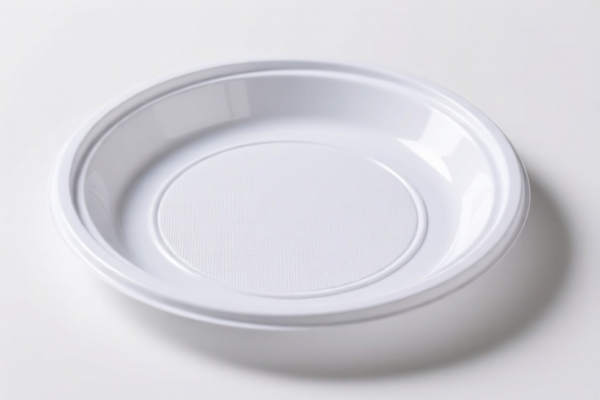
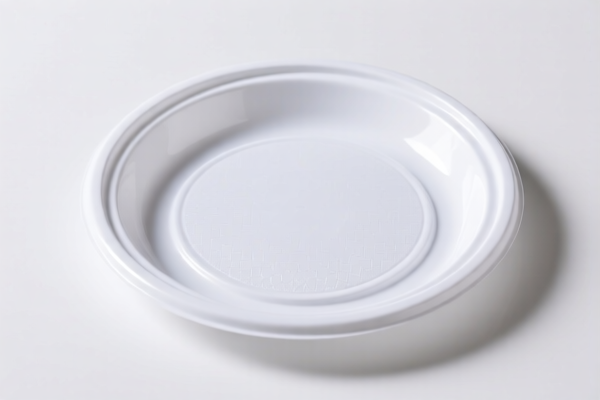
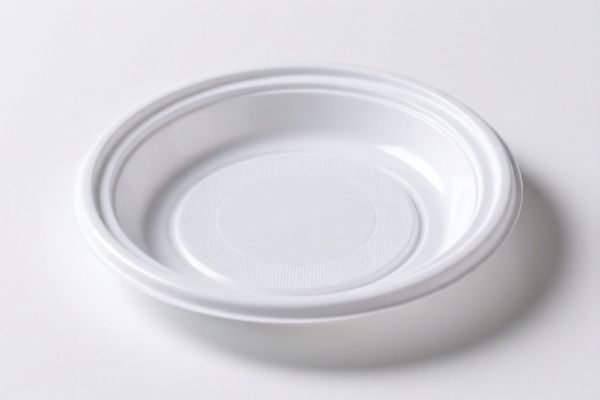
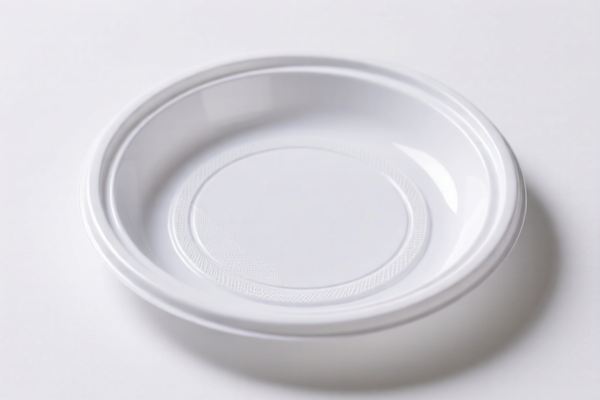
AI Analysis
🧿 Beaded Plate (Beaded Dish)
🌐 HS Code Reference & Customs Clearance Guide | 2026 Latest Tariff Analysis | Professional-Level Strategy
📌 I. Product Definition & Classification: Do You Really Understand "Beaded Plate"?
The term "Beaded Plate" is ambiguous and can refer to two entirely different product categories depending on its material and intended use. In international trade, this ambiguity leads to vastly different HS Code classifications and tax liabilities.
There are two primary scenarios for "Beaded Plate":
Scenario A: Ceramic Tableware/Kitchenware
If the "plate" is made of ceramic/porcelain and decorated with beads or has a beaded rim, it is classified as tableware. This falls under Chapter 69.
Scenario B: Game Component/Toy Part
If the "plate" is a component for a board game (like a Monopoly board or a puzzle base) or a game console accessory, it is classified as game parts/accessories. This falls under Chapter 95.
⚠️ Critical Distinction:
- If it is a ceramic dish used for food or decoration → It is Tableware (HS 6911).
- If it is a plastic/wooden board for games → It is Game Part (HS 9504).
- If "Beaded" refers to plastic beads included with a plate → It might be Plastic Articles (HS 3926).
📦 II. HS Code Classification Details (2026 Latest Tariff Authority Comparison)
Based on the inferred product descriptions from the name "Beaded Plate," here are the possible classifications and their logic:
| HS Code | Product Description | Inference Logic | Key Feature |
|---|---|---|---|
6911.10.80.10 |
Other Tableware and Kitchenware, of Porcelain or China | "Beaded Plate" as Ceramic: Inferred as a plate (dish shape) fitting tableware/kitchenware characteristics. "Beaded" refers to decoration. | ✅ Ceramic/Tableware |
6911.10.80.90 |
Other Tableware and Kitchenware, of Porcelain or China | "Beaded Plate" as Ceramic: "Plate" implies tableware/vessel form. Material inferred as porcelain/ceramic based on common sense. | ✅ Ceramic/Tableware |
9504.90.90.80 |
Other Games and Toys, Parts and Accessories | "Beaded Plate" as Game Part: Inferred as a component for gaming consoles or electronic games. "Beaded" may refer to texture or design. | ✅ Electronic Game Part |
9504.90.60.00 |
Other Games and Toys, Parts and Accessories (Chessboards, etc.) | "Beaded Plate" as Game Board: Inferred as a board game component (e.g., a puzzle board or game tray). Fits "parts of games (including boards)." | ✅ Board Game Part |
3926.90.33.00 |
Other Articles of Plastics, Other | "Beaded" as Plastic Beads: If the product is primarily "beads" (decorative plastic beads) rather than a plate, it falls here. "Beads, cones, and sequins." | ✅ Plastic Beads |
🔍 Important Note:
- Material is Key: If the plate is ceramic, use 6911. If it is a game board, use 9504. If it is plastic beads, use 3926.
- No Material Conflict: The classification assumes no conflicting material evidence (e.g., a ceramic plate claimed as a plastic toy part would be rejected).
💰 III. 2026 Latest Tariff Rate Details (Including Surcharges & Policy Add-ons)
✅ Applicable Country: United States (US)
✅ Country of Origin: China (CN)
✅ Effective Date: From November 10, 2025 (and subsequent imports)
🎯 1. 6911.10.80.10 & 6911.10.80.90 —— Ceramic/Tableware Plates
| Item | Content |
|---|---|
| Base Tariff | 20.8% (ad valorem) |
| Section 301 Surcharge | +7.5% |
| 122 Clause Tariff | +10.0% |
| Total Tariff Rate | 38.3% |
| Tax Calculation | CIF Value × 38.3% |
| De Minimis Exemption | ❌ Not Eligible (deny_de_minimis) |
| Legal Basis Path | Base: 20.8% → Section 301: 7.5% → 122 Clause: 10% |
📌 Explanation:
- Base Tariff (20.8%): Standard MFN rate for ceramic tableware.
- Section 301 Surcharge (7.5%): Applied to Chinese-origin goods under US trade remedy actions.
- 122 Clause Tariff (10%): Additional levy under specific trade enforcement clauses.
- Total 38.3%: High tariff burden. Must be factored into pricing strategy.
🎯 2. 9504.90.90.80 —— Electronic Game Parts/Accessories
| Item | Content |
|---|---|
| Base Tariff | 0.0% |
| Section 301 Surcharge | +7.5% |
| 122 Clause Tariff | +10.0% |
| Total Tariff Rate | 17.5% |
| Tax Calculation | CIF Value × 17.5% |
| De Minimis Exemption | ❌ Not Eligible (deny_de_minimis) |
| Legal Basis Path | Base: 0.0% → Section 301: 7.5% → 122 Clause: 10% |
📌 Explanation:
- Base Tariff (0.0%): Many game accessories enjoy lower base duties.
- Section 301 & 122: Still apply due to China origin.
- Total 17.5%: Significantly lower than ceramic tableware.
🎯 3. 9504.90.60.00 —— Board Game Parts (Including Boards)
| Item | Content |
|---|---|
| Base Tariff | 0.0% |
| Section 301 Surcharge | 0.0% |
| 122 Clause Tariff | +10.0% |
| Total Tariff Rate | 10.0% |
| Tax Calculation | CIF Value × 10.0% |
| De Minimis Exemption | ❌ Not Eligible (deny_de_minimis) |
| Legal Basis Path | Base: 0.0% → Section 301: 0.0% → 122 Clause: 10% |
📌 Explanation:
- Base Tariff (0.0%): Low base duty for certain game parts.
- Section 301 Surcharge (0.0%): Exempt from the 7.5% surcharge in this specific subheading!
- 122 Clause Tariff (10%): Still applies.
- Total 10.0%: Most favorable rate among all options. Ideal if the product can be legally classified as a board game component.
🎯 4. 3926.90.33.00 —— Plastic Beads/Articles
| Item | Content |
|---|---|
| Base Tariff | 6.5% |
| Section 301 Surcharge | 0.0% |
| 122 Clause Tariff | +10.0% |
| Total Tariff Rate | 16.5% |
| Tax Calculation | CIF Value × 16.5% |
| De Minimis Exemption | ❌ Not Eligible (deny_de_minimis) |
| Legal Basis Path | Base: 6.5% → Section 301: 0.0% → 122 Clause: 10% |
📌 Explanation:
- Base Tariff (6.5%): Standard duty for plastic articles.
- Section 301 Surcharge (0.0%): Exempt from the 7.5% surcharge.
- 122 Clause Tariff (10%): Still applies.
- Total 16.5%: Competitive rate if the product is pure plastic beads.
🛠️ IV. Customs Clearance Practical Advice (Real-World Pitfall Avoidance)
✅ 1. Document Preparation Checklist (Non-negotiable)
| Document | Must Provide | Explanation |
|---|---|---|
| ✅ Product Specification | ✔️ | Clearly state material (Ceramic/Plastic/Wood), dimensions, and weight. |
| ✅ Product Photos | ✔️ | Show the "beaded" feature. Is it a decorative ceramic plate? Or a plastic game board? |
| ✅ Usage Description | ✔️ | Critical: State clearly if it is "Tableware" or "Game Component." Mislabeling leads to seizures. |
| ✅ Commercial Invoice | ✔️ | Use precise English terms: e.g., "Ceramic Beaded Plate" or "Plastic Board Game Tray." |
| ✅ Packing List | ✔️ | Detail contents to avoid mixed shipment confusion. |
| ✅ Origin Certificate (CO) | ✔️ | Required for China origin verification to apply correct surcharges. |
✅ 2. Declaration Tips (Key Mantras)
🔥 "Material Determines HS, Use Defines Tax Class!"
| Scenario | Correct Declaration | Wrong Approach |
|---|---|---|
| Ceramic Plate | 6911.10.80.10 / 6911.10.80.90 |
Declaring as "Game Part" → Penalty for Misclassification |
| Game Board | 9504.90.60.00 |
Declaring as "Tableware" → 38.3% vs 10% Tax Difference |
| Plastic Beads | 3926.90.33.00 |
Declaring as "Plate" → Rejection by Customs |
| Mixed Package | Split Declaration | Packing ceramic plates with game parts in one box → Customs Audit & Delay |
✅ 3. Special Situation Handling
| Situation | Handling Advice |
|---|---|
| OEM Custom Plates | Provide design files to prove intent (tableware vs. game prop). |
| Beaded Decorations | If beads are removable, clarify if they are part of the product or separate items. |
| Electronic Game Parts | If the "plate" has wires or connectors, declare as electronic accessory (9504.90.90.80). |
| High-Value Imports | Apply for Advance Ruling (Ruling Letter) to lock in HS Code and tariff rate before shipment. |
🌍 V. Global Market Clearance Comparison (2026 Latest)
| Country/Region | Recommended HS Code | Tariff Rate | Certification Requirements | Notes |
|---|---|---|---|---|
| 🇺🇸 USA | 6911.10.80.10 / 9504.90.60.00 |
10.0% - 38.3% | No specific certs, but origin verification | High tariffs on China origin |
| 🇨🇳 China | 6911.10.80.10 / 9504.90.60.00 |
0% - 20% | N/A (Import) | Lower base duties |
| 🇪🇺 EU | 6911.10.80.10 / 9504.90.60.00 |
0% - 6.5% | CE, REACH (if plastic) | No Section 301/122 equivalent |
| 🇦🇺 Australia | 6911.10.80.10 / 9504.90.60.00 |
5% - 10% | No specific certs | Moderate tariffs |
📌 Conclusion:
- USA is the only market with significant Section 301 and 122 surcharges on China-origin goods.
- Classification Strategy: If the product can be legally classified as a Board Game Part (9504.90.60.00), it saves 28.3% in tariffs compared to ceramic tableware.
- Recommendation: Optimize product description and packaging to support the lowest applicable tariff while remaining compliant.
📌 VI. Common Errors & Pitfalls (Lessons Learned)
❌ Error 1: Declaring a Ceramic Plate as a Game Part to avoid tariffs
👉 Consequence: Customs inspection reveals ceramic material → Seizure, fines, and blacklisting.
❌ Error 2: Using vague terms like "Beaded Item" on the Invoice
👉 Consequence: Customs cannot determine HS Code → Delay in clearance, storage fees.
❌ Error 3: Ignoring the 122 Clause Tariff
👉 Consequence: Underpayment by 10% → Back taxes + interest.
❌ Error 4: Mixing Tableware and Game Parts in one shipment without splitting
👉 Consequence: Customs may assess the entire shipment at the highest applicable rate or require separate declarations.
✅ Correct Approach:
“Ceramic Beaded Plate, 10-inch, Dishware, Not for Electronic Games”
OR
“Plastic Board Game Component, Beaded Surface, Not Tableware”
🎯 VII. Conclusion: Professional Declaration Saves Money!
🎯 Remember the Mantra:
🔹 "Ceramic? 38.3%! Game Part? 10%! Plastic Beads? 16.5%! Declare Correctly!"
🔹 "HS Code Determines Cost, Tariff Difference is Huge!"
📌 Pro Tip:
If your Beaded Plate is originally from Vietnam, Mexico, Thailand, or Malaysia, you may qualify for IEEPA Exemptions, reducing tariffs to 0%~5%.
It is strongly recommended to apply for an Advance Ruling (Pre-classification) to avoid customs disputes.
📣 Immediate Action:
📞 Contact a Professional Customs Broker + Provide Product Photos + Apply for HS Code Advance Ruling
🚀 Ensure Smooth Clearance, Efficient Export, and Profit Maximization!
✨ Professional Clearance Starts with Accurate Classification!
💼 Every Cent of Cost Deserves to Be Precisely Calculated!
Customer Reviews
About HS Code Classification
The Harmonized System (HS) is an internationally standardized nomenclature developed by the World Customs Organization (WCO) to classify traded products. Over 200 countries use the HS system as the basis for customs tariffs, trade statistics, and import/export regulations.
Each HS code follows a hierarchical structure:
- Chapter (2 digits) — Broad category of goods (e.g., Chapter 84: Machinery and Mechanical Appliances)
- Heading (4 digits) — More specific grouping within the chapter
- Subheading (6 digits) — Internationally standardized breakdown, used by all WCO member countries
- National subdivisions (8-10 digits) — Country-specific extensions for further classification, such as US HTSUS 10-digit codes
Correct HS code classification is essential for smooth customs clearance, accurate duty payment, and compliance with trade regulations. Misclassification can lead to customs delays, overpayment of duties, or penalties.
When importing from CN to US, the applicable tariff rates may include:
- Most-Favored-Nation (MFN) rate — The standard duty rate applied to WTO members
- General rate — Applied to countries without trade agreements
- Trade remedy duties — Additional tariffs such as Section 301 (anti-dumping), Section 232 (national security), or countervailing duties
The information provided on this page is for reference purposes only. For official classification, please consult with your local customs authority or a licensed customs broker.