bear feeding pad blue
CN → US| HS Code | Tariff Rate | Origin | Destination | Doc |
|---|---|---|---|---|
| 3924901050 | 13.3% | CN | US | Official Doc |
| 3924905650 | 20.9% | CN | US | Official Doc |
| 6302514000 | 23.8% | CN | US | Official Doc |
| 6302530030 | 28.8% | CN | US | Official Doc |
Product Images
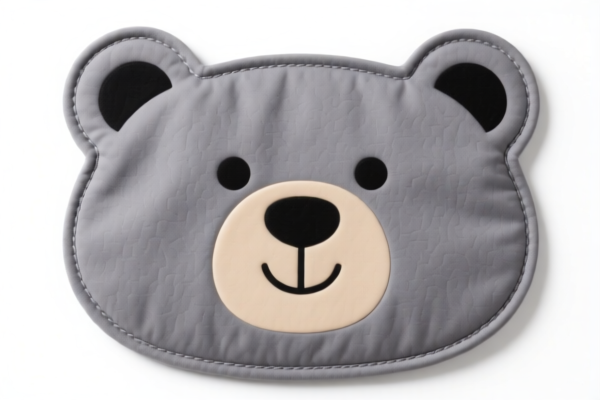
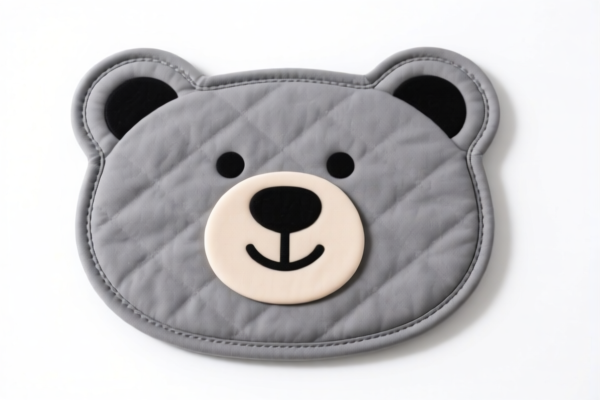
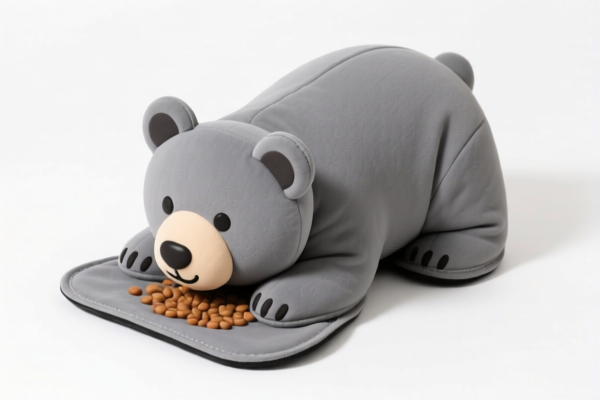
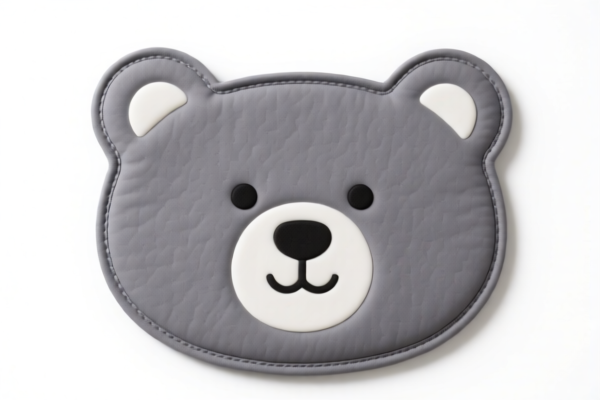
AI Analysis
🐻 Bear Feeding Pad (Blue) | Table Mats & Kitchen Textiles
🌐 HS Code Reference & Customs Clearance Guide | 2026 Latest Tariff Analysis | Professional Clearance Strategy
📌 I. Product Definition & Classification: What exactly is a "Bear Feeding Pad"?
A "Bear Feeding Pad" (often shaped like a bear or featuring bear motifs) is typically a table mat, placemat, or bib used for children or pets. In international trade, its classification hinges on two critical factors:
1. Material Composition: Is it Plastic (PVC, Silicone), Textile (Cotton, Polyester), or Artificial Fiber?
2. Primary Function: Is it a table covering (HS 3924/6302) or a personal article (HS 61/62)?
⚠️ Key Distinction:
- If made of Plastic/PVC → Likely HS 3924.90 (Tableware/Table Mats).
- If made of Textile (Cotton/Synthetic) → Likely HS 6302.51/53 (Table Linens).
- Note: Even if it has a bear shape, if it’s primarily a flat mat for placing under dishes, it falls under table linen/tableware, not clothing.
📦 II. HS Code Classification Details (2026 Latest Tariff Authority Comparison)
| HS Code | Product Description | Applicable Scenario | Material |
|---|---|---|---|
3924.90.10.50 |
Tableware / Table Mats (Plastic) | Plastic placemats, PVC bear-shaped mats, silicone feeding mats | ✅ Plastic (PVC/Silicone) |
3924.90.56.50 |
Other Tableware / Household Articles (Plastic) | Plastic cutlery sets, plastic bowls, other plastic household items | ✅ Plastic (Non-mat specific) |
6302.51.40.00 |
Table Linens (Textile, <85% Synthetic) | Cotton, linen, or mixed textile placemats/napkins | ✅ Textile (Cotton/Linen/Low Synthetic) |
6302.53.00.30 |
Table Linens (Textile, ≥85% Synthetic) | Polyester or nylon placemats, synthetic fiber mats | ✅ Textile (High Synthetic) |
🔍 Critical Reminder:
- "Bear Feeding Pad" is often a textile product (e.g., cotton bibs or polyester mats). If it is plastic, use3924.90.10.50.
- Do NOT classify as clothing (HS 61/62) unless it is specifically a wearable bib with straps. Flat mats go to3924or6302.
💰 III. 2026 Latest Tariff Rate Breakdown (Including Surtaxes & Policy Add-ons)
✅ Applicable Country: United States (US)
✅ Origin: China (CN)
✅ Effective Date: Post-2025 (Current 122-Clause Tariffs Apply)
🎯 1. 3924.90.10.50 —— Tableware / Table Mats (Plastic)
| Item | Details |
|---|---|
| Base Tariff | 3.3% |
| Section 301 Surtax | 0.0% (Specific exemption or lower rate for certain plastics) |
| 122-Clause Tariff | +10% (Targeting specific Chinese industrial products) |
| Total Tariff Rate | 13.3% |
| Tax Calculation | CIF Value × 13.3% |
| De Minimis Eligibility | ❌ No (Subject to full inspection and tariffs) |
| Legal Basis Path | HTSUS:3924.90.10.50 → USITC:122-Clause:10% |
📌 Explanation:
- This code is favorable for plastic placemats.
- The 10% 122-Clause tariff is mandatory for Chinese-origin goods in this category.
- Total 13.3% is relatively low compared to textile alternatives.
🎯 2. 3924.90.56.50 —— Other Tableware (Plastic)
| Item | Details |
|---|---|
| Base Tariff | 3.4% |
| Section 301 Surtax | 7.5% |
| 122-Clause Tariff | +10% |
| Total Tariff Rate | 20.9% |
| Tax Calculation | CIF Value × 20.9% |
| De Minimis Eligibility | ❌ No |
| Legal Basis Path | HTSUS:3924.90.56.50 → USITC:301:7.5% + 122-Clause:10% |
📌 Note:
- If the product is classified as "other plastic household articles" rather than "table mats," the Section 301 surtax jumps to 7.5%.
- Total 20.9% makes this less attractive than3924.90.10.50for plastic mats.
🎯 3. 6302.51.40.00 —— Table Linens (Textile, <85% Synthetic)
| Item | Details |
|---|---|
| Base Tariff | 6.3% |
| Section 301 Surtax | 7.5% |
| 122-Clause Tariff | +10% |
| Total Tariff Rate | 23.8% |
| Tax Calculation | CIF Value × 23.8% |
| De Minimis Eligibility | ❌ No |
| Legal Basis Path | HTSUS:6302.51.40.00 → USITC:301:7.5% + 122-Clause:10% |
📌 Explanation:
- For cotton or linen-heavy textile placemats.
- Higher tariff than plastic due to Section 301 surtax.
- Must provide fiber content proof (e.g., Cotton vs. Polyester).
🎯 4. 6302.53.00.30 —— Table Linens (Textile, ≥85% Synthetic)
| Item | Details |
|---|---|
| Base Tariff | 11.3% |
| Section 301 Surtax | 7.5% |
| 122-Clause Tariff | +10% |
| Total Tariff Rate | 28.8% |
| Tax Calculation | CIF Value × 28.8% |
| De Minimis Eligibility | ❌ No |
| Legal Basis Path | HTSUS:6302.53.00.30 → USITC:301:7.5% + 122-Clause:10% |
📌 Warning:
- This is the highest tariff among the options.
- Applies to polyester/nylon dominant mats.
- Cost Impact: Nearly 3x the base tariff compared to plastic mats (3924.90.10.50).
🛠️ IV. Customs Clearance Practical Advice (Real-World Pitfall Guide)
✅ 1. Required Documentation Checklist (Mandatory)
| Document | Mandatory? | Description |
|---|---|---|
| ✅ Product Specification Sheet | ✔️ | Must state material (e.g., "100% PVC" or "80% Cotton, 20% Polyester") |
| ✅ Photos (Front/Back/Label) | ✔️ | Show bear shape, but also material texture and care label |
| ✅ Commercial Invoice | ✔️ | Describe as "Plastic Table Mat" or "Cotton Table Linen," NOT just "Bear Toy" |
| ✅ Fiber Content Certificate | ✔️ | For textiles (HS 6302), lab test report proving synthetic vs. natural fiber ratio |
| ✅ Origin Certificate | ✔️ | To confirm CN origin (triggers 122-Clause + 301 taxes) |
| ✅ Packaging List | ✔️ | Confirm no hidden accessories (e.g., plastic cutlery inside) |
✅ 2. Declaration Tips (Key Mnemonic)
🔥 “Material First, Use Second, Bear Shape Irrelevant for Tariff!”
| Scenario | Correct Declaration | Incorrect Practice |
|---|---|---|
| Plastic Mat | 3924.90.10.50 (Table Mat) |
Misdeclare as "Toy" → Higher scrutiny/penalty |
| Cotton Mat | 6302.51.40.00 (Table Linen) |
Misdeclare as "Bed Linen" (6301) → Wrong rate |
| Polyester Mat | 6302.53.00.30 (Synthetic Linen) |
Understate synthetic % to aim for 6302.51 → Audit risk |
| Bib with Straps | Check HS 61/62 (Apparel) | Declare as "Mat" → If wearable, may be reclassified |
⚠️ Critical:
- If the "feeding pad" is a wearable bib (with neck straps), it may fall under HS 6109/6203 (Apparel). However, if it’s a placemat (flat, placed on table), it stays in3924or6302.
- Do not declare as "Bear Toy" (HS 9503) to avoid tariffs. US Customs will inspect material and function.
✅ 3. Special Cases Handling
| Case | Recommendation |
|---|---|
| Mixed Material (Plastic + Cloth) | Declare based on chief characteristic. If plastic backing dominates, consider 3924. |
| "Bear" Shape | Shape does not change HS Code. Emphasize function (Table Mat) in description. |
| Small Quantity (De Minimis) | ❌ 122-Clause and 301 taxes still apply if originating from China. Do not rely on $800 de minimis for tariff avoidance. |
| OEM Custom Design | Provide design files to prove it’s a "Table Mat," not a "Toy." |
🌍 V. Global Market Customs Comparison (2026 Latest)
| Country/Region | Recommended HS Code | Tariff (CN Origin) | Certification Required | Notes |
|---|---|---|---|---|
| 🇺🇸 USA | 3924.90.10.50 (Plastic) |
13.3% | ASTM F963 (Toy Safety if considered toy), CPSIA | High 301/122 taxes |
| 🇺🇸 USA | 6302.53.00.30 (Synthetic Textile) |
28.8% | CPSIA, Prop 65 | Highest tax among options |
| 🇪🇺 EU | 3924.10.10 / 6302.51 |
6.5% - 12% | CE, REACH, LFGB (Food Contact) | No 122-Clause or 301 |
| 🇨🇳 China | 3924.90.10 / 6302.51 |
5% - 10% | GB 4806 (Food Contact) | Low import duty, high VAT |
📌 Conclusion:
- USA: Plastic mats (3924.90.10.50) are cheaper (13.3%) than synthetic textiles (6302.53.00.30at 28.8%).
- EU: No punitive tariffs, but strict food contact (LFGB) and chemical (REACH) regulations apply.
📌 VI. Common Errors & Pitfalls (Lessons Learned)
❌ Error 1: Declaring as "Bear Toy" (HS 9503)
👉 Consequence: Customs may reclassify to 3924 or 6302 upon inspection → Back taxes + Penalties.
👉 Why: Toys have different safety standards (CPSIA/ASTM). If it’s a mat, it’s tableware.
❌ Error 2: Misidentifying Material
👉 Consequence: Using 6302.51 (Cotton) for a Polyester mat → Underpayment → Audit risk.
👉 Fix: Always provide a fiber content test report.
❌ Error 3: Ignoring 122-Clause Tariffs
👉 Consequence: Assuming only 301 applies → Short-paid 10% → Delayed release.
👉 Fact: 122-Clause (10%) is mandatory for many Chinese industrial goods since 2025.
✅ Correct Declaration Example:
"Plastic Table Mat, Bear Shape, PVC Material, For Kitchen/Table Use, HS 3924.90.10.50"
🎯 VII. Conclusion: Smart Classification, Cost Optimization!
🎯 Remember Mnemonics:
🔹 "Plastic Mat? 13.3% Total. Synthetic Textile? 28.8% Ouch! Cotton Textile? 23.8% Mid."
🔹 "Bear Shape is Cosmetic, Material is Key, Function is King."
🔹 "Don’t call it a Toy, call it a Mat, Save Taxes and Avoid Scat."
📌 Pro Tip:
If you are shipping small quantities (e.g., <2 units) for personal use, de minimis ($800) may still apply for income tax purposes, but tariffs (3924/6302) are not exempted under current 122/301 policies. Always declare accurately.
For large-scale imports, plastic mats (HS 3924.90.10.50) offer the lowest tariff burden (13.3%) compared to synthetic textiles (28.8%). Consider material selection based on cost vs. market preference.
📣 Immediate Action:
📞 Consult a licensed customs broker.
📄 Obtain fiber content reports and material safety data sheets.
🚀 Optimize for HS 3924.90.10.50 if plastic is acceptable.
✨ Professional Customs Clearance Starts with Precise Classification!
💼 Every Percent of Tariff Saved is Pure Profit Added!
Customer Reviews
About HS Code Classification
The Harmonized System (HS) is an internationally standardized nomenclature developed by the World Customs Organization (WCO) to classify traded products. Over 200 countries use the HS system as the basis for customs tariffs, trade statistics, and import/export regulations.
Each HS code follows a hierarchical structure:
- Chapter (2 digits) — Broad category of goods (e.g., Chapter 84: Machinery and Mechanical Appliances)
- Heading (4 digits) — More specific grouping within the chapter
- Subheading (6 digits) — Internationally standardized breakdown, used by all WCO member countries
- National subdivisions (8-10 digits) — Country-specific extensions for further classification, such as US HTSUS 10-digit codes
Correct HS code classification is essential for smooth customs clearance, accurate duty payment, and compliance with trade regulations. Misclassification can lead to customs delays, overpayment of duties, or penalties.
When importing from CN to US, the applicable tariff rates may include:
- Most-Favored-Nation (MFN) rate — The standard duty rate applied to WTO members
- General rate — Applied to countries without trade agreements
- Trade remedy duties — Additional tariffs such as Section 301 (anti-dumping), Section 232 (national security), or countervailing duties
The information provided on this page is for reference purposes only. For official classification, please consult with your local customs authority or a licensed customs broker.