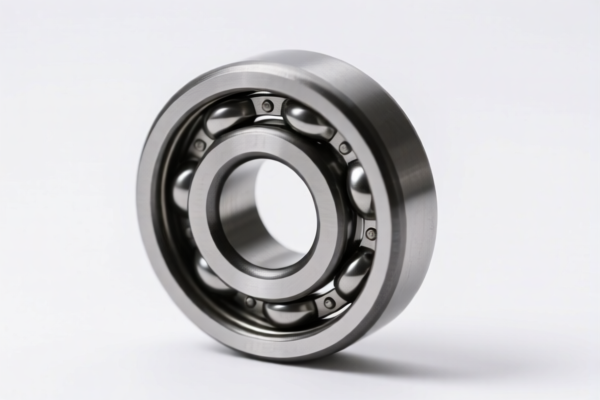
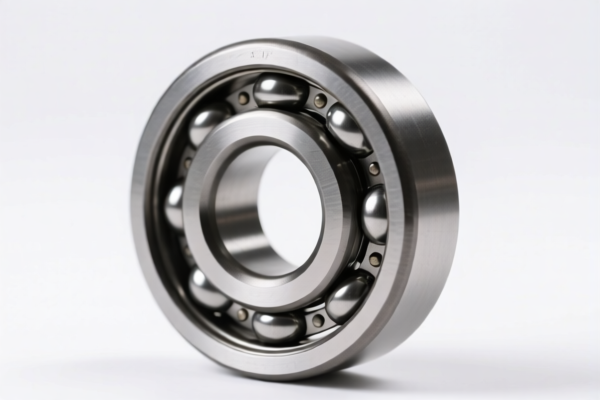
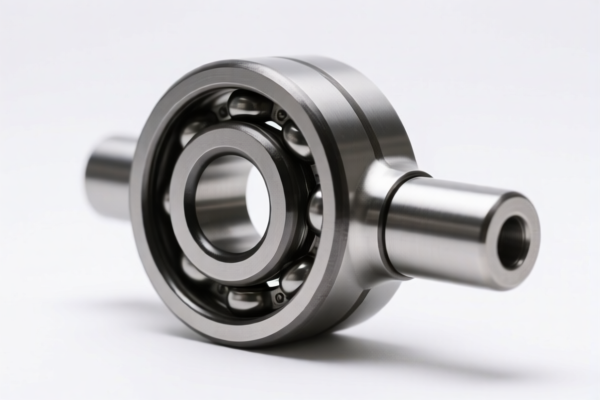
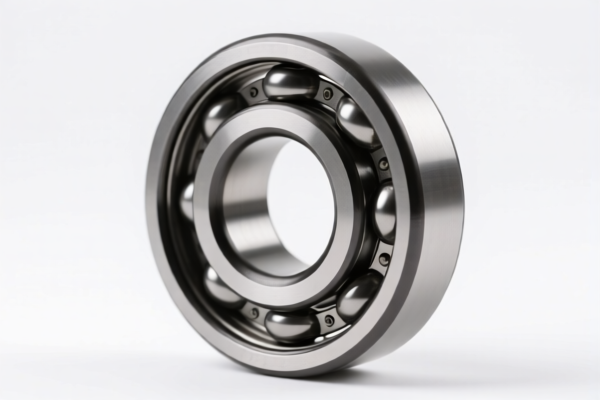
bearing unit
CN → US| HS Code | Tariff Rate | Origin | Destination | Doc |
|---|---|---|---|---|
| 8482105012 | 44.0% | CN | US | Official Doc |
| 8482105068 | 44.0% | CN | US | Official Doc |
| 8482105004 | 44.0% | CN | US | Official Doc |
| 7326190080 | 87.9% | CN | US | Official Doc |
| 7326908688 | 87.9% | CN | US | Official Doc |
Product Images
AI Analysis
🛠️ Bearing Units (Industrial Rolling Bearings & Steel Articles)
🌐 HS Code Reference & Customs Clearance Guide | 2026 Latest Tariff Analysis | Professional Level Clearance Strategy
📌 I. Product Definition & Classification: Do You Really Understand “Bearing Units”?
Bearing units are mechanical components used to reduce friction between moving parts. In international trade, they are broadly categorized based on their functional precision and material composition:
- Precision Rolling Bearings (High-End): These include ball bearings, roller bearings, and complete bearing assemblies with high manufacturing standards. They fall under Chapter 84.
- General Steel Articles (Low-End/Raw): These are steel-made bearing parts, cages, or simple structural components that do not meet the precision standards of Chapter 84. They fall under Chapter 73.
⚠️ Key Distinction Point:
- If the item is a precision bearing (ball/roller type) → Classify under Chapter 84 (8482).
- If the item is a steel casting/forging or general hardware part made of steel, lacking precision bearing features → Classify under Chapter 73 (7326).
- Note: Both categories currently face significant additional tariffs if imported from China to the US.
📦 II. HS Code Classification Details (2026 Latest Tariff Authoritative Comparison)
| HS Code | Product Description | Applicable Scenario | Material/Precision |
|---|---|---|---|
8482.10.50.12 |
Bearings, based on core name consistency and fallback category matching | Precision ball bearings, standard industrial units | High Precision |
8482.10.50.68 |
Bearings, based on ball bearing type and fallback principle without material conflict | Spherical ball bearings, precision assemblies | High Precision |
8482.10.50.04 |
Bearings, based on ball bearing name and spare parts attribute matching | Bearing kits, precision spare parts | High Precision |
7326.19.00.80 |
Bearings/Steel Parts, based on steel material and spare parts attribute | Steel bearing cages, housings, non-precision parts | Steel / General |
7326.90.86.88 |
Bearings/Steel Parts, inferred as "other articles of iron or steel" | General steel hardware, non-specific bearing parts | Steel / General |
🔍 Important Reminder:
- Chapter 84 Codes are for functional bearings. Even if made of steel, if they function as precision bearings, they go to 8482.
- Chapter 73 Codes are for steel articles. If the "bearing unit" is actually a structural steel part or a non-precision cage, it falls here.
- Do not mix: Misclassifying a precision bearing as a steel article can lead to penalties for incorrect declaration.
💰 III. 2026 Latest Tariff Rate Details (Including Additional Taxes & Policy Surcharges)
✅ Applicable Country: United States (US)
✅ Origin: China (CN)
✅ Effective Time: Current rates apply (Section 301 + Section 122/IEEPA surcharges)
🎯 1. 8482.10.50.12 / 8482.10.50.68 / 8482.10.50.04
Classification: Precision Rolling Bearings (Chapter 84)
| Item | Content |
|---|---|
| Base Tariff Rate | 9.0% (MFN Rate for Chapter 84) |
| Section 301 Additional Tariff | +25.0% (Trade Remedy) |
| Section 122/IEEPA Surcharge | +10.0% (Specific policy surcharge for Chinese goods) |
| Total Tax Rate | 44.0% |
| Tax Calculation | CIF Value × 44% |
| De Minimis Exemption | ❌ Not Applicable (These goods are subject to full tariff scrutiny) |
| Legal Basis Path | HTSUS:8482.10.50.xx → USITC Footnote: Section 301 → Executive Order: 122 Surcharge |
📌 Explanation:
- The 9.0% is the standard import duty for bearings.
- The 25.0% is the famous Section 301 tariff on Chinese goods.
- The 10.0% is an additional layer (often cited as 122 clause or specific IEEPA provision) adding to the base + 301.
- Total Burden: 44%. This is a high-cost category.
🎯 2. 7326.19.00.80 / 7326.90.86.88
Classification: Steel Articles (Chapter 73)
| Item | Content |
|---|---|
| Base Tariff Rate | 2.9% (Low base rate for steel articles) |
| Section 301 Additional Tariff | +25.0% (Trade Remedy) |
| Section 122/IEEPA Surcharge | +10.0% (Specific policy surcharge) |
| Steel/Aluminum/Copper Surcharge | +50.0% (Special surcharge for metal products in some specific contexts/clauses) |
| Total Tax Rate | 87.9% |
| Tax Calculation | CIF Value × 87.9% |
| De Minimis Exemption | ❌ Not Applicable |
| Legal Basis Path | HTSUS:7326.xx.xx → USITC Footnote: Section 301 → Metal Specific Surcharge |
📌 Critical Warning:
- Although the base rate is low (2.9%), the additional surcharges are severe.
- The 87.9% total rate includes a 50% surcharge specifically targeting steel/aluminum/copper products in certain classifications.
- Do not assume "steel" means "cheap tariff"; in the current US-China trade environment, steel articles face the highest effective duty rates among bearing-related classifications.
🛠️ IV. Customs Clearance Practical Advice (Battle-Tested Pitfall Guide)
✅ 1. Document Checklist (All Mandatory)
| Document | Required | Explanation |
|---|---|---|
| ✅ Product Specification Sheet | ✔️ | Must clearly state: Type (Ball/Roller), Precision Grade (ABEC, P6, etc.), Dimensions. |
| ✅ Material Certificate | ✔️ | Proves if it’s high-carbon chromium steel (for Ch.84) or general steel (for Ch.73). |
| ✅ Commercial Invoice | ✔️ | Must describe as "Bearing Unit" or "Steel Part" consistently with HS Code. |
| ✅ Packing List | ✔️ | Detail each component to avoid "mixed shipment" penalties. |
| ✅ Origin Certificate (CO) | ✔️ | Required for tariff calculation; if non-China origin, tariffs may drop. |
✅ 2. Declaration Tips (Key Mantras)
🔥 “Precision is Chapter 84; Steel is Chapter 73. Do not misclassify to save base tax – you pay via surcharge!”
| Scenario | Correct Declaration | Incorrect Practice |
|---|---|---|
| Precision Ball Bearing Unit | 8482.10.50.xx (44%) |
Declare as 7326.90.86.88 (87.9%) → Higher Tax! |
| Steel Bearing Housing/Cage | 7326.19.00.80 (87.9%) |
Declare as 8482.10.50.xx → Risk of Misclassification Penalty |
| Mixed Shipment (Bearings + Housings) | Split Declaration: Ch.84 for bearings, Ch.73 for housings | Lump all under one code → Customs Audit Risk |
✅ 3. Special Handling for "Bearing Units"
| Scenario | Handling Advice |
|---|---|
| OEM Custom Bearings | Provide detailed drawings showing precision features (raceway geometry) to justify 8482. |
| Used/Rebuilt Bearings | Must declare as "Used". Additional inspection required. Tariff rates remain the same, but clearance is slower. |
| Bearing Kits (Bearings + Seals + Grease) | Generally classified as the main component (the bearing itself, 8482). Do not split unless seals are significant value. |
| Steel Shafts/Cages sold separately | Classify as 7326 (Steel Articles). Do not force into 8482 unless they are functional bearing parts with precision. |
🌍 V. Global Market Clearance Comparison (2026 Latest)
| Country/Region | Recommended HS Code (Precision) | Total Tax (China Origin) | Key Certification | Remarks |
|---|---|---|---|---|
| 🇺🇸 USA | 8482.10.50.xx |
44.0% | None required for duty | 7326 items face 87.9% (Steel Surcharge) |
| 🇨🇳 China | 8482.10.50.xx |
~10-12% (Import Duty) | ISO Certification | Lower barrier for domestic trade |
| 🇪🇺 EU | 8482.10.xx |
0-3% | CE (if machinery part) | No Section 301 or 122 surcharges |
| 🇯🇵 Japan | 8482.10.xx |
0-3% | JIS Standards | FTA benefits may apply |
📌 Conclusion:
- USA is the most expensive market for bearing imports due to Section 301 + 122/IEEPA叠加 (stacking) surcharges.
- Steel articles (Ch.73) are penalized heavily (87.9%), so avoid using Ch.73 if the item can reasonably be classified as a precision bearing (Ch.84, 44%).
- Cost Optimization Strategy: If sourcing from China, consider transshipment or value-added processing in a third country (e.g., Vietnam, Thailand) to claim Non-Preferential Origin, but beware of Rules of Origin audits.
📌 VI. Common Errors & Pitfalls (Lessons from Blood and Tears)
❌ Error 1: Classifying a Precision Bearing as General Steel Hardware (7326) to avoid Ch.84 complexity.
👉 Consequence: Tax jumps from 44% to 87.9%. You lose 43.9% extra!
❌ Error 2: Classifying a Steel Housing/Cage as a Precision Bearing (8482) to get lower "base" rate.
👉 Consequence: Customs audit reveals it’s not a bearing. Penalty for misclassification + retroactive tax.
❌ Error 3: Ignoring the 10% Section 122/IEEPA surcharge.
👉 Consequence: Under-declared value. Seizure or fines upon inspection.
❌ Error 4: Declaring "Bearing Parts" without specifying if they are precision or structural.
👉 Consequence: Customs asks for clarification, causing 3-6 week delays.
✅ Correct Action:
- For Ball/Roller Bearings: Use
8482.10.50.xx→ 44% Total Tax.- For Steel Cages/Housings/Structural Parts: Use
7326.xx.xx→ 87.9% Total Tax.- Strategy: If possible, optimize supply chain to avoid China origin for these high-tariff items, or ensure precise documentation to justify the 44% path over the 87.9% path for critical components.
🎯 VII. Conclusion: Precision in Classification Saves Massive Costs
🎯 Remember the Mantra:
🔹 “Precision = 44%. Steel Parts = 87.9%. Don’t confuse the two!”
🔹 “Base rate is just the start. Surcharges are the killer. Total cost is 44% or 88%.”
📌 Pro Tip:
If your bearing units are manufactured in Vietnam, Mexico, or Germany, you may qualify for 0%~5% duty (no US-China surcharges).
Action:
📞 Consult a licensed customs broker + Provide technical datasheets + Apply for Advance Ruling (CBP) if shipping large volumes.
🚀 Ensure your clearance is accurate, your taxes are predictable, and your supply chain is resilient!
✨ Professional clearance starts with accurate classification!
💼 Every percentage point of tax difference is pure profit lost!
Customer Reviews
About HS Code Classification
The Harmonized System (HS) is an internationally standardized nomenclature developed by the World Customs Organization (WCO) to classify traded products. Over 200 countries use the HS system as the basis for customs tariffs, trade statistics, and import/export regulations.
Each HS code follows a hierarchical structure:
- Chapter (2 digits) — Broad category of goods (e.g., Chapter 84: Machinery and Mechanical Appliances)
- Heading (4 digits) — More specific grouping within the chapter
- Subheading (6 digits) — Internationally standardized breakdown, used by all WCO member countries
- National subdivisions (8-10 digits) — Country-specific extensions for further classification, such as US HTSUS 10-digit codes
Correct HS code classification is essential for smooth customs clearance, accurate duty payment, and compliance with trade regulations. Misclassification can lead to customs delays, overpayment of duties, or penalties.
When importing from CN to US, the applicable tariff rates may include:
- Most-Favored-Nation (MFN) rate — The standard duty rate applied to WTO members
- General rate — Applied to countries without trade agreements
- Trade remedy duties — Additional tariffs such as Section 301 (anti-dumping), Section 232 (national security), or countervailing duties
The information provided on this page is for reference purposes only. For official classification, please consult with your local customs authority or a licensed customs broker.