bed linen
CN → US| HS Code | Tariff Rate | Origin | Destination | Doc |
|---|---|---|---|---|
| 6304111000 | 29.5% | CN | US | Official Doc |
| 9404409036 | 22.8% | CN | US | Official Doc |
| 6304191000 | 21.9% | CN | US | Official Doc |
| 6302322060 | 21.4% | CN | US | Official Doc |
| 6302390030 | 21.8% | CN | US | Official Doc |
| 9404902060 | 23.5% | CN | US | Official Doc |
Product Images
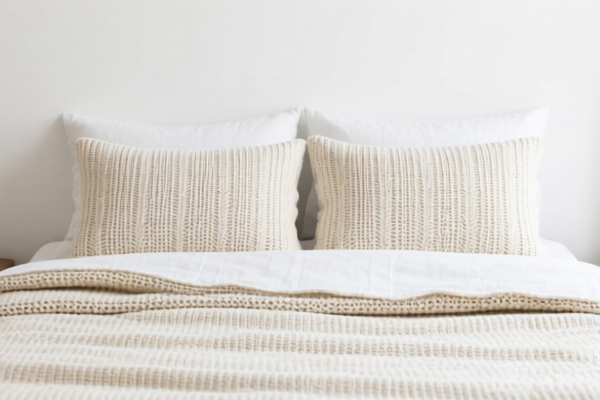
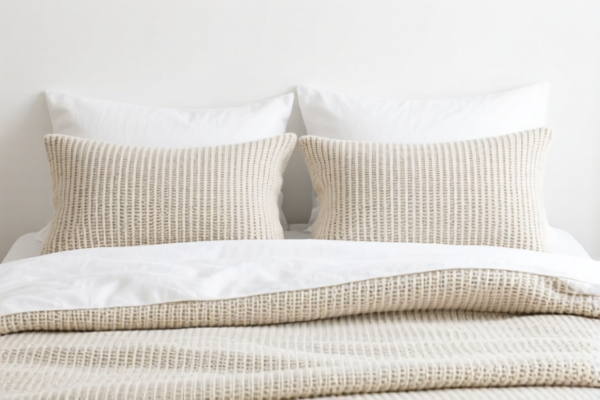
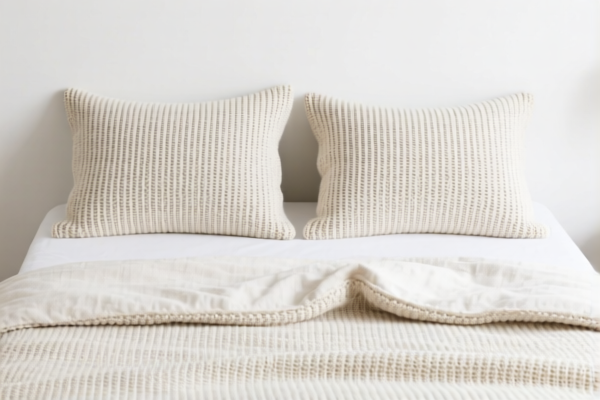
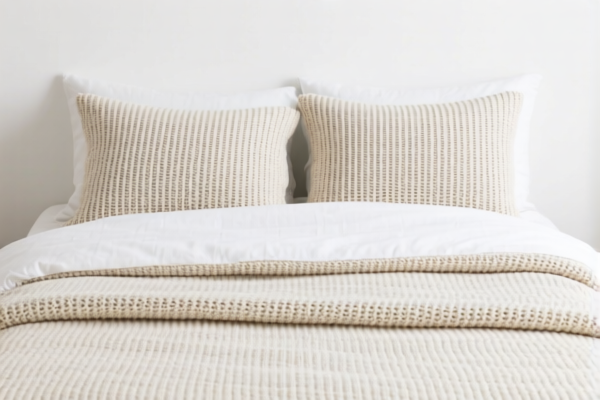
AI Analysis
🛏️ Bed Linen & Bedding Articles (Household Textiles)
🌐 HS Code Reference & Customs Clearance Guide | 2026 Latest Tariff Breakdown | Strategic Entry Strategy
📌 I. Product Definition & Classification: What Exactly is "Bed Linen"?
"Bed Linen" is a broad term in international trade that generally refers to textiles used in the bedroom, specifically bed sheets, pillowcases, duvet covers, and bedspreads. However, under the Harmonized System (HS), precise classification depends on material composition and specific use.
Key Distinctions: * Bed Coverings (Chapters 63/94): Items primarily designed to cover the bed (e.g., bedspreads, quilts, comforters) often fall under Chapter 63 (Other made-up textile articles) or Chapter 94 (Mattress supports; articles of bedding). * Sheets & Pillowcases (Chapter 6302): Specific items like sheets and pillowcases are strictly classified under Heading 6302, differentiated by fiber content (Cotton vs. Synthetic Fibers). * Bedding Articles (Chapter 9404): Items like mattresses, pillows, and certain "bedding" accessories that don't fit textile headings fall here.
⚠️ Critical Note:
- If the item is a bedspread/coverlet, it is likely 6304.xx.
- If it is a sheet/pillowcase, it is likely 6302.xx.
- If it is a pillow/mattress, it is likely 9404.xx.
- Misclassification leads to massive duty discrepancies due to the varied "Section XI" (Textiles) vs. "Chapter 94" rates.
📦 II. HS Code Classification Matrix (Based on Provided Data)
The following codes are derived directly from the provided dataset for "Bed Linen." Note that the Total Tax Rate varies significantly based on the specific sub-heading and the breakdown of base tariffs + trade remedies (Section 301/122).
| HS Code | Product Description / Summary | Total Tax Rate | Composition of Tax |
|---|---|---|---|
6304.19.10.00 |
Bed Spreads / Coverlets (Inferred cotton/other fiber based on common knowledge) |
21.9% | Base: 4.4% Added: 7.5% Section 122: 10% |
6302.32.20.60 |
Sheeting / Pillowcases (Synthetic) (Matches use; inferred man-made fibers) |
21.4% | Base: 11.4% Added: 0.0% Section 122: 10% |
6302.39.00.30 |
Other Bed Linen (Sheets/Pillowcases) (Matches use/form; excludes wool/silk) |
21.8% | Base: 4.3% Added: 7.5% Section 122: 10% |
9404.90.20.60 |
Bedding Articles (Pillows/Comforters) (Falls under "Bedding articles" broad category) |
23.5% | Base: 6.0% Added: 7.5% Section 122: 10% |
6304.11.10.00 |
Bed Spreads (Cotton) (High match for "Bed Cover" use; cotton material) |
29.5% | Base: 12.0% Added: 7.5% Section 122: 10% |
9404.40.90.36 |
Bedding Articles (Other) (Fits "Bedding Articles" usage; "Other" residual category) |
22.8% | Base: 12.8% Added: 0.0% Section 122: 10% |
🔍 Analysis of Tax Structure:
- The 10% "Section 122 Tariff" is a constant across all provided codes. This suggests a specific trade policy application (likely US import duties on certain Chinese textiles/apparel).
- Base Tariffs vary from 4.3% to 12.8%, driven by whether the item is considered a "cover" (6304/9404) or "sheeting" (6302).
- Added Tariffs (Section 301-like) of 7.5% apply to most codes except6302.32.20.60and9404.40.90.36.
💰 III. Detailed Tariff Breakdown & Tax Calculation
✅ Context: Based on the provided data, these rates appear to reflect US Import Duties (given the "122" and "Added Tariff" structure typical of recent US trade actions on Chinese goods).
✅ Calculation Basis: Ad Valorem (percentage of CIF value).
🎯 1. The "Cotton Bedspread" Trap: 6304.11.10.00
- Product: Cotton Bed Spreads/Coverlets.
- Total Rate: 29.5% (Highest in the list).
- Breakdown:
- Base Duty: 12.0%
- Added Duty: 7.5%
- Section 122 Duty: 10%
- Why it's expensive: Cotton textiles often face higher base duties than synthetics in certain classifications, compounded by trade remedies.
🎯 2. The "Synthetic Sheeting" Opportunity: 6302.32.20.60
- Product: Synthetic Fiber Sheets/Pillowcases.
- Total Rate: 21.4% (Lowest in the list).
- Breakdown:
- Base Duty: 11.4%
- Added Duty: 0.0% (✅ Exemption)
- Section 122 Duty: 10%
- Strategy: If you are selling synthetic sheets/pillowcases, this code offers a 7.5% savings on the "Added Duty" portion compared to cotton coverlets.
🎯 3. The "General Bedding" Fallback: 9404.90.20.60 & 9404.40.90.36
- Product: Pillows, Mattress Pads, Other Bedding Articles.
- Rates: 23.5% (
9404.90) and 22.8% (9404.40). - Breakdown:
- Base Duty: 6.0% or 12.8%
- Added Duty: 7.5% (for
9404.90) or 0.0% (for9404.40) - Section 122 Duty: 10%
- Insight:
9404.40.90.36has a high base duty (12.8%) but no added duty, making it competitive against textile codes that have both base + added + 122 duties.
🛠️ IV. Customs Clearance & Compliance Advice
✅ 1. Documentation Checklist (Mandatory)
| Document | Requirement | Notes |
|---|---|---|
| Commercial Invoice | Must specify "Material Composition" (e.g., 100% Cotton, 100% Polyester). | HS Code 6302 vs 6304 depends heavily on this. |
| Packing List | Detailed breakdown of items (Sheets, Pillows, Duvets). | Do not lump all into "Bed Linen"; split by type. |
| Bill of Lading/Air Waybill | Standard shipping docs. | Ensure Consignee/Notify Party details are accurate. |
| Certificate of Origin | Essential for trade remedy checks. | Must clearly state "Made in China" if applicable. |
| Product Description | Specific: "100% Cotton Percale Sheet Set" vs. "Polyester Bedspread." | Avoid vague terms like "Bedding Accessories." |
✅ 2. Classification Strategy (How to Choose)
-
Identify the Primary Item: Is it a sheet (flat textile) or a bedspread (decorative cover) or a pillow (filling)?
- Sheet/Pillowcase → Go to 6302 (Chapter 6302.32/39).
- Bedspread/Coverlet → Go to 6304 (Chapter 6304.11/19).
- Pillow/Mattress Topper → Go to 9404 (Chapter 9404.40/90).
-
Check Material:
- Cotton: Likely
6304.11.10.00(29.5%) or6302.39.00.30(21.8%). - Synthetic (Polyester): Likely
6302.32.20.60(21.4%) or9404.90.20.60(23.5%).
- Cotton: Likely
-
Minimize Duty:
- If your product can be classified as Synthetic Sheeting (
6302.32.20.60), you save 7.5% on the added tariff. - If it is a Pillow/Bedding Article (
9404.40.90.36), you also save the 7.5% added tariff, despite a higher base duty.
- If your product can be classified as Synthetic Sheeting (
✅ 3. Red Flags & Pitfalls
- ❌ Vague Descriptions: "Bed Linen Set" is not sufficient. It triggers manual examination and potential misclassification.
- Fix: Use "100% Cotton Duvet Cover" or "Polyester Fiber Fill Pillow."
- ❌ Ignoring Section 122: All provided codes include a 10% Section 122 Tariff. This is non-negotiable for most textile imports from certain origins. Ensure your cost model includes this.
- ❌ Misclassifying Pillows as Textiles: Pillows with filling belong in 9404, not 6302/6304. Misclassification can lead to audits.
🌍 V. Global Market Comparison (Inferred Context)
| Market | Likely HS Code for Sheets | Likely HS Code for Bedspreads | Estimated Duty Impact |
|---|---|---|---|
| 🇺🇸 United States | 6302.32/39 |
6304.11/19 |
High (Base + Added + Sec 122) |
| 🇨🇳 China | 6302.32/39 |
6304.11/19 |
Low/Moderate (MFN Rates) |
| 🇪🇺 European Union | 6302.32/39 |
6304.11/19 |
Moderate (Standard MFN) |
| 🇬🇧 United Kingdom | 6302.32/39 |
6304.11/19 |
Moderate (Post-Brexit Tariffs) |
📌 Note: The data provided is specific to a jurisdiction with "122" and "Added" tariffs, strongly suggesting US Trade Policy. Importers to other regions will see different duty structures (likely without the 122/Added components).
📌 VI. Final Recommendations
- Pre-Classification Audit: Before shipping, confirm the exact material (Cotton vs. Synthetic) and item type (Sheet vs. Cover vs. Pillow).
- Cost Modeling: Include the 10% Section 122 Tariff in your landed cost calculation. It is a significant variable.
- Documentation Precision: Clearly distinguish between "Bedspreads" (6304) and "Sheets" (6302). The 7.5% "Added Tariff" difference between some codes makes this distinction financially material.
- Legal Counsel: Given the complexity of Section 122 and Added Tariffs, consult a licensed customs broker to verify the applicability of these specific HTS codes for your shipment's origin and material.
🎯 Key Takeaway:
"Material is Money. A Synthetic Sheet (
6302.32) saves you 7.5% in Added Tariffs compared to a Cotton Cover (6304.11). Always classify by specific item type, not generic 'Bed Linen.'"
✨ Accurate Classification = Predictable Costs.
💼 Don't let vague descriptions cost you 30% in duties!
Customer Reviews
About HS Code Classification
The Harmonized System (HS) is an internationally standardized nomenclature developed by the World Customs Organization (WCO) to classify traded products. Over 200 countries use the HS system as the basis for customs tariffs, trade statistics, and import/export regulations.
Each HS code follows a hierarchical structure:
- Chapter (2 digits) — Broad category of goods (e.g., Chapter 84: Machinery and Mechanical Appliances)
- Heading (4 digits) — More specific grouping within the chapter
- Subheading (6 digits) — Internationally standardized breakdown, used by all WCO member countries
- National subdivisions (8-10 digits) — Country-specific extensions for further classification, such as US HTSUS 10-digit codes
Correct HS code classification is essential for smooth customs clearance, accurate duty payment, and compliance with trade regulations. Misclassification can lead to customs delays, overpayment of duties, or penalties.
When importing from CN to US, the applicable tariff rates may include:
- Most-Favored-Nation (MFN) rate — The standard duty rate applied to WTO members
- General rate — Applied to countries without trade agreements
- Trade remedy duties — Additional tariffs such as Section 301 (anti-dumping), Section 232 (national security), or countervailing duties
The information provided on this page is for reference purposes only. For official classification, please consult with your local customs authority or a licensed customs broker.