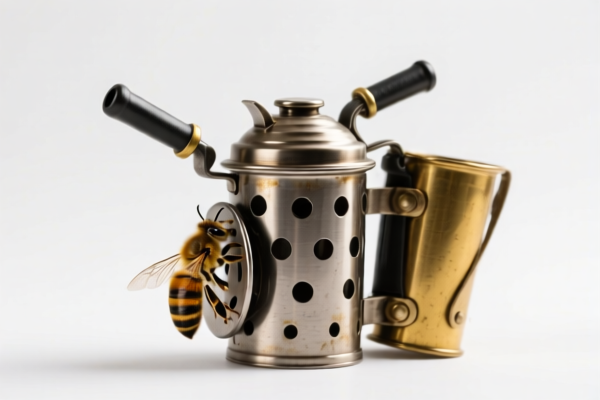
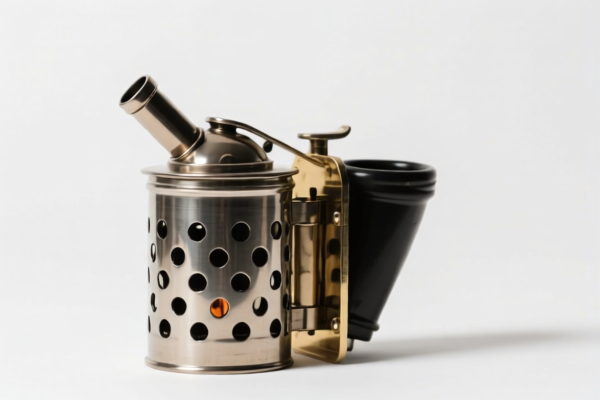
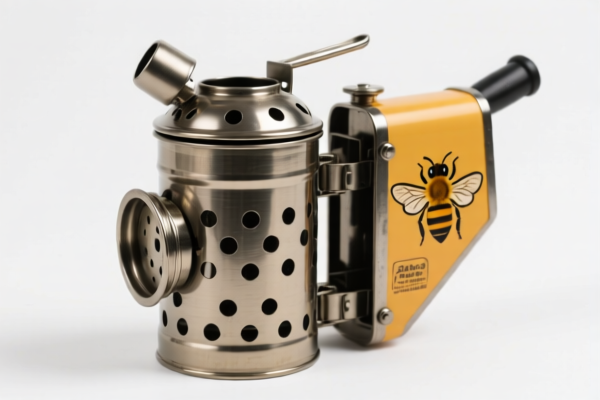
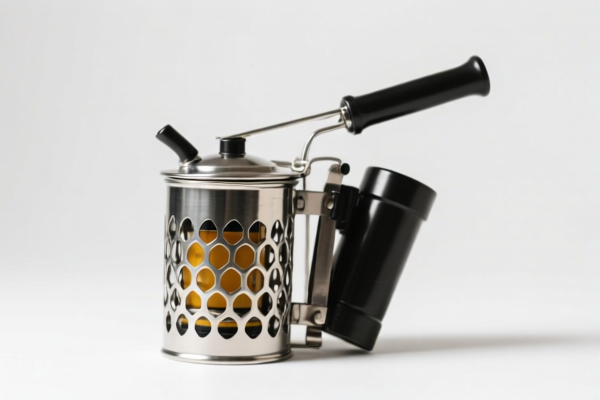
bee smoker
CN → US| HS Code | Tariff Rate | Origin | Destination | Doc |
|---|---|---|---|---|
| 8419899560 | 39.2% | CN | US | Official Doc |
| 8205600000 | 37.9% | CN | US | Official Doc |
| 8205591000 | 42.2% | CN | US | Official Doc |
Product Images
AI Analysis
🐝 Bee Smoker: The Essential Apiary Tool
🌐 HS Code Reference & Customs Clearance Guide | 2024 Latest Tariff Analysis | Professional Clearance Strategy
📌 Part I: Product Definition – Do You Really Know a "Bee Smoker"?
A Bee Smoker is a handheld device used in beekeeping to calm bees by masking alarm pheromones (isopentyl acetate) with smoke. It typically consists of a bellows, a fire pan, and a nozzle. While simple in appearance, its functional classification in international trade is complex because it combines mechanical parts (bellows) with heating elements (fuel combustion).
⚠️ Key Classification Ambiguity:
- Is it a machine for heat treatment (Chapter 84)?
- Or is it a hand tool (Chapter 82)?
The answer depends on whether customs prioritizes the heating function or the manual handling aspect.
📦 Part II: HS Code Classification Details (Based on Provided Data)
Based on the specific data provided, three potential HS Codes have been identified. Each reflects a different interpretive approach by customs authorities.
🆚 Comparison Table of Potential Classifications
| HS Code | Classification Logic | Total Tax Rate (China-US) | Breakdown of Taxes |
|---|---|---|---|
| 8419.89.95.60 | Function-Driven: Viewed as a device that uses heat to process materials (smoke generation for calming). Fits Chapter 84 (Machinery for heat treatment). | 39.2% | Base: 4.2% Add. Tariff: 25.0% Section 301 (122 Clause): 10% |
| 8205.60.00.00 | Tool-Driven: Viewed as a self-contained portable torch or similar heating tool. Fits Chapter 82 (Tools of base metal). | 37.9% | Base: 2.9% Add. Tariff: 25.0% Section 301 (122 Clause): 10% |
| 8205.59.10.00 | Hand Tool/Extension: Viewed as a handheld tool extension of plumb bobs or similar manual tools. Fits Chapter 82 (Other hand tools). | 42.2% | Base: 7.2% Add. Tariff: 25.0% Section 301 (122 Clause): 10% |
💰 Part III: Detailed Tariff Analysis & Tax Clause Explanation
✅ Applicable Country: United States (US)
✅ Origin: China (CN)
✅ Status: High Tariff Environment for Apiary Tools
🎯 1. HS Code 8419.89.95.60 – The "Heat Treatment Machine" Approach
Most logical for automated or industrial-style smokers, but often contested for manual ones.
| Item | Detail |
|---|---|
| Base Duty | 4.2% (General Rate) |
| Section 301 Additional Duty | +25.0% (Standard USITC Footnote for China) |
| Section 122 / IEEPA Duty | +10.0% (Specific clause for certain Chinese goods) |
| Total Effective Tax | 39.2% |
| Calculation Base | CIF Value (Cost + Insurance + Freight) × 39.2% |
| De Minimis Exemption | ❌ NOT APPLICABLE |
| Legal Path | USITC:8419.89.95.60 → Section 301: 25% → Section 122: 10% |
📌 Why this applies:
Customs may view the smoker as a "machine" because it produces heat (smoke) to alter the biological state of the bees. This is the most "functional" interpretation.
🎯 2. HS Code 8205.60.00.00 – The "Portable Torch/Tool" Approach
Often the most competitive rate among the options provided.
| Item | Detail |
|---|---|
| Base Duty | 2.9% (General Rate) |
| Section 301 Additional Duty | +25.0% |
| Section 122 / IEEPA Duty | +10.0% |
| Total Effective Tax | 37.9% |
| Calculation Base | CIF Value × 37.9% |
| De Minimis Exemption | ❌ NOT APPLICABLE |
| Legal Path | USITC:8205.60.00.00 → Section 301: 25% → Section 122: 10% |
📌 Why this applies:
The summary notes this is considered a "similar self-contained torch or portable heat source." Since a smoker is essentially a manual torch producing smoke, this functional analogy is strong.
🎯 3. HS Code 8205.59.10.00 – The "Other Hand Tool" Approach
Highest tax rate; least favorable.
| Item | Detail |
|---|---|
| Base Duty | 7.2% (General Rate) |
| Section 301 Additional Duty | +25.0% |
| Section 122 / IEEPA Duty | +10.0% |
| Total Effective Tax | 42.2% |
| Calculation Base | CIF Value × 42.2% |
| De Minimis Exemption | ❌ NOT APPLICABLE |
| Legal Path | USITC:8205.59.10.00 → Section 301: 25% → Section 122: 10% |
📌 Why this applies:
This归类 is based on a logical inference that the smoker is an extension of "plumb bobs or similar hand tools." However, this is a weaker functional match than the torch analogy, hence the higher base duty.
🛠️ Part IV: Customs Clearance Practical Advice
✅ 1. Documentation Checklist (Critical for Clearance)
| Document | Required? | Purpose |
|---|---|---|
| Product Description | ✔️ | Must clearly state "Bee Smoker," "Apiary Tool," or "Manual Beekeeping Smoker." Avoid vague terms like "Smoke Generator." |
| Material Composition | ✔️ | Specify metal type (e.g., Zinc Alloy, Steel) and plastic parts (if any). Crucial for Chapter 82 vs. 85/84 distinction. |
| Operation Manual | ✔️ | Demonstrates it is a manual tool (bellows operated), supporting HS 82 classification over automated machinery. |
| Commercial Invoice | ✔️ | Value must be accurate. Note that de minimis ($800) does not apply due to Section 301/122 duties. |
| Origin Certificate | ✔️ | Proof of Chinese origin to apply the correct 25% + 10% surcharges. |
✅ 2. Declaration Strategy: How to Lower Risk & Cost
🔥 Golden Rule: "Function First, Tool Second."
| Strategy | Recommended Action | Rationale |
|---|---|---|
| Preferred HS Code | 8205.60.00.00 (37.9%) | Lowest total tax rate among options. Justify it as a "portable heating tool" similar to a torch. |
| Avoid HS Code | 8205.59.10.00 (42.2%) | Highest tax rate. Only use if customs insists on "hand tool" classification but rejects "torch" analogy. |
| Alternative HS Code | 8419.89.95.60 (39.2%) | Use only if the device has electronic ignition/temperature control. For manual bellows smokers, this is often misapplied. |
| Description Tip | "Manual Bee Smoker, Zinc Alloy, Bellows-Operated" | Emphasize "Manual" and "Beekeeping" to avoid being classified as an industrial smoke generator. |
✅ 3. Special Considerations for US Imports
- No De Minimis Exemption:
Even if the shipment value is under $800, Section 301 (25%) and Section 122 (10%) duties still apply. You must pay the ~38-42% tax on every entry. - Section 122 Clause:
The additional 10% is significant. Ensure your supplier’s country of origin is correctly declared as China. - Pre-Ruling Recommendation:
Given the ambiguity between Chapter 82 (Tools) and Chapter 84 (Machinery), consider applying for an Advance Ruling (Pre-Decision) from US Customs and Border Protection (CBP). This locks in the classification and avoids retroactive duty adjustments.
🌍 Part V: Global Market Comparison (Snapshot)
| Market | Likely HS Code | Estimated Total Duty | Notes |
|---|---|---|---|
| 🇺🇸 USA | 8205.60.00.00 |
37.9% | High duties due to 301 + 122. |
| 🇨🇳 China | 8205.60.00.00 |
~7-10% | Low base duty, no US-style surcharges. |
| 🇪🇺 EU | 8205.60.00.00 |
~4-6% | No Section 301/122 equivalents. |
| 🇨🇦 Canada | 8205.60.00.00 |
~5-10% | Check CUSMA eligibility for duty reduction. |
📌 Conclusion:
The US market is the most expensive for importing Bee Smokers from China due to叠加 tariffs (Base + 25% + 10%). Suppliers in Vietnam or Thailand may offer significant cost advantages due to lower tariff rates.
📌 Part VI: Common Mistakes & Pitfalls
❌ Mistake 1: Declaring as "Industrial Smoke Machine"
👉 Consequence: Misclassification under Chapter 84, potential penalties for fraud if deemed manual.
❌ Mistake 2: Assuming De Minimis ($800) Applies
👉 Consequence: Package seized, duties + storage fees + fines.
❌ Mistake 3: Using Generic Description "Smoker"
👉 Consequence: CBP may assign a default high-duty code or request further documentation, causing delays.
✅ Correct Description Example:
"Beekeeping Smoker, Manual, Zinc Alloy Body, Plastic Handle, Used to Calm Honeybees, Model BS-100"
🎯 Part VII: Final Recommendation
- Best HS Code:
8205.60.00.00
Reason: Lowest tax burden (37.9%) and strong functional argument as a "portable heat source/torch." - Action Plan:
- Prepare detailed product specs showing manual operation.
- Label clearly as "Apiary Tool" or "Beekeeping Equipment."
- Budget for ~38% total landed cost increase due to taxes.
- Consider sourcing from non-China origins if profit margins are thin.
📣 Pro Tip:
"In the beekeeping trade, smoke calms bees. In customs, clear documentation calms your accountant. Classify as
8205.60.00.00, pay 37.9%, and sleep well!"
✨ Precise Classification = Predictable Costs = Profitable Imports
💼 Don’t let tariff ambiguity sting your business like an angry bee!
Customer Reviews
About HS Code Classification
The Harmonized System (HS) is an internationally standardized nomenclature developed by the World Customs Organization (WCO) to classify traded products. Over 200 countries use the HS system as the basis for customs tariffs, trade statistics, and import/export regulations.
Each HS code follows a hierarchical structure:
- Chapter (2 digits) — Broad category of goods (e.g., Chapter 84: Machinery and Mechanical Appliances)
- Heading (4 digits) — More specific grouping within the chapter
- Subheading (6 digits) — Internationally standardized breakdown, used by all WCO member countries
- National subdivisions (8-10 digits) — Country-specific extensions for further classification, such as US HTSUS 10-digit codes
Correct HS code classification is essential for smooth customs clearance, accurate duty payment, and compliance with trade regulations. Misclassification can lead to customs delays, overpayment of duties, or penalties.
When importing from CN to US, the applicable tariff rates may include:
- Most-Favored-Nation (MFN) rate — The standard duty rate applied to WTO members
- General rate — Applied to countries without trade agreements
- Trade remedy duties — Additional tariffs such as Section 301 (anti-dumping), Section 232 (national security), or countervailing duties
The information provided on this page is for reference purposes only. For official classification, please consult with your local customs authority or a licensed customs broker.