bicycle handle
CN → US| HS Code | Tariff Rate | Origin | Destination | Doc |
|---|---|---|---|---|
| 8714998000 | 27.5% | CN | US | Official Doc |
| 8714996000 | 17.5% | CN | US | Official Doc |
| 8712005000 | 0.0% | CN | US | Official Doc |
| 8712004800 | 46.0% | CN | US | Official Doc |
Product Images
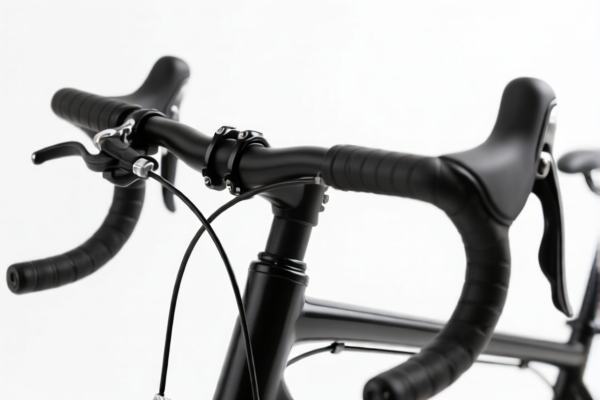
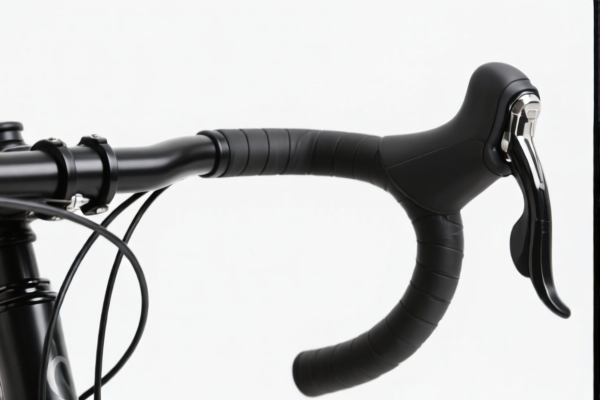
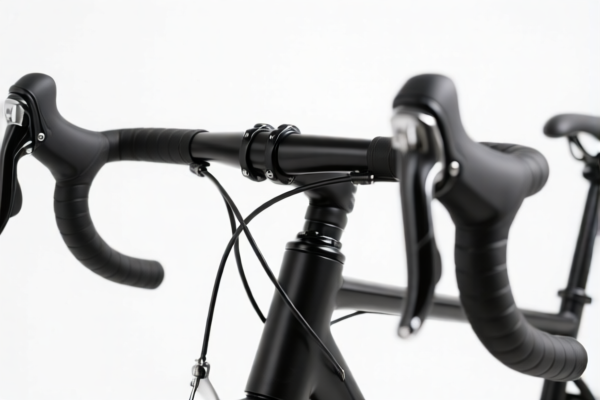
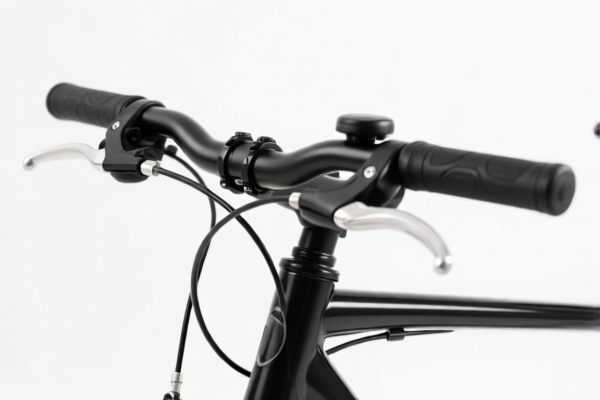
AI Analysis
🚴♂️ Bicycle Handlebars: The Steering Heart of Your Bike
🌐 HS Code Reference & Customs Clearance Guide | 2026 Latest Tariff Analysis | Professional-Level Clearance Strategy
📌 Part 1: Product Definition & Classification: What Exactly is a "Bicycle Handlebar"?
A bicycle handlebar is the primary steering control component of a bicycle, transferring rider input to the front wheel. In international trade, it is classified not as a finished bicycle, but as a part/accessory. However, its classification depends heavily on structural integration and material usage, leading to significant tariff differences.
⚠️ Key Distinction Point:
- If the handlebar is identified as a standard spare part for a bicycle frame → It falls under Chapter 87 (Vehicles), specifically 8712 (Bicycles).
- If classified broadly as a generic vehicle part or if specific bicycle sub-headings are disputed → It may fall under 8714 (Parts and Accessories of Vehicles).
- Material Conflicts: Certain materials (e.g., specific metals or composites) may trigger different sub-headings within these chapters.
📦 Part 2: HS Code Classification Matrix (2026 Latest Tariff Authorities)
| HS Code | Product Description | Application Scenario | Tax Rate Structure |
|---|---|---|---|
8712.00.50.00 |
Handlebars classified as bicycle parts/components. Matches "Bracket/Component" rules. | Standard bike parts, aftermarket replacements. | 3.7% (Base) + 25% (Section 301) + 10% (Section 122) |
8714.99.80.00 |
Bicycle handlebars as vehicle parts/accessories. Matches "Other Categories" fallback. | Generic vehicle accessories, ambiguous structure. | 27.5% (Total: 10% Base + 7.5% Add-on + 10% Sec 122) |
8712.00.48.00 |
Handlebars as other bicycle accessories under Chapter 8712. | Specific bicycle accessory attributes. | 46.0% (Total: 11% Base + 25% Add-on + 10% Sec 122) |
8714.99.60.00 |
Matches bicycle handlebar/stem usage description. No material conflict. | Specific handlebar/stem combos. | 17.5% (Total: 0% Base + 7.5% Add-on + 10% Sec 122) |
8714.99.80.00 |
Belong to bicycle parts & accessories category. | General vehicle part classification. | 27.5% (Total: 10% Base + 7.5% Add-on + 10% Sec 122) |
🔍 Critical Insight:
- The "Base Tax Rate" varies significantly (from 0% to 11%) depending on the precise sub-headings used.
- The Section 122 Tariff (10%) is constant across all codes for this product from China.
- The Section 301/Add-on Tariffs vary between 7.5% and 25%, causing a massive spread in total cost.
💰 Part 3: 2026 Latest Tariff Rate Breakdown (Including Surcharges)
✅ Applicable Country: United States (US)
✅ Origin: China (CN)
✅ Effective Time: Current policies apply (Section 122 & 301 active)
🎯 1. 8712.00.50.00 —— Best Case Scenario? Low Base Tax
| Item | Content |
|---|---|
| Base Tariff | 3.7% |
| Section 301 Surcharge | +25.0% |
| Section 122 Tariff | +10.0% |
| Total Effective Rate | 38.7% |
| Calculation Basis | CIF Value × 38.7% |
| De Minimis Exemption | ❌ Not Eligible (Subject to high scrutiny) |
| Legal Path | 8712.00.50.00 → Section 301 → Section 122 |
📌 Explanation:
- This code offers the lowest base rate (3.7%).
- However, the 25% Section 301 tariff still applies, making the total burden high.
- Use this if the handlebar is clearly defined as a standard bicycle component.
🎯 2. 8714.99.60.00 —— Zero Base Tariff Opportunity?
| Item | Content |
|---|---|
| Base Tariff | 0.0% |
| Section 301 Surcharge | +7.5% |
| Section 122 Tariff | +10.0% |
| Total Effective Rate | 17.5% |
| Calculation Basis | CIF Value × 17.5% |
| De Minimis Exemption | ❌ Not Eligible |
| Legal Path | 8714.99.60.00 → Section 301 (7.5%) → Section 122 |
📌 Explanation:
- This is the most cost-effective classification if accepted by customs.
- 0% Base + only 7.5% Add-on = 17.5% Total.
- Requires proving the item matches the specific "bicycle handlebar/stem" description in 8714.99.60.00.
🎯 3. 8712.00.48.00 —— Highest Cost Risk
| Item | Content |
|---|---|
| Base Tariff | 11.0% |
| Section 301 Surcharge | +25.0% |
| Section 122 Tariff | +10.0% |
| Total Effective Rate | 46.0% |
| Calculation Basis | CIF Value × 46.0% |
| De Minimis Exemption | ❌ Not Eligible |
| Legal Path | 8712.00.48.00 → Section 301 → Section 122 |
📌 Warning:
- This code attracts the maximum penalty.
- High base (11%) + Maximum Section 301 (25%) + Sec 122 (10%) = 46%.
- Avoid this unless specifically required by regulatory constraints.
🎯 4. 8714.99.80.00 —— The "Catch-All" Fallback
| Item | Content |
|---|---|
| Base Tariff | 10.0% |
| Section 301 Surcharge | +7.5% |
| Section 122 Tariff | +10.0% |
| Total Effective Rate | 27.5% |
| Calculation Basis | CIF Value × 27.5% |
| De Minimis Exemption | ❌ Not Eligible |
| Legal Path | 8714.99.80.00 → Section 301 (7.5%) → Section 122 |
📌 Explanation:
- Often used when the specific "bicycle part" code is disputed.
- Moderate cost at 27.5%.
- Safer than8712.00.48.00but more expensive than8714.99.60.00.
🛠️ Part 4: Customs Clearance Practical Advice (Real-World Pitfall Guide)
✅ 1. Documentation Checklist (Non-Negotiable)
| Document | Required | Description |
|---|---|---|
| ✅ Product Specification Sheet | ✔️ | Must detail material (Aluminum, Carbon, Steel), weight, and dimensions. |
| ✅ Technical Drawings | ✔️ | Show how it attaches to the stem/bike frame. Proves it’s a "part," not a generic handle. |
| ✅ Product Photos | ✔️ | Clear images of the handlebar, including any branding or model numbers. |
| ✅ Commercial Invoice | ✔️ | Must explicitly state "Bicycle Handlebars for Use in Bicycles". Avoid vague terms like "Metal Pipe." |
| ✅ Bill of Lading/Air Waybill | ✔️ | Ensure packaging reflects the declared value and quantity. |
✅ 2. Declaration Strategy (Key Mantra)
🔥 "Be Specific, Be Accurate, Avoid 'Other' Codes!"
| Scenario | Correct Declaration | Incorrect Practice |
|---|---|---|
| Standard Handlebar | 8714.99.60.00 (17.5%) or 8712.00.50.00 (38.7%) |
Vague term "Bicycle Part" → Risks 8714.99.80.00 |
| Carbon Fiber Handlebar | Highlight material in description; may still fall under 8714 |
Misclassifying as "Part of Machine" → Higher scrutiny |
| Integrated Brake Lever | Declare as complete assembly | Splitting into "Handle" + "Brake" → Complex classification |
| Gift/Free Sample | Still subject to duty if value > De Minimis | Assuming "Free" means "Duty-Free" → False! |
✅ 3. Special Circumstances Handling
| Situation | Recommendation |
|---|---|
| OEM Custom Handlebars | Provide OEM agreement + design specs. Helps prove intended use as bicycle parts. |
| Mixed Container (Bikes + Parts) | Declare separately. Do not bundle handlebars under the main bike HS code. |
| Disputed Classification | Apply for CBP Ruling (Advance Ruling) before shipment. Saves time and penalties. |
| Section 122 Compliance | Ensure product country of origin is clearly marked China. Section 122 applies strictly to Chinese goods. |
🌍 Part 5: Global Market Comparison (2026)
| Country/Region | Recommended HS Code | Estimated Total Duty | Notes |
|---|---|---|---|
| 🇺🇸 USA | 8714.99.60.00 |
17.5% | Best rate if accepted. Includes Sec 122 & 301. |
| 🇺🇸 USA | 8712.00.48.00 |
46.0% | Worst-case scenario. High base + high surcharge. |
| 🇨🇳 China | 8714.99.00.00 |
Varies | Import duties may be lower; focus on VAT. |
| 🇪🇺 EU | 8714.99.00 |
~4.5% + VAT | No Section 301/122 equivalent. Much cheaper. |
| 🇨🇦 Canada | 8714.99.00 |
~5-7% | Competitive, but verify CUSMA eligibility. |
📌 Conclusion:
- The US market is the most expensive due to additive tariffs (Sec 301 + Sec 122).
- Optimizing HS Code from8712.00.48.00to8714.99.60.00saves 28.5% in duties.
- Always verify the latest USITC Exclusions if applicable (though rare for bicycle parts).
📌 Part 6: Common Mistakes & Pitfall Avoidance (Blood Lessons)
❌ Mistake 1: Declaring as "Bicycle Part" without specifying Handlebar.
👉 Consequence: Customs may assign a generic code with higher base rates.
❌ Mistake 2: Ignoring Section 122.
👉 Consequence: Even if Sec 301 is excluded, Sec 122 (10%) may still apply to Chinese goods.
❌ Mistake 3: Using 8712.00.48.00 without justification.
👉 Consequence: 46% total duty is unnecessarily high. Fight for 8714.99.60.00.
❌ Mistake 4: Assuming De Minimis (Under $800) exempts this item.
👉 Consequence: Section 301 and 122 tariffs often override De Minimis exemptions for certain categories. Check CBP notices.
✅ Correct Approach:
"Aluminum Bicycle Handlebars, Straight Design, 600mm Width, Compatible with Standard 31.8mm Stem, Model XYZ, Made in China"
🎯 Part 7: Conclusion: Precision Pays Off!
🎯 Remember the Mantra:
🔹 "Low Base, Low Add-on = High Profit!"
🔹 Fight for8714.99.60.00(17.5%) over8712.00.48.00(46.0%)!
🔹 "Section 122 is always 10% for China. Don't forget it!"
📌 Pro Tip:
If your handlebars are made from specialty materials (e.g., titanium, carbon fiber), ensure your technical docs highlight this to justify specific sub-headings.
Recommend Applying for a CBP Ruling to lock in the 17.5% rate before bulk shipment.
📣 Take Action Now:
📞 Consult your customs broker with the Technical Drawing.
🚀 Optimize your HS Code and save up to 28.5% in duties!
✨ Professional Clearance Starts with Precise Classification!
💼 Every Percentage Point Counts in Your Margin!
Customer Reviews
About HS Code Classification
The Harmonized System (HS) is an internationally standardized nomenclature developed by the World Customs Organization (WCO) to classify traded products. Over 200 countries use the HS system as the basis for customs tariffs, trade statistics, and import/export regulations.
Each HS code follows a hierarchical structure:
- Chapter (2 digits) — Broad category of goods (e.g., Chapter 84: Machinery and Mechanical Appliances)
- Heading (4 digits) — More specific grouping within the chapter
- Subheading (6 digits) — Internationally standardized breakdown, used by all WCO member countries
- National subdivisions (8-10 digits) — Country-specific extensions for further classification, such as US HTSUS 10-digit codes
Correct HS code classification is essential for smooth customs clearance, accurate duty payment, and compliance with trade regulations. Misclassification can lead to customs delays, overpayment of duties, or penalties.
When importing from CN to US, the applicable tariff rates may include:
- Most-Favored-Nation (MFN) rate — The standard duty rate applied to WTO members
- General rate — Applied to countries without trade agreements
- Trade remedy duties — Additional tariffs such as Section 301 (anti-dumping), Section 232 (national security), or countervailing duties
The information provided on this page is for reference purposes only. For official classification, please consult with your local customs authority or a licensed customs broker.