bidirectional ratchet quick wrench
CN → US| HS Code | Tariff Rate | Origin | Destination | Doc |
|---|---|---|---|---|
| 8204110060 | 44.0% | CN | US | Official Doc |
| 8204120000 | 44.0% | CN | US | Official Doc |
| 8467115040 | 35.0% | CN | US | Official Doc |
| 8467290040 | 17.5% | CN | US | Official Doc |
| 8205513060 | 38.7% | CN | US | Official Doc |
Product Images
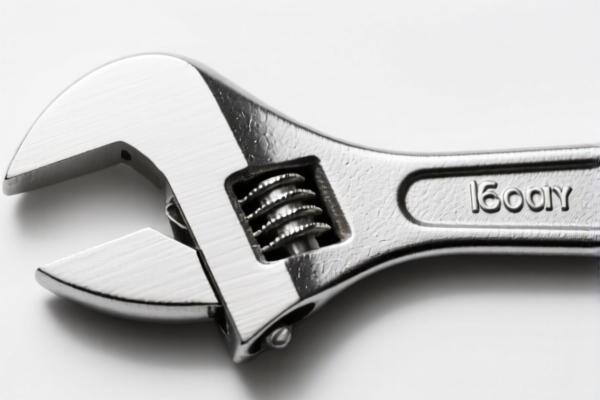
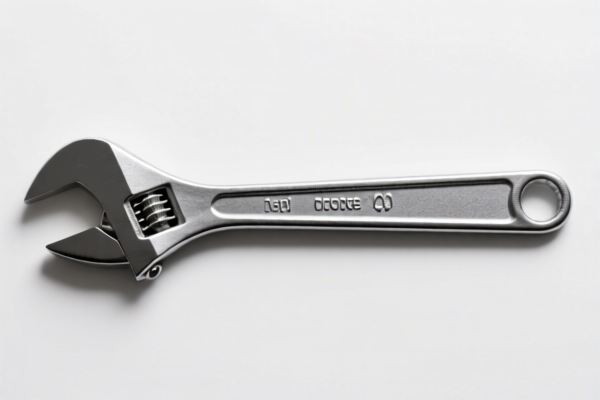
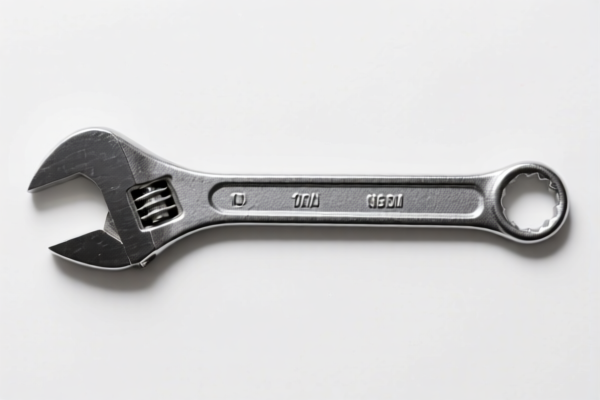
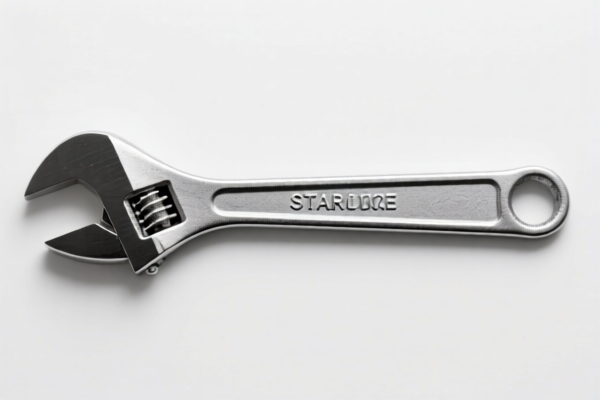
AI Analysis
🔧 Bidirectional Ratchet Quick Wrench
🌐 HS Code Reference & Customs Clearance Guide | 2026 Latest Tariff Analysis | Professional Clearance Strategy
📌 I. Product Definition & Classification: What Exactly is a "Bidirectional Ratchet Quick Wrench"?
The Bidirectional Ratchet Quick Wrench is a hand tool designed for tightening and loosening nuts and bolts. Its key features are: 1. "Bidirectional": It can turn in both clockwise and counter-clockwise directions without removing and repositioning the tool. 2. "Ratchet": It contains a pawl-and-gear mechanism allowing continuous rotation in one direction while freewheeling in the other. 3. "Quick": Refers to the high tooth count of the ratchet gear, allowing for faster operation in tight spaces. 4. "Wrench": The general category of manual torque-applying tool.
⚠️ Key Classification Dilemma:
The main challenge lies in determining whether the tool is classified as a manual hand tool of base metals (Chapter 82) or a power tool part/assembly (Chapter 84), although the name suggests "manual." Customs authorities often scrutinize the material and intended use. If it is purely manual, it falls under Chapter 82. If it has pneumatic/electric components (which the name "Quick Wrench" might misleadingly suggest to some, but the description clarifies as manual/ratchet), it might be misclassified. Based on the provided data, all entries are treated as manual tools or tools where the "wrench" aspect dominates.
📦 II. HS Code Classification Details (2026 Latest Tariff Authority Comparison)
| HS Code | Product Description | Applicable Scenario | Material/Type Inference | Total Tax Rate |
|---|---|---|---|---|
8204.11.00.60 |
Two-way pointed tail ratchet quick wrench | Manual wrench category, fixed/non-adjustable shape | Infered as manual wrench, non-adjustable | 44.0% |
8204.12.00.00 |
Two-way pointed tail ratchet quick wrench | Usage: Wrench, Material: Base metal, Form: Hand tool | Manual hand tool, base metal | 44.0% |
8467.11.50.40 |
Two-way pointed tail ratchet quick wrench | Name "wrench" fits pneumatic/manual tool category | Inferred as pneumatic/manual tool class | 35.0% |
8467.29.00.40 |
Two-way pointed tail ratchet quick wrench | Usage: Nut driver, usually metal | Metal material, nut driver type | 17.5% |
8205.51.30.60 |
Two-way pointed tail ratchet quick wrench | Manual wrench, fits "Household tools/Other hand tools" | Iron or steel, household/other hand tools | 38.7% |
🔍 Critical Insight:
- The classification hinges on whether the customs officer views this as a standard manual wrench (8204or8205) or a specialized tool part (8467). -8204covers hand wrenches (excluding screwdriver handles). This is the most logical fit for a "ratchet wrench." -8467covers tools for working on metal (drills, saws, etc.). If the tool is considered a "nut driver" or part of a larger power tool system, it might fall here, but typically "manual ratchet wrenches" are excluded from8467unless they are attachments. - The tax rates vary significantly, from 17.5% to 44.0%, depending on the specific subheading chosen.
💰 III. 2026 Latest Tariff Rate Breakdown (Including Surcharges & Policy Add-ons)
✅ Applicable Country: United States (US)
✅ Country of Origin: China (CN)
✅ Effective Date: 2025 November 10 onwards (including subsequent imports)
🎯 1. 8204.11.00.60 & 8204.12.00.00 —— Manual Wrenches (Base Metal)
| Item | Content |
|---|---|
| Base Tariff | 9.0% |
| Section 301 Additional Tariff | +25.0% |
| Section 122 Tariff | +10.0% |
| Total Tax Rate | 44.0% |
| Tax Calculation | CIF Value × 44% |
| De Minimis Eligibility | ❌ Not Eligible (deny_de_minimis) |
| Legal Basis Path | Section 301 → Section 122 → 8204.11.00.60 / 8204.12.00.00 |
📌 Explanation:
- The 9.0% is the standard Most Favored Nation (MFN) rate for manual wrenches. - The 25.0% is the Section 301 tariff on Chinese goods. - The 10.0% is the Section 122 tariff (often related to national security or specific industrial policy). - Total 44% is extremely high. This is the standard classification for most manual ratchet wrenches.
🎯 2. 8467.11.50.40 —— Pneumatic/Manual Tools (Other)
| Item | Content |
|---|---|
| Base Tariff | 0.0% |
| Section 301 Additional Tariff | +25.0% |
| Section 122 Tariff | +10.0% |
| Total Tax Rate | 35.0% |
| Tax Calculation | CIF Value × 35% |
| De Minimis Eligibility | ❌ Not Eligible |
| Legal Basis Path | Section 301 → Section 122 → 8467.11.50.40 |
📌 Explanation:
- Base rate is 0%, but the 25% + 10% surcharges still apply. - This classification is risky if the tool is clearly manual, as customs may reclassify it to8204.
🎯 3. 8467.29.00.40 —— Other Tools for Working on Metal (Nut Drivers)
| Item | Content |
|---|---|
| Base Tariff | 0.0% |
| Section 301 Additional Tariff | +7.5% |
| Section 122 Tariff | +10.0% |
| Total Tax Rate | 17.5% |
| Tax Calculation | CIF Value × 17.5% |
| De Minimis Eligibility | ❌ Not Eligible |
| Legal Basis Path | Section 301 (7.5%) → Section 122 → 8467.29.00.40 |
📌 Explanation:
- This is the most favorable tax rate (17.5%). - It assumes the tool is a "nut driver" or part of a tool set classified under "other tools for working on metal." - Caution: This classification is aggressive. If customs determines it's a standard manual wrench, they may assess the 44% rate + penalties.
🎯 4. 8205.51.30.60 —— Other Hand Tools (Iron/Steel)
| Item | Content |
|---|---|
| Base Tariff | 3.7% |
| Section 301 Additional Tariff | +25.0% |
| Section 122 Tariff | +10.0% |
| Total Tax Rate | 38.7% |
| Tax Calculation | CIF Value × 38.7% |
| De Minimis Eligibility | ❌ Not Eligible |
| Legal Basis Path | Section 301 → Section 122 → 8205.51.30.60 |
📌 Explanation:
- Falls under "Other hand tools." Base rate is low (3.7%), but surcharges push it to 38.7%. - Less common for standard ratchet wrenches, which prefer8204.
🛠️ IV. Customs Clearance Practical Advice (Operational Pitfall Avoidance Guide)
✅ 1. Preparation Checklist (All Necessary)
| Document | Must Provide | Explanation |
|---|---|---|
| ✅ Product Specification Sheet | ✔️ | Must clearly state: "Manual Ratchet Wrench," "Bidirectional," "Non-Pneumatic/Electric." |
| ✅ Product Photos (Clear Labels) | ✔️ | Show the ratchet mechanism, handle, and jaws. Proves it's manual. |
| ✅ Commercial Invoice | ✔️ | Description: "Manual Bidirectional Ratchet Wrench, Steel, Non-Powered." |
| ✅ Packing List | ✔️ | Itemized list, no hidden power components. |
| ✅ Country of Origin Certificate (CO) | ✔️ | If applicable for other markets, but for US, origin is key for surcharges. |
| ✅ Declaration of Non-Assembly | ✔️ | If imported in parts, state they are unassembled tools. |
✅ 2. Declaration Tips (Key Mantra)
🔥 "Manual is Key, Power is Not, Name is Precise, Tax Can Drop!"
| Scenario | Correct Declaration | Wrong Practice |
|---|---|---|
| Pure Manual Wrench | 8204.11.00.60 or 8204.12.00.00 |
Misdeclare as 8467 without justification → 35-44% risk |
| "Quick" refers to speed, not power | Explicitly state "Manual" in description | Use "Pneumatic Wrench" in name → Customs suspicion |
| Material is Steel/Iron | Specify "Steel" or "Iron" | Vague "Metal" → May lead to 8205 (38.7%) instead of 8204 (44%) |
| Tool Set | If part of a set, declare main item | Split declaration → Higher total tax |
✅ 3. Special Situation Handling
| Situation | Handling Advice |
|---|---|
| OEM Custom Wrench | Provide design drawings to prove manual operation. |
| "Quick Wrench" Branding | Clarify in declaration that "Quick" refers to ratchet tooth count, not power source. |
| Imported in Bulk | Ensure each unit is manually operable. If any electronic component is present, reclassify. |
Dispute on 8467 |
If 8467.29.00.40 (17.5%) is chosen, be prepared to justify why it's not a standard wrench. Customs may challenge this. |
🌍 V. Global Market Clearance Comparison (2026 Latest)
| Country/Region | Recommended HS Code | Tariff (China Origin) | Certification Requirements | Remarks |
|---|---|---|---|---|
| 🇺🇸 USA | 8204.11.00.60 |
44.0% | No special certs | High tariff due to Section 301 & 122 |
| 🇨🇳 China | 8204.11.00.60 |
~5-9% | CCC (if applicable) | Lower tariff, no Section 301 |
| 🇪🇺 EU | 8204.11.00.60 |
0% (if GSP not applicable, check current) | CE (if applicable) | Generally lower tariffs on tools |
| 🇦🇺 Australia | 8204.11.00.60 |
5% | RCM | No major surcharges |
| 🇯🇵 Japan | 8204.11.00.60 |
0% | PSE | Favorable for tools |
📌 Conclusion:
- USA has the highest effective tariff (44%) for manual ratchet wrenches. - Alternative classification8467.29.00.40(17.5%) is significantly cheaper but carries higher audit risk. - No de minimis exemption applies, so all shipments are subject to full duty.
📌 VI. Common Mistakes & Pitfall Guide (Blood & Tears Lessons)
❌ Mistake 1: Using "Ratchet Wrench" without specifying "Manual"
👉 Consequence: Customs may assume it's pneumatic (8467) and apply different codes, leading to delays.
✅ Fix: Always state "Manual Bidirectional Ratchet Wrench."
❌ Mistake 2: Misclassifying as 8467.29.00.40 (17.5%) without strong justification
👉 Consequence: Audit, back-taxes of 26.5% difference, and penalties.
✅ Fix: Stick to 8204 unless you have a strong legal argument for "nut driver" classification.
❌ Mistake 3: Ignoring Section 122 Tariff
👉 Consequence: Unexpected 10% surcharge.
✅ Fix: Budget for 44% total tax, not just the base rate.
❌ Mistake 4: Declaring as "Hardware" generally
👉 Consequence: Wrong HS code, potential seizure.
✅ Fix: Use specific HS codes.
🎯 VII. Conclusion: Professional Declaration Saves Money!
🎯 Remember the Mantra:
🔹 "Manual is King, Power is Not,
8204is Safe,8467is Risky, 44% is the Price!"
🔹 "HS Code Defines Life, Tax Rate Differs by 25 Points, One Step Wrong, Penalty Follows!"
📌 Tips:
- If your wrench is originally from Vietnam, Mexico, or Thailand, you may qualify for IEEPA Exemptions or lower Section 301 rates.
- Apply for an Advance Ruling from US Customs and Border Protection (CBP) to secure your HS code and tariff rate before shipment.
📣 Immediate Action:
📞 Contact a professional customs broker + Provide Product Photos + Apply for HS Code Advance Ruling
🚀 Ensure your Bidirectional Ratchet Quick Wrench clears customs smoothly, efficiently, and cost-effectively!
✨ Professional Clearance Starts with Accurate Classification!
💼 Every Cent of Your Cost Deserves Precise Calculation!
Customer Reviews
About HS Code Classification
The Harmonized System (HS) is an internationally standardized nomenclature developed by the World Customs Organization (WCO) to classify traded products. Over 200 countries use the HS system as the basis for customs tariffs, trade statistics, and import/export regulations.
Each HS code follows a hierarchical structure:
- Chapter (2 digits) — Broad category of goods (e.g., Chapter 84: Machinery and Mechanical Appliances)
- Heading (4 digits) — More specific grouping within the chapter
- Subheading (6 digits) — Internationally standardized breakdown, used by all WCO member countries
- National subdivisions (8-10 digits) — Country-specific extensions for further classification, such as US HTSUS 10-digit codes
Correct HS code classification is essential for smooth customs clearance, accurate duty payment, and compliance with trade regulations. Misclassification can lead to customs delays, overpayment of duties, or penalties.
When importing from CN to US, the applicable tariff rates may include:
- Most-Favored-Nation (MFN) rate — The standard duty rate applied to WTO members
- General rate — Applied to countries without trade agreements
- Trade remedy duties — Additional tariffs such as Section 301 (anti-dumping), Section 232 (national security), or countervailing duties
The information provided on this page is for reference purposes only. For official classification, please consult with your local customs authority or a licensed customs broker.