binder and anti impact agent for casting
CN → US| HS Code | Tariff Rate | Origin | Destination | Doc |
|---|---|---|---|---|
| 3824100000 | 41.0% | CN | US | Official Doc |
| 3206496050 | 38.1% | CN | US | Official Doc |
| 3206491000 | 40.9% | CN | US | Official Doc |
| 3810905000 | 40.0% | CN | US | Official Doc |
| 3824992900 | 41.5% | CN | US | Official Doc |
Product Images

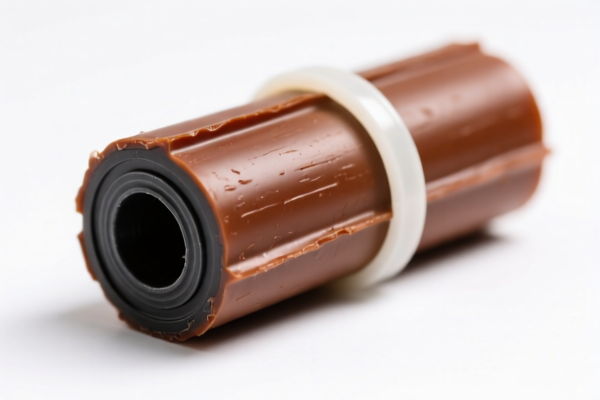
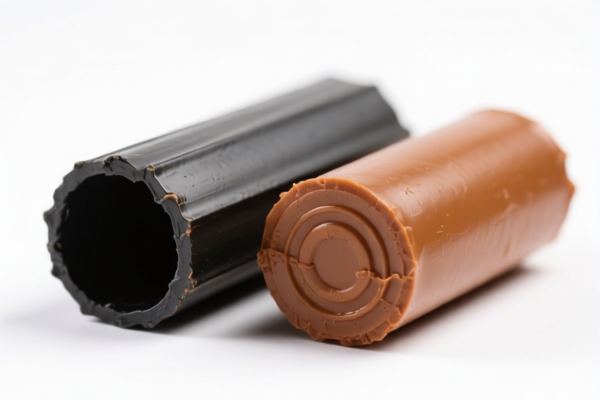
AI Analysis
🏭 Binder and Anti-impact Agent for Casting
🌐 HS Code Reference & Customs Clearance Guide | 2026 Latest Tariff Analysis | Professional Clearance Strategy
📌 I. Product Definition & Classification: Do You Really Understand "Casting Binders"?
A Binder and Anti-impact Agent for Casting is a critical chemical auxiliary material used in the foundry industry. Its primary function is to bind sand grains together to form strong molds or cores, while also providing impact resistance to prevent cracking during handling or pouring.
In international trade, this product is strictly classified based on its chemical composition and specific application. It falls under the realm of Chemical Products (Section VI) or Miscellaneous Chemical Products (Chapter 38).
⚠️ Key Classification Logic:
- If the product is primarily a binding agent for molds/cores → Look at Chapter 38 (3824).
- If the product is primarily a dye/colorant used in casting (less common for binders) → Look at Chapter 32 (3206).
- If the product is a general-purpose metalworking auxiliary → Look at Chapter 38 (3810).
📦 II. HS Code Classification Details (2026 Latest Tariff Authoritative Comparison)
Based on the product description "Binder and Anti-impact Agent for Casting," here are the most probable HS Codes and their corresponding tax implications according to the provided data.
| HS Code | Product Description | Match Logic | Total Tax Rate (US/China) |
|---|---|---|---|
3824.10.00.00 |
Prepared Binders for Foundry Molds or Cores | Best Match. "Casting" matches "Foundry"; "Binder" matches "Prepared Binder". High functional attribute match. | 41.0% |
3824.99.29.00 |
Other Chemical Products (Prepared Binders) | Strong Match. Specifically covers "Prepared binders for casting molds or cores." Fits material and usage perfectly. | 41.5% |
3810.90.50.00 |
Preparations for Metal Treatment (Other Auxiliaries) | Moderate Match. "Casting" is a metal processing step. Classified as a "general auxiliary preparation." | 40.0% |
3206.49.10.00 |
Other Coloring Matter Preparations | Partial Match. If the product contains dyes/pigments for coloring, it may be misclassified here. "Binder" implies chemical preparation. | 40.9% |
3206.49.60.50 |
Other Coloring Matter Preparations | Weak Match. Only applies if the primary function is coloring/dyeing, not binding. "Casting" usage is secondary. | 38.1% |
🔍 Important Note:
-3824.10.00.00is the most direct classification for foundry binders.
-3824.99.29.00is a close alternative if the binder is for non-standard cores or complex alloys.
- Avoid3206codes unless the product is explicitly a colored dye for casting patterns, not a structural binder.
💰 III. 2026 Latest Tariff Rate Details (Including Surcharges & Policy Add-ons)
✅ Applicable Country: United States (US)
✅ Country of Origin: China (CN)
✅ Effective Time: From November 10, 2025 (for subsequent imports)
🎯 1. 3824.10.00.00 —— Prepared Binders for Foundry Molds or Cores
| Item | Content |
|---|---|
| Base Tariff | 6.0% |
| Section 301 Surcharge | +25.0% |
| IEEPA Surcharge (122 Clause) | +10.0% |
| Total Tax Rate | 41.0% |
| Tax Calculation | CIF Value × 41.0% |
| De Minimis Eligibility | ❌ No (deny_de_minimis) |
| Legal Basis Path | IEEPA:9903.01.25 → USITC:3824.10.00.00 → FOOTNOTE:9903.88.01 |
📌 Explanation:
- The 25% is the standard Section 301 tariff on Chinese chemical products.
- The 10% is the additional IEEPA surcharge specifically targeting certain Chinese goods.
- Total 41% is a high tariff rate, significantly impacting profitability.
🎯 2. 3824.99.29.00 —— Other Chemical Products (Prepared Binders)
| Item | Content |
|---|---|
| Base Tariff | 6.5% |
| Section 301 Surcharge | +25.0% |
| IEEPA Surcharge (122 Clause) | +10.0% |
| Total Tax Rate | 41.5% |
| Tax Calculation | CIF Value × 41.5% |
| De Minimis Eligibility | ❌ No |
| Legal Basis Path | IEEPA:9903.01.25 → USITC:3824.99.29.00 → FOOTNOTE:9903.88.01 |
📌 Note:
- Slightly higher base rate (6.5% vs 6.0%) makes this option 0.5% more expensive than3824.10.00.00.
- Only use this if the binder does not fit the strict definition of "Foundry Molds or Cores" in3824.10.
🎯 3. 3810.90.50.00 —— Preparations for Metal Treatment (Other)
| Item | Content |
|---|---|
| Base Tariff | 5.0% |
| Section 301 Surcharge | +25.0% |
| IEEPA Surcharge (122 Clause) | +10.0% |
| Total Tax Rate | 40.0% |
| Tax Calculation | CIF Value × 40.0% |
| De Minimis Eligibility | ❌ No |
| Legal Basis Path | IEEPA:9903.01.25 → USITC:3810.90.50.00 → FOOTNOTE:9903.88.01 |
📌 Note:
- Lowest total tariff (40%) among the binders.
- However, classification risk is higher if Customs determines it’s a foundry-specific binder rather than a general metal preparation.
🎯 4. 3206.49.10.00 & 3206.49.60.50 —— Coloring Matter Preparations
| HS Code | Base Tariff | 301 Surcharge | IEEPA Surcharge | Total Tax Rate |
|---|---|---|---|---|
3206.49.10.00 |
5.9% | +25.0% | +10.0% | 40.9% |
3206.49.60.50 |
3.1% | +25.0% | +10.0% | 38.1% |
📌 Warning:
- These rates are lower, but classification is risky.
- If Customs inspects and finds the product is a binder (not a dye), you will face penalties, back taxes, and delays.
- Only use if the product is primarily a dye with minor binding properties.
🛠️ IV. Customs Clearance Practical Advice (Real-World Pitfall Avoidance)
✅ 1. Documentation Checklist (Essential)
| Document | Required | Notes |
|---|---|---|
| ✅ Technical Data Sheet (TDS) | ✔️ | Must specify chemical composition and primary function (Binding vs. Coloring). |
| ✅ Safety Data Sheet (SDS) | ✔️ | Required for chemical imports. Classify under UN 1263 or similar if applicable. |
| ✅ Product Photos | ✔️ | Clear images of packaging, labels, and product state (liquid/powder). |
| ✅ Commercial Invoice | ✔️ | Clearly state: "Prepared Binder for Foundry Molds" or "Foundry Core Binder". Avoid vague terms like "Chemical Agent." |
| ✅ Certificate of Origin (CO) | ✔️ | To prove Chinese origin (triggers tariffs). |
| ✅ Bill of Lading | ✔️ | Ensure HS Code is pre-agreed with freight forwarder. |
✅ 2. Declaration Tips (Key Mnemonics)
🔥 “Function First, Chemical Second; Foundry Binder, Chapter 38 Prevails!”
| Scenario | Correct Declaration | Incorrect Practice |
|---|---|---|
| Primary Function is Binding | 3824.10.00.00 or 3824.99.29.00 |
Misclassify as 3206 (Dye) → Risk of audit & penalty. |
| Contains Dye but Mainly Binds | Still 3824.10.00.00 |
Declare as 3206.49.60.50 to save tax → High Risk. |
| General Metal Auxiliary | 3810.90.50.00 |
Use only if not specifically for molds/cores. |
| Vague Name: "Casting Chemical" | Ambiguous → Customs will assign highest rate or detain. | Be specific: "Binder for Sand Cores." |
✅ 3. Special Cases Handling
| Situation | Recommendation |
|---|---|
| ODM/OEM Custom Binder | Provide client contract + formula (if possible) to prove specific use. |
| Mixed Shipment (Binder + Dye) | Separate HS Codes on invoice. Do not mix. |
| Small Quantity (Sample) | Still subject to tariffs if > $800 (de minimis not applicable for China). |
| Re-export from Third Country | If processed in Vietnam/Mexico, may avoid IEEPA surcharge. Verify rules of origin. |
🌍 V. Global Market Comparison (2026 Latest)
| Country/Region | Recommended HS Code | Tariff (China Origin) | Certification Required | Notes |
|---|---|---|---|---|
| 🇺🇸 USA | 3824.10.00.00 |
41.0% | FDA/OSHA Compliance (if food-contact) | High Tariff |
| 🇨🇳 China | 3824.10.00.00 |
6.0% | None | No surcharges |
| 🇪🇺 EU | 3824.10.00 |
~6.0% | REACH Registration | No IEEPA Surcharge |
| 🇬🇧 UK | 3824.10.00 |
~6.0% | UK REACH | Post-Brexit rules apply |
| 🇲🇽 Mexico | 3824.10.00 |
0% (USMCA) | NOM Certifications | Tariff-Free if Mexican origin |
| 🇻🇳 Vietnam | 3824.10.00 |
Varies | TACI Compliance | Check FTAs |
📌 Conclusion:
- USA has the highest burden (41%) due to Section 301 + IEEPA.
- EU/UK/China have much lower base rates (~6%).
- If you want to avoid US tariffs, consider supply chain diversification to Vietnam, Mexico, or Thailand (verify origin rules).
📌 VI. Common Mistakes & Pitfalls (Lessons Learned)
❌ Mistake 1: Declaring "Casting Binder" as 3206.49.60.50 (Dye) to save 2.9%
👉 Consequence: Customs audit → Back taxes + penalties + delayed shipment.
👉 Lesson: Function determines classification. If it binds, it’s 3824.
❌ Mistake 2: Ignoring IEEPA 10% Surcharge
👉 Consequence: Underpayment by 10% → Seizure or large back-tax bill.
👉 Lesson: Always include 122 Clause in cost calculations for China-origin goods.
❌ Mistake 3: Vague Product Description ("Chemical for Casting")
👉 Consequence: Customs assigns highest rate or requests additional info → Delays.
👉 Lesson: Use precise terms: "Prepared Binder for Foundry Molds."
❌ Mistake 4: Assuming De Minimis ($800) Applies
👉 Consequence: All China-origin goods >$800 are subject to full tariffs.
👉 Lesson: No de minimis for China in this category.
✅ Correct Practice:
"Foundry Core Binder, Liquid, Chemical Composition: Silicate & Additives, For Sand Molding, HS Code 3824.10.00.00, Made in China"
🎯 VII. Conclusion: Professional Declaration Saves Money
🎯 Remember the Mnemonic:
🔹 "Binder for Foundry → Chapter 38, Not 32."
🔹 "301 + IEEPA = 35% Surcharge on Top of Base."
🔹 "41% Total Tax is Real; Plan Your Costs Accordingly."
📌 Pro Tip:
If you are exporting to the USA, consider:
1. Advance Ruling: Apply for a binding ruling from CBP to confirm HS Code.
2. Supply Chain Shift: Explore sourcing from Vietnam/Mexico to leverage FTAs (USMCA).
3. Cost Absorption: Factor in 41% tariff into your pricing strategy.
📣 Immediate Action:
📞 Contact your customs broker with the TDS and Product Photos.
📝 Prepare Invoice with precise HS Code3824.10.00.00.
🚀 Ensure smooth clearance, avoid penalties, and protect your margins.
✨ Professional clearance starts with accurate classification.
💼 Every dollar of tariff saved is pure profit.
Customer Reviews
About HS Code Classification
The Harmonized System (HS) is an internationally standardized nomenclature developed by the World Customs Organization (WCO) to classify traded products. Over 200 countries use the HS system as the basis for customs tariffs, trade statistics, and import/export regulations.
Each HS code follows a hierarchical structure:
- Chapter (2 digits) — Broad category of goods (e.g., Chapter 84: Machinery and Mechanical Appliances)
- Heading (4 digits) — More specific grouping within the chapter
- Subheading (6 digits) — Internationally standardized breakdown, used by all WCO member countries
- National subdivisions (8-10 digits) — Country-specific extensions for further classification, such as US HTSUS 10-digit codes
Correct HS code classification is essential for smooth customs clearance, accurate duty payment, and compliance with trade regulations. Misclassification can lead to customs delays, overpayment of duties, or penalties.
When importing from CN to US, the applicable tariff rates may include:
- Most-Favored-Nation (MFN) rate — The standard duty rate applied to WTO members
- General rate — Applied to countries without trade agreements
- Trade remedy duties — Additional tariffs such as Section 301 (anti-dumping), Section 232 (national security), or countervailing duties
The information provided on this page is for reference purposes only. For official classification, please consult with your local customs authority or a licensed customs broker.