binder custom logo
CN → US| HS Code | Tariff Rate | Origin | Destination | Doc |
|---|---|---|---|---|
| 3926908800 | 0.0% | CN | US | Official Doc |
| 3926100000 | 15.3% | CN | US | Official Doc |
| 4820300020 | 35.0% | CN | US | Official Doc |
| 4820300040 | 35.0% | CN | US | Official Doc |
Product Images
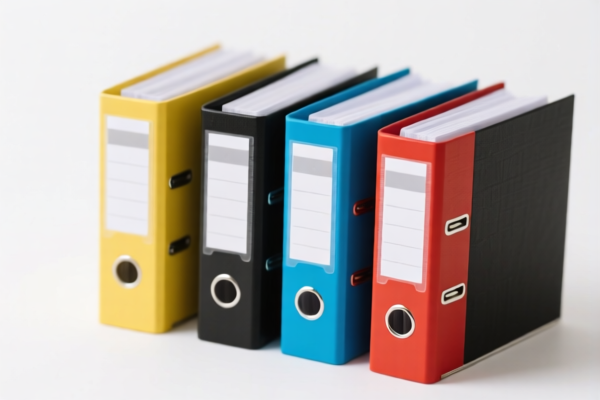
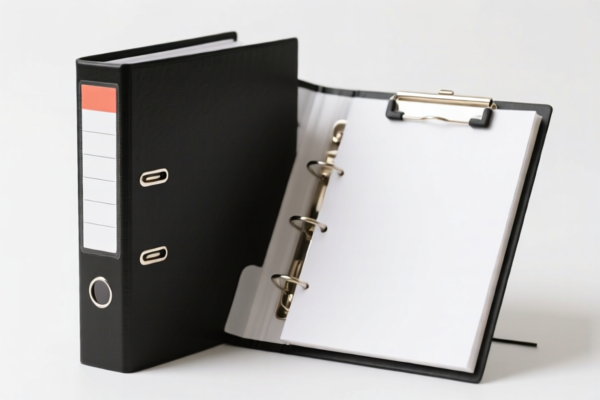


AI Analysis
📒 Binders with Custom Logo (Looseleaf, Folders & File Covers)
🌐 HS Code Reference & Customs Clearance Guide | 2026 Latest Tariff Analysis | Professional Clearance Strategy
📌 I. Product Definition & Classification: Do You Really Understand "Binders with Custom Logo"?
"Binders with Custom Logo" refers to stationery items used for organizing documents, featuring personalized branding (logos, text, or designs). In international trade, the classification depends strictly on the material composition and structural type.
There are two primary categories for customs purposes:
1. Paper/Paperboard Binders (Stationery):
These include looseleaf binders, folders, and file covers made primarily of paper, paperboard, or attached paper components (even if metal rings/plastic parts are present). The key is that the main functional component is the paper-based cover or insert.
Key Feature: Used for business records, diaries, notebooks, and general office filing.
Sub-types: Looseleaf binders, folders, file covers.
2. Plastic Binders (Office Supplies):
These are primarily made of plastic materials (polymer substances) and fall under Chapter 39.
Key Feature: Often includes flexible plastic document binders with tabs, or rigid plastic office supply containers.
Sub-types: Plastic folders, plastic looseleaf binders.
⚠️ Critical Distinction Point:
- If the binder is made of paper/board (even with metal rings) → It is classified under HS 4820 (Stationery of paper).
- If the binder is made of plastic (e.g., clear plastic sleeves, plastic ring mechanisms without paper dominance) → It is classified under HS 3926 (Articles of plastics).
- "Custom Logo" does NOT change the HS Code. The logo is considered a processing step applied to the base material. The tariff risk is driven by the material, not the branding.
📦 II. HS Code Classification Details (2026 Latest Tariff Authority)
Based on the provided data, here are the four most relevant HS Codes for binders with custom logos:
| HS Code | Product Description | Material | Applicable Scenario |
|---|---|---|---|
4820.30.00.20 |
Looseleaf binders of paper/paperboard | Paper/Board | Standard school/business looseleaf binders with rings, made of paper covers. |
4820.30.00.40 |
Other binders, folders, file covers of paper/paperboard | Paper/Board | Folders, file covers, or binders not specifically "looseleaf" (e.g., clipboards, simple folder cases). |
3926.90.88.00 |
Flexible plastic document binders with tabs, rolled or flat | Plastic | Plastic page protectors, tabbed plastic dividers, flexible plastic wallets/folders. |
3926.10.00.00 |
Office or school supplies of plastics | Plastic | General plastic office items, including rigid plastic binders, plastic desk organizers, or non-specific plastic stationery. |
🔍 Key Insight:
- Paper Binders (4820) are considered "Stationery."
- Plastic Binders (3926) are considered "Plastic Articles" or "Office Supplies."
- The presence of a custom logo is irrelevant to the HS Code selection but may require additional labeling compliance in the destination country (e.g., Country of Origin marking).
💰 III. 2026 Latest Tariff Rate Breakdown (US Import Focus)
✅ Applicable Country: United States (US)
✅ Origin: China (CN) (Assumed based on common trade routes for custom stationery)
✅ Effective Time: 2025 onwards (Subject to current USITC/IEEPA policies)
🎯 1. Paper Binders: 4820.30.00.20 & 4820.30.00.40
These codes fall under Chapter 48 (Paper and Paperboard). Due to Section 301 tariffs on Chinese goods, these attract significant additional duties.
| Item | Content |
|---|---|
| Base Tariff | 0.0% (Ad valorem) |
| Additional Tariff (Section 301) | +25.0% |
| Total Tax Rate | 25.0% |
| Tax Calculation | CIF Value × 25% |
| De Minimis Exemption | ❌ Not Eligible (Generally, Section 301 goods are excluded from de minimis relief if aggregated) |
| Legal Basis | USITC Harmonized Tariff Schedule of the United States (HTSUS) |
📌 Explanation:
- 0% Base Rate: Paper products generally have low base tariffs.
- 25% Additional Tariff: This is the critical cost driver. All Chinese-origin paper and paperboard articles subject to Section 301 are taxed at an additional 25%.
- Result: A $1,000 shipment of paper binders will incur $250 in duties.
🎯 2. Plastic Binders: 3926.10.00.00 (Office/ School Supplies)
| Item | Content |
|---|---|
| Base Tariff | 0.0% |
| Additional Tariff | 0.0% |
| Total Tax Rate | 0.0% |
| Tax Calculation | $0 |
| De Minimis Exemption | ✅ Eligible (Under $800 threshold) |
📌 Explanation:
- Many plastic office supplies are not subject to the 25% Section 301 tariff, or have been excluded from specific lists.
- Result: A $1,000 shipment of plastic binders (under this code) may incur $0 in duties (if under $800 per person per day, de minimis applies; if over, 0% duty still applies).
🎯 3. Plastic Binders: 3926.90.88.00 (Other Plastic Articles)
| Item | Content |
|---|---|
| Tax Information | Error / Failed to Retrieve |
| Estimated Impact | High Risk |
📌 Warning:
- This code is a "catch-all" for plastic articles not elsewhere specified.
- Risk: It may be subject to Section 301 tariffs (25%) depending on the specific plastic material and manufacturing process.
- Recommendation: Avoid this code if3926.10.00.00is applicable, due to tax uncertainty. Always verify with a customs broker if this code triggers additional duties.
🛠️ IV. Customs Clearance Practical Advice (Avoid Pitfalls)
✅ 1. Preparation Checklist (Must-Haves)
| Document | Required | Notes |
|---|---|---|
| ✅ Product Specifications | ✔️ | Must specify Material (e.g., "PP Plastic," "Paper Board") |
| ✅ Material Composition | ✔️ | Percentage of paper vs. plastic vs. metal parts |
| ✅ Custom Logo Proof | ✔️ | Show that logo is printed/embossed, not altering material class |
| ✅ Commercial Invoice | ✔️ | Clearly state "Custom Printed Binder" or "Promotional Binder" |
| ✅ Country of Origin | ✔️ | Essential for Section 301 tariff determination |
| ✅ HS Code Declaration | ✔️ | Must match the material (4820 for paper, 3926 for plastic) |
✅ 2. Classification Strategy (Key Rules)
🔥 "Material Determines Code, Logo is Irrelevant!"
| Scenario | Correct HS Code | Duty Rate | Why? |
|---|---|---|---|
| Paper Cover + Metal Rings | 4820.30.00.20 / .40 |
25% | Paper is the essential character. Subject to Section 301. |
| Plastic Cover + Plastic Rings | 3926.10.00.00 |
0% | Plastic office supply. Often exempt from Section 301. |
| Flexible Plastic Sleeve with Tabs | 3926.90.88.00 |
Uncertain | May face 25%. High risk. Prefer 3926.10 if possible. |
| Wooden Binder | N/A (Not in data) | N/A | Would fall under Chapter 44. Not covered in provided data. |
📌 Pro Tip:
- If you can switch from Paper to Plastic binders without compromising quality, you may save 25% in duties.
- However, ensure the plastic binder is classified under3926.10(Office Supplies) rather than3926.90(Other) to avoid tax ambiguity.
✅ 3. Special Cases & Warnings
| Situation | Handling Advice |
|---|---|
| OEM Custom Logos | Ensure the invoice says "Custom Logo Printing" to avoid being classified as "Blank Stationery" which might have different rules. |
| Mixed Materials | If a binder has paper covers but plastic rings, it usually still falls under 4820 (Paper) because the paper cover is the primary component. |
| De Minimis (Under $800) | If shipping via USPS/UPS/FedEx as a gift or low-value shipment: - Paper Binders: May still be taxed if Section 301 applies to de minimis (check current CBP rules). - Plastic Binders: Likely tax-free under de minimis. |
| Labeling | Must mark "Made in China" on the product or packaging. Failure to do so can lead to penalties. |
🌍 V. Global Market Comparison (2026)
| Country/Region | Recommended HS Code | Tariff (China Origin) | Notes |
|---|---|---|---|
| 🇺🇸 USA | 4820.30.00.20 (Paper) |
25% | High duty due to Section 301. Consider plastic alternative. |
| 🇺🇸 USA | 3926.10.00.00 (Plastic) |
0% | Favorable for plastic office supplies. |
| 🇪🇺 EU | 4820 / 3926 | Varies (0-6.5%) | Generally lower tariffs. No Section 301. |
| 🇬🇧 UK | 4820 / 3926 | Varies (0-5%) | Post-Brexit rules apply. Check UK Global Tariff. |
| 🇨🇳 China | 4820 / 3926 | 0% (Import) | No import duty on stationery/plastics. |
📌 Conclusion:
- The USA is the only major market with a 25% penalty on paper binders.
- Plastic binders (3926.10) offer a 0% duty advantage in the US.
- For other markets, material differences matter less for duty costs.
📌 VI. Common Mistakes & Pitfalls (Lessons Learned)
❌ Mistake 1: Classifying Paper Binders under 3926 (Plastics) to avoid duty.
👉 Consequence: Customs will reclassify, impose 25% duty + penalties + potential seizure.
👉 Reality: Paper dominates the character, even with plastic components.
❌ Mistake 2: Using 3926.90.88.00 for flexible plastic folders.
👉 Consequence: Tax uncertainty. May be assessed 25% if not clearly "office supplies."
👉 Reality: Use 3926.10.00.00 if it qualifies as an office supply.
❌ Mistake 3: Ignoring Country of Origin marking.
👉 Consequence: Rejection at US Customs if "Made in China" is missing on custom-logo binders.
👉 Reality: Must be visibly marked on product or immediate packaging.
✅ Correct Declaration Example:
"Custom Printed Looseleaf Binder, Paper Cover with Metal Rings, Model XYZ, Made in China"
→ HS Code:4820.30.00.20
→ Duty: 25%"Plastic Ring Binder, PP Material, Custom Logo Printed, Office Use"
→ HS Code:3926.10.00.00
→ Duty: 0%
🎯 VII. Conclusion: Smart Sourcing & Clearance
🎯 Remember the Golden Rule:
🔹 "Paper = 25% Duty (US)"
🔹 "Plastic Office Supply = 0% Duty (US)"
🔹 "Logo Doesn't Change Code, Material Does!"
📌 Actionable Advice:
1. Audit Your Product: Is it paper or plastic?
2. Switch if Possible: If US-bound, consider switching to plastic binders under 3926.10 to save 25%.
3. Verify Code: Confirm 3926.10 applies to your specific plastic binder type (office supply vs. general plastic).
4. Mark Origin: Ensure "Made in China" is on every custom item.
📣 Immediate Next Steps:
📞 Contact Your Customs Broker: Provide product samples (paper vs. plastic) for pre-classification.
📄 Update Invoice Descriptions: Be precise about material to avoid audits.
🚀 Optimize Supply Chain: Shift plastic-based custom binders to reduce US import costs.
✨ Professional Clearance Starts with Accurate Classification!
💼 Every 1% of Duty Saved is Pure Profit Gained!
Customer Reviews
About HS Code Classification
The Harmonized System (HS) is an internationally standardized nomenclature developed by the World Customs Organization (WCO) to classify traded products. Over 200 countries use the HS system as the basis for customs tariffs, trade statistics, and import/export regulations.
Each HS code follows a hierarchical structure:
- Chapter (2 digits) — Broad category of goods (e.g., Chapter 84: Machinery and Mechanical Appliances)
- Heading (4 digits) — More specific grouping within the chapter
- Subheading (6 digits) — Internationally standardized breakdown, used by all WCO member countries
- National subdivisions (8-10 digits) — Country-specific extensions for further classification, such as US HTSUS 10-digit codes
Correct HS code classification is essential for smooth customs clearance, accurate duty payment, and compliance with trade regulations. Misclassification can lead to customs delays, overpayment of duties, or penalties.
When importing from CN to US, the applicable tariff rates may include:
- Most-Favored-Nation (MFN) rate — The standard duty rate applied to WTO members
- General rate — Applied to countries without trade agreements
- Trade remedy duties — Additional tariffs such as Section 301 (anti-dumping), Section 232 (national security), or countervailing duties
The information provided on this page is for reference purposes only. For official classification, please consult with your local customs authority or a licensed customs broker.