binder dispersant for casting
CN → US| HS Code | Tariff Rate | Origin | Destination | Doc |
|---|---|---|---|---|
| 3824999397 | 40.0% | CN | US | Official Doc |
| 3911909150 | 41.5% | CN | US | Official Doc |
| 3824100000 | 41.0% | CN | US | Official Doc |
| 3911909110 | 41.5% | CN | US | Official Doc |
| 3901909000 | 41.5% | CN | US | Official Doc |
Product Images
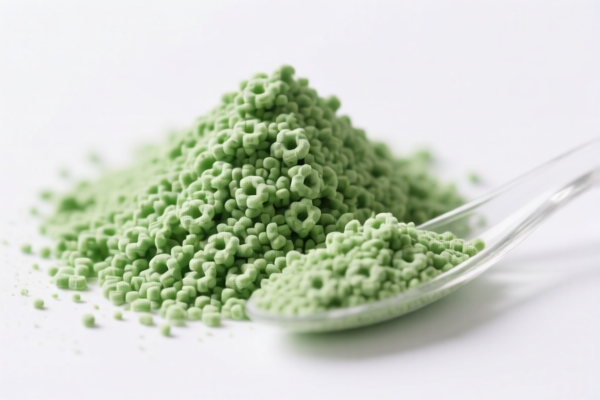



AI Analysis
🏭 Binder Dispersant for Casting
🌐 HS Code Reference & Customs Clearance Guide | 2026 Latest Tariff Analysis | Professional Clearance Strategy
📌 I. Product Definition & Classification: Do You Really Understand "Casting Binder Dispersant"?
A Binder Dispersant for Casting is a specialized chemical additive used in the foundry industry. Its primary function is to improve the dispersion, stability, and flow properties of binders (such as resin or clay systems) within mold and core making processes. In international trade, it is classified under chemical preparations and auxiliary agents rather than raw polymer materials, depending on its specific composition and formulation.
⚠️ Key Distinction Point:
- If the product is a final formulated chemical preparation specifically for casting aids → Classify under Chapter 38 (Miscellaneous Chemical Products).
- If the product is a primary polymer/resin additive not elsewhere specified → Classify under Chapter 39 (Plastics and Articles Thereof).
📦 II. HS Code Classification Details (2026 Latest Tariff Authority Comparison)
Based on the specific technical characteristics and functional use, here are the five most likely HS Code classifications for "Binder Dispersant for Casting":
| HS Code | Product Description | Application Scenario | Classification Logic |
|---|---|---|---|
3824.99.93.97 |
Other chemical preparations/nondomestic mixes (Casting dispersant) | General casting process, chemical formulation | ✅ Chemical Preparation: Fits "other chemical products" under Chapter 38. |
3911.90.91.50 |
Resinous/chemical additives, primary form, not elsewhere specified | Chemical auxiliary agent, inferred from dispersant function | ✅ Chemical Auxiliary: Inferred as a chemical aid under Chapter 39, unlisted chemicals. |
3824.10.00.00 |
Prepared binders for metal casting molds/cores | Core/mold binder preparation | ✅ Binding Agent: Directly matches "prepared binders for molds or cores" logic. |
3911.90.91.10 |
Polymer/resin additives, not elsewhere specified | Polymer-based dispersant/additive | ✅ Polymer Additive: Inferred as a polymer additive under Chapter 39. |
3901.90.90.00 |
Primary form polymers, adhesive compatibility | Polymer material, adhesive form | ✅ Primary Polymer: Matches logic of "adhesive/adhesive agent" in primary form. |
🔍 Key Reminder:
- If the product is a ready-to-use chemical mixture for casting molds,3824codes are most appropriate.
- If the product is a raw polymer resin or additive used to make the binder,3911or3901codes may apply.
- Misclassification Risk: Declaring a chemical dispersant as a raw plastic pellet (3901) can lead to customs rejection if it doesn't meet "primary form" criteria.
💰 III. 2026 Latest Tariff Rate Details (Including Additional Taxes & Policy Add-ons)
✅ Applicable Country: United States (US)
✅ Country of Origin: China (CN)
✅ Effective Time: 2025 onwards (including subsequent imports)
🎯 1. 3824.99.93.97 —— Other Chemical Preparations (Casting Dispersant)
| Item | Content |
|---|---|
| Base Tariff | 5.0% (ad valorem) |
| Section 301 Tariff (Additional) | +25.0% |
| Section 122 Tariff (Additional) | +10.0% |
| Total Tax Rate | 40.0% |
| Tax Calculation | CIF Value × 40% |
| De Minimis Eligibility | ❌ No (deny_de_minimis) |
| Legal Basis Path | Base:3824 → 301:9903.01.25 → 122:9903.01.24 |
📌 Explanation:
- This is a chemical preparation subject to standard US base tariffs.
- Subject to Section 301 (25%) and Section 122 (10%) additional tariffs due to origin in China.
- Total 40% is high. Ensure proper documentation to confirm it is not a raw material exempt from Section 122.
🎯 2. 3911.90.91.50 —— Other Resinous/Chemical Additives
| Item | Content |
|---|---|
| Base Tariff | 6.5% (ad valorem) |
| Section 301 Tariff (Additional) | +25.0% |
| Section 122 Tariff (Additional) | +10.0% |
| Total Tax Rate | 41.5% |
| Tax Calculation | CIF Value × 41.5% |
| De Minimis Eligibility | ❌ No (deny_de_minimis) |
| Legal Basis Path | Base:3911 → 301:9903.01.25 → 122:9903.01.24 |
📌 Explanation:
- Classified as a chemical auxiliary agent.
- Base rate is slightly higher (6.5%) than3824, but total rate is still high at 41.5%.
- Applicable if the product is inferred as a chemical aid under Chapter 39.
🎯 3. 3824.10.00.00 —— Prepared Binders for Metal Casting Molds or Cores
| Item | Content |
|---|---|
| Base Tariff | 6.0% (ad valorem) |
| Section 301 Tariff (Additional) | +25.0% |
| Section 122 Tariff (Additional) | +10.0% |
| Total Tax Rate | 41.0% |
| Tax Calculation | CIF Value × 41.0% |
| De Minimis Eligibility | ❌ No (deny_de_minimis) |
| Legal Basis Path | Base:3824.10 → 301:9903.01.25 → 122:9903.01.24 |
📌 Explanation:
- This code specifically targets binding agents for molds/cores.
- If your "disperant" is functionally a binder or binding aid, this is the most accurate functional classification.
- Total 41.0%.
🎯 4. 3911.90.91.10 —— Other Polymer/Resin Additives
| Item | Content |
|---|---|
| Base Tariff | 6.5% (ad valorem) |
| Section 301 Tariff (Additional) | +25.0% |
| Section 122 Tariff (Additional) | +10.0% |
| Total Tax Rate | 41.5% |
| Tax Calculation | CIF Value × 41.5% |
| De Minimis Eligibility | ❌ No (deny_de_minimis) |
| Legal Basis Path | Base:3911 → 301:9903.01.25 → 122:9903.01.24 |
📌 Explanation:
- Similar to3911.90.91.50, this is for polymer additives.
- Total 41.5%.
- Use if the product is a polymer-based additive not elsewhere specified.
🎯 5. 3901.90.90.00 —— Primary Form Polymers (Adhesive/Resin)
| Item | Content |
|---|---|
| Base Tariff | 6.5% (ad valorem) |
| Section 301 Tariff (Additional) | +25.0% |
| Section 122 Tariff (Additional) | +10.0% |
| Total Tax Rate | 41.5% |
| Tax Calculation | CIF Value × 41.5% |
| De Minimis Eligibility | ❌ No (deny_de_minimis) |
| Legal Basis Path | Base:3901 → 301:9903.01.25 → 122:9903.01.24 |
📌 Explanation:
- This code is for primary form polymers.
- Only applicable if the product is a raw resin/adhesive material, not a formulated dispersant.
- Total 41.5%.
- Risk: If misclassified as raw polymer when it is a chemical mix, customs may penalize for misdeclaration.
🛠️ IV. Customs Clearance Practical Advice (Battle-Tested Pitfall Guide)
✅ 1. Required Documentation Checklist (None Can Be Omitted)
| Document | Mandatory? | Description |
|---|---|---|
| ✅ Product Specification Sheet | ✔️ | Must include chemical composition, function (dispersant/binder), and CAS numbers. |
| ✅ Material Safety Data Sheet (MSDS/SDS) | ✔️ | Critical for chemical imports to determine hazard class and handling requirements. |
| ✅ Product Photos | ✔️ | Clear images of packaging, labels, and the product itself. |
| ✅ Certificate of Origin (CO) | ✔️ | Must explicitly state Country of Origin: China. |
| ✅ Commercial Invoice | ✔️ | Must clearly state "Casting Binder Dispersant" or specific chemical name. |
| ✅ Packing List | ✔️ | Detail net/gross weight and package type. |
✅ 2. Declaration Tips (Key Mantra)
🔥 "Function First, Chemistry Second, Name Precise, Tax Avoided!"
| Scenario | Correct Declaration | Wrong Practice |
|---|---|---|
| Ready-to-use chemical mix | 3824.99.93.97 or 3824.10.00.00 |
Declare as "Plastic Resin" → Risk of penalties. |
| Raw polymer additive | 3911.90.91.50 or 3901.90.90.00 |
Declare as "Chemical Preparation" → Possible reclassification. |
| Core/Binder Aid | 3824.10.00.00 |
Vague name like "Casting Agent" → Customs hold for inspection. |
| Mixed Chemicals | 3824.99.93.97 |
Declare as individual components separately → Overcomplication. |
✅ 3. Special Circumstances Handling
| Situation | Handling Advice |
|---|---|
| OEM Custom Formula | Provide Formulation Sheet (without trade secrets) to prove it is a "preparation" (Chapter 38) rather than "raw material" (Chapter 39). |
| Hazardous Chemicals | If the SDS indicates hazard, ensure DOT/PHMSA compliance for shipping. |
| Section 122 Exemption Claim | If claiming exemption (not applicable here as total tax includes it), provide proof of non-China origin or specific product exclusion list. |
| Pre-Ruling Application | Highly Recommended: Apply for an Advance Ruling from US CBP to lock in the HS Code and avoid disputes. |
🌍 V. Global Market Clearance Comparison (2026 Latest)
| Country/Region | Recommended HS Code | Tariff Rate (China Origin) | Certification Requirements | Notes |
|---|---|---|---|---|
| 🇺🇸 USA | 3824.99.93.97 |
40.0% | SDS, MSDS, CO | High tax due to Section 301 & 122. |
| 🇨🇳 China | 3824.99.93.97 |
~5% | None specific | Low import tax. |
| 🇪🇺 EU | 3824.99.90 |
~0-6.5% | REACH Registration | No additional tariffs, but REACH compliance is critical. |
| 🇬🇧 UK | 3824.99.90 |
~0-6.5% | UK REACH | Post-Brexit, UK REACH required. |
| 🇯🇵 Japan | 3824.99.90 |
~0-6.5% | PRTR, JIS | No additional tariffs. |
📌 Conclusion:
- The US market has the highest barrier due to 40-41.5% total tariffs.
- EU/UK/Japan have lower tariffs but strict chemical registration (REACH/PRTR).
- Strategy: For US imports, consider supply chain diversification or Advance Ruling to mitigate risk.
📌 VI. Common Errors & Pitfall Guide (Lessons from Blood and Tears)
❌ Error 1: Declaring "Binder Dispersant" as "Raw Plastic Resin" (3901)
👉 Consequence: If it's a formulated mix, customs may classify it as 3824 and charge 40%, not 6.5%. Plus, potential penalties for misdeclaration.
❌ Error 2: Vague Name "Casting Chemical"
👉 Consequence: Customs delay for inspection. They may classify it under the highest possible rate or require a full chemical breakdown.
❌ Error 3: Ignoring Section 122 Tariff
👉 Consequence: Underestimating cost by 10%. Total tax is not just 25% (Section 301) but 40%+.
❌ Error 4: Missing SDS/MSDS
👉 Consequence: Customs rejection. Chemicals cannot be cleared without safety data.
✅ Correct Practice:
"Casting Binder Dispersant, Chemical Preparation, Function: Improve Dispersion of Resin Binders, CAS No. XXXXX-XX-X, Origin: China, SDS Attached"
🎯 VII. Conclusion: Professional Declaration, Save Time, Reduce Costs!
🎯 Remember the Mantra:
🔹 "Function defines Code, Chemistry defines Tax."
🔹 "Chapter 38 for Mixtures, Chapter 39 for Raw Polymers."
🔹 "US Tariffs are High: 40%+ Total. Plan Ahead!"
📌 Pro Tip:
If your product is imported into the US from China, the 40-41.5% tax rate is significant.
1. Apply for an Advance Ruling from US CBP to confirm the HS Code.
2. Ensure SDS/MSDS are up-to-date and accurate.
3. Consider Supply Chain Optimization if possible (e.g., third-country processing) to mitigate Section 301/122 impact.
📣 Immediate Action:
📞 Consult a licensed customs broker.
📄 Prepare SDS, Specification, and CO.
🚀 Clear Customs Smoothly, Optimize Costs, Boost Profits!
✨ Professional Clearance Starts with Accurate Classification!
💼 Every Percent of Tax Matters!
Customer Reviews
About HS Code Classification
The Harmonized System (HS) is an internationally standardized nomenclature developed by the World Customs Organization (WCO) to classify traded products. Over 200 countries use the HS system as the basis for customs tariffs, trade statistics, and import/export regulations.
Each HS code follows a hierarchical structure:
- Chapter (2 digits) — Broad category of goods (e.g., Chapter 84: Machinery and Mechanical Appliances)
- Heading (4 digits) — More specific grouping within the chapter
- Subheading (6 digits) — Internationally standardized breakdown, used by all WCO member countries
- National subdivisions (8-10 digits) — Country-specific extensions for further classification, such as US HTSUS 10-digit codes
Correct HS code classification is essential for smooth customs clearance, accurate duty payment, and compliance with trade regulations. Misclassification can lead to customs delays, overpayment of duties, or penalties.
When importing from CN to US, the applicable tariff rates may include:
- Most-Favored-Nation (MFN) rate — The standard duty rate applied to WTO members
- General rate — Applied to countries without trade agreements
- Trade remedy duties — Additional tariffs such as Section 301 (anti-dumping), Section 232 (national security), or countervailing duties
The information provided on this page is for reference purposes only. For official classification, please consult with your local customs authority or a licensed customs broker.