birch wood for panel production
CN → US| HS Code | Tariff Rate | Origin | Destination | Doc |
|---|---|---|---|---|
| 4407960011 | 35.0% | CN | US | Official Doc |
| 4407960013 | 35.0% | CN | US | Official Doc |
| 4403950127 | 35.0% | CN | US | Official Doc |
| 4403960123 | 35.0% | CN | US | Official Doc |
Product Images
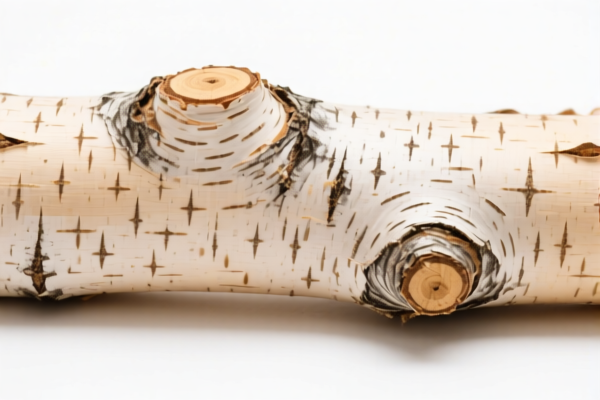
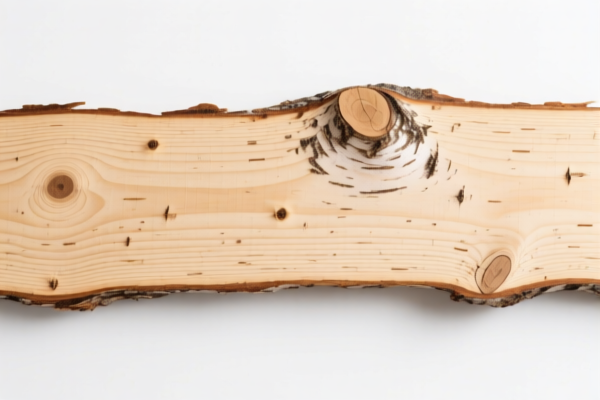
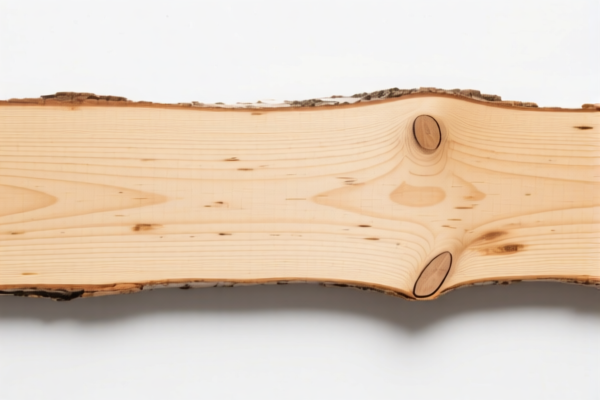
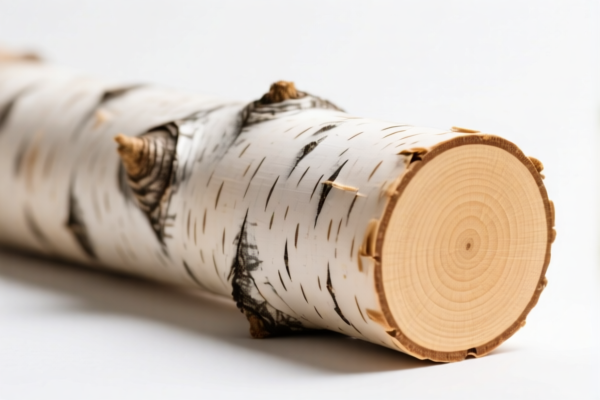
AI Analysis
🌳 Birch Wood for Panel Production (Raw Material for Wood-Based Panels)
🌐 HS Code Reference & Customs Clearance Guide | 2026 Latest Tariff Structure | Professional Clearance Strategy
📌 I. Product Definition & Classification: What Exactly is "Birch Wood for Panel Production"?
Birch wood for panel production refers to primary forms of birch timber, specifically processed or prepared for manufacturing wood-based panels (such as plywood, particleboard, or MDF). It is not finished furniture or simple lumber for construction, but rather the semi-processed or raw material stage.
In international trade, this category is split into two main states: 1. Sawn Wood/Veneer Shavings: Birch wood that has been longitudinally sawn or sliced into boards or thin sheets suitable for immediate panel lamination or processing. 2. Logs (Raw Timber): Unprocessed birch logs, either intended for industrial sawing (lumber grade) or specifically designated for pulping/papermaking (though "panel production" usually implies sawn/laminated forms, raw logs are often the upstream source).
⚠️ Key Distinction Point: * If the wood is sawn or sliced into boards/shapes for panels → Classify under 4407 (Wood Sawn/Chipped lengthwise). * If the wood is unprocessed logs → Classify under 4403 (Wood in the Rough). * Note: Despite the user input focusing on "panel production," if the physical form is a raw log, it falls under 4403. If it is already sawn into board form for panels, it falls under 4407.
📦 II. HS Code Classification Details (2026 Latest Tariff Authority Comparison)
| HS Code | Product Description | Application Scenario | Form/State |
|---|---|---|---|
4407.96.00.11 |
Birch wood, longitudinally sawn or chipped lengthwise | Raw material for plywood, veneer, or engineered wood panels | ✅ Sawn/Sliced Primary Form |
4407.96.00.13 |
Birch wood, longitudinally sawn or chipped lengthwise | Alternative classification for birch sawn wood for panel production | ✅ Sawn/Sliced Primary Form |
4403.95.01.27 |
Birch wood in the rough | Raw logs, unprocessed, possibly for industrial sawing | ✅ Unprocessed Rough Timber |
4403.96.01.23 |
Birch wood in the rough | Raw logs, specifically conforming to characteristics for paper wood | ✅ Unprocessed Rough Timber |
🔍 Critical Note: * Both 4407 and 4403 classifications for Chinese-origin birch wood are subject to the same high tariff structure due to trade restrictions. * Do not assume that "raw logs" (4403) have lower duties than "sawn wood" (4407). In this specific trade context, the total tax burden is identical.
💰 III. 2026 Latest Tariff Rate Breakdown (Including Additional Taxes & Policy Surcharges)
✅ Applicable Country: United States (US)
✅ Country of Origin: China (CN)
✅ Effective Date: 2025 November 10 onwards (Including subsequent imports)
🎯 1. 4407.96.00.11 & 4407.96.00.13 —— Birch Wood, Sawn/Chipped for Panels
| Item | Content |
|---|---|
| Base Tariff Rate | 0.0% (Ad Valorem) |
| Section 301 Surcharge | +25.0% (Additional Tariff) |
| Section 122 Tariff | +10.0% (Specific Section 122 Tariff) |
| Total Tariff Rate | 35.0% |
| Tax Calculation | CIF Value × 35% |
| De Minimis Eligibility | ❌ Not Eligible (High tariff items are excluded) |
| Legal Basis Path | Section 301: USITC Footnote → Section 122: IEEPA/USMCA Related Provisions → HS Code 4407.96.00.11/13 |
📌 Explanation: * "Base Tariff 0%": Under normal MFN (Most Favored Nation) treatment, wood products often have low or zero base duties. * "301 Surcharge 25%": This is the primary trade war tariff targeting Chinese forestry products. * "Section 122 Tariff 10%": This is an additional statutory surcharge often applied to specific categories of Chinese goods under U.S. trade laws. * Total 35%: This is a significant cost increase. Importers must factor this into their landed cost calculations immediately.
🎯 2. 4403.95.01.27 & 4403.96.01.23 —— Birch Logs (Rough Timber)
| Item | Content |
|---|---|
| Base Tariff Rate | 0.0% (Ad Valorem) |
| Section 301 Surcharge | +25.0% (Additional Tariff) |
| Section 122 Tariff | +10.0% (Specific Section 122 Tariff) |
| Total Tariff Rate | 35.0% |
| Tax Calculation | CIF Value × 35% |
| De Minimis Eligibility | ❌ Not Eligible |
| Legal Basis Path | Section 301: USITC Footnote → Section 122: IEEPA/USMCA Related Provisions → HS Code 4403.95.01.27 / 4403.96.01.23 |
📌 Note: * Even though these are "raw logs," the tariff rate is identical to the sawn wood. * Whether you import birch logs for pulping or for sawing into panel stock, the 35% total duty applies uniformly to Chinese-origin birch.
🛠️ IV. Customs Clearance Operational Advice (Practical Pitfall Avoidance Guide)
✅ 1. Required Documentation Checklist (Mandatory)
| Document | Required | Description |
|---|---|---|
| ✅ Commercial Invoice | ✔️ | Must clearly state "Birch Wood," HS Code, and Country of Origin (China). |
| ✅ Packing List | ✔️ | Detail weight, volume, and number of packages. Ensure consistency with invoice. |
| ✅ Phytosanitary Certificate | ✔️ | CRITICAL: Issued by the Chinese customs/agricultural authority. Must state wood is free from pests/diseases (e.g., Emerald Ash Borer, though this is birch, still required). |
| ✅ ISPM 15 Compliance | ✔️ | If wood is in solid form (logs/boards), pallets/crating must be heat-treated and marked with the IPPC mark. |
| ✅ Bill of Lading | ✔️ | Standard shipping document. |
| ✅ Species Verification | ✔️ | Proof of species (Betula spp.) may be requested to ensure it is indeed "Birch" and not a restricted species. |
✅ 2. Declaration Tips (Key Mantra)
🔥 "Species Clear, Phytosanitary Valid, HS Precise, Tax Predictable!"
| Scenario | Correct Declaration Method | Common Mistake |
|---|---|---|
| Birch Veneer/Sheets | 4407.96.00.11 or .13 |
Misclassifying as "Finished Wood" → Higher base rate or rejection. |
| Raw Birch Logs | 4403.95.01.27 or .23 |
Declaring as "Sawn Wood" → Discrepancy in form, leads to inspection delay. |
| Mixed Shipments | Separate HS Codes | Combining birch with other woods → Risk of audit on entire shipment. |
| Pallets/Crating | Must comply with ISPM 15 | Using untreated wood pallets → Shipment destroyed or fumigated at importer's cost. |
✅ 3. Special Handling for "Panel Production" Context
| Scenario | Handling Advice |
|---|---|
| OEM Custom Birch for Plywood | Provide end-use statement. While it doesn't change the 35% tariff, it helps customs understand the nature of the goods. |
| Birch for Paper vs. Panels | Ensure the description matches the physical form. If it's thin chips for paper, it might still fall under 4403/4407 depending on size, but the tariff is the same. Accuracy prevents re-classification fines. |
| Moisture Content | Declare accurately. High moisture can lead to mold inspections. Dried wood is preferred for panel production. |
🌍 V. Global Market Comparison (2026 Latest)
| Country/Region | Recommended HS Code | Tariff Rate (China Origin) | Certification/Requirements | Notes |
|---|---|---|---|---|
| 🇺🇸 USA | 4407.96.00.11 / 4403.95.01.27 |
35.0% (0% Base + 25% + 10%) | Phytosanitary + ISPM 15 | High Tariff. 301 & Section 122 apply. |
| 🇨🇳 China | 4407.96.00.11 / 4403.95.01.27 |
0% - 5% (Import Duties) | Phytosanitary | Standard import rates for raw materials. |
| 🇪🇺 EU | 4407.96 / 4403.95 |
0% - 2.5% | FSC/PEFC (Voluntary but common) | No major surcharges like US. |
| 🇨🇦 Canada | 4407.96 / 4403.95 |
0% | Phytosanitary | FTA benefits may apply if processed further. |
📌 Conclusion: * The USA is the most challenging market for Chinese birch wood due to the 35% total tariff. * EU and Canada are more tariff-friendly, but still require strict phytosanitary compliance. * Importers must weigh the 35% cost against potential savings in manufacturing labor or market access in the US.
📌 VI. Common Errors & Pitfall Guide (Lessons Learned)
❌ Mistake 1: Assuming "Raw Logs" have lower duties than "Sawn Wood"
👉 Consequence: In the US, both are 35%. No savings by importing logs instead of boards.
❌ Mistake 2: Missing the ISPM 15 Mark on Pallets
👉 Consequence: Shipment held at port, fumigation charges ($5,000-$10,000+) or destruction.
❌ Mistake 3: Incorrect Species Declaration (e.g., calling Birch "Hardwood" generally)
👉 Consequence: Customs may request additional testing to verify species, causing weeks of delay.
❌ Mistake 4: Ignoring the Section 122 Tariff
👉 Consequence: Underestimating landed cost. The 10% Section 122 tariff is often overlooked in basic 301 calculations.
✅ Correct Approach:
"Birch Wood, Sawn/Chipped, Origin: China, HS: 4407.96.00.11, Phytosanitary Cert Attached, ISPM 15 Pallets."
🎯 VII. Conclusion: Professional Declaration, Cost Control, Efficiency
🎯 Remember the Mantra:
🔹 "Birch for Panels: 35% Total Tax (US)."
🔹 "Logs or Boards: Same Rate, Different HS."
🔹 "Phytosanitary & ISPM 15: Non-Negotiable."
🔹 "301 + Section 122: The Double Bite."
📌 Pro Tip:
If you are sourcing birch wood for panel production in the US, do not rely on de minimis exemptions (Section 321). The value is typically too high, and the goods are excluded.
Recommendation: Calculate the fully landed cost including the 35% duty, freight, insurance, and customs brokerage fees before finalizing orders. Consider duty drawback programs if you re-export the panels.
📣 Immediate Action Required:
📞 Consult a licensed customs broker to verify the exact form of your birch wood (Sawn vs. Log).
📄 Ensure your supplier provides a valid Phytosanitary Certificate from China.
🚀 Clear your supply chain of tariff surprises!
✨ Professional Customs Clearance Starts with Accurate Classification!
💼 Every percent of duty counts in the wood products trade!
Customer Reviews
About HS Code Classification
The Harmonized System (HS) is an internationally standardized nomenclature developed by the World Customs Organization (WCO) to classify traded products. Over 200 countries use the HS system as the basis for customs tariffs, trade statistics, and import/export regulations.
Each HS code follows a hierarchical structure:
- Chapter (2 digits) — Broad category of goods (e.g., Chapter 84: Machinery and Mechanical Appliances)
- Heading (4 digits) — More specific grouping within the chapter
- Subheading (6 digits) — Internationally standardized breakdown, used by all WCO member countries
- National subdivisions (8-10 digits) — Country-specific extensions for further classification, such as US HTSUS 10-digit codes
Correct HS code classification is essential for smooth customs clearance, accurate duty payment, and compliance with trade regulations. Misclassification can lead to customs delays, overpayment of duties, or penalties.
When importing from CN to US, the applicable tariff rates may include:
- Most-Favored-Nation (MFN) rate — The standard duty rate applied to WTO members
- General rate — Applied to countries without trade agreements
- Trade remedy duties — Additional tariffs such as Section 301 (anti-dumping), Section 232 (national security), or countervailing duties
The information provided on this page is for reference purposes only. For official classification, please consult with your local customs authority or a licensed customs broker.