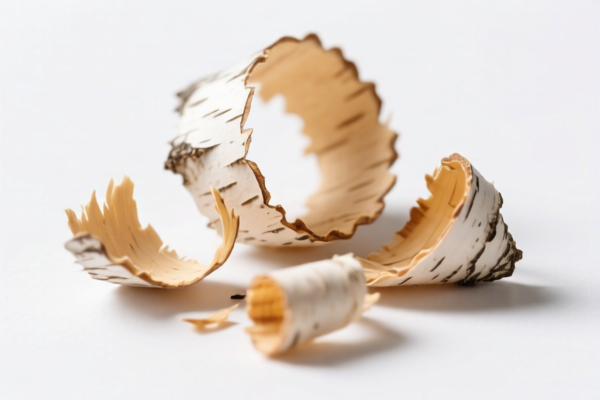
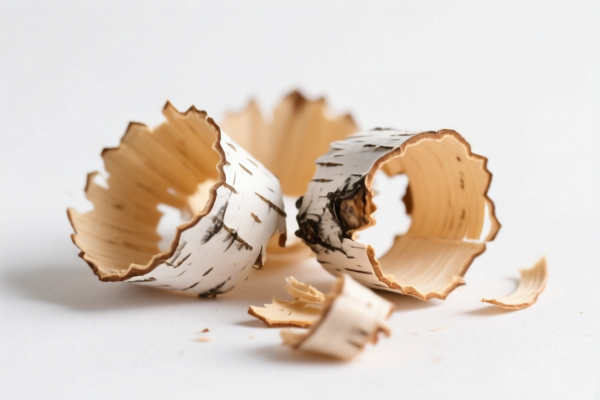
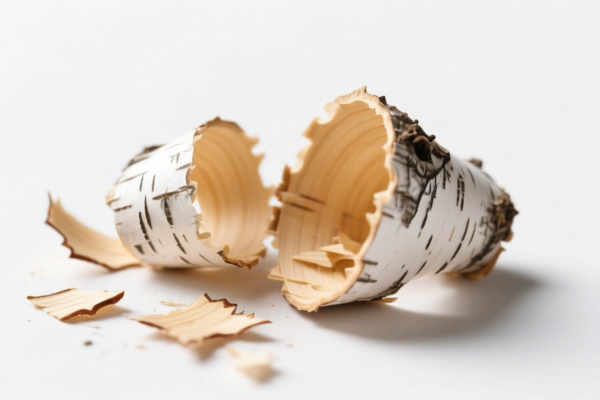
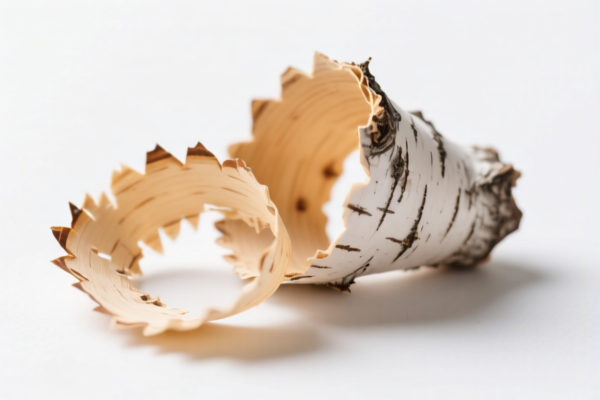
birch wood shavings
CN → US| HS Code | Tariff Rate | Origin | Destination | Doc |
|---|---|---|---|---|
| 4401220000 | 35.0% | CN | US | Official Doc |
| 4401490020 | 35.0% | CN | US | Official Doc |
| 4405000000 | 38.2% | CN | US | Official Doc |
| 4401394220 | 35.0% | CN | US | Official Doc |
| 4407110052 | 35.0% | CN | US | Official Doc |
Product Images
AI Analysis
🪵 Birch Wood Shavings (Birch Shavings)
🌐 HS Code Reference & Customs Clearance Guide | 2026 Latest Tariff Analysis | Professional Entry Strategy
📌 Part 1: Product Definition & Classification Analysis: What Exactly are "Birch Wood Shavings"?
Birch wood shavings are primary products derived from the mechanical processing of birch timber. In international trade, their classification depends heavily on their physical state (chunk vs. powder vs. waste) and end-use. Unlike sawn timber, shavings are considered "waste," "scrap," or "primary processed forms" depending on their granularity and intent.
The data provided identifies three potential classification paths, each carrying significant tariff implications due to US trade policies (Section 301 and Section 122).
⚠️ Key Distinction Point:
- If intended for fuel or industrial processing as raw material: Likely 4401.22.00.00 or 4401.39.42.20.
- If classified strictly as waste/scrap: Likely 4401.49.00.20.
- If classified as wood wool/chips/powder (very fine): Likely 4405.00.00.00.
📦 Part 2: HS Code Classification Details (2026 Tariff Schedule)
| HS Code | Product Description | Applicable Scenario | Material State |
|---|---|---|---|
4401.22.00.00 |
Birch wood in chips or particles; shavings | Broad category for birch shavings as non-coniferous wood products | ✅ Shavings/Chips |
4401.49.00.20 |
Wood waste and scrap; wood shavings (Shavings) | Specifically classified as waste/scrap material | ✅ Waste/Shavings |
4405.00.00.00 |
Wood wool, wood flour, and other wood waste (in powder form) | Fine shavings/powdered birch, considered primary pulverization | ✅ Powder/Fine Shavings |
🔍 Important Note:
- All three codes fall under Chapter 44 (Wood and articles of wood).
- The choice of code depends on the granularity and commercial intent.
- Pinewood references (4401.39.42.20,4407.11.00.52) in the data are incorrect for Birch and should be ignored for this specific product, as Birch is a broadleaf (deciduous) tree, not a conifer (pinus).
💰 Part 3: 2026 Latest Tariff Rate Breakdown (Including Surcharges & Policy Add-ons)
✅ Applicable Country: United States (US)
✅ Origin: China (CN) (Assumed based on "122-Clause" and typical trade context)
✅ Effective Date: Post-November 2025 (Current Trade Policy)
🎯 1. 4401.22.00.00 —— Birch Wood (Chips/Shavings, Broadleaf)
| Item | Content |
|---|---|
| Base Duty Rate | 0.0% |
| Section 301 Surcharge | +25.0% |
| Section 122 Duty | +10.0% |
| Total Duty Rate | 35.0% |
| Tax Calculation | CIF Value × 35% |
| De Minimis Eligibility | ❌ Not Eligible (Deny De Minimis) |
| Legal Basis Path | HTSUS:4401.22.00.00 → Section 301 → Section 122 |
📌 Explanation:
- This is the most common classification for birch shavings used as raw material.
- Although the base duty is 0%, the 35% effective rate is driven entirely by US trade restrictions.
- Section 122 (often related to national security or specific trade remedies) adds an additional 10% on top of the standard 301 tariff.
🎯 2. 4401.49.00.20 —— Wood Waste & Scrap (Birch Shavings)
| Item | Content |
|---|---|
| Base Duty Rate | 0.0% |
| Section 301 Surcharge | +25.0% |
| Section 122 Duty | +10.0% |
| Total Duty Rate | 35.0% |
| Tax Calculation | CIF Value × 35% |
| De Minimis Eligibility | ❌ Not Eligible (Deny De Minimis) |
| Legal Basis Path | HTSUS:4401.49.00.20 → Section 301 → Section 122 |
📌 Explanation:
- If customs authorities classify the shavings as "waste" rather than "product," this code applies.
- The tariff burden is identical (35%) to the primary material code.
- Risk: Misclassification as "waste" might trigger additional inspection or phytosanitary requirements.
🎯 3. 4405.00.00.00 —— Wood Wool, Wood Flour, and Other Wood Waste (Powder)
| Item | Content |
|---|---|
| Base Duty Rate | 3.2% |
| Section 301 Surcharge | +25.0% |
| Section 122 Duty | +10.0% |
| Total Duty Rate | 38.2% |
| Tax Calculation | CIF Value × 38.2% |
| De Minimis Eligibility | ❌ Not Eligible (Deny De Minimis) |
| Legal Basis Path | HTSUS:4405.00.00.00 → Section 301 → Section 122 |
📌 Explanation:
- This code applies if the shavings are very fine (powder/wood wool).
- Crucial Difference: The base duty is 3.2%, making the total rate 38.2%, which is 3.2% higher than the other two codes.
- Recommendation: If your product is chunky shavings (not powder), avoid this code to save 3.2% in base duty.
🛠️ Part 4: Customs Clearance Practical Advice (Actionable Strategy)
✅ 1. Documentation Checklist (Non-Negotiable)
| Document | Required? | Explanation |
|---|---|---|
| ✅ Commercial Invoice | ✔️ | Must clearly state "Birch Wood Shavings," NOT "Wood Waste" unless intended. |
| ✅ Packing List | ✔️ | Detail weight, volume, and packaging type. |
| ✅ Phytosanitary Certificate | ✔️ | Critical for wood products. Must prove pest-free treatment (e.g., heat treatment, fumigation). |
| ✅ Certificate of Origin | ✔️ | To prove origin (China) and apply correct surcharges. |
| ✅ Product Specification Sheet | ✔️ | Include moisture content, particle size, and intended use (e.g., biomass fuel, bedding, industrial feedstock). |
✅ 2. Classification Strategy (Key Tips)
🔥 “Be Precise: Shavings vs. Powder vs. Waste”
| Scenario | Recommended HS Code | Total Duty | Why? |
|---|---|---|---|
| Standard Shavings (Chunky, usable) | 4401.22.00.00 |
35.0% | Most accurate for birch chips/shavings. |
| Fine Powder/Flour | 4405.00.00.00 |
38.2% | Only if particle size is <2mm. Avoid if possible due to higher base duty. |
| Damaged/Scrap Only | 4401.49.00.20 |
35.0% | Use only if product is unusable waste. Risky if claimed as "shavings." |
🚫 Do NOT Use Pine Codes:
-4401.39.42.20and4407.11.00.52are for Pinus species. Birch is Betula (broadleaf). Using pine codes for birch is a misclassification error and will lead to penalties.
✅ 3. Special Considerations
| Issue | Advice |
|---|---|
| Phytosanitary Risks | Wood shavings are high-risk for pests. Ensure heat treatment (HT) or fumigation is documented. |
| De Minimis Threshold | $800/shipment does NOT apply. All shipments, regardless of value, are subject to inspection and duty. |
| Section 122 | This 10% surcharge is specific to certain countries/trade policies. Ensure your supplier’s country of origin matches the applicable trade agreement. |
| Moisture Content | High moisture can lead to mold. Declare accurately to avoid quarantine issues. |
🌍 Part 5: Global Market Comparison (2026)
| Market | Recommended HS Code | Base Duty | Surcharges | Total Est. Duty | Notes |
|---|---|---|---|---|---|
| 🇺🇸 USA | 4401.22.00.00 |
0.0% | +35% (301+122) | 35.0% | High barrier. Phytosanitary cert mandatory. |
| 🇨🇳 China | 4401.22.00.00 |
0.0% | None | 0.0% | Import of birch shavings into China is generally duty-free if for processing. |
| 🇪🇺 EU | 4401.10 or 4401.49 |
0.0% | None | 0.0% | No additional trade tariffs. ISPM 15 compliance required. |
| 🇯🇵 Japan | 4401.10 |
0.0% | None | 0.0% | Strict phytosanitary rules. |
📌 Conclusion:
- The US market is the most expensive due to the 35% effective tariff.
- China, EU, and Japan are duty-free for this category, but phytosanitary compliance is universal and critical.
📌 Part 6: Common Mistakes & Pitfalls (Learn from Others)
❌ Mistake 1: Classifying Birch as Pine (4401.39...)
👉 Consequence: Misclassification penalty, back taxes, and potential seizure.
✅ Fix: Always specify Betula (Birch) in commercial documents.
❌ Mistake 2: Under-declaring as "Wood Waste" to avoid scrutiny
👉 Consequence: Customs may reclassify and deny entry if phytosanitary certs are missing for "waste."
✅ Fix: Declare accurately as "Shavings" or "Chips" with proper treatment certs.
❌ Mistake 3: Ignoring Section 122
👉 Consequence: Underpaying duty by 10%.
✅ Fix: Include Section 122 in cost calculations for US-bound shipments.
🎯 Part 7: Final Advice: Professional Entry, Cost Control, Risk Mitigation
🎯 Remember These Key Points:
🔹 Birch is Broadleaf, Not Pine: Use
4401.22.00.00or4401.49.00.20.
🔹 Total Duty for US is 35%: Base 0% + 301 (25%) + 122 (10%).
🔹 Phytosanitary Cert is Mandatory: No cert = No entry.
🔹 Avoid Powder if Possible:4405.00.00.00has a 3.2% base duty, raising total to 38.2%.
📌 Pro Tip:
If you are shipping to the US, factor in the 35% duty from day one.
Consider pre-clearance consultations with a US licensed customs broker to verify the exact particle size classification.
Ensure your supplier provides ISPM 15-compliant treatment documentation.
📣 Immediate Action:
📞 Contact a Customs Broker: Confirm HS Code
4401.22.00.00for your specific shavings size.
📄 Request Phytosanitary Certificate: From the country of origin.
💰 Calculate Landed Cost: Include CIF + 35% Duty + Brokerage Fees + Insurance.
✨ Accurate Classification Saves Money!
💼 Don’t let trade wars erode your margins—plan ahead!
Customer Reviews
About HS Code Classification
The Harmonized System (HS) is an internationally standardized nomenclature developed by the World Customs Organization (WCO) to classify traded products. Over 200 countries use the HS system as the basis for customs tariffs, trade statistics, and import/export regulations.
Each HS code follows a hierarchical structure:
- Chapter (2 digits) — Broad category of goods (e.g., Chapter 84: Machinery and Mechanical Appliances)
- Heading (4 digits) — More specific grouping within the chapter
- Subheading (6 digits) — Internationally standardized breakdown, used by all WCO member countries
- National subdivisions (8-10 digits) — Country-specific extensions for further classification, such as US HTSUS 10-digit codes
Correct HS code classification is essential for smooth customs clearance, accurate duty payment, and compliance with trade regulations. Misclassification can lead to customs delays, overpayment of duties, or penalties.
When importing from CN to US, the applicable tariff rates may include:
- Most-Favored-Nation (MFN) rate — The standard duty rate applied to WTO members
- General rate — Applied to countries without trade agreements
- Trade remedy duties — Additional tariffs such as Section 301 (anti-dumping), Section 232 (national security), or countervailing duties
The information provided on this page is for reference purposes only. For official classification, please consult with your local customs authority or a licensed customs broker.