black dog collar l
CN → US| HS Code | Tariff Rate | Origin | Destination | Doc |
|---|---|---|---|---|
| 4201003000 | 37.4% | CN | US | Official Doc |
| 4201006000 | 37.8% | CN | US | Official Doc |
| 4205008000 | 35.0% | CN | US | Official Doc |
Product Images
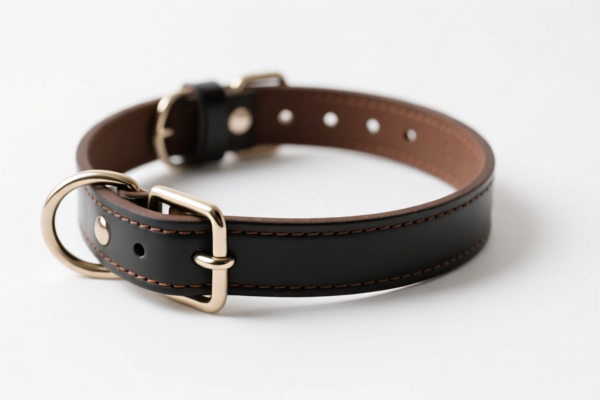
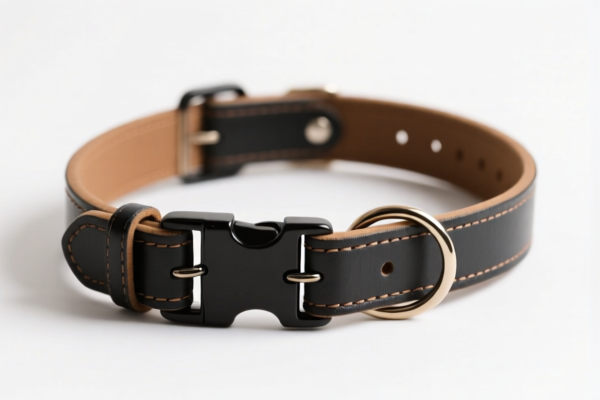
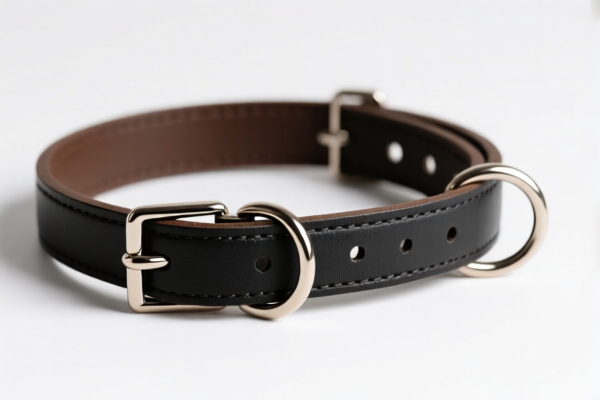
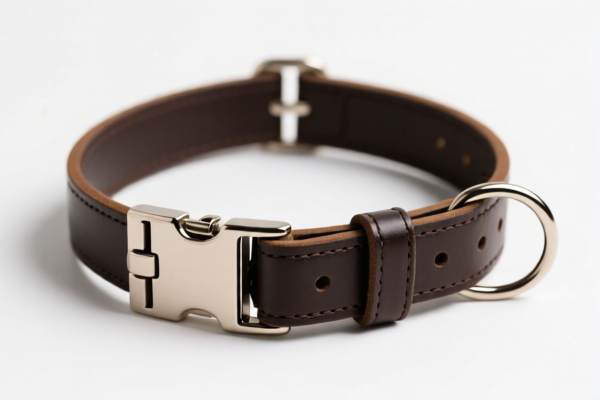
AI Analysis
🐕 Black Dog Collar (S) – Strategic HS Code Classification & Customs Clearance Guide
🌐 HS Code Reference & Customs Strategy | 2026 Latest Tariff Analysis | Professional Clearance Tactics
📌 I. Product Definition & Classification: What Exactly Is a "Dog Collar"?
A black dog collar (Size S) is a fundamental accessory for pet ownership, serving both functional and decorative purposes. In international trade, its classification depends heavily on its material composition, specific design features, and intended use. It is generally categorized under Chapter 42 (Articles of leather; saddlery and harness).
There are three primary classification pathways based on material and construction:
- General Accessories (
4201.00.30): Standard collars made of nylon, synthetic leather, or generic materials, used primarily for holding identification tags or leashes. - Equestrian/Harness Category (
4201.00.60): Collars that are structurally similar to horse tack or heavy-duty harnesses, often classified under animal saddlery/harness accessories. - Leather Goods (
4205.00.80): Collars made explicitly of genuine leather or composite leather, falling under the broader category of other leather articles.
⚠️ Key Distinction Point:
- If the collar is nylon, fabric, or mixed synthetic material →归类 to 4201.00.30.00 (Most Common for Pet Supplies)
- If the collar is designed as part of a harness system or heavy-duty tack →归类 to 4201.00.60.00
- If the collar is pure leather (genuine or composite) →归类 to 4205.00.80.00 (Potentially Lower Base Duty)
📦 II. HS Code Classification Details (2026 Latest Tariff Authority Comparison)
| HS Code | Product Description | Application Scenario | Material/Construction |
|---|---|---|---|
4201.00.30.00 |
Articles of leather used for animal saddlery or harness, not elsewhere specified: Other (Collars, Leads, etc.) | Standard pet collars (nylon, webbing, synthetic leather), size S/M/L | Nylon, Polyester, Synthetic Leather, Fabric |
4201.00.60.00 |
Articles of leather used for animal saddlery or harness: Horses' bridles and reins, other | Heavy-duty collars, harnesses, or items classified under equestrian tack categories | Leather, Reinforced Nylon, Composite Materials |
4205.00.80.00 |
Other articles of leather or composite leather: Other | Premium leather collars, genuine leather accessories, composite leather goods | Genuine Leather, Composite Leather, Patent Leather |
🔍 Critical Reminder:
- Standard Pet Collars are most frequently classified under 4201.00.30.00.
- Leather Collars may fall under 4205.00.80.00 to benefit from a lower base duty rate (0%), but must strictly meet the "composite leather" definition.
- Do not classify pet collars under Chapter 39 (Plastics) or Chapter 63 (Textiles) unless they are purely textile with no leather/leather-like components.
💰 III. 2026 Latest Tariff Rate Breakdown (Including Surtaxes & Policy Add-ons)
✅ Applicable Country: United States (US)
✅ Origin: China (CN)
✅ Effective Date: From November 10, 2025 (for subsequent imports)
🎯 1. 4201.00.30.00 – General Animal Accessories (Collars, Leads)
| Item | Detail |
|---|---|
| Base Duty Rate | 2.4% (ad valorem) |
| USITC Surtax (Section 301) | +25.0% |
| IEEPA Surtax (Section 122/EEA) | +10.0% |
| Total Duty Rate | 37.4% |
| Tax Calculation | CIF Value × 37.4% |
| De Minimis Eligibility | ❌ Not Eligible (deny_de_minimis) |
| Legal Authority Path | USITC:4201.00.30.00 → USITC:FOOTNOTE:301 (25%) → IEEPA:9903.01.25 (10%) |
📌 Explanation:
- The 25% represents the additional tariff imposed under Section 301 of the Trade Act of 1974 against Chinese goods.
- The 10% represents the IEEPA (International Emergency Economic Powers Act) surcharge, often linked to Section 122 or specific emergency provisions targeting Chinese imports.
- Total 37.4% is a high effective duty rate. Cost calculation must include all three components.
🎯 2. 4201.00.60.00 – Equestrian/Harness Category Accessories
| Item | Detail |
|---|---|
| Base Duty Rate | 2.8% (ad valorem) |
| USITC Surtax (Section 301) | +25.0% |
| IEEPA Surtax (Section 122/EEA) | +10.0% |
| Total Duty Rate | 37.8% |
| Tax Calculation | CIF Value × 37.8% |
| De Minimis Eligibility | ❌ Not Eligible (deny_de_minimis) |
| Legal Authority Path | USITC:4201.00.60.00 → USITC:FOOTNOTE:301 (25%) → IEEPA:9903.01.25 (10%) |
📌 Note:
- This classification carries a slightly higher base duty (2.8%) compared to general accessories (2.4%).
- The surtaxes (25% + 10%) remain identical.
- Use this code only if the product is structurally akin to horse tack or explicitly marketed as harness equipment.
🎯 3. 4205.00.80.00 – Other Leather/Composite Leather Articles
| Item | Detail |
|---|---|
| Base Duty Rate | 0.0% (ad valorem) |
| USITC Surtax (Section 301) | +25.0% |
| IEEPA Surtax (Section 122/EEA) | +10.0% |
| Total Duty Rate | 35.0% |
| Tax Calculation | CIF Value × 35.0% |
| De Minimis Eligibility | ❌ Not Eligible (deny_de_minimis) |
| Legal Authority Path | USITC:4205.00.80.00 → USITC:FOOTNOTE:301 (25%) → IEEPA:9903.01.25 (10%) |
📌 Advantage:
- Lowest Total Duty Rate (35.0%) among the three options.
- The base duty is 0%, which reduces the taxable base for the surtaxes slightly, resulting in a lower overall effective rate.
- Requirement: Must be proven as composite leather or genuine leather. Textile-backed fabric with plastic coating does not qualify.
🛠️ IV. Customs Clearance Practical Advice (Battle-Tested Pitfall Avoidance)
✅ 1. Required Documentation Checklist (Non-Negotiable)
| Document | Mandatory? | Description |
|---|---|---|
| ✅ Product Specification Sheet | ✔️ | Must detail material composition (e.g., "100% Nylon Webbing" vs. "Genuine Leather"). |
| ✅ Product Photos (Clear & Labeled) | ✔️ | Show the buckle, stitching, and material texture. Crucial for proving "leather" status. |
| ✅ Commercial Invoice | ✔️ | Clearly state "Black Dog Collar (S)" and HS Code. Do not use vague terms like "Pet Supplies." |
| ✅ Packing List | ✔️ | Itemize quantity and weight. Ensure no mixed shipments of non-leather and leather items if claiming 4205. |
| ✅ Material Declaration | ✔️ | If claiming 4205.00.80.00, provide a letter confirming composite/genuine leather content. |
| ✅ Certificate of Origin | ✔️ | Required for US Customs to apply specific surtaxes and verify origin. |
✅ 2. Declaration Strategy (Key Mnemonics)
🔥 “Material Dictates Code, Not Just Use! Leverage 0% Base for Leather!”
| Scenario | Correct HS Code | Incorrect Classification | Consequence |
|---|---|---|---|
| Nylon/Polyester Collar | 4201.00.30.00 (37.4%) |
4205.00.80.00 (35.0%) |
Audit Risk: Misdeclaration of material → Penalty + Back Taxes |
| Leather Collar | 4205.00.80.00 (35.0%) |
4201.00.30.00 (37.4%) |
Overpayment: Paying 2.4% extra unnecessarily |
| Heavy Duty/Harness | 4201.00.60.00 (37.8%) |
4201.00.30.00 |
Minor Error: Slight overpayment, but acceptable if ambiguity exists |
| Textile Collar (No Leather) | 4201.00.30.00 |
5609.99 (Textiles) |
Classification Error: Pet accessories are generally 4201, not 5609 |
✅ 3. Special Case Handling
| Situation | Handling Advice |
|---|---|
| Composite Leather Collar | Ensure documentation explicitly states "Composite Leather" (layered material with a visible grain layer). If ambiguous, customs may default to 4201.00.30.00. |
| OEM/White Label Products | Provide customer design specs. If the design is identical to a leather collar but made of nylon, declare as nylon. Do not switch codes based on brand. |
| Set Sales (Collar + Leash) | Declare separately if possible. If bundled, the principal item (collar) determines the HS code. Avoid mixing with non-Chapter 42 items to prevent confusion. |
| De Minimis Exemption | ❌ Do Not Expect: All three codes are subject to Section 301 and IEEPA surtaxes. The $800 de minimis exemption does not apply to goods from China under these surtax regimes. |
🌍 V. Global Market Customs Comparison (2026 Latest)
| Country/Region | Recommended HS Code | Duty Rate | Certification Requirements | Notes |
|---|---|---|---|---|
| 🇺🇸 USA | 4201.00.30.00 / 4205.00.80.00 |
35.0% - 37.8% | None specific for pet collars | High surtaxes apply. Leather classification saves 2.4%. |
| 🇨🇳 China | 4201.00.30.00 |
5% - 10% | None | Standard import duty for export processing. |
| 🇪🇺 EU | 4201.00.30.00 |
12.5% | REACH (if chemical-treated) | No Section 301 equivalents. |
| 🇬🇧 UK | 4201.00.30.00 |
12.5% | UKCA (if applicable) | Post-Brexit rules mirror EU pre-2021. |
| 🇯🇵 Japan | 4201.00.30.00 |
14.0% | None | Standard MFN rate. |
📌 Conclusion:
- The USA is the most expensive market due to Section 301 and IEEPA surtaxes.
- Classification as Leather (4205.00.80.00) is the only viable strategy to reduce costs in the US market, saving 2.4% on the total CIF value.
- China-origin goods face significant barriers in the US; consider supply chain diversification if volumes are high.
📌 VI. Common Errors & Pitfalls (Blood Lessons)
❌ Error 1: Declaring Nylon Collars as "Leather" to get 35% duty
👉 Consequence: Customs audit, seizure, penalty, and back taxes + interest. Never lie about material.
❌ Error 2: Using "Pet Accessories" as the description
👉 Consequence: Vague description leads to manual review, delays, and potential reclassification to a higher duty code.
❌ Error 3: Assuming De Minimis ($800) applies
👉 Consequence: Packages seized at border. Section 301/IEEPA goods from China do NOT qualify for de minimis.
❌ Error 4: Mixing Leather and Nylon items in one shipment without clear separation
👉 Consequence: The entire shipment may be scrutinized, or the wrong code applied to the wrong items.
✅ Correct Practice:
"Black Nylon Dog Collar, Size S, 1-inch width, Metal Buckle, Material: 100% Nylon Webbing, Model: BC-001"
"Black Genuine Leather Dog Collar, Size S, Material: Composite Leather, Buckle: Zinc Alloy, Model: LC-002"
🎯 VII. Conclusion: Precise Classification, Cost Optimization!
🎯 Remember the Mnemonic:
🔹 "Nylon is 37.4%, Leather is 35.0%, Lies are 100% Risk!"
🔹 "Chapter 42, Section 301, IEEPA 10% – Pay Up or Prepare for Audit!"
📌 Pro Tip:
If you have high-volume shipments, invest in Advanced Rulings from US Customs and Border Protection (CBP) to confirm the classification of composite leather items. This provides legal certainty and protects against retroactive penalties.
📣 Immediate Action:
📞 Consult with a licensed customs broker.
📤 Provide material composition reports.
📋 Prepare accurate commercial invoices.
🚀 Clear customs smoothly, control costs, and expand your pet business globally!
✨ Professional Clearance Starts with Precise Classification!
💼 Every percentage point matters in global trade.
Customer Reviews
About HS Code Classification
The Harmonized System (HS) is an internationally standardized nomenclature developed by the World Customs Organization (WCO) to classify traded products. Over 200 countries use the HS system as the basis for customs tariffs, trade statistics, and import/export regulations.
Each HS code follows a hierarchical structure:
- Chapter (2 digits) — Broad category of goods (e.g., Chapter 84: Machinery and Mechanical Appliances)
- Heading (4 digits) — More specific grouping within the chapter
- Subheading (6 digits) — Internationally standardized breakdown, used by all WCO member countries
- National subdivisions (8-10 digits) — Country-specific extensions for further classification, such as US HTSUS 10-digit codes
Correct HS code classification is essential for smooth customs clearance, accurate duty payment, and compliance with trade regulations. Misclassification can lead to customs delays, overpayment of duties, or penalties.
When importing from CN to US, the applicable tariff rates may include:
- Most-Favored-Nation (MFN) rate — The standard duty rate applied to WTO members
- General rate — Applied to countries without trade agreements
- Trade remedy duties — Additional tariffs such as Section 301 (anti-dumping), Section 232 (national security), or countervailing duties
The information provided on this page is for reference purposes only. For official classification, please consult with your local customs authority or a licensed customs broker.