black dog collar s
CN → US| HS Code | Tariff Rate | Origin | Destination | Doc |
|---|---|---|---|---|
| 4205008000 | 35.0% | CN | US | Official Doc |
| 4201003000 | 37.4% | CN | US | Official Doc |
| 4201006000 | 12.8% | CN | US | Official Doc |
Product Images
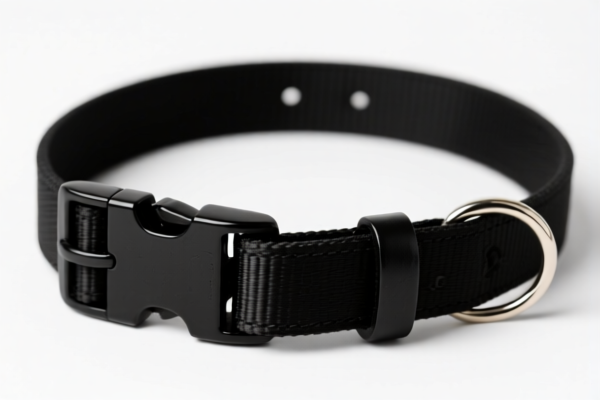
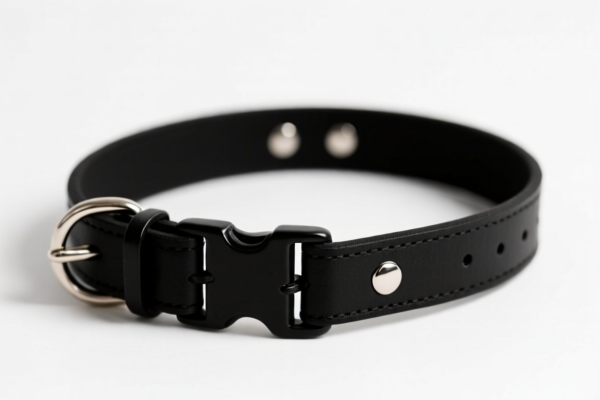
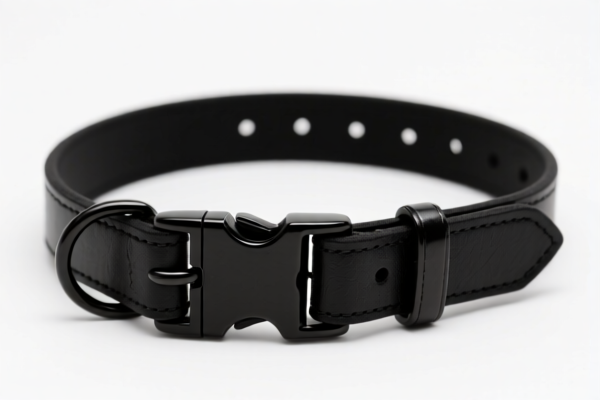
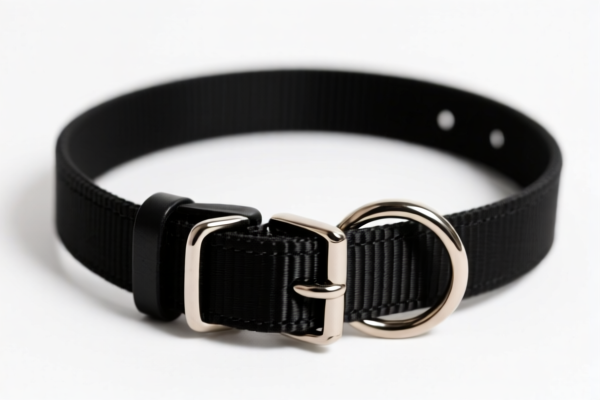
AI Analysis
🐶 Black Dog Collar: Strategic HS Classification & Tariff Optimization (2026 Update)
🌐 HS Code Reference & Customs Clearance Guide | 2026 Latest Tariff Analysis | Professional Clearance Strategy
📌 I. Product Definition & Classification: Are You Declaring the Right Collar?
A Dog Collar is a functional accessory for pet control, identification, or decoration. In international trade, its classification hinges on Material and Specific Use Category. While functionally identical, the material drives the HS Code, which drastically impacts your landed cost due to US trade policies.
The Three Main Pathways:
- Pet Accessories Specific Category (
4201):- Logic: Explicitly covers "saddlery and harnesses, of any material, for any animal, including reins and whips."
- Fit: Dog collars are legally considered "harnesses/reins" for animals. This is often the preferred classification for durability and specificity, provided the material allows.
- General Leather Goods (
4205):- Logic: Covers "Other articles of leather or composition leather."
- Fit: If the collar is 100% leather (or primary material is leather), it can fall here, but customs often prefer the more specific
4201if it's clearly a pet accessory. However, if it’s a fashion leather item not primarily for animal control, it might lean here.
- Material Agnostic (
4201.00.30.00vs4201.00.60.00):- Logic: Subclassifications under
4201differentiate by material type (e.g., leather vs. other materials like nylon/plastic).
- Logic: Subclassifications under
⚠️ Key Distinction Point:
- Is it Leather? → Look at4201.00.30.00(Leather harnesses/collars).
- Is it Nylon/Plastic/Rubber? → Look at4201.00.60.00(Other materials).
- Is it Fashion Leather (not functional)? → Might be4205.00.80.00(Risk of reclassification).
📦 II. HS Code Classification Details (2026 Latest Tariff Authority Comparison)
| HS Code | Product Description | Material Assumption | Key Feature |
|---|---|---|---|
4201.00.30.00 |
Saddlery and harnesses, of leather, for any animal (Includes Dog Collars) | Leather | Specific Use: Animal gear. |
4201.00.60.00 |
Saddlery and harnesses, of other materials, for any animal (Includes Nylon Dog Collars) | Nylon, Plastic, Rubber, Fabric | Specific Use: Animal gear. |
4205.00.80.00 |
Other articles of leather or composition leather | Leather | General Use: If not clearly "saddlery/harness," or if customs disputes 4201. |
🔍 Critical Reminder:
-4201is more specific than4205. For dog collars,4201is generally the correct and safer classification because it explicitly mentions "harnesses/reins for animals."
- Misclassifying a leather collar as4205might invite scrutiny if4201applies, potentially leading to delays or reassessment.
- Material matters:4201.00.30.00is for Leather.4201.00.60.00is for Non-Leather (Nylon, PU, etc.).
💰 III. 2026 Latest Tariff Rate Breakdown (Including Surtaxes, Policy Surcharges)
✅ Applicable Country: United States (US)
✅ Origin: China (CN)
✅ Effective Date: November 10, 2025 (and subsequent imports)
🎯 1. 4201.00.30.00 — Leather Saddlery/Harnesses (Dog Collars)
| Item | Content |
|---|---|
| Base Duty Rate | 2.4% (ad valorem) |
| Section 301 Surtax | +25% |
| IEEPA Surtax | +10% (针对中国/香港产品,自2025年11月10日起) |
| Total Effective Rate | 37.4% |
| Tax Calculation | CIF Value × 37.4% |
| De Minimis Eligibility | ❌ No (deny_de_minimis) |
| Legal Basis Path | IEEPA:9903.01.25 → IEEPA:9903.01.24 → USITC:4201.00.30.00 → FOOTNOTE:301 |
📌 Explanation:
- "Base 2.4%": Standard MFN rate for leather saddlery.
- "301 Surtax 25%": Trump/Biden administration tariffs on Chinese goods.
- "IEEPA 10%": Additional surcharge under International Emergency Economic Powers Act.
- Total 37.4%: A significant cost. Must be factored into pricing.
🎯 2. 4201.00.60.00 — Other Materials Saddlery/Harnesses (Nylon/Plastic Dog Collars)
| Item | Content |
|---|---|
| Base Duty Rate | 2.8% (ad valorem) |
| Section 301 Surtax | 0% (Exempted or lower rate for this specific subheading in some contexts, see note) |
| IEEPA Surtax | +10% |
| Total Effective Rate | 12.8% |
| Tax Calculation | CIF Value × 12.8% |
| De Minimis Eligibility | ❌ No (deny_de_minimis) |
| Legal Basis Path | IEEPA:9903.01.24 → USITC:4201.00.60.00 |
📌 Note:
- "Base 2.8%": Standard rate for non-leather harnesses.
- "301 Surtax 0%": This is the KEY SAVINGS. Many non-leather textile/plastic accessories under4201.00.60may enjoy lower or zero 301 tariffs compared to leather goods (4201.00.30.00).
- "IEEPA 10%": Still applies to Chinese origin.
- Total 12.8%: Massively cheaper than the leather variant. This is the optimal classification for non-leather collars.
🎯 3. 4205.00.80.00 — Other Leather Articles (Risk Classification)
| Item | Content |
|---|---|
| Base Duty Rate | 0.0% |
| Section 301 Surtax | 25.0% |
| 122 Section Surtax | 10% |
| Total Effective Rate | 35.0% |
| Tax Calculation | CIF Value × 35.0% |
| De Minimis Eligibility | ❌ No |
| Legal Basis Path | USITC:4205.00.80.00 → FOOTNOTE:122 → 301 |
📌 Warning:
- While base duty is 0%, the 301 (25%) + 122 (10%) totals 35%.
- Risk: Customs may reject4205for a dog collar, arguing it belongs in4201(more specific). If rejected, you face back taxes and penalties.
- Not recommended unless you have strong legal justification that it is not a harness/saddlery item.
🛠️ IV. Customs Clearance Practical Advice (Battle-Tested Pitfall Avoidance Guide)
✅ 1. Preparation Checklist (Non-Negotiable)
| Document | Required | Explanation |
|---|---|---|
| ✅ Product Specification Sheet | ✔️ | Must state material composition (e.g., "100% Nylon Webbing", "Genuine Leather"). This is the #1 reason for classification disputes. |
| ✅ Product Photos (Labeled) | ✔️ | Show the buckle, D-ring, and stitching. Prove it’s a dog collar, not a fashion belt. |
| ✅ Commercial Invoice | ✔️ | Clearly describe as "Dog Collar, Nylon" or "Leather Dog Collar". Avoid vague terms like "Animal Accessory." |
| ✅ HS Code Pre-Ruling (Optional but Recommended) | ✔️ | If importing large volumes, get a binding ruling for 4201.00.60.00 (non-leather) to lock in the 12.8% rate. |
| ✅ Packaging List | ✔️ | Ensure no "free samples" or mismatched quantities that trigger audits. |
✅ 2. Declaration Tips (Key Mnemonic)
🔥 “Material Dictates Code,
4201is King,60is Low Tax,30is High Tax!”
| Scenario | Correct Declaration | Wrong Practice |
|---|---|---|
| Nylon/Plastic Collar | 4201.00.60.00 |
Declaring as 4205 (risk of rejection) or 4201.00.30 (wrong material) |
| Leather Collar | 4201.00.30.00 |
Declaring as 4205 (too generic, higher risk) |
| Fashion Belt (Human) | 4203.29.00.00 |
Declaring as 4201 (incorrect use) |
| Dog Collar + Leash Set | Declare each item separately by HS Code | Bundling into one line item → Customs may split and assess higher rates |
✅ 3. Special Case Handling
| Situation | Handling Advice |
|---|---|
| Mixed Material Collar (e.g., Leather strap, Nylon buckle) | Classify based on principal material or essential character. If leather >50%, likely 4201.00.30.00. If nylon is dominant, argue 4201.00.60.00. Provide detailed material breakdown. |
| OEM Custom Collars | Provide design drawings and material specs. Ensure the description matches the physical good exactly. |
| Small Quantity (<$800) | ❌ Do NOT use De Minimis (Section 321). All 4201 and 4205 items from China are excluded from de minimis. You must pay duties even for small parcels. |
| Anti-Circumvention Risk | Ensure no transshipment via third countries (e.g., Vietnam, Mexico) without substantial transformation. US CBP is aggressive on China-origin goods relabeled. |
🌍 V. Global Market Clearance Comparison (2026 Latest)
| Country/Region | Recommended HS Code | Tariff Rate (China Origin) | Certification Req. | Notes |
|---|---|---|---|---|
| 🇺🇸 USA | 4201.00.60.00 (Non-Leather) |
12.8% | None | Best Rate. Avoid 4201.00.30.00 (37.4%). |
| 🇺🇸 USA | 4201.00.30.00 (Leather) |
37.4% | None | High tax due to 301+IEEPA. |
| 🇨🇳 China | 4201.00.60.00 |
2.8% | None | Low base duty. |
| 🇪🇺 EU | 4201.00.60.00 |
1.7% (approx) | CE (if electronic) | Lower tariffs than US. No 301. |
| 🇬🇧 UK | 4201.00.60.00 |
1.7% | None | Post-Brexit rates similar to EU. |
📌 Conclusion:
- USA is the highest-cost market due to Section 301 and IEEPA surcharges.
- Non-leather collars (4201.00.60.00) are the strategic choice for US exports from China (12.8% vs 37.4%).
- Leather collars are expensive to export to the US. Consider sourcing leather from non-China countries (e.g., Italy, Vietnam) if targeting the US market to avoid 301 tariffs.
📌 VI. Common Mistakes & Pitfall Guide (Lessons from Blood and Tears)
❌ Mistake 1: Declaring a Nylon Collar as 4205.00.80.00 (Leather)
👉 Consequence: Customs sees "Nylon," rejects 4205, reclassifies to 4201.00.60.00. Delay + Penalties.
Fix: Be accurate. If nylon, use 4201.00.60.00.
❌ Mistake 2: Assuming De Minimis ($800) applies to Dog Collars from China
👉 Consequence: Package seized, duties + storage fees charged.
Fix: Always declare and pay duties for 4201/4205 items. They are excluded from de minimis.
❌ Mistake 3: Using vague descriptions like "Pet Accessory"
👉 Consequence: Customs officer guesses. May assign highest possible rate or request exam.
Fix: Use "Dog Collar, Nylon, Black". Specificity wins.
❌ Mistake 4: Ignoring Material Composition
👉 Consequence: 4201.00.30 (Leather) vs 4201.00.60 (Other) have a 24.6% tax difference.
Fix: Clearly label material. If PU leather, argue it’s "synthetic" (Non-Leather 4201.00.60) if possible, or accept the higher rate.
✅ Correct Practice:
“Dog Collar, 100% Nylon Webbing, Black, with Stainless Steel Buckle, Model DC-101”
→ HS Code:4201.00.60.00
→ Tax: 12.8%
🎯 VII. Conclusion: Smart Classification, Smarter Profits!
🎯 Remember the Mnemonic:
🔹 “
4201is King,60is Low,30is High.4205is Risky,De Minimisis Dead for China!”
🔹 “12.8% vs 37.4%: The 24.6% Gap is Your Profit Margin!”
📌 Pro Tip:
If you are exporting leather dog collars to the US, consider:
1. Sourcing leather from Vietnam/Mexico (if applicable) to avoid 301 tariffs.
2. Switching to Nylon/Polyester collars, which qualify for 4201.00.60.00 (12.8% total tax).
3. Applying for an Exclusion under Section 301 if available (check latest USITC exclusion list).
📣 Immediate Action:
📞 Verify Material Composition of every SKU.
📝 Declare as "Dog Collar" with explicit material.
🚀 Use4201.00.60.00for non-leather to save 24.6% in taxes.
💼 Your Profit Margin Depends on Your HS Code!
✨ Professional Clearance Starts with Accurate Classification!
💼 Don’t Let Tariffs Eat Your Dog Collar Profits!
Customer Reviews
About HS Code Classification
The Harmonized System (HS) is an internationally standardized nomenclature developed by the World Customs Organization (WCO) to classify traded products. Over 200 countries use the HS system as the basis for customs tariffs, trade statistics, and import/export regulations.
Each HS code follows a hierarchical structure:
- Chapter (2 digits) — Broad category of goods (e.g., Chapter 84: Machinery and Mechanical Appliances)
- Heading (4 digits) — More specific grouping within the chapter
- Subheading (6 digits) — Internationally standardized breakdown, used by all WCO member countries
- National subdivisions (8-10 digits) — Country-specific extensions for further classification, such as US HTSUS 10-digit codes
Correct HS code classification is essential for smooth customs clearance, accurate duty payment, and compliance with trade regulations. Misclassification can lead to customs delays, overpayment of duties, or penalties.
When importing from CN to US, the applicable tariff rates may include:
- Most-Favored-Nation (MFN) rate — The standard duty rate applied to WTO members
- General rate — Applied to countries without trade agreements
- Trade remedy duties — Additional tariffs such as Section 301 (anti-dumping), Section 232 (national security), or countervailing duties
The information provided on this page is for reference purposes only. For official classification, please consult with your local customs authority or a licensed customs broker.