black self tapping screws
CN → US| HS Code | Tariff Rate | Origin | Destination | Doc |
|---|---|---|---|---|
| 7318141060 | 91.2% | CN | US | Official Doc |
| 7318145080 | 93.6% | CN | US | Official Doc |
| 7318141030 | 91.2% | CN | US | Official Doc |
| 7318145020 | 93.6% | CN | US | Official Doc |
| 7318156040 | 91.2% | CN | US | Official Doc |
Product Images
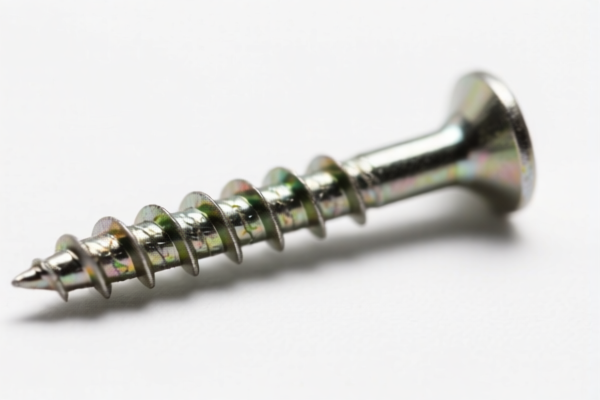
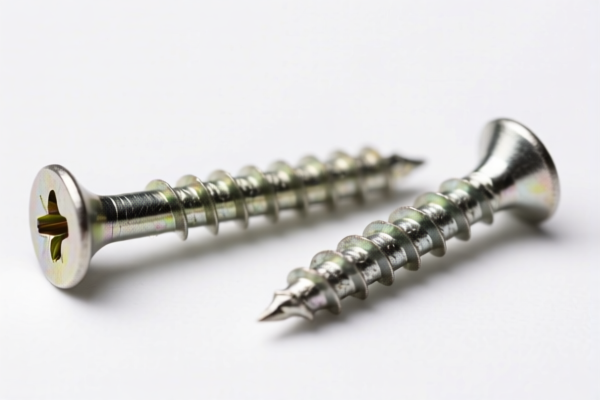
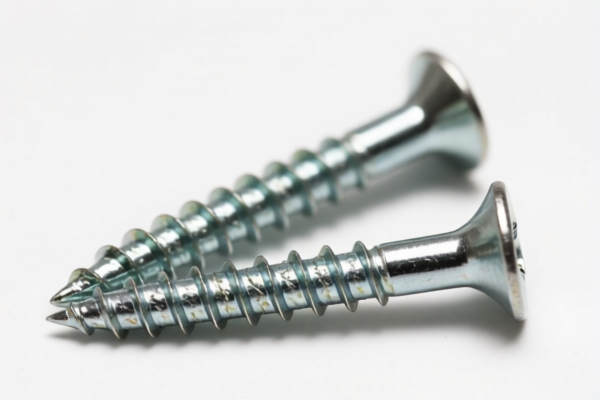
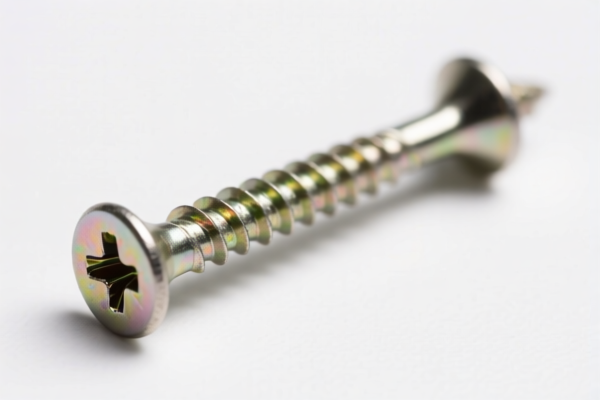
AI Analysis
🔩 Black Self-Tapping Screws (Black Zinc/Carbon Steel & Stainless Steel Fasteners)
🌐 HS Code Reference & Customs Clearance Guide | 2026 Latest Tariff Analysis | Professional Compliance Strategy
📌 Part 1: Product Definition & Classification – Do You Know Your "Black" Screw?
"Black self-tapping screws" are critical fastening components used in construction, automotive, and industrial assembly. In international trade, they are not a single monolithic category but are strictly divided based on material and head/drive type. The term "Black" usually refers to a surface treatment (e.g., black oxide, phosphating, or zinc plating) applied to Carbon Steel or Iron, though it can sometimes describe a coating on Stainless Steel.
Key Distinctions:
Carbon Steel/Iron Black Screws: These are magnetic, prone to rust if the coating is damaged, and are the most common "black" hardware. They fall under specific sub-headings based on thread pitch and drive type (e.g., Phillips, Hex).
Stainless Steel Black Screws: These are non-magnetic (usually 304/316 grade) but may have a black PVD coating or passivation. They are grouped separately from carbon steel due to higher material value and different chemical resistance profiles.
⚠️ Critical Classification Point:
- If the screw is Carbon Steel/Iron with a black finish (oxide/zinc) → It belongs to 7318.14 or 7318.15 depending on the head.
- If the screw is Stainless Steel with a black coating → It is still classified under 7318.14 (Threaded articles of iron or steel, where stainless is often grouped or specified separately in US HTS).
- Drive Type Matters: A standard Phillips head screw (7318.14) is taxed differently from a Hex Socket/Allen head screw (7318.15). Misclassification here leads to massive duty errors.
📦 Part 2: HS Code Classification Details (2026 Authority对照)
| HS Code | Product Description (Summary from Data) | Material | Form/Drive Type | Tax Summary |
|---|---|---|---|---|
7318.14.50.80 |
Black Self-Tapping Screw | Carbon Steel | Self-Tapping Screw (General) | 93.6% |
7318.14.10.60 |
Black Self-Tapping Screw | Carbon Steel | Self-Tapping Screw (Specific Pitch/Size) | 91.2% |
7318.14.10.30 |
Stainless Black Self-Tapping Screw | Stainless Steel | Self-Tapping Screw | 91.2% |
7318.14.50.20 |
Stainless Black Self-Tapping Screw | Stainless Steel | Self-Tapping Screw | 93.6% |
7318.15.60.40 |
Socket Head Black Self-Tapping Screw | Iron/Steel | Hex Socket/Allen (Internal Hex) | 91.2% |
🔍 Key Insight:
-7318.14covers general threaded screws and bolts (including self-tappers) not specified in other subheadings. This is the most common code for standard black Phillips/Torx self-tappers.
-7318.15specifically covers Hex Socket (Allen head) screws. If your "black screw" has an internal hex drive, it must go to7318.15.60.40, not7318.14.
- Material Split: US Customs distinguishes between10.60(Carbon/Iron) and10.30(Stainless) within the7318.14.10bracket. Similarly,50.80and50.20in7318.14.50split by material. You MUST declare the exact material to avoid fraud alerts.
💰 Part 3: 2026 Tariff Rate Breakdown (Including Add-on Duties)
✅ Applicable Country: United States (US)
✅ Origin: China (CN)
✅ Effective Date: 2025/2026 (Current Trade War Framework)
🎯 1. Carbon Steel Black Screws (7318.14.10.60 & 7318.14.50.80)
| Item | Detail |
|---|---|
| Base Duty Rate | 6.2% (10.60) / 8.6% (50.80) |
| Section 301 Add-on | +25.0% |
| Section 301 (10% Steel/Aluminum/Copper) | +10.0% |
| Section 122 (Steel/Aluminum/Copper Add-on) | +50.0% |
| Total Effective Tax Rate | 91.2% (10.60) / 93.6% (50.80) |
| Calculation | CIF Value × Total Rate |
| De Minimis Eligibility | ❌ NO (Denied) |
| Legal Basis | USITC:7318.14... → FOOTNOTE:301... + IEEPA/122 Clauses |
📌 Explanation:
- The 50% Section 122 tariff is the killer here. It applies specifically to steel and aluminum articles imported under certain conditions.
- The 25% Section 301 is standard for Chinese goods.
- The 10% Add-on targets specific raw material categories.
- Result: Even for cheap hardware, the duty exceeds the product cost. Profit margins will be wiped out if not priced correctly.
🎯 2. Stainless Steel Black Screws (7318.14.10.30 & 7318.14.50.20)
| Item | Detail |
|---|---|
| Base Duty Rate | 6.2% (10.30) / 8.6% (50.20) |
| Section 301 Add-on | +25.0% |
| Section 301 (10% Steel/Aluminum/Copper) | +10.0% |
| Section 122 (Steel/Aluminum/Copper Add-on) | +50.0% |
| Total Effective Tax Rate | 91.2% (10.30) / 93.6% (50.20) |
| Calculation | CIF Value × Total Rate |
| De Minimis Eligibility | ❌ NO (Denied) |
📌 Note:
- Stainless steel is still considered "Steel" under Section 232/122 frameworks for certain tariffs. Hence, it attracts the same 50%+25%+10% burden.
- There is no tax advantage for using stainless steel over carbon steel in terms of duty rate in this specific HS breakdown.
🎯 3. Socket Head (Hex) Black Screws (7318.15.60.40)
| Item | Detail |
|---|---|
| Base Duty Rate | 6.2% |
| Section 301 Add-on | +25.0% |
| Section 301 (10% Steel/Aluminum/Copper) | +10.0% |
| Section 122 (Steel/Aluminum/Copper Add-on) | +50.0% |
| Total Effective Tax Rate | 91.2% |
| Calculation | CIF Value × Total Rate |
📌 Why this matters:
- If you have Hex-head black screws, do NOT use7318.14. Use7318.15.60.40.
- The rate is identical (91.2%), but the HS Code is legally distinct. Misdeclaring Hex screws as standard screws (7318.14) is a common customs violation that leads to penalties.
🛠️ Part 4: Customs Clearance Practical Advice (Pitfall Avoidance)
✅ 1. Mandatory Documentation Checklist
| Document | Required? | Explanation |
|---|---|---|
| ✅ Product Specification Sheet | ✔️ | Must clearly state: Material (Carbon Steel vs. Stainless), Finish (Black Oxide/Zinc), Head Type (Phillips/Hex), Thread Pitch. |
| ✅ Commercial Invoice | ✔️ | Must match HS Code exactly. Use description: "Black Self-Tapping Screws, Carbon Steel, Zinc Plated" or "Black Stainless Steel Self-Tapping Screws". |
| ✅ Certificate of Origin (CO) | ✔️ | Essential for verifying Chinese origin to apply correct Section 301/122 duties. |
| ✅ Packing List | ✔️ | Show gross/net weight. Customs may verify weight-to-count ratios to detect under-declaration. |
| ✅ Third-Party Lab Report | ✔️ | Proof of material composition (e.g., 1018 Carbon Steel vs. 304 Stainless). Crucial for distinguishing 10.60 vs 10.30. |
✅ 2. Declaration Tips (Golden Rules)
🔥 “Material First, Head Second, Finish Third!”
| Scenario | Correct Declaration | Incorrect Action |
|---|---|---|
| Standard Black Screw (Phillips) | 7318.14.10.60 (Carbon) OR 7318.14.10.30 (Stainless) |
Calling it just "Screws" → Audits. |
| Hex Socket Black Screw | 7318.15.60.40 |
Using 7318.14 → Classification Error Penalty. |
| Mixed Box (Carbon & Stainless) | Split Lines on Invoice | Combining into one HS Code → Seizure Risk. |
| "Black" vs. "Zinc Plated" | Declare actual material + surface treatment | Ignoring "Black" → May trigger anti-dumping checks if misidentified. |
✅ 3. Special Handling Scenarios
| Situation | Handling Advice |
|---|---|
| OEM/Private Label | Ensure the supplier’s invoice matches the importer’s specs. Discrepancies in "Material" cause 100% seizure. |
| Sample Shipments | Even samples are subject to 91-93% duty. Do not use De Minimis (Section 321) for screws from China; it is explicitly denied for this category. |
| Stainless Steel Claim | If you claim Stainless (10.30), you MUST provide chemical analysis. If tested as Carbon, you face back-duties + fines. |
| High Volume | Consider HTS Subheading 8070 or other potential exemptions? No, not for China. The 122/301 duties are robust. |
🌍 Part 5: Global Market Comparison (2026 Update)
| Country/Region | Recommended HS Code | Approx. Total Duty (China Origin) | Certification/Notes |
|---|---|---|---|
| 🇺🇸 USA | 7318.14.10.60 / 7318.14.50.80 |
91.2% - 93.6% | Section 301 + 122 Apply. Very High Cost. |
| 🇨🇳 China | 7318.14.10 / 7318.15.60 |
~6-8% | Low import duty for domestic use. |
| 🇪🇺 EU | 7318.15 / 7318.14 |
0-10% | No US-style Section 122. Much Cheaper. |
| 🇨🇦 Canada | 7318.15.60 |
5-10% | No Section 301. |
| 🇲🇽 Mexico | 7318.14 |
0% (If USMCA eligible) | Check Rules of Origin. |
📌 Strategic Insight:
- USA Market: The 91-93% tariff makes importing Chinese screws to the US economically unviable for low-margin goods.
- Alternative: Source from Vietnam, Thailand, or Mexico (if USMCA/FTA applicable) to avoid Section 301/122.
- EU Market: A far better destination for Chinese hardware due to lower tariffs and no "122" style punitive duties.
📌 Part 6: Common Errors & Pitfalls (Blood Lessons)
❌ Error 1: Declaring Stainless Screws as Carbon Steel (7318.14.10.30 vs 10.60)
👉 Consequence: If the importer under-declares to try a different rate (though rates are similar here), it’s a fraud risk. More importantly, mixing materials in one line item causes rejection.
❌ Error 2: Using 7318.14 for Hex Socket Screws (7318.15)
👉 Consequence: Incorrect HS Code. CBP may assess penalties for misdeclaration. The structure of 7318.15 is distinct for Hex Socket heads.
❌ Error 3: Assuming "Black" is the primary classifier
👉 Consequence: "Black" is a finish, not a material. Customs classifies by Material first. Focusing on color leads to wrong HS codes.
❌ Error 4: Trying to use Section 321 (De Minimis) for LCL or Personal Packages
👉 Consequence: Explicitly Denied. The data confirms deny_de_minimis for these HS codes. All entries will be bonded and taxed at 91-93%.
✅ Correct Action:
"Black Self-Tapping Screws, Carbon Steel, Zinc Plated, Phillips Head, Inch Series, Model XYZ"
HS Code:7318.14.10.60
🎯 Part 7: Conclusion – Professional Declaration, Cost Control!
🎯 Remember the Mantra:
🔹 "Material Dictates Code, Head Defines Subheading, Finish is Secondary."
🔹 "US Tariffs are 90%+: Source Locally or Diversify Supply Chain!"
📌 Pro Tip:
If you are importing these to the US, do not ignore the Section 122 and 301 duties. Your profit margin WILL disappear.
1. Verify Material: Carbon vs. Stainless.
2. Verify Drive: Phillips (14) vs. Hex (15).
3. Check Alternatives: Can you source from Vietnam/Mexico?
4. Calculate Landed Cost: Product Cost + Shipping + 93% Duty = Final Price.
📣 Immediate Action:
📞 Contact your Customs Broker with the exact material test report.
📋 Apply for an HTS Classification Ruling if unsure.
🚀 Optimize Supply Chain: Avoid Chinese origin for US-bound screws unless margins are >100%.
✨ Precision in Classification, Profit in Logistics!
💼 Every percent of duty saved is pure profit!
Customer Reviews
About HS Code Classification
The Harmonized System (HS) is an internationally standardized nomenclature developed by the World Customs Organization (WCO) to classify traded products. Over 200 countries use the HS system as the basis for customs tariffs, trade statistics, and import/export regulations.
Each HS code follows a hierarchical structure:
- Chapter (2 digits) — Broad category of goods (e.g., Chapter 84: Machinery and Mechanical Appliances)
- Heading (4 digits) — More specific grouping within the chapter
- Subheading (6 digits) — Internationally standardized breakdown, used by all WCO member countries
- National subdivisions (8-10 digits) — Country-specific extensions for further classification, such as US HTSUS 10-digit codes
Correct HS code classification is essential for smooth customs clearance, accurate duty payment, and compliance with trade regulations. Misclassification can lead to customs delays, overpayment of duties, or penalties.
When importing from CN to US, the applicable tariff rates may include:
- Most-Favored-Nation (MFN) rate — The standard duty rate applied to WTO members
- General rate — Applied to countries without trade agreements
- Trade remedy duties — Additional tariffs such as Section 301 (anti-dumping), Section 232 (national security), or countervailing duties
The information provided on this page is for reference purposes only. For official classification, please consult with your local customs authority or a licensed customs broker.