blade disc
CN → US| HS Code | Tariff Rate | Origin | Destination | Doc |
|---|---|---|---|---|
| 8202913000 | 35.0% | CN | US | Official Doc |
| 8202310000 | 35.0% | CN | US | Official Doc |
| 8466939885 | 39.7% | CN | US | Official Doc |
Product Images
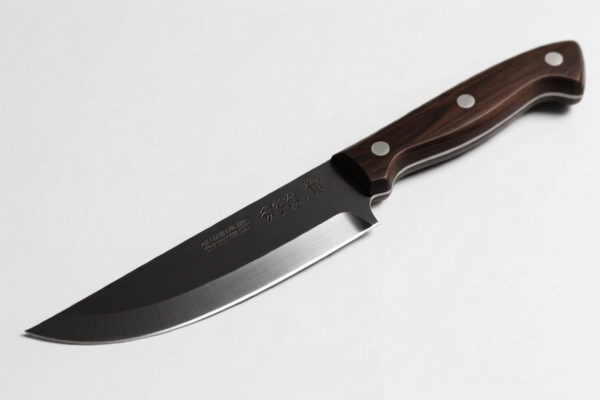
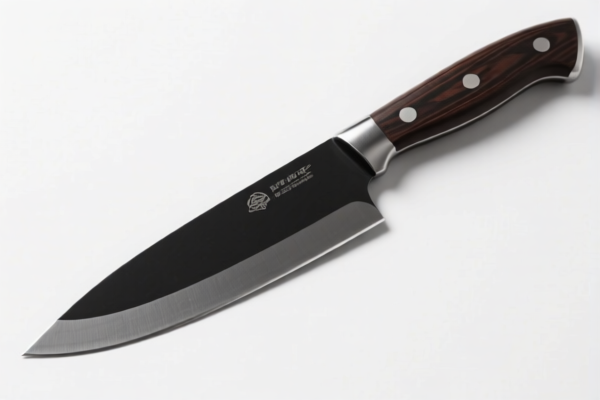

AI Analysis
🪚 Blade Discs (Saws & Cutting Tools)
🌐 HS Code Reference & Customs Clearance Guide | 2026 Latest Tariff Analysis | Professional Entry Strategy
📌 I. Product Definition & Classification: What Exactly is a "Blade Disc"?
In international trade, "Blade Disc" is a generic term that typically refers to circular cutting tools. However, under the Harmonized System (HS), the classification depends strictly on the material, function, and integration with machinery.
There are three primary classification paths for Blade Discs, ranging from general cutting tools to machine accessories. Misclassification here is critical because the tariff rates vary significantly based on whether the item is considered a standalone tool or a part of a machine.
⚠️ Key Distinction Points:
- If the disc is a standalone cutting tool made of steel (even if hardened) without a specific non-metallic core described in other headings → Group 82 (Tools).
- If the disc is specifically designed as an interchangeable component for a machine tool (like a CNC saw or lathe) and meets the definition of a machine part → Group 84 (Machinery).
- Material Matters: Metal vs. Non-metal components can shift the HS code entirely.
📦 II. HS Code Classification Details (2026 Latest Tariff Authority Comparison)
| HS Code | Product Description | Application Scenario | Material/Feature |
|---|---|---|---|
8202.91.30.00 |
Saw blades, matching various saws and steel bandsaws | General industrial sawing, metal cutting, woodworking | Inferred Metal Material |
8202.31.00.00 |
Saw blades (Circular) | Industrial circular saws, consistent form and use | Inferred Steel Working Part |
8466.93.98.85 |
Parts & accessories for machine tools (Saw blades as attachments) | Machine tool accessories, CNC equipment parts | Metal Material, Machine Part |
🔍 Key Reminder:
-8202Category: These are classified as tools of heading 82.02. They are generally subject to lower base tariffs but are heavily impacted by specific trade sanctions (Section 301 & Section 122).
-8466Category: These are classified as parts of machine tools (Heading 84.66). They incur a base tariff (4.7%) in addition to the trade sanctions, resulting in a higher total effective tax rate for this specific classification.
💰 III. 2026 Latest Tariff Rate Details (Including Surtaxes & Policy Surcharges)
✅ Applicable Country: United States (US)
✅ Country of Origin: China (CN)
✅ Effective Time: Current rates apply to imports post-2025 regulations.
🎯 1. 8202.91.30.00 —— Saw Blades (Matching Various Saws/Bandsaws)
| Item | Content |
|---|---|
| Base Tariff | 0.0% (ad valorem) |
| Section 301 Surcharge | +25.0% (Trade Remedy Duties) |
| Section 122 Surcharge | +10.0% (Specific Section 122 Tariff) |
| Total Tax Rate | 35.0% |
| Tax Calculation | CIF Value × 35% |
| De Minimis Exemption | ❌ Not Eligible |
| Legal Basis Path | HTS:8202.91.30.00 → Section 301 (Footnote 9903.88.01) → Section 122 |
📌 Explanation:
- Although the base tariff is 0%, this product is heavily burdened by two layers of additional tariffs.
- Section 301 (+25%): Applies to a wide range of Chinese-manufactured tools and steel products.
- Section 122 (+10%): A specific additional duty applied to certain imported goods, including specific saw blades.
- Result: A flat 35% total duty rate.
🎯 2. 8202.31.00.00 —— Circular Saw Blades (Steel Working Part)
| Item | Content |
|---|---|
| Base Tariff | 0.0% (ad valorem) |
| Section 301 Surcharge | +25.0% (Trade Remedy Duties) |
| Section 122 Surcharge | +10.0% (Specific Section 122 Tariff) |
| Total Tax Rate | 35.0% |
| Tax Calculation | CIF Value × 35% |
| De Minimis Exemption | ❌ Not Eligible |
| Legal Basis Path | HTS:8202.31.00.00 → Section 301 (Footnote 9903.88.01) → Section 122 |
📌 Note:
- Similar to the previous code, this circular saw blade is classified as a tool.
- The base rate is 0%, but the surcharges bring the total to 35%.
- This classification is used when the blade is defined by its form (circular) and material (steel) for general cutting purposes.
🎯 3. 8466.93.98.85 —— Parts & Accessories for Machine Tools (Saw Blades)
| Item | Content |
|---|---|
| Base Tariff | 4.7% (ad valorem) |
| Section 301 Surcharge | +25.0% (Trade Remedy Duties) |
| Section 122 Surcharge | +10.0% (Specific Section 122 Tariff) |
| Total Tax Rate | 39.7% |
| Tax Calculation | CIF Value × 39.7% |
| De Minimis Exemption | ❌ Not Eligible |
| Legal Basis Path | HTS:8466.93.98.85 → Section 301 (Footnote 9903.88.01) → Section 122 |
📌 Critical Difference:
- This code classifies the blade as a machine part/accessory rather than a standalone tool.
- Unlike the8202codes, this code carries a 4.7% Base Tariff.
- Combined with the 25% Section 301 and 10% Section 122 surcharges, the total tax burden is 39.7%.
- Use Case: This is appropriate if the blade is marketed and sold specifically as an interchangeable component for a CNC machine or industrial saw unit, rather than as a consumer or general industrial tool.
🛠️ IV. Customs Clearance Practical Advice (Avoiding Pitfalls)
✅ 1. Preparation Checklist (Non-negotiable)
| Document | Required? | Notes |
|---|---|---|
| ✅ Product Specifications | ✔️ | Must detail material (e.g., High-Speed Steel, Carbide), diameter, tooth count, and arbor size. |
| ✅ Usage Declaration | ✔️ | Clearly state if it is a "Standalone Saw Blade" (8202) or a "Machine Tool Accessory" (8466). |
| ✅ Material Certification | ✔️ | Proof of steel/alloy composition to confirm metal classification. |
| ✅ Commercial Invoice | ✔️ | Must explicitly state "Saw Blade" or "Blade Disc" with the specific HS Code if pre-decided. |
| ✅ Packaging List | ✔️ | Ensure packaging matches the declared value and quantity. |
✅ 2. Classification Strategy (The Golden Rules)
🔥 “Tool vs. Part: Define the Function First!”
| Scenario | Correct HS Code | Tax Rate | Why? |
|---|---|---|---|
| General Purpose Saw Blade | 8202.91.30.00 or 8202.31.00.00 |
35.0% | Classified as a tool of heading 82.02. Lower base rate (0%). |
| Machine Tool Accessory | 8466.93.98.85 |
39.7% | Classified as a part of heading 84.66. Higher base rate (4.7%) adds to the surcharge. |
| Non-Metal Blade | Not in DATA | N/A | If non-metallic, it may fall under different chapters (e.g., 84 or 39), requiring separate analysis. |
⚠️ Warning:
- Do not arbitrarily choose8466to avoid the 0% base rate if the item is clearly a general-purpose tool. Customs may reclassify it, leading to penalties.
- However, if the blade is sold exclusively as a replacement part for a specific machine,8466is technically more accurate, though it costs more in taxes.
✅ 3. Special Circumstances Handling
| Situation | Advice |
|---|---|
| OEM Blades for a Machine | If shipped with the machine, consider declaring as part of the machine if possible, but standalone blades usually trigger these specific codes. |
| Mixed Containers | Ensure commercial invoices clearly separate "Blade Discs" from other tools to avoid ambiguity during inspection. |
| Origin Marking | All blade discs must be clearly marked "Made in China" to trigger the Section 301 and 122 duties. |
🌍 V. Global Market Clearance Comparison (2026 Latest)
| Region | Recommended HS Code | Estimated Duty (China Origin) | Key Certifications | Notes |
|---|---|---|---|---|
| 🇺🇸 USA | 8202.91.30.00 / 8466.93.98.85 |
35.0% - 39.7% | None typically required for hardware | High Tariff Zone. Section 301 & 122 are critical. |
| 🇨🇳 China | 8202.91 / 8202.31 |
~0% - 5% | N/A | Import into China may have different duties. |
| 🇪🇺 EU | 8202.31 |
~14% + VAT | CE (if power tool) | No Section 301 equivalent, but standard EU duties apply. |
| 🇯🇵 Japan | 8202.31 |
~14% | JIS Standards | Standard MFN rates apply. |
📌 Conclusion:
- The USA imposes the highest burden due to the combined 35%-39.7% tariff.
- There are no de minimis exemptions for these items.
- Companies must factor in the Section 122 (10%) and Section 301 (25%) surcharges into their landed cost calculations.
📌 VI. Common Mistakes & Pitfalls (Lessons Learned)
❌ Mistake 1: Assuming "Blade Disc" is a single HS Code.
👉 Consequence: Customs may reclassify, causing delays and potential penalties.
Fix: Determine if it is a Tool (8202) or Machine Part (8466).
❌ Mistake 2: Ignoring the Section 122 Tariff.
👉 Consequence: Under-declaring the duty rate.
Fix: Ensure the declared rate includes the 10% Section 122 surcharge on top of the 25% Section 301.
❌ Mistake 3: Labeling as "Machine Part" when it's a general tool.
👉 Consequence: Risk of fraud allegations if intent doesn't match product description.
Fix: Be transparent. If it's a general saw blade, use 8202.
🎯 VII. Conclusion: Precise Classification, Cost Control!
🎯 Key Takeaway:
🔹 Tools (
8202): 35.0% Total Tax (0% Base + 25% + 10%).
🔹 Parts (8466): 39.7% Total Tax (4.7% Base + 25% + 10%).
🔹 Always Include Section 122: Many shippers forget the extra 10%.
📌 Pro Tip:
If your Blade Discs are not made in China (e.g., manufactured in Vietnam or Thailand), they may be exempt from Section 301 and 122 tariffs.
Action: Verify the Country of Origin meticulously. If not China, the tax rate could drop to near 0% (depending on the base HTS).
📣 Immediate Action:
📞 Consult a Customs Broker: Verify if your specific blade fits the
8202or8466definition based on marketing claims.
📝 Update Landed Cost Models: Include the 35%-39.7% burden for China-origin goods.
🚀 Optimize Supply Chain: Consider non-China sourcing if margins are tight, as US tariffs are among the highest globally for these goods.
✨ Professional Clearance Starts with Accurate Classification!
💼 Every Percentage Point Matters in Global Trade!
Customer Reviews
About HS Code Classification
The Harmonized System (HS) is an internationally standardized nomenclature developed by the World Customs Organization (WCO) to classify traded products. Over 200 countries use the HS system as the basis for customs tariffs, trade statistics, and import/export regulations.
Each HS code follows a hierarchical structure:
- Chapter (2 digits) — Broad category of goods (e.g., Chapter 84: Machinery and Mechanical Appliances)
- Heading (4 digits) — More specific grouping within the chapter
- Subheading (6 digits) — Internationally standardized breakdown, used by all WCO member countries
- National subdivisions (8-10 digits) — Country-specific extensions for further classification, such as US HTSUS 10-digit codes
Correct HS code classification is essential for smooth customs clearance, accurate duty payment, and compliance with trade regulations. Misclassification can lead to customs delays, overpayment of duties, or penalties.
When importing from CN to US, the applicable tariff rates may include:
- Most-Favored-Nation (MFN) rate — The standard duty rate applied to WTO members
- General rate — Applied to countries without trade agreements
- Trade remedy duties — Additional tariffs such as Section 301 (anti-dumping), Section 232 (national security), or countervailing duties
The information provided on this page is for reference purposes only. For official classification, please consult with your local customs authority or a licensed customs broker.