blank notebook
CN → US| HS Code | Tariff Rate | Origin | Destination | Doc |
|---|---|---|---|---|
| 4820102010 | 35.0% | CN | US | Official Doc |
| 4820102060 | 35.0% | CN | US | Official Doc |
Product Images
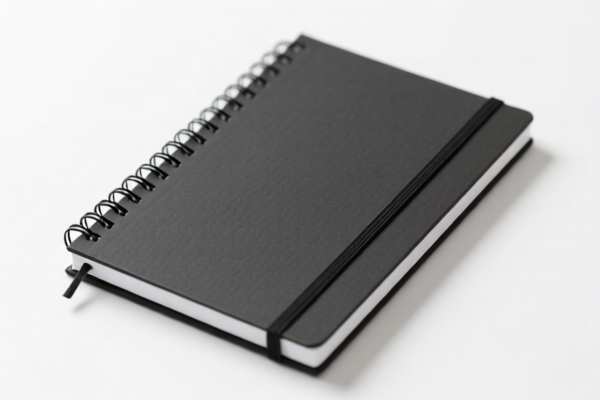
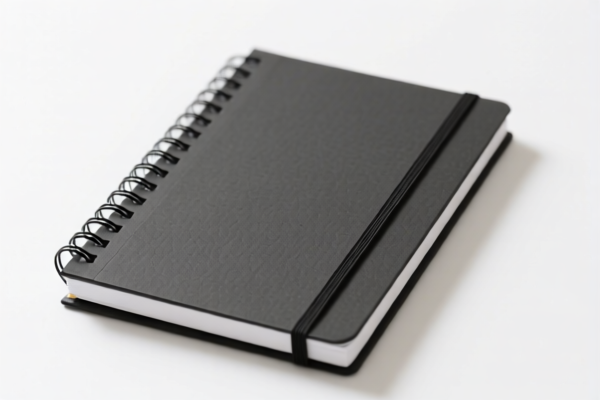
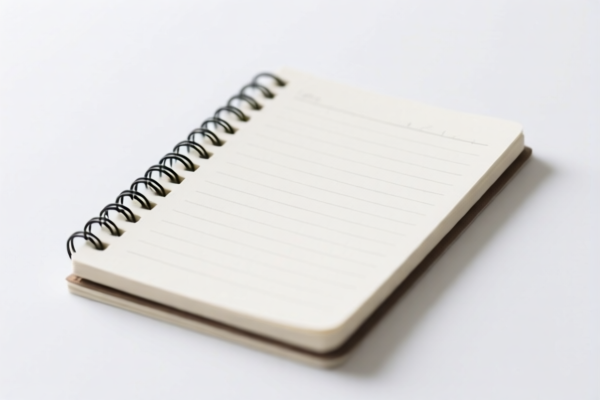

AI Analysis
📓 Blank Notebook (Papers Stationery)
🌐 HS Code Reference & Customs Clearance Guide | 2026 Latest Tariff Analysis | Professional Level通关 Strategy
📌 1. Product Definition and Classification: Do You Really Understand “Blank Notebooks”?
Notebooks (Blank) are essential office supplies and stationery items, widely used for personal notes, meetings, sketches, and academic records. In international trade, they fall under Chapter 48 (Paper and Paperboard; Articles of Paper Pulp, of Paper or Paperboard). Specifically, they are categorized based on whether they are "bound" (sewn/printed bindings) or "loose," though the provided data focuses on bound diaries, notebooks, and address books.
⚠️ Key Distinction: - Bound Notebooks (Closed/Loose-leaf): Includes spiral-bound, stitched, glued, or hardcover notebooks. These are classified under 4820.10. - Loose Leaf Paper/Refills: Not included in this specific HS Code scope; these usually fall under other headings (e.g., 4820.10.90 or 4802). - Exercise Books (Ruled/Printed): Sometimes distinguished from "Blank" notebooks, but often grouped similarly under 4820.10 depending on specific national sub-headings. The provided data explicitly mentions "Notebooks... bound."
📦 2. HS Code Classification Details (2026 Latest Tariff Authority Comparison)
Based on the provided <DATA>, the "Blank Notebook" falls strictly into two sub-categories under 4820.10.20 (Diaries, notebooks and address books, bound; memorandum pads, letter pads and similar articles).
| HS Code | Product Description | Applicable Scenario | Binding Type |
|---|---|---|---|
4820.10.20.10 |
Diaries, notebooks and address books, bound; memorandum pads, letter pads and similar articles: Diaries and address books | Hardcover diaries, leather-bound journals, formal address books, premium blank notebooks marketed as "diaries" | ✅ Bound |
4820.10.20.60 |
Diaries, notebooks and address books, bound; memorandum pads, letter pads and similar articles: Other | Standard school notebooks, spiral-bound blank notebooks, softcover journals, memo pads, loose-leaf binders (if classified here) | ✅ Bound |
🔍 Key Reminder: - Both codes fall under 4820.10.20, which covers bound stationery. - The distinction between
.10and.60often depends on the end-use (e.g., is it marketed as a "diary/address book" vs. a general "notebook") or binding style in specific national interpretations. However, both carry the same tax rate in this dataset. - Unbound paper reams or loose sheets do not fit here.
💰 3. 2026 Latest Tariff Rate Details (Including Additional Taxes & Policy Surcharges)
✅ Applicable Country: United States (US)
✅ Origin: China (CN)
✅ Effective Time: 2025 November 10 onwards (including subsequent imports)
🎯 1. 4820.10.20.10 — Diaries, Notebooks, Address Books (Bound)
| Item | Content |
|---|---|
| Base Tariff | 0.0% (ad valorem) |
| USITC Additional Tariff | +25.0% (Under Section 301 Trade Act) |
| IEEPA Additional Tariff | Not explicitly listed in DATA, but typically 0% for this category unless specified otherwise in broader context. However, the DATA explicitly states "Total Tax: 25.0%". |
| Total Tax Rate | 25.0% |
| Tax Calculation | CIF Value × 25% |
| De Minimis Exemption Eligible? | ❌ No (Section 301 duties apply; de minimis usually does not exempt 301 tariffs) |
| Legal Basis Path | USITC:4820.10.20.10 → SECTION_301:4820.10.20.10 |
📌 Explanation: - The 25% additional tariff is a result of the Section 301 Trade Act against China. - No base tariff is applied to most stationery items, but the 25% surcharge makes it expensive. - This is a high tariff category compared to other paper products.
🎯 2. 4820.10.20.60 — Other Notebooks (Bound)
| Item | Content |
|---|---|
| Base Tariff | 0.0% |
| USITC Additional Tariff | +25.0% |
| Total Tax Rate | 25.0% |
| Tax Calculation | CIF Value × 25% |
| De Minimis Exemption Eligible? | ❌ No |
| Legal Basis Path | USITC:4820.10.20.60 → SECTION_301:4820.10.20.60 |
📌 Note: - Identical tax treatment to
.10. - Whether you call it a "notebook," "memo pad," or "loose-leaf binder," if it’s bound stationery, it falls here.
🛠️ 4. Customs Clearance Practical Advice (Real-World Pitfall Avoidance)
✅ 1. Preparation Checklist (All Documents Required)
| Document | Mandatory? | Description |
|---|---|---|
| ✅ Product Specifications | ✔️ | Include dimensions, page count, paper weight (gsm), binding type (spiral, glued, stitched). |
| ✅ Product Photos | ✔️ | Show the cover, binding mechanism, and interior pages. Must show it is bound. |
| ✅ Commercial Invoice | ✔️ | Clearly state: "Blank Notebooks, Bound, Paper Stationery." Avoid vague terms like "Paper Goods." |
| ✅ Packing List | ✔️ | Detail the number of units per carton. |
| ✅ Origin Certificate (CO) | ✔️ | If applicable, to prove origin. However, Section 301 tariffs apply regardless of origin if produced in China. |
✅ 2. Declaration Tips (Critical Mnemonic)
🔥 "Bound = 4820, Loose = Not Here, 25% Tax is Real!"
| Scenario | Correct Declaration | Incorrect Practice |
|---|---|---|
| Spiral-bound blank notebook | 4820.10.20.60 |
Misclassify as "Paper Sheets" (4802) → High Risk of Audit |
| Hardcover diary/journal | 4820.10.20.10 |
Call it "Book" (4901) → Wrong Chapter, Delayed Clearance |
| Loose-leaf paper refills | Not 4820.10 | Declare as 4820 → Rejection/Correction Needed |
| Pre-printed exercise books | 4820.10.20.60 (Usually) |
Assume all paper = 4802 → 25% Tariff Risk if Bound |
✅ 3. Special Circumstances Handling
| Situation | Handling Advice |
|---|---|
| OEM Custom Notebooks | Provide design files. Ensure "blank" means unprinted pages. If branded, still 4820.10. |
| Mixed Shipments | If shipping notebooks with pens or folders, declare separately. Folders (4820.10.90 or 4820.10.30) may have different tax treatments. Do not lump together. |
| De Minimis (Section 321) | ⚠️ Warning: Under $800 shipments may still be subject to Section 301 tariffs depending on current CBP enforcement. Do not assume exemption. Verify with your broker. |
| Material Composition | If cover is leather/plastic and pages are paper, paper dominates → 4820.10. |
🌍 5. Global Market Comparison (2026 Latest)
| Country/Region | Recommended HS Code | Tariff Rate (CN Origin) | Certification Required | Notes |
|---|---|---|---|---|
| 🇺🇸 USA | 4820.10.20.60 |
25% (Section 301) | None specific | High tariff. Plan cost accordingly. |
| 🇨🇳 China | 4820.10.20.60 |
0-5% (Import Duty) | None | Low import duty. |
| 🇪🇺 EU | 4820.10.20 |
0-6.5% | CE (if applicable) | No Section 301 equivalent. |
| 🇬🇧 UK | 4820.10.20 |
0-5% | UKCA (if applicable) | Post-Brexit rules apply. |
| 🇯🇵 Japan | 4820.10.20 |
0-8% | JIS (optional) | Generally low tariffs. |
📌 Conclusion: - The US is the most challenging market for paper stationery due to the 25% Section 301 tariff. - EU, UK, Japan are much more tariff-friendly. - Strategy: If exporting to the US, consider pricing absorption, tariff engineering (if applicable, e.g., classifying as "printed" vs "blank" if it allows, though unlikely to reduce 25% surcharge), or supply chain diversification.
📌 6. Common Errors & Pitfall Guide (Blood & Tears Lessons)
❌ Error 1: Declaring bound notebooks as "Paper Sheets" (4802)
👉 Consequence:海关 (Customs) will reclassify to 4820.10 → 25% Tax + Penalties + Delays.
❌ Error 2: Assuming De Minimis ($800) exempts Section 301 duties
👉 Consequence: CBP may still assess the 25% tax. Always confirm with a broker.
❌ Error 3: Mixing "Blank" and "Printed" notebooks in one shipment without clear distinction
👉 Consequence: Inspection delay. Customs may audit the entire shipment.
❌ Error 4: Using vague descriptions like "Office Supplies"
👉 Consequence: High risk of misclassification. Be Specific: "Blank Spiral-Bound Notebook, 100 Sheets, 70gsm Paper."
✅ Correct Practice:
"Blank Notebooks, Bound, Spiral Binding, Paper Covers, 60 Pages, Model XYZ"
HS Code:4820.10.20.60
Tariff: 25%
🎯 7. Conclusion: Professional Declaration, Cost Control, Efficiency!
🎯 Remember the Mnemonic:
🔹 "Bound = 4820, Blank or Print, 25% Tax Applies."
🔹 "Loose Paper = 4802, Bound Notebook = 4820."
🔹 "De Minimis is NOT a Free Pass for Section 301."
📌 Pro Tip: If your notebook contains non-paper elements (e.g., heavy plastic covers, electronics like smart notebooks), classification may shift. However, standard paper notebooks are firmly in 4820.10.
📣 Immediate Action:
📞 Contact a Customs Broker to verify if your specific "blank notebook" design qualifies for
.10or.60(though tax is same, accuracy is key).
🚀 Pre-calculate Landed Cost: Add 25% to your FOB price for US market competitiveness.
✨ Professional Clearance Starts with Accurate Classification!
💼 Every Dollar Saved on Tariff is Pure Profit!
Customer Reviews
About HS Code Classification
The Harmonized System (HS) is an internationally standardized nomenclature developed by the World Customs Organization (WCO) to classify traded products. Over 200 countries use the HS system as the basis for customs tariffs, trade statistics, and import/export regulations.
Each HS code follows a hierarchical structure:
- Chapter (2 digits) — Broad category of goods (e.g., Chapter 84: Machinery and Mechanical Appliances)
- Heading (4 digits) — More specific grouping within the chapter
- Subheading (6 digits) — Internationally standardized breakdown, used by all WCO member countries
- National subdivisions (8-10 digits) — Country-specific extensions for further classification, such as US HTSUS 10-digit codes
Correct HS code classification is essential for smooth customs clearance, accurate duty payment, and compliance with trade regulations. Misclassification can lead to customs delays, overpayment of duties, or penalties.
When importing from CN to US, the applicable tariff rates may include:
- Most-Favored-Nation (MFN) rate — The standard duty rate applied to WTO members
- General rate — Applied to countries without trade agreements
- Trade remedy duties — Additional tariffs such as Section 301 (anti-dumping), Section 232 (national security), or countervailing duties
The information provided on this page is for reference purposes only. For official classification, please consult with your local customs authority or a licensed customs broker.