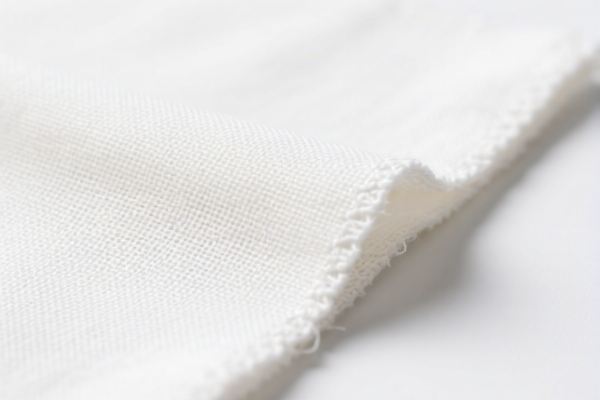
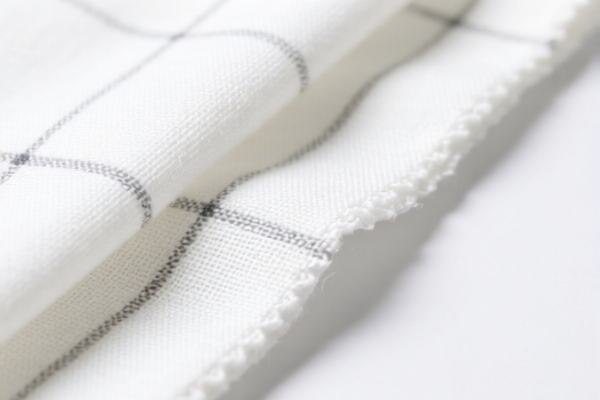
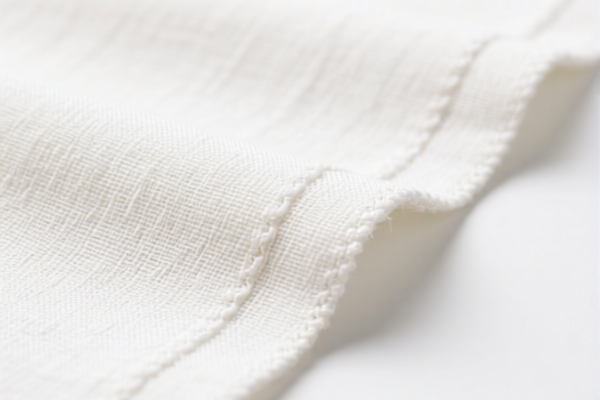
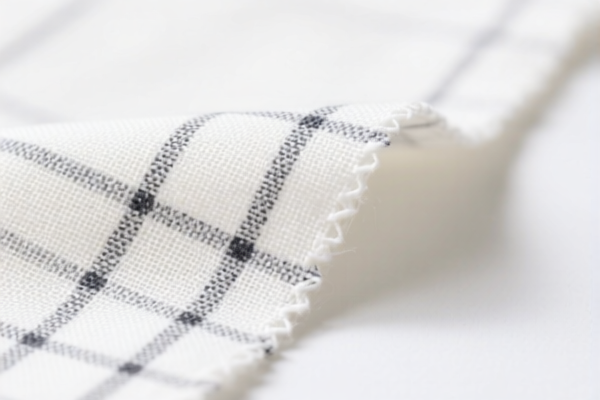
bleached cotton twill fabric
CN → US| HS Code | Tariff Rate | Origin | Destination | Doc |
|---|---|---|---|---|
| 5209320020 | 43.4% | CN | US | Official Doc |
| 5211120020 | 42.7% | CN | US | Official Doc |
| 5208130000 | 42.9% | CN | US | Official Doc |
| 5209120020 | 41.5% | CN | US | Official Doc |
| 5211320020 | 43.1% | CN | US | Official Doc |
Product Images
AI Analysis
🧵 Bleached Cotton Twill Fabric (漂白棉斜纹布)
🌐 HS Code Classification & Customs Clearance Guide | 2026 Latest Tariff Analysis | Professional Clearance Strategy
📌 I. Product Definition & Classification: What Defines "Bleached Cotton Twill"?
Bleached Cotton Twill Fabric is a versatile textile material characterized by its diagonal ribbing pattern (twill weave) and its natural fiber composition (cotton). The "bleached" process removes natural impurities and color, resulting a white or off-white base, which is ideal for dyeing, printing, or medical/apparel applications.
In international trade, the classification hinges on two critical technical parameters: 1. Weight: The fabric weight determines whether it falls under subheadings 5208 (≤200g/m²), 5209 (>200g/m²), or 5211 (>200g/m², finer yarns). 2. Weave Structure: Strictly "Satin Weave" (Satin) or "Twill Weave" (Satin). Plain weave fabrics are excluded.
⚠️ Key Distinction:
- If the fabric weight is ≤ 200 g/m², it generally falls under Heading 5208.
- If the fabric weight is > 200 g/m², it falls under Heading 5209 or 5211 (depending on yarn fineness).
- All codes below assume the fabric is Bleached (not dyed, printed, or mercerized).
📦 II. HS Code Classification Details (2026 Latest Tariff Authority Cross-Reference)
Based on the provided data, here are the specific HS Codes for Bleached Cotton Twill Fabric, categorized by weight and technical specification:
| HS Code | Product Description & Technical Summary | Applicable Scenario | Weight/Type Indicator |
|---|---|---|---|
5209.32.00.20 |
Bleached Cotton Twill Woven Fabric,符合棉制梭织物及斜纹特征 (Meets characteristics of cotton woven and twill) | Medium-to-heavy weight twill (e.g., denim, chinos, workwear). | > 200 g/m² (Standard Twill) |
5211.12.00.20 |
Bleached Cotton Twill Woven Fabric,完全符合分类解释中的材质与形态要求 (Fully meets material and form requirements in classification notes) | Finer yarn twill fabrics, high-count count sheets, premium apparel. | > 200 g/m² (Finer Yarn/Specific Form) |
5208.13.00.00 |
Bleached Cotton Twill Woven Fabric,符合棉制及3或4经纬斜纹织物要求 (Meets cotton and 3-or-4 warp/weft twill requirements) | Lightweight to medium-weight twill (e.g., lightweight shirts, linings). | ≤ 200 g/m² (Lightweight) |
5209.12.00.20 |
Bleached Cotton Twill Woven Fabric,材质与形态均符合分类要求的关键特征 (Key features of material and form meet classification requirements) | Standard twill fabrics, balanced weave, general industrial/apparel use. | > 200 g/m² (Standard) |
5211.32.00.20 |
Bleached Cotton Twill Woven Fabric,材质及织物特征完全符合分类要求 (Material and fabric features fully meet classification requirements) | High-count twill fabrics, specific technical applications requiring strict material compliance. | > 200 g/m² (High-Count/Specific) |
🔍 Important Reminder:
- The primary differentiator between5208,5209, and5211is the Gram Weight and Yarn Count.
- 5208: Weight ≤ 200 g/m².
- 5209: Weight > 200 g/m².
- 5211: Weight > 200 g/m², but with finer yarns or specific technical attributes.
- Misclassifying weight can lead to significant duty discrepancies and customs penalties.
💰 III. 2026 Latest Tariff Rate Breakdown (Including Additional Duties, Policy Add-ons)
✅ Applicable Country: United States (US)
✅ Country of Origin: China (CN)
✅ Effective Date: November 10, 2025 onwards (including subsequent imports)
🎯 1. 5209.32.00.20 —— Bleached Cotton Twill Woven Fabric (Medium/Heavy Weight)
| Item | Content |
|---|---|
| Base Duty Rate | 8.4% (ad valorem) |
| Section 301 Additional Duty | +25.0% |
| Section 122 Duty | +10.0% |
| Total Effective Rate | 43.4% |
| Tax Calculation | CIF Value × 43.4% |
| De Minimis Eligibility | ❌ Not Eligible (denied_de_minimis) |
| Legal Basis Path | Section 301: 8.4% → Section 301: 25.0% → Section 122: 10.0% → Total: 43.4% |
📌 Explanation:
- The Base Rate (8.4%) is the standard Most Favored Nation (MFN) duty for cotton twill fabrics >200g/m².
- The 25% Section 301 Duty is the standard punitive tariff on Chinese textiles.
- The 10% Section 122 Duty is an additional tariff specifically targeting certain textile imports under specific trade provisions.
- Total 43.4% is a high tariff burden, requiring careful cost planning.
🎯 2. 5211.12.00.20 —— Bleached Cotton Twill Woven Fabric (Finer Yarn/Specific Form)
| Item | Content |
|---|---|
| Base Duty Rate | 7.7% (ad valorem) |
| Section 301 Additional Duty | +25.0% |
| Section 122 Duty | +10.0% |
| Total Effective Rate | 42.7% |
| Tax Calculation | CIF Value × 42.7% |
| De Minimis Eligibility | ❌ Not Eligible (denied_de_minimis) |
| Legal Basis Path | Section 301: 7.7% → Section 301: 25.0% → Section 122: 10.0% → Total: 42.7% |
📌 Note:
- Slightly lower base rate (7.7%) compared to5209.32(8.4%), but still subject to heavy additional duties.
- Applies to finer, higher-count twill fabrics that may have different market value but similar tariff structure.
🎯 3. 5208.13.00.00 —— Bleached Cotton Twill Woven Fabric (Lightweight ≤200g/m²)
| Item | Content |
|---|---|
| Base Duty Rate | 7.9% (ad valorem) |
| Section 301 Additional Duty | +25.0% |
| Section 122 Duty | +10.0% |
| Total Effective Rate | 42.9% |
| Tax Calculation | CIF Value × 42.9% |
| De Minimis Eligibility | ❌ Not Eligible (denied_de_minimis) |
| Legal Basis Path | Section 301: 7.9% → Section 301: 25.0% → Section 122: 10.0% → Total: 42.9% |
📌 Note:
- Lightweight fabrics (≤200g/m²) have a base rate of 7.9%.
- Despite being lighter, the additional duties remain the same, keeping the total high.
🎯 4. 5209.12.00.20 —— Bleached Cotton Twill Woven Fabric (Standard)
| Item | Content |
|---|---|
| Base Duty Rate | 6.5% (ad valorem) |
| Section 301 Additional Duty | +25.0% |
| Section 122 Duty | +10.0% |
| Total Effective Rate | 41.5% |
| Tax Calculation | CIF Value × 41.5% |
| De Minimis Eligibility | ❌ Not Eligible (denied_de_minimis) |
| Legal Basis Path | Section 301: 6.5% → Section 301: 25.0% → Section 122: 10.0% → Total: 41.5% |
📌 Note:
- This code has the lowest base rate (6.5%) among the listed options.
- However, with additional duties, the total is still 41.5%, which is significant.
🎯 5. 5211.32.00.20 —— Bleached Cotton Twill Woven Fabric (High-Count/Specific)
| Item | Content |
|---|---|
| Base Duty Rate | 8.1% (ad valorem) |
| Section 301 Additional Duty | +25.0% |
| Section 122 Duty | +10.0% |
| Total Effective Rate | 43.1% |
| Tax Calculation | CIF Value × 43.1% |
| De Minimis Eligibility | ❌ Not Eligible (denied_de_minimis) |
| Legal Basis Path | Section 301: 8.1% → Section 301: 25.0% → Section 122: 10.0% → Total: 43.1% |
📌 Note:
- High-count twill fabrics typically have higher base rates due to their premium nature.
- Total rate of 43.1% reflects the combination of base and additional duties.
🛠️ IV. Customs Clearance Practical Advice (Battle-Tested Pitfall Avoidance Guide)
✅ 1. Required Documentation Checklist (Non-Negotiable)
| Document | Must Provide | Explanation |
|---|---|---|
| ✅ Product Specification Sheet | ✔️ | Must include: Fabric weight (g/m²), yarn count, weave type (twill), bleaching process. |
| ✅ Lab Test Report | ✔️ | Proof of cotton content (≥100% cotton), weight verification, and bleaching status. |
| ✅ Commercial Invoice | ✔️ | Must clearly state "Bleached Cotton Twill Fabric" and HS Code. |
| ✅ Packing List | ✔️ | Details roll dimensions, weight, and quantity. |
| ✅ Certificate of Origin (CO) | ✔️ | Required for origin verification; crucial for duty assessment. |
| ✅ Bill of Lading/Air Waybill | ✔️ | Standard shipping document. |
✅ 2. Declaration Tips (Key Mantra)
🔥 “Weight Matters, Twill Must Be Clear, Bleached Stated, Duty Will Not Alter!”
| Scenario | Correct Declaration | Wrong Approach |
|---|---|---|
| Fabric Weight > 200 g/m² | Use 5209.xx or 5211.xx |
Use 5208.xx → Underpayment Risk |
| Fabric Weight ≤ 200 g/m² | Use 5208.xx |
Use 5209.xx → Overpayment Risk |
| Twill Weave Confirmed | Explicitly state "Twill Weave" | Omit weave type → Classification Delay |
| Bleached Status | Explicitly state "Bleached" | State "White" or "Uncolored" → Ambiguity |
| 100% Cotton | State "100% Cotton" | State "Cotton Blend" → Different HS Code |
✅ 3. Special Handling Situations
| Situation | Handling Advice |
|---|---|
| OEM Custom Fabric | Provide customer order + design specs to prove custom nature; avoid generic descriptions. |
| Fabric with Minor Imperfections | Declare as "Firsts" or "Seconds" if applicable; may affect value but not HS Code. |
| Mixed Shipments (Cotton + Synthetic) | Strictly Prohibited: If not 100% cotton, HS Code changes entirely (e.g., to 5514/5516). |
| Pre-shipment Inspection | Recommend third-party inspection for weight and cotton content to avoid customs disputes. |
🌍 V. Global Market Clearance Comparison (2026 Latest)
| Country/Region | Recommended HS Code | Tariff Rate | Certification Requirements | Notes |
|---|---|---|---|---|
| 🇺🇸 United States | 5208-5211 Series |
41.5% - 43.4% | None (but strict weight/yarn verification) | Highest Tariffs: Includes Base + 301 + 122 Duties. |
| 🇨🇳 China | 5208-5211 Series |
5% - 8% (Import Duty) | CCC (if applicable) | Low import duty, but no additional punitive tariffs. |
| 🇪🇺 European Union | 5208-5211 Series |
6.5% - 8.4% (Standard) | REACH (Chemical Compliance) | No additional punitive tariffs; REACH compliance critical for chemicals. |
| 🇬🇧 United Kingdom | 5208-5211 Series |
6.5% - 8.4% | UKCA (if applicable post-Brexit) | Similar to EU, but check for UK-specific rules of origin. |
| 🇯🇵 Japan | 5208-5211 Series |
6.0% - 8.0% | PSE (if electrical components, not applicable) | Low standard tariffs; no additional punitive duties. |
📌 Conclusion:
- The United States imposes the highest total tariffs (41.5%-43.4%) due to the combination of base, Section 301, and Section 122 duties.
- Other major markets (EU, UK, Japan) have significantly lower tariffs (6%-8.4%) but require strict chemical (REACH) and safety compliance.
- Supply Chain Strategy: For US-bound goods, consider cost-benefit analysis of sourcing from non-China origins (e.g., Vietnam, India) to avoid 35% additional duties.
📌 VI. Common Mistakes & Pitfall Avoidance Guide (Blood-Tear Lessons)
❌ Mistake 1: Confusing "Bleached" with "White" or "Unbleached"
👉 Consequence: "Unbleached" has a different HS Code and potentially different duty rates. Misdeclaration leads to customs delays and fines.
❌ Mistake 2: Ignoring Fabric Weight (g/m²)
👉 Consequence: Using 5208 for >200g/m² fabric results in underpayment. Customs will reassess and demand back taxes + penalties.
❌ Mistake 3: Not Specifying "Twill" Weave
👉 Consequence: If the weave is unclear, customs may classify as "Plain Weave" (different HS Code), leading to incorrect duty assessment.
❌ Mistake 4: Omitting Cotton Content
👉 Consequence: If cotton content is <100%, the HS Code changes (e.g., to synthetic blends), which have different tariff structures.
✅ Correct Approach:
"100% Cotton, Bleached, Twill Weave Woven Fabric, Weight: 250g/m², Width: 150cm, For Apparel Use, Origin: China"
🎯 VII. Conclusion: Professional Declaration Saves Money!
🎯 Remember the Mantra:
🔹 "Weight Determines Code, Twill Must Be Stated, Bleached Must Be Clear, Duty Will Be Accurate!"
🔹 "HS Code Defines Life, Tariff Differs by 25%, Declaration Error Costs Thousands!"
📌 Pro Tip:
If your fabric is sourced from Vietnam, India, or Turkey, you may be eligible for Section 301 exemptions or lower base rates.
Recommend Applying for a Pre-Ruling (Advance Ruling) from US Customs (CBP) to confirm the HS Code and duty rate before shipment.
📣 Immediate Action Required:
📞 Contact a Professional Customs Broker + Provide Product Specs + Apply for HS Code Pre-Ruling
🚀 Ensure your Bleached Cotton Twill Fabric clears customs smoothly, avoids delays, and maximizes profit margins!
✨ Professional Clearance Starts with Accurate Classification!
💼 Every Cent of Your Cost Deserves Precise Calculation!
Customer Reviews
About HS Code Classification
The Harmonized System (HS) is an internationally standardized nomenclature developed by the World Customs Organization (WCO) to classify traded products. Over 200 countries use the HS system as the basis for customs tariffs, trade statistics, and import/export regulations.
Each HS code follows a hierarchical structure:
- Chapter (2 digits) — Broad category of goods (e.g., Chapter 84: Machinery and Mechanical Appliances)
- Heading (4 digits) — More specific grouping within the chapter
- Subheading (6 digits) — Internationally standardized breakdown, used by all WCO member countries
- National subdivisions (8-10 digits) — Country-specific extensions for further classification, such as US HTSUS 10-digit codes
Correct HS code classification is essential for smooth customs clearance, accurate duty payment, and compliance with trade regulations. Misclassification can lead to customs delays, overpayment of duties, or penalties.
When importing from CN to US, the applicable tariff rates may include:
- Most-Favored-Nation (MFN) rate — The standard duty rate applied to WTO members
- General rate — Applied to countries without trade agreements
- Trade remedy duties — Additional tariffs such as Section 301 (anti-dumping), Section 232 (national security), or countervailing duties
The information provided on this page is for reference purposes only. For official classification, please consult with your local customs authority or a licensed customs broker.