bleached knitted/crocheted cotton decorative fabric
CN → US| HS Code | Tariff Rate | Origin | Destination | Doc |
|---|---|---|---|---|
| 6006219080 | 45.0% | CN | US | Official Doc |
| 6004100085 | 47.3% | CN | US | Official Doc |
| 6006219020 | 45.0% | CN | US | Official Doc |
| 6001910020 | 53.5% | CN | US | Official Doc |
| 5209210020 | 42.7% | CN | US | Official Doc |
Product Images
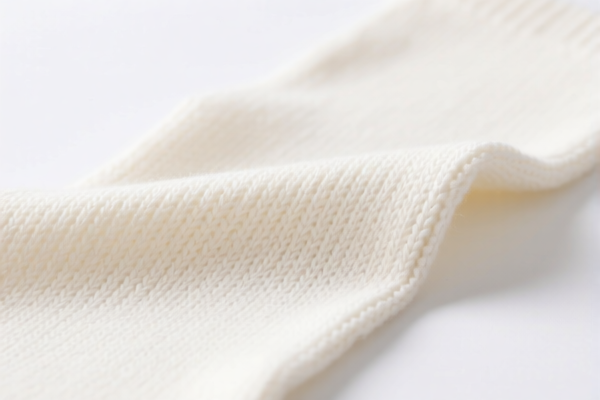
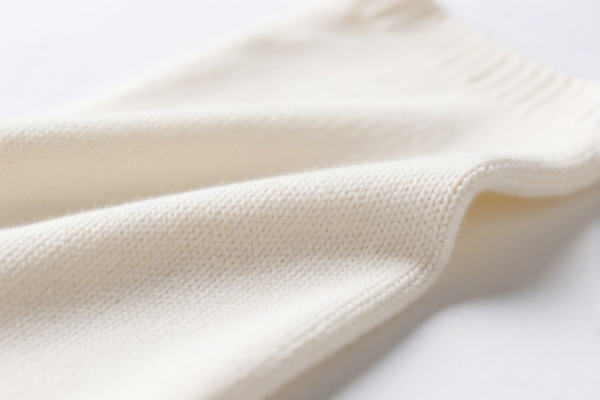
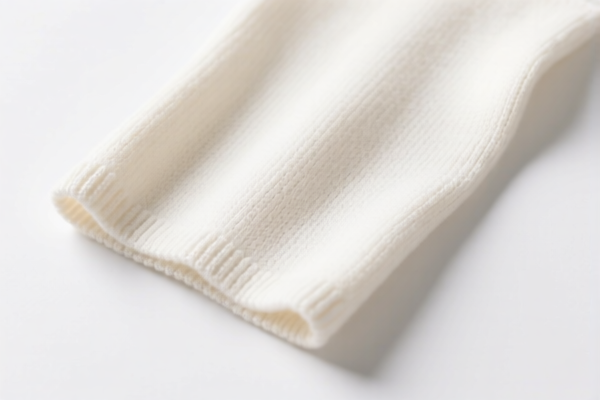
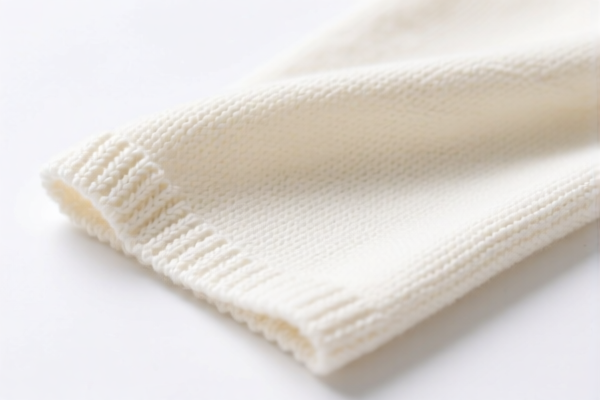
AI Analysis
🧵 Bleached Knitted/Crocheted Cotton Decorative Fabric
🌐 HS Code Reference & Customs Clearance Guide | 2026 Latest Tariff Analysis | Professional-Level Customs Strategy
📌 I. Product Definition and Classification: Do You Really Understand "Bleached Knitted Cotton Fabric"?
Bleached knitted/crocheted cotton decorative fabric is a versatile textile material widely used in home decor, fashion, and interior design. In international trade, its classification depends heavily on structural characteristics (single vs. double knit), width/structure specifics, and processing state.
Key Distinctions: * Knitted vs. Woven: This product is knitted or crocheted (Chapter 60), not woven (Chapter 52/54). Confusing these is a common and costly error. * Single vs. Double Face: Double-face knitted fabrics (like interlock) often have different duty rates than single-face jerseys. * Fabric Type: Specific widths or loop structures (e.g., terry, pile) may push classification into different subheadings.
⚠️ Critical Classification Point:
- If it is double-face knitted cotton (e.g., interlock, rib with specific loop structure) → Likely 6006.21.90 or 6006.21.80
- If it is other knitted cotton fabric (single face, jersey, etc.) → Likely 6004.10.00 or 6006.21.90
- If it has pile/terry characteristics → Likely 6001.91.00
- If it is mistakenly classified as woven → 5209.21.00 (Incorrect but possible if structure is ambiguous)
📦 II. HS Code Classification Details (2026 Latest Tariff Authority Comparison)
| HS Code | Product Description | Applicable Scenario | Key Structural Feature |
|---|---|---|---|
6006.21.90.80 |
Bleached cotton knitted fabric, double-face structure, other | Double-knit fabrics (e.g., interlock, fine rib) | ✅ Double-face knit |
6004.10.00.85 |
Bleached cotton knitted/crocheted fabric, other | Single-face jersey, standard knit fabrics | ✅ Knitted/Crocheted |
6006.21.90.20 |
Bleached cotton knitted fabric, double-face, other | Similar to .80 but different sub-sub-category | ✅ Double-face knit |
6001.91.00.20 |
Bleached cotton knitted fabric with pile/terry | Terry cloth, fleece, looped fabrics | ✅ Pile/Terry loop |
5209.21.00.20 |
Bleached cotton woven fabric, plain weave, ≤ 200 g/m² | Misclassification Risk: If fabric is actually woven, not knitted | ❌ Woven (Incorrect if knitted) |
🔍 Important Note:
- Chapter 60 is for Knitted/Crocheted fabrics.
- Chapter 52 is for Cotton Textiles (Woven).
- Do not confuse knitted structure with woven structure. A microscope or tactile inspection is often required for customs verification.
💰 III. 2026 Latest Tariff Rate Breakdown (Including Additional Duties, Policy Surcharges)
✅ Applicable Country: United States (US)
✅ Country of Origin: China (CN)
✅ Effective Date: November 10, 2025 (and subsequent imports)
🎯 1. 6006.21.90.80 & 6006.21.90.20 —— Bleached Cotton Knitted Fabric, Double-Face
| Item | Content |
|---|---|
| Base Duty Rate | 10.0% (ad valorem) |
| Section 301 Additional Duty | +25.0% |
| 122 Provision Duty | +10.0% |
| Total Duty Rate | 45.0% |
| Tax Calculation | CIF Value × 45% |
| De Minimis Exemption? | ❌ No (deny_de_minimis) |
| Legal Basis Path | USITC:6006.21.90.80 → USITC:Footnote_301 → 122_Provision |
📌 Explanation:
- 10.0% Base: Standard MFN rate for double-face knitted cotton fabric.
- 25.0% Section 301: Additional duty under U.S. Trade Act Section 301 for Chinese goods.
- 10.0% 122 Provision: Additional duty under Section 122 of the Trade Act of 1974 (emergency action).
- Total 45%: High tariff burden. Must be accounted for in pricing strategy.
🎯 2. 6004.10.00.85 —— Bleached Cotton Knitted/Crocheted Fabric, Other
| Item | Content |
|---|---|
| Base Duty Rate | 12.3% (ad valorem) |
| Section 301 Additional Duty | +25.0% |
| 122 Provision Duty | +10.0% |
| Total Duty Rate | 47.3% |
| Tax Calculation | CIF Value × 47.3% |
| De Minimis Exemption? | ❌ No (deny_de_minimis) |
| Legal Basis Path | USITC:6004.10.00.85 → USITC:Footnote_301 → 122_Provision |
📌 Note:
- This category often applies to standard single-face knitted fabrics.
- The base rate is slightly higher than double-face variants, leading to a higher total duty (47.3%).
- Ensure the fabric structure is accurately described to avoid misclassification penalties.
🎯 3. 6001.91.00.20 —— Bleached Cotton Knitted Fabric with Pile/Terry
| Item | Content |
|---|---|
| Base Duty Rate | 18.5% (ad valorem) |
| Section 301 Additional Duty | +25.0% |
| 122 Provision Duty | +10.0% |
| Total Duty Rate | 53.5% |
| Tax Calculation | CIF Value × 53.5% |
| De Minimis Exemption? | ❌ No (deny_de_minimis) |
| Legal Basis Path | USITC:6001.91.00.20 → USITC:Footnote_301 → 122_Provision |
📌 Warning:
- Pile fabrics (terry, fleece) carry the highest base duty due to their specialized nature.
- Total duty of 53.5% is extremely high. Consider alternative sourcing if volume is large.
🎯 4. 5209.21.00.20 —— Bleached Cotton Woven Fabric (Plain Weave)
| Item | Content |
|---|---|
| Base Duty Rate | 7.7% (ad valorem) |
| Section 301 Additional Duty | +25.0% |
| 122 Provision Duty | +10.0% |
| Total Duty Rate | 42.7% |
| Tax Calculation | CIF Value × 42.7% |
| De Minimis Exemption? | ❌ No (deny_de_minimis) |
| Legal Basis Path | USITC:5209.21.00.20 → USITC:Footnote_301 → 122_Provision |
📌 Caution:
- This classification applies ONLY if the fabric is woven, not knitted.
- If customs determines the fabric is actually knitted, you may face misclassification penalties and owe the difference between 42.7% and the correct knitted rate (45%+).
- Do not use this code to reduce duties unless the fabric is definitively woven.
🛠️ IV. Customs Clearance Practical Advice (Real-World Pitfall Avoidance Guide)
✅ 1. Required Documentation Checklist (Missing Items = Delays)
| Document | Required | Description |
|---|---|---|
| ✅ Product Specification Sheet | ✔️ | Must detail: Fiber content (100% Cotton), Construction (Knitted/Crocheted), Weight (g/m²), Width, Weave/Knit Type (Single/Double/Pile) |
| ✅ Fabric Sample/Photo | ✔️ | Close-up of loop structure to prove knitted vs. woven |
| ✅ Commercial Invoice | ✔️ | Must state "Bleached Knitted Cotton Fabric" |
| ✅ Packing List | ✔️ | Include roll dimensions, weight, and quantity |
| ✅ Origin Certificate | ✔️ | Required for China origin verification |
| ✅ Third-Party Test Report | ✔️ | Fiber content analysis from accredited lab (e.g., SGS, BV) |
✅ 2. Declaration Tips (Key Mantra)
🔥 “Structure Defines Code, Pile Means Higher Duty, Woven is Not Knit!”
| Scenario | Correct Declaration | Wrong Practice |
|---|---|---|
| Double-face interlock | 6006.21.90.80 (45%) |
Misclassified as woven → 5209... → Penalty |
| Standard jersey | 6004.10.00.85 (47.3%) |
Labeled as "textile" → Vague declaration → Audit |
| Terry cloth/Fleece | 6001.91.00.20 (53.5%) |
Listed as "cotton fabric" → Under-declared duty |
| Woven poplin | 5209.21.00.20 (42.7%) |
Labeled as "knitted" → Misclassification |
✅ 3. Special Situations Handling
| Situation | Handling Advice |
|---|---|
| OEM Custom Fabric | Provide design sheets and sample approvals to prove specific structure |
| Mixed Fabric | If <50% cotton, chapter changes entirely → Check fiber content rigorously |
| Urgent Shipment | Apply for Advance Ruling (CBP Ruling Letter) to confirm HS Code before shipment |
| Small Sample Shipments | Still subject to duties; de minimis does not apply for China-origin textiles |
🌍 V. Global Market Comparison (2026 Latest)
| Country/Region | Recommended HS Code | Duty Rate (China Origin) | Certification Requirement | Notes |
|---|---|---|---|---|
| 🇺🇸 USA | 6006.21.90.80 / 6004.10.00.85 |
45% - 47.3% | None specific | High additional duties (301 + 122) |
| 🇨🇳 China | 6006.21.90 / 6004.10.00 |
~5-10% | No special | Lower base duties |
| 🇪🇺 EU | 6006.21.90 / 6004.10.00 |
0-4.5% | CE (if consumer good) | No anti-dumping duties on textiles |
| 🇬🇧 UK | 6006.21.90 / 6004.10.00 |
0-4.5% | UKCA (if applicable) | Post-Brexit rules apply |
| 🇦🇺 Australia | 6006.21.90 / 6004.10.00 |
5-10% | No special | FTAs may reduce rates |
📌 Conclusion:
- USA is the most costly market for Chinese knitted cotton fabrics due to layered additional duties.
- EU/UK/Australia offer significantly lower duties, making them more competitive for pricing.
- Consider supply chain diversification (e.g., sourcing from Vietnam, India) to avoid US additional duties.
📌 VI. Common Errors & Pitfall Avoidance (Lessons Learned)
❌ Error 1: Classifying knitted fabric as woven (5209 vs 6006)
👉 Consequence: 42.7% vs 45%+ duty → Underpayment detected → Penalties + Back Taxes
❌ Error 2: Ignoring pile/terry structure
👉 Consequence: 6006 (45%) vs 6001 (53.5%) → 8.5% extra duty per unit
❌ Error 3: Vague description "Cotton Fabric"
👉 Consequence: Customs request for additional info → Shipment delay
❌ Error 4: Assuming de minimis applies
👉 Consequence: Small packages seized or assessed duties → No exemption for China textiles
✅ Correct Practice:
"Bleached Knitted Cotton Fabric, Interlock Structure, 100% Cotton, 200gsm, Double-Face, Roll 50m"
🎯 VII. Conclusion: Precision in Classification Saves Money!
🎯 Remember the Mantra:
🔹 "Knit is 60, Woven is 52, Pile is 6001, Duty is High!"
🔹 "301 + 122 = 35% Extra, Total Duty 45%+, Plan Ahead!"
📌 Pro Tip:
If your fabric is not knitted but woven, use 5209.21.00.20 for a lower total duty (42.7%). However, misclassification is risky. Always verify fabric structure with a lab test if unsure.
For US imports, consider Advance Rulings from CBP to lock in the correct HS Code and duty rate.
📣 Immediate Action:
📞 Consult a licensed customs broker + Provide fabric swatch + Request HS Code Advance Ruling
🚀 Ensure smooth clearance, avoid penalties, and optimize your textile supply chain!
✨ Professional Customs Clearance Starts with Accurate Classification!
💼 Every cent counts in global trade!
Customer Reviews
About HS Code Classification
The Harmonized System (HS) is an internationally standardized nomenclature developed by the World Customs Organization (WCO) to classify traded products. Over 200 countries use the HS system as the basis for customs tariffs, trade statistics, and import/export regulations.
Each HS code follows a hierarchical structure:
- Chapter (2 digits) — Broad category of goods (e.g., Chapter 84: Machinery and Mechanical Appliances)
- Heading (4 digits) — More specific grouping within the chapter
- Subheading (6 digits) — Internationally standardized breakdown, used by all WCO member countries
- National subdivisions (8-10 digits) — Country-specific extensions for further classification, such as US HTSUS 10-digit codes
Correct HS code classification is essential for smooth customs clearance, accurate duty payment, and compliance with trade regulations. Misclassification can lead to customs delays, overpayment of duties, or penalties.
When importing from CN to US, the applicable tariff rates may include:
- Most-Favored-Nation (MFN) rate — The standard duty rate applied to WTO members
- General rate — Applied to countries without trade agreements
- Trade remedy duties — Additional tariffs such as Section 301 (anti-dumping), Section 232 (national security), or countervailing duties
The information provided on this page is for reference purposes only. For official classification, please consult with your local customs authority or a licensed customs broker.