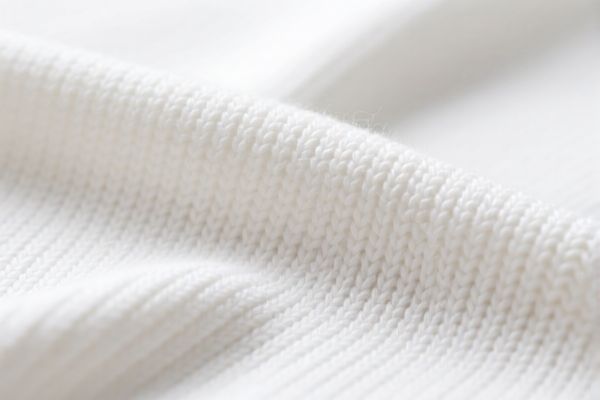
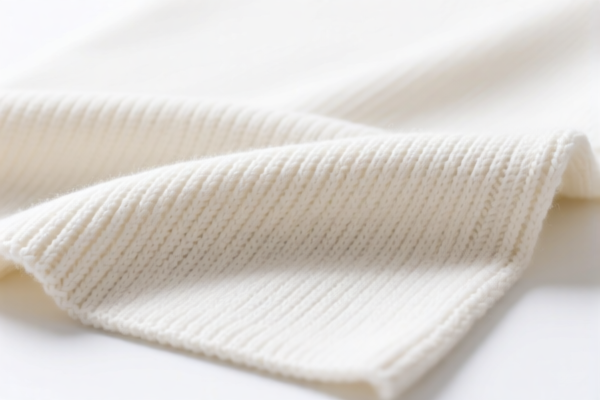
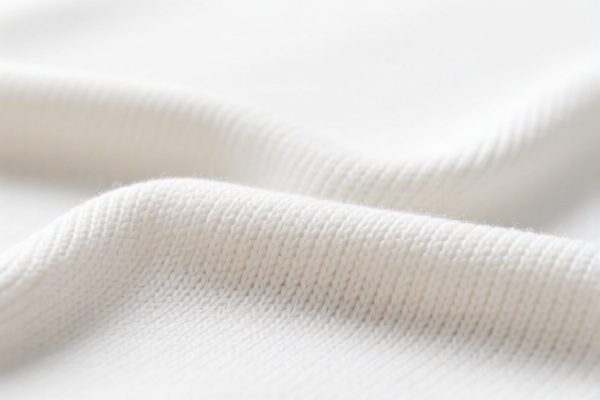
bleached knitted/crocheted cotton fabric
CN → US| HS Code | Tariff Rate | Origin | Destination | Doc |
|---|---|---|---|---|
| 6006219080 | 45.0% | CN | US | Official Doc |
| 6004100085 | 47.3% | CN | US | Official Doc |
| 6006219020 | 45.0% | CN | US | Official Doc |
| 5208212040 | 43.4% | CN | US | Official Doc |
| 5210298090 | 49.7% | CN | US | Official Doc |
Product Images
AI Analysis
🧵 Bleached Knitted/Crocheted Cotton Fabric: HS Code Classification & U.S. Customs Clearance Guide
🌐 HS Code Reference & Clearance Strategy | 2026 Latest Tariff Analysis | Professional Compliance Guide
📌 Part I: Product Definition & Classification Logic
Bleached Knitted/Crocheted Cotton Fabric is a foundational textile material widely used in apparel, home textiles, and industrial applications. In international trade, particularly under the U.S. Harmonized Tariff Schedule (HTS), classification hinges on two critical factors:
1. Fabric Structure: Is it Knitted (loops) or Woven (interlaced)?
2. Construction Details: Is it Single Jersey, Double Knit, Rib, or Plain Weave?
⚠️ Critical Distinction:
- If the fabric has a looped structure (knitted/crocheted) → It generally falls under Chapter 60 (Knitted or Crocheted Fabrics).
- If the fabric has a woven structure (even if bleached cotton) → It falls under Chapter 52 (Cotton Woven Fabrics).
- Misclassification Risk: Importing a knitted fabric as woven (or vice versa) leads to incorrect duty rates and potential customs penalties.
📦 Part II: Detailed HS Code Breakdown (2026 Latest Tariff Data)
Based on the provided data, here are the specific HS Codes and their corresponding tax structures for Bleached Knitted/Crocheted Cotton Fabric.
🔍 Category A: Knitted/Crocheted Fabrics (Chapter 60)
These codes apply if the fabric is structurally knitted or crocheted.
| HS Code | Product Description & Summary | Total Tax Rate | Tax Composition Details |
|---|---|---|---|
| 6006.21.90.80 | Bleached Cotton, Knitted, Double Interlock/Double Face. Matches material and structural classification for double-faced knitted structures. |
45.0% | Base Duty: 10.0% Section 301 Duty: 25.0% Section 122 Duty: 10.0% |
| 6004.10.00.85 | Bleached Cotton, Knitted/Crocheted (General). Matches general characteristics of knitted or crocheted fabrics. |
47.3% | Base Duty: 12.3% Section 301 Duty: 25.0% Section 122 Duty: 10.0% |
| 6006.21.90.20 | Bleached Cotton, Knitted (Double Face). Double-faced knitted fabric categorized under other specific sub-heads. |
45.0% | Base Duty: 10.0% Section 301 Duty: 25.0% Section 122 Duty: 10.0% |
🔍 Key Insight for Category A:
- The difference between 45.0% and 47.3% lies primarily in the Base Duty Rate (10.0% vs. 12.3%).
- Both categories are subject to the same 50% in total additional tariffs (25% Section 301 + 10% Section 122).
- 6004.10.00.85 is often used for broader "knitted or crocheted" classifications where specific double-face structures aren't explicitly defined or when the fabric meets general knitting criteria.
🔍 Category B: Woven Fabrics (Chapter 52)
These codes apply if the fabric is Woven (not knitted), despite the common misconception that "cotton fabric" is always knitted. If your product is woven, it cannot use Chapter 60 codes.
| HS Code | Product Description & Summary | Total Tax Rate | Tax Composition Details |
|---|---|---|---|
| 5208.21.20.40 | Bleached Cotton Woven Fabric (For Toys). Plain weave bleached cotton, specifically identified for toy applications. |
43.4% | Base Duty: 8.4% Section 301 Duty: 25.0% Section 122 Duty: 10.0% |
| 5210.29.80.90 | Bleached Cotton Woven Fabric (Other). General bleached woven cotton matching material consistency criteria. |
49.7% | Base Duty: 14.7% Section 301 Duty: 25.0% Section 122 Duty: 10.0% |
🔍 Key Insight for Category B:
- If your fabric is woven (check by pulling threads; knitted fabrics unravel, woven fabrics do not), you must use Chapter 52 codes.
- 5208.21.20.40 has the lowest base duty (8.4%) among all listed options but is restricted to toy applications.
- 5210.29.80.90 has the highest base duty (14.7%) for general bleached woven cotton.
💰 Part III: 2026 Tariff Structure Breakdown (Detailed Explanation)
All listed HS Codes for Chinese-origin goods imported into the U.S. are subject to a compound tariff structure. Here is the detailed breakdown:
🎯 1. Base Duty Rate (Standard MFN)
- Range: 8.4% – 14.7%
- Definition: The standard Most-Favored-Nation (MFN) duty rate applied to WTO member countries.
- Variation: Depends on the specific sub-heading within Chapters 52 or 60. For example, fabrics for toys (5208) often have lower base duties than general woven fabrics (5210).
🎯 2. Section 301 Additional Duty (Trade War Tariff)
- Rate: +25.0%
- Legal Basis: U.S. Trade Act of 1974, Section 301.
- Applicability: Applies to all cotton fabrics originating from China.
- Note: This is a fixed ad valorem rate added to the base duty. It is non-negotiable for Chinese goods unless a specific exclusion applies (which is rare for basic textiles).
🎯 3. Section 122 Additional Duty
- Rate: +10.0%
- Legal Basis: U.S. Trade Act of 1974, Section 122 (Emergency Action).
- Applicability: Applies to all imports from China in this category.
- Note: This is an additional surcharge on top of Section 301 and Base Duty.
📊 Total Effective Tax Rate Calculation Example
| HS Code | Base Duty | Sec. 301 (25%) | Sec. 122 (10%) | TOTAL TAX |
|---|---|---|---|---|
| 6006.21.90.80 | 10.0% | 25.0% | 10.0% | 45.0% |
| 6004.10.00.85 | 12.3% | 25.0% | 10.0% | 47.3% |
| 5208.21.20.40 | 8.4% | 25.0% | 10.0% | 43.4% |
| 5210.29.80.90 | 14.7% | 25.0% | 10.0% | 49.7% |
✅ Crucial Note:
- The Base Duty is calculated on the CIF value.
- The Additional Duties (25% + 10%) are also calculated on the CIF value and added cumulatively.
- Total Tax = (Base Rate + 25% + 10%) × CIF Value.
🛠️ Part IV: Customs Clearance Practical Advice
✅ 1. Essential Documentation Checklist
| Document | Required? | Purpose |
|---|---|---|
| Commercial Invoice | ✔️ | Must clearly state: "Bleached Knitted/Crocheted Cotton Fabric," Country of Origin (China), and HS Code. |
| Packing List | ✔️ | Detail weight, dimensions, and package count. |
| Bill of Lading / Air Waybill | ✔️ | Proof of shipment. |
| Product Technical Sheet | ✔️ | Critical: Must describe the fabric structure (Knitted vs. Woven), weight (GSM), width, and composition (100% Cotton). |
| Labeling Information | ✔️ | FTC label requirements: "Made in China," Fiber Content, Care Instructions. |
| Section 301 Exclusion Letter | ❌ | Check if your specific HTS code was eligible for exclusion (rare for basic cotton fabrics). |
✅ 2. Classification Tips: How to Avoid Mistakes
🔥 "Knit vs. Weave is the Key!"
| Scenario | Correct HS Code Category | Common Mistake | Consequence |
|---|---|---|---|
| Knitted Fabric (loops, stretchy) | Chapter 60 (e.g., 6006.21.90.80) | Classifying as Woven (Chapter 52) | Overpayment: Base duty might be lower for woven, but wrong classification leads to penalties. |
| Woven Fabric (rigid, non-stretch) | Chapter 52 (e.g., 5210.29.80.90) | Classifying as Knitted (Chapter 60) | Underpayment: Base duty for woven might be higher or lower, but misdeclaration triggers audits. |
| Toy-Specific Fabric | 5208.21.20.40 (if woven) | General Classification | Missed opportunity for lower base duty (8.4% vs 14.7%). |
✅ 3. Special Considerations
| Situation | Recommendation |
|---|---|
| Double-Face Knitted | Ensure the product description explicitly states "Double Face" or "Interlock" to qualify for 6006.21.90.80 (10% base) instead of general knitted codes. |
| Mixed Blends | If not 100% cotton, Chapter 52 or 60 may change based on the principal fiber. 100% Cotton is assumed here. |
| Section 122 & 301 | These are mandatory for China-origin goods. No tariff engineering can remove them unless you change the country of origin (e.g., through substantial transformation in Vietnam/Mexico). |
🌍 Part V: Global Market Comparison (2026)
| Market | Recommended HS Code (China Origin) | Total Est. Tax Rate | Key Compliance Note |
|---|---|---|---|
| 🇺🇸 United States | 6006.21.90.80 / 6004.10.00.85 |
45.0% - 47.3% | High additional tariffs (301+122). Must declare origin accurately. |
| 🇨🇳 China (Export) | Same Codes | Varies | China imposes export taxes on some textiles; check with local customs. |
| 🇪🇺 European Union | 6006.21 / 6004.10 |
~12% - 15% | No Section 301/122. Standard EU duty rates apply. |
| 🇬🇧 United Kingdom | 6006.21 / 6004.10 |
~12% - 15% | Post-Brexit tariff schedules similar to EU. |
📌 Conclusion for U.S. Importers:
- The U.S. market is the most expensive due to Section 301 and 122 tariffs.
- Total tax burden ranges from 43.4% to 49.7%.
- Cost-saving Tip: If the fabric is woven and intended for toys, 5208.21.20.40 offers the lowest base duty (8.4%), resulting in a total of 43.4% (still high, but 4.3% lower than 6006.21.90.80).
📌 Part VI: Common Errors & Pitfalls (Lessons Learned)
❌ Error 1: Calling knitted fabric "woven" to avoid Section 301.
👉 Result: Customs rejects the declaration, imposes penalties, and delays shipment.
❌ Error 2: Ignoring the "Double Face" specification for knitted fabrics.
👉 Result: May be misclassified into a higher base duty bracket.
❌ Error 3: Not providing a detailed technical sheet.
👉 Result: CBP may reclassify the goods under a default, higher-tax category.
✅ Best Practice:
"Specify Structure: Knitted or Woven?
Specify Construction: Single or Double Face?
Specify Use: General or Toy?
Accurate Details = Lower Risk = Smooth Clearance."
🎯 Part VII: Final Recommendations
- Confirm Fabric Structure: Before shipping, conduct a physical test to confirm if the fabric is knitted (loops) or woven (interlaced). This is the single most important factor for HS Code selection.
- Choose the Lowest Base Duty:
- If Knitted: Aim for
6006.21.90.80(10% base) if it's double-faced. - If Woven: Aim for
5208.21.20.40(8.4% base) if used for toys; otherwise,5210.29.80.90(14.7% base). - Budget for Total Tax: Plan for 45%+ total tax on U.S. imports from China. This includes base duty, Section 301, and Section 122.
- Pre-Arrival Review: Consider filing an Advance Ruling with U.S. Customs and Border Protection (CBP) to get a binding classification decision before shipment.
📣 Call to Action:
📞 Contact your freight forwarder to verify the fabric structure.
📄 Prepare detailed product specs including GSM, width, and weave/knit type.
🚀 Start your clearance process early to avoid demurrage and storage fees due to classification disputes.
✨ Professional Classification, Cost Efficiency, and Risk Mitigation!
💼 Your supply chain’s success depends on precise tariff engineering.
Customer Reviews
About HS Code Classification
The Harmonized System (HS) is an internationally standardized nomenclature developed by the World Customs Organization (WCO) to classify traded products. Over 200 countries use the HS system as the basis for customs tariffs, trade statistics, and import/export regulations.
Each HS code follows a hierarchical structure:
- Chapter (2 digits) — Broad category of goods (e.g., Chapter 84: Machinery and Mechanical Appliances)
- Heading (4 digits) — More specific grouping within the chapter
- Subheading (6 digits) — Internationally standardized breakdown, used by all WCO member countries
- National subdivisions (8-10 digits) — Country-specific extensions for further classification, such as US HTSUS 10-digit codes
Correct HS code classification is essential for smooth customs clearance, accurate duty payment, and compliance with trade regulations. Misclassification can lead to customs delays, overpayment of duties, or penalties.
When importing from CN to US, the applicable tariff rates may include:
- Most-Favored-Nation (MFN) rate — The standard duty rate applied to WTO members
- General rate — Applied to countries without trade agreements
- Trade remedy duties — Additional tariffs such as Section 301 (anti-dumping), Section 232 (national security), or countervailing duties
The information provided on this page is for reference purposes only. For official classification, please consult with your local customs authority or a licensed customs broker.