bleached satin fabric
CN → US| HS Code | Tariff Rate | Origin | Destination | Doc |
|---|---|---|---|---|
| 5209290040 | 42.7% | CN | US | Official Doc |
| 5209290020 | 42.7% | CN | US | Official Doc |
| 5208192020 | 42.9% | CN | US | Official Doc |
| 5208192090 | 42.9% | CN | US | Official Doc |
| 5408210030 | 49.9% | CN | US | Official Doc |
Product Images
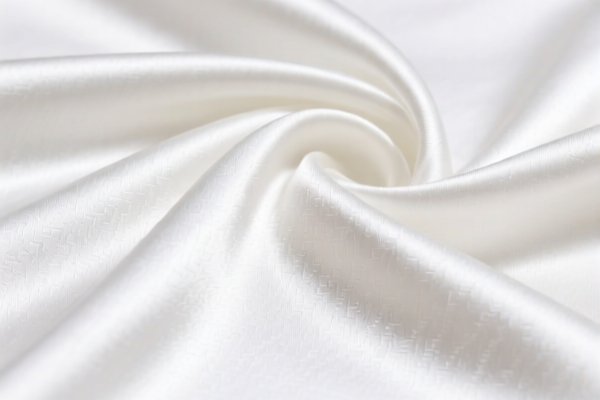
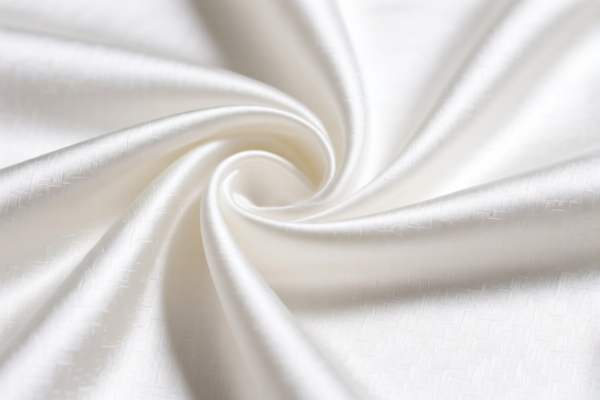
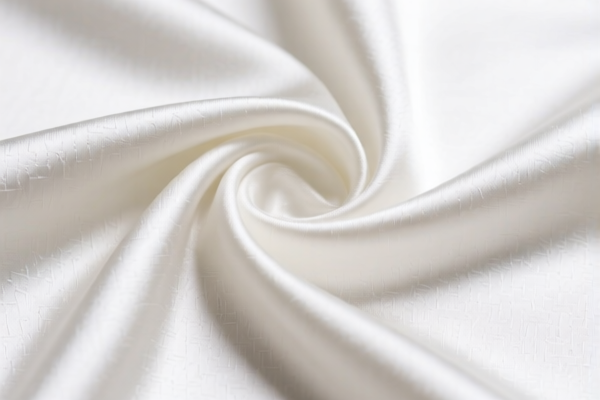
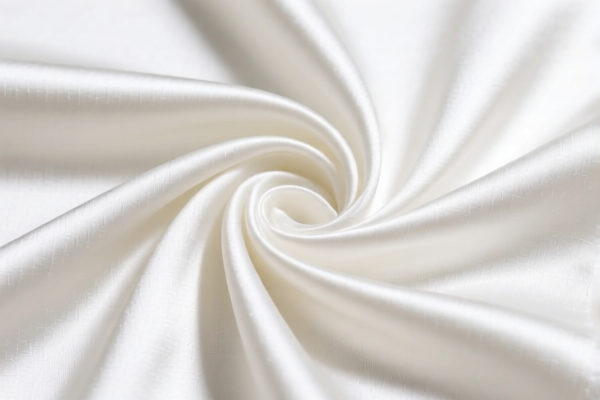
AI Analysis
🧵 Bleached Satin Fabric (漂白斜纹/缎纹棉织物)
🌐 HS Code Reference & Clearance Guide | 2026 Latest Tariff Analysis | Professional Customs Strategy
📌 Part 1: Product Definition & Classification: What Exactly Is "Bleached Satin Fabric"?
Bleached Satin Fabric refers to woven cotton (or synthetic) fabrics that have undergone a bleaching process to achieve a white or bright appearance, using a satin or twill weave structure. In international trade, this product is primarily categorized under Chapter 52 (Cotton) or Chapter 54 (Man-made Filaments), depending on the fiber content.
Key Distinctions: * Cotton Satin/Twill (Chapters 52): The most common category for apparel linings, dresses, and home textiles. * Bleached: White/bright finish. * Unbleached: Natural off-white/yellowish tone. * Synthetic Satin (Chapter 54): Often referred to as "polyester satin" or "rayon satin." While the user input is "Bleached," if the fabric is actually synthetic, it falls under different HS codes. However, based on the provided data, the focus is heavily on Cotton items, with one synthetic reference for comparison.
⚠️ Critical Classification Point:
- If the fabric is 100% Cotton and Bleached (white/bright): It falls under 5209.xx.
- If the fabric is 100% Cotton but Unbleached (natural tone): It falls under 5208.xx.
- If the fabric is Synthetic (e.g., Polyester/Viscose): It falls under 5408.xx.
📦 Part 2: HS Code Classification Details (Based on Provided Data)
The provided dataset highlights specific HS codes for Cotton Satin/Twill Fabrics imported from China to the USA, reflecting high tariff structures due to trade policies.
| HS Code | Product Description | Weave Type | Bleach Status | Fiber Content |
|---|---|---|---|---|
5209.29.00.40 |
Bleached Twill/Satin Woven Cotton Fabric | Twill/Satin | ✅ Bleached | Cotton |
5209.29.00.20 |
Bleached Twill/Satin Woven Cotton Fabric | Twill/Satin | ✅ Bleached | Cotton |
5208.19.20.20 |
Unbleached Satin Lining (Reference) | Satin | ❌ Unbleached | Cotton |
5208.19.20.90 |
Unbleached Satin Lining (Reference) | Satin | ❌ Unbleached | Cotton |
5408.21.00.30 |
Unbleached Man-made Filament Satin Fabric | Satin | ❌ Unbleached | Synthetic/Man-made |
🔍 Important Note:
- 5209 covers Weighty Cotton Fabrics (≥ 200g/m²).
- 5208 covers Lighter Cotton Fabrics (< 200g/m²).
- The provided data for5209codes explicitly mentions "Bleached", while5208and5408are marked as "Unbleached" (with a note that they are for reference regarding process differences).
- If your fabric is truly "Bleached" and Cotton, it likely falls under 5209.29.00.xx. If it is Unbleached, it may fall under 5208.19.20.xx.
- Do not misdeclare "Bleached" as "Unbleached" to avoid penalties; the chemical treatment is verifiable.
💰 Part 3: 2026 Tariff Rate Breakdown (Detailed Policy Analysis)
✅ Applicable Country: USA (US)
✅ Origin: China (CN)
✅ Effective Date: Current policies (2025-2026)
🎯 1. 5209.29.00.40 & 5209.29.00.20 —— Bleached Twill/Satin Cotton Fabric
These codes apply to Bleached cotton fabrics with a weight ≥ 200g/m².
| Item | Details |
|---|---|
| Base Tariff (MFN) | 7.7% (ad valorem) |
| Section 301 Tariff | +25.0% (Specific to Chinese goods) |
| Section 122 Tariff | +10.0% (Specific Chinese tariffs) |
| Total Tariff Rate | 42.7% |
| De Minimis Exemption | ❌ NOT Applicable (Section 301 & 122 tariffs negate the $800 de minimis exemption for these goods) |
| Legal Basis | HTSUS 5209.29 + USITC Footnotes + IEEPA Authorities |
📌 Explanation:
- Base Tax (7.7%): The standard Most Favored Nation (MFN) rate for woven cotton fabrics.
- Section 301 (25%): The primary "trade war" tariff imposed on Chinese textile imports.
- Section 122 (10%): Additional targeted tariffs on specific Chinese industrial and consumer goods.
- Total (42.7%): This is a very high combined tariff. Importers must budget for this cost.
- No De Minimis: Unlike many other goods, textile imports under these codes from China cannot use the $800 de minimis exemption (Section 321) to bypass duties.
🎯 2. 5208.19.20.20 & 5208.19.20.90 —— Unbleached Satin Lining (Reference)
These codes apply to Unbleached cotton fabrics (usually lighter weight < 200g/m²).
| Item | Details |
|---|---|
| Base Tariff (MFN) | 7.9% (ad valorem) |
| Section 301 Tariff | +25.0% |
| Section 122 Tariff | +10.0% |
| Total Tariff Rate | 42.9% |
| De Minimis Exemption | ❌ NOT Applicable |
📌 Explanation:
- Slightly higher base rate (7.9%) compared to bleached (7.7%).
- Same punitive tariffs (35% total added).
- Total: 42.9%.
- Note: The dataset labels these as "Unbleached," but if you are importing "Bleached" fabric, do not use these codes. Using the wrong code for bleached vs. unbleached fabric is a common customs error.
🎯 3. 5408.21.00.30 —— Unbleached Man-made Filament Satin (Reference)
This code applies to Synthetic/Man-made satin fabrics.
| Item | Details |
|---|---|
| Base Tariff (MFN) | 14.9% (ad valorem) |
| Section 301 Tariff | +25.0% |
| Section 122 Tariff | +10.0% |
| Total Tariff Rate | 49.9% |
| De Minimis Exemption | ❌ NOT Applicable |
📌 Explanation:
- Synthetic fabrics have a higher base duty (14.9%).
- Total: 49.9%. This is even higher than cotton satin.
- Crucial: If your "Bleached Satin" is actually polyester or rayon, you face a 49.9% tariff, not 42.7%.
🛠️ Part 4: Customs Clearance Practical Advice (Avoiding Pitfalls)
✅ 1. Essential Documentation Checklist
| Document | Required? | Description |
|---|---|---|
| ✅ Commercial Invoice | ✔️ | Must clearly state "Bleached" or "Unbleached" and "Cotton" or "Synthetic". |
| ✅ Packing List | ✔️ | Detail fabric weight (g/m²) and dimensions. |
| ✅ Bill of Lading | ✔️ | Standard shipping document. |
| ✅ Certificate of Origin | ✔️ | Proves origin as China (CN). If from Vietnam, rates may differ. |
| ✅ Fiber Content Declaration | ✔️ | Must match the HS Code (e.g., 100% Cotton for 5209). |
| ✅ Processing Confirmation | ✔️ | Evidence of bleaching (for 5209 codes) if audited. |
✅ 2. Classification Strategy (Key Rules)
🔥 "Fiber First, Weight Second, Process Third!"
| Scenario | Correct HS Code Family | Why? |
|---|---|---|
| 100% Cotton + Bleached + Heavy (≥200g/m²) | 5209.xx.xx |
Chapter 52 covers cotton; 5209 is for heavier weights. |
| 100% Cotton + Bleached + Light (<200g/m²) | 5208.xx.xx |
Chapter 52 covers cotton; 5208 is for lighter weights. |
| 100% Cotton + Unbleached | 5208.xx.xx (or 5209 if heavy) |
Unbleached fabrics are classified under 5208. |
| Synthetic/Polyester Satin | 5408.xx.xx |
Man-made filaments fall under Chapter 54. |
⚠️ Common Error:
Declaring Synthetic Satin as Cotton Satin (5209vs5408) to save on base duty (14.9% → 7.7%).
Consequence: Customs will test the fabric. If it’s synthetic, you will face penalties, back-taxes, and potential seizure.
✅ 3. Special Considerations for US Imports from China
| Issue | Advice |
|---|---|
| De Minimis ($800) | ❌ Do NOT use for these HS codes. The 301/122 tariffs explicitly exclude these items from Section 321 exemptions. |
| Lumpy Packaging | Ensure invoices clearly separate the fabric cost from any accessories (labels, hangers) to avoid duty creep. |
| Fabric Weight | Accurately declare GSM (grams per square meter). Misdeclaring a 300g/m² fabric as 150g/m² to shift from 5209 to 5208 is risky. |
| Bleaching Process | If using 5209 (Bleached), be prepared to prove the bleaching process if challenged. If it’s unbleached, use 5208. |
🌍 Part 5: Global Market Comparison (2026)
| Country/Region | Recommended HS Code | Base Tariff | Additional Duties (China) | Total Effective Rate | Notes |
|---|---|---|---|---|---|
| 🇺🇸 USA | 5209.29.00.40 |
7.7% | +35% (301+122) | 42.7% | Very High. No de minimis. |
| 🇺🇸 USA | 5408.21.00.30 |
14.9% | +35% (301+122) | 49.9% | Higher for synthetics. |
| 🇨🇳 China | 5208 / 5209 |
5-7% | 0% | ~7% | Low duty for domestic/consumption. |
| 🇪🇺 EU | 5208 / 5209 |
6.5% | 0% | 6.5% | No Section 301/122 equivalent. |
| 🇬🇧 UK | 5208 / 5209 |
6.5% | 0% | 6.5% | Post-Brexit, aligns with EU tariffs. |
| 🇻🇳 Vietnam | 5208 / 5209 |
0% (if local) | N/A | 0% | Alternative Strategy: Shift production to Vietnam to avoid US tariffs. |
📌 Conclusion:
- USA is the most expensive market for these goods from China due to 42.7%-49.9% total tariffs.
- EU/UK are much cheaper (~6.5%).
- Supply Chain Diversification: Many importers are moving production to Vietnam, Bangladesh, or India to access lower or zero tariffs in the US (under trade agreements or general MFN rates without Section 301).
📌 Part 6: Common Mistakes & Pitfalls (Lessons Learned)
❌ Mistake 1: Using De Minimis ($800) for shipments under $800.
👉 Result: Goods seized at border. Section 301/122 tariffs apply to all values.
❌ Mistake 2: Confusing "Bleached" and "Unbleached."
👉 Result: If you declare unbleached (5208) but customs tests and finds it’s bleached (5209), you face penalties for misdeclaration.
❌ Mistake 3: Misidentifying Fiber Content.
👉 Result: Declaring polyester as cotton (5209 instead of 5408) leads to incorrect duty calculation and potential fraud charges.
❌ Mistake 4: Ignoring GSM (Weight).
👉 Result: Shifting between 5208 and 5209 incorrectly based on weight leads to classification errors.
✅ Best Practice:
"100% Cotton, Bleached, Satin Weave, Weight 250gsm, HS Code 5209.29.00.40"
🎯 Part 7: Conclusion & Actionable Advice
🎯 Remember:
🔹 "Cotton Bleached Satin = 5209 (Heavy) or 5208 (Light)"
🔹 "US Tariff = 42.7% (Cotton) or 49.9% (Synthetic)"
🔹 "No De Minimis for China Textiles!"
📌 Pro Tip:
If you are importing Bleached Satin Fabric from China to the US:
1. Budget for 42.7% in duties.
2. Verify Fiber Content strictly.
3. Consider Supply Chain Shift to Vietnam/India if volume is high.
4. Consult a Customs Broker for pre-classification rulings.
📣 Immediate Action:
📞 Contact a Licensed Customs Broker
📦 Prepare Fiber Test Reports
💰 Calculate Landed Cost with 42.7% Tariff
🚀 Optimize Your Supply Chain to Protect Margins!
✨ Professional Customs Clearance Starts with Accurate Classification!
💼 Every Percent of Duty Counts!
Customer Reviews
About HS Code Classification
The Harmonized System (HS) is an internationally standardized nomenclature developed by the World Customs Organization (WCO) to classify traded products. Over 200 countries use the HS system as the basis for customs tariffs, trade statistics, and import/export regulations.
Each HS code follows a hierarchical structure:
- Chapter (2 digits) — Broad category of goods (e.g., Chapter 84: Machinery and Mechanical Appliances)
- Heading (4 digits) — More specific grouping within the chapter
- Subheading (6 digits) — Internationally standardized breakdown, used by all WCO member countries
- National subdivisions (8-10 digits) — Country-specific extensions for further classification, such as US HTSUS 10-digit codes
Correct HS code classification is essential for smooth customs clearance, accurate duty payment, and compliance with trade regulations. Misclassification can lead to customs delays, overpayment of duties, or penalties.
When importing from CN to US, the applicable tariff rates may include:
- Most-Favored-Nation (MFN) rate — The standard duty rate applied to WTO members
- General rate — Applied to countries without trade agreements
- Trade remedy duties — Additional tariffs such as Section 301 (anti-dumping), Section 232 (national security), or countervailing duties
The information provided on this page is for reference purposes only. For official classification, please consult with your local customs authority or a licensed customs broker.