blood pressure monitor
CN → US| HS Code | Tariff Rate | Origin | Destination | Doc |
|---|---|---|---|---|
| 9018199530 | 35.0% | CN | US | Official Doc |
| 9018905040 | 10.0% | CN | US | Official Doc |
| 9025805000 | 19.1% | CN | US | Official Doc |
Product Images
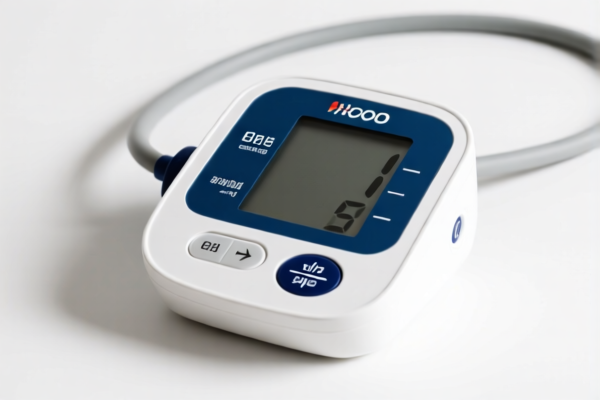


AI Analysis
Here is the comprehensive Wiki-style guide for the Blood Pressure Monitor, tailored strictly to the provided DATA and TAX information, with a focus on precise HS Code classification and detailed tax breakdowns.
🩺 Blood Pressure Monitor: Global HS Code Guide & Customs Clearance Strategy (2026)
🌐 HS Code Classification & Tax Breakdown | Professional Customs Strategy
📌 One Product, Three Possible Classifications
The Blood Pressure Monitor is a versatile medical device. Its classification depends entirely on specific construction details, functionality, and component integration.
⚠️ Critical Insight:
- Is it a standalone digital unit? → Likely 9018.19.95.30 (Highest Tax).
- Is it a replacement part/kit? → Likely 9018.90.50.40 (Lowest Tax).
- Is it a general clinical measurement instrument? → Likely 9025.80.50.00 (Mid-Range Tax).
📦 II. Detailed HS Code & Tax Analysis (Strictly Based on Provided Data)
1️⃣ Category A: The Complete Standalone Device
Target Code:
9018.19.95.30
| Attribute | Detail |
|---|---|
| HS Code | 9018.19.95.30 |
| Product Summary | Blood Pressure Monitor (Complete unit). |
| Functionality | Explicitly for Blood Pressure Measurement. Function aligns perfectly with the classification definition. |
| Total Tax Rate | 35.0% |
| Tax Breakdown | • Base Tariff: 0.0% • Additional Tariff: 25.0% • Section 122 Tariff: 10.0% |
| Math Logic | $0\% + 25\% + 10\% = \mathbf{35\%}$ |
| Best For | Final consumer units sold as a complete package (cuff + monitor + electronics). |
📌 Why this code?
This is the "heavy hitter" classification. If the product is a finished, packaged blood pressure monitor ready for sale, customs will likely apply the 35% total rate due to the combination of Base (0%) + Additional (25%) + Section 122 (10%) tariffs.
2️⃣ Category B: Parts, Accessories & Kits
Target Code:
9018.90.50.40
| Attribute | Detail |
|---|---|
| HS Code | 9018.90.50.40 |
| Product Summary | Parts, Accessories, and Attachments for Blood Pressure Monitors. |
| Functionality | Product name and use are fully consistent with parts/accessories classification. |
| Total Tax Rate | 10.0% |
| Tax Breakdown | • Base Tariff: 0.0% • Additional Tariff: 0.0% • Section 122 Tariff: 10.0% |
| Math Logic | $0\% + 0\% + 10\% = \mathbf{10\%}$ |
| Best For | Spare parts, replacement cuffs, batteries, or disassembled kits (not fully assembled units). |
📌 Why this code?
This is the cost-saver. If you are importing replacement tubes, cuffs, or parts to be assembled later, this code applies the lowest possible tax (10%) because the "Additional Tariff" (25%) is waived for non-complete units.
3️⃣ Category C: General Clinical Measurement Instruments
Target Code:
9025.80.50.00
| Attribute | Detail |
|---|---|
| HS Code | 9025.80.50.00 |
| Product Summary | Clinical Medical Measurement Instruments. |
| Functionality | Functional attributes are highly consistent with the "Measurement Instrument" category. |
| Total Tax Rate | 19.1% |
| Tax Breakdown | • Base Tariff: 1.6% • Additional Tariff: 7.5% • Section 122 Tariff: 10.0% |
| Math Logic | $1.6\% + 7.5\% + 10\% = \mathbf{19.1\%}$ |
| Best For | Professional clinical devices or instruments where the specific "Blood Pressure" sub-category might be debated, or broader medical gauges. |
📌 Why this code?
A middle-ground option. If the device is classified more broadly as a "Clinical Measurement Instrument" rather than the specific "Blood Pressure Monitor" category, the Base Tariff (1.6%) and Additional Tariff (7.5%) apply, totaling 19.1%.
💰 III. Tax Clause Deep Dive: Understanding the 35% vs. 10% Gap
To ensure zero surprises during customs clearance, here is the precise legal structure of the tariffs:
| Tariff Component | Code 9018.19.95.30 (Complete Unit) |
Code 9018.90.50.40 (Parts) |
Code 9025.80.50.00 (General Instrument) |
|---|---|---|---|
| Base Tariff | 0.0% | 0.0% | 1.6% |
| Additional Tariff | 25.0% (Heavy Duty) | 0.0% | 7.5% (Moderate) |
| Section 122 Tariff | 10.0% (Section 122) | 10.0% (Section 122) | 10.0% (Section 122) |
| Total Burden | 35.0% | 10.0% | 19.1% |
| Key Difference | Highest Burden: 25% "Additional" tax applies to the finished medical device. | Lowest Burden: No "Additional" tax on parts; only Section 122 applies. | Mid Burden: Lower base and additional rates than the specific BP monitor code. |
🔥 Pro Tip: The 25% Additional Tariff is the deal-breaker. It applies to the finished
9018.19.95.30unit but is 0% for parts (9018.90.50.40). This is why distinguishing between "Finished Device" and "Parts" is the single most important step in your customs strategy.
🛠️ IV. Customs Clearance Strategy & Actionable Advice
✅ 1. Pre-Shipment Declaration Strategy
-
Scenario A: Selling Finished Units
- Action: Prepare for 35% total tax. Factor this into your landed cost immediately.
- Documentation: Must clearly state "Blood Pressure Monitor" in the commercial invoice. Do not hide the function.
- Risk: High risk of audit if declared as "Parts" to avoid the 25% tariff.
-
Scenario B: Selling Spare Parts / Kits
- Action: Aim for
9018.90.50.40to save 25%. - Strategy: Ensure the shipment does not include a fully assembled, powered-on unit. Ship components separately or as "unassembled kits" with clear packaging indicating "Parts".
- Documentation: Invoice description should be "Replacement Cuff," "Power Adapter," or "Sensor Assembly" – NOT "Blood Pressure Monitor."
- Action: Aim for
-
Scenario C: Broad Clinical Instruments
- Action: Consider
9025.80.50.00(19.1%) if the device has ambiguous functions (e.g., measures BP + Pulse + Temperature). - Risk: Lower than 35%, but higher than 10%. Requires strong justification for "Clinical Measurement Instrument" classification.
- Action: Consider
✅ 2. Critical Documentation Checklist
| Document | Requirement for 9018.19.95.30 |
Requirement for 9018.90.50.40 |
|---|---|---|
| Commercial Invoice | Must explicitly state: "Blood Pressure Monitor, Complete Unit". | Must state: "Parts/Accessories for Blood Pressure Monitor". |
| Packing List | Show single unit packaging. | Show bulk parts or component boxes. |
| Technical Specs | Full diagram showing integration. | Diagrams showing individual components only. |
| Certificates | CE, FDA, or local medical device registration. | Quality certificates for components (e.g., ISO for sensors). |
✅ 3. Common Pitfalls to Avoid
- ❌ The "Kit" Trap: Shipping a BP monitor disassembled but with all parts in one box may still be classified as a Finished Unit (
9018.19.95.30) by customs, incurring the 35% tax.- Solution: Ship as separate SKUs or clearly label as "For Assembly Only."
- ❌ The Name Game: Using generic names like "Medical Sensor" for a complete BP monitor.
- Solution: Be honest. If it measures BP, use the specific term. Hiding the function leads to penalties and delays.
- ❌ Ignoring Section 122: Both
9018.19.95.30and9018.90.50.40carry the 10% Section 122 tariff. This is non-negotiable for these codes. Do not try to avoid it by switching codes arbitrarily.
🌍 V. Summary: Which Path to Choose?
| Goal | Recommended HS Code | Total Tax | Strategy |
|---|---|---|---|
| Maximize Profit on Parts | 9018.90.50.40 |
10.0% | Import components only; assemble locally. |
| Selling Final Retail Units | 9018.19.95.30 |
35.0% | Price accordingly; budget for high tariff. |
| Ambiguous Multi-Function Devices | 9025.80.50.00 |
19.1% | Use if device function is broader than just BP. |
🚀 Final Call to Action
"Don't let the 25% Additional Tariff destroy your margin!" 1. Audit your product: Is it a finished unit or a part? 2. Check the Invoice: Does it match the HS Code description? 3. Consult a Broker: Verify the "Section 122" applicability for your specific shipment origin.
Disclaimer: This guide is based on the provided data 9018.19.95.30, 9018.90.50.40, and 9025.80.50.00. Customs regulations vary by jurisdiction and time. Always consult with a licensed customs broker for the latest rulings.
Customer Reviews
About HS Code Classification
The Harmonized System (HS) is an internationally standardized nomenclature developed by the World Customs Organization (WCO) to classify traded products. Over 200 countries use the HS system as the basis for customs tariffs, trade statistics, and import/export regulations.
Each HS code follows a hierarchical structure:
- Chapter (2 digits) — Broad category of goods (e.g., Chapter 84: Machinery and Mechanical Appliances)
- Heading (4 digits) — More specific grouping within the chapter
- Subheading (6 digits) — Internationally standardized breakdown, used by all WCO member countries
- National subdivisions (8-10 digits) — Country-specific extensions for further classification, such as US HTSUS 10-digit codes
Correct HS code classification is essential for smooth customs clearance, accurate duty payment, and compliance with trade regulations. Misclassification can lead to customs delays, overpayment of duties, or penalties.
When importing from CN to US, the applicable tariff rates may include:
- Most-Favored-Nation (MFN) rate — The standard duty rate applied to WTO members
- General rate — Applied to countries without trade agreements
- Trade remedy duties — Additional tariffs such as Section 301 (anti-dumping), Section 232 (national security), or countervailing duties
The information provided on this page is for reference purposes only. For official classification, please consult with your local customs authority or a licensed customs broker.