blow molding grade low density polyethylene resin
CN → US| HS Code | Tariff Rate | Origin | Destination | Doc |
|---|---|---|---|---|
| 3901105020 | 41.5% | CN | US | Official Doc |
| 3901105010 | 41.5% | CN | US | Official Doc |
| 3902100000 | 41.5% | CN | US | Official Doc |
| 3917220000 | 38.1% | CN | US | Official Doc |
| 3905915000 | 40.3% | CN | US | Official Doc |
Product Images

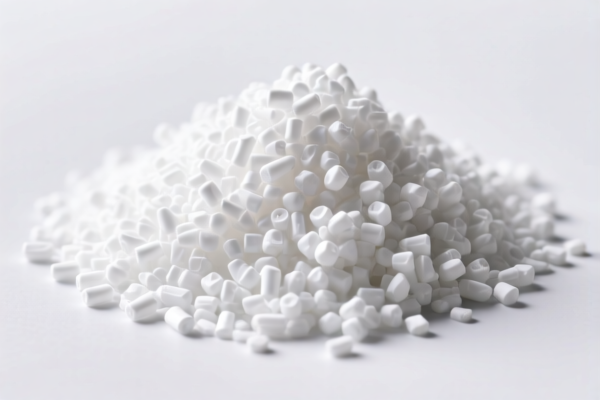
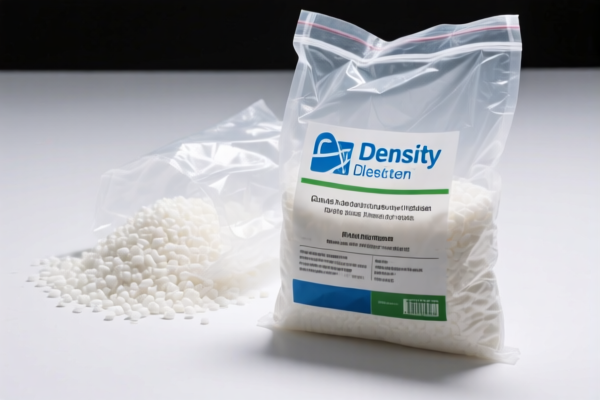

AI Analysis
🧪 Low Density Polyethylene (LDPE/LLDPE) Resin for Blow Molding
🌐 HS Code Reference & Customs Clearance Guide | 2026 Latest Tariff Analysis | Professional Clearance Strategy
📌 I. Product Definition & Classification: Do You Know What "Blow Molding Grade" Really Means?
Low Density Polyethylene (LDPE) and Linear Low Density Polyethylene (LLDPE) are thermoplastic polymers widely used in packaging, films, and containers. In international trade, the distinction between "Resin" (raw material) and "Finished Goods" (bottles/films) is critical for tariff purposes.
Key Definition: * Primary Form (Resin/Granules): The polymer is in its raw, unprocessed state (pellets, powders, or primary shapes). This falls under Chapter 39. * Blow Molding Grade: Indicates the specific physical properties (melt index, molecular weight distribution) optimized for the blow molding process, but does not change the HS classification from raw resin to finished article.
⚠️ Critical Distinction:
- If the product is pellets/granules/rice-form resin → It is Chemical/Plastic Material (Chapter 39).
- If the product is pre-made bottles or containers → It is Plastic Articles (Chapter 39, different heading).
- Do NOT confuse with Polypropylene (PP). Many suppliers mix up LDPE/LLDPE with PP. They have different HS codes and tax rates.
📦 II. HS Code Classification Details (2026 Latest Tariff Authority对照)
Based on the provided data, here are the specific classifications for Low Density Polyethylene (LDPE/LLDPE) and related polymers mentioned in the context of blow molding.
| HS Code | Product Description | Application Scenario | Material Type |
|---|---|---|---|
3901.10.50.20 |
LLDPE Blow Molding Grade | Raw resin for bottles, films, bags | Linear Low Density Polyethylene (Primary Form) |
3901.10.50.10 |
LLDPE Blow Molding Grade | Raw resin for specific uses as described | Linear Low Density Polyethylene (Primary Form) |
3905.91.50.00 |
EVA Blow Molding Grade | Flexible packaging, coatings, shoe soles | Ethylene Vinyl Acetate (EVA) Copolymer |
3902.10.00.00 |
Polypropylene (PP) | Rigid containers, caps, textiles | Polypropylene (Primary Form) |
3917.22.00.00 |
Polypropylene Tubes/Hoses | Rigid pipes, flexible tubing | Polypropylene (Primary Form) |
🔍 Important Note on Data Integrity:
- The data provided lists PP (Polypropylene) under3902and3917alongside LDPE/LLDPE under3901.
- LLDPE/LDPE falls under 3901.
- PP falls under 3902 or 3917.
- EVA falls under 3905.
- Misclassification Risk: Declaring PP as LDPE can lead to significant tax discrepancies and customs delays. Ensure material certificates match the HS code.
💰 III. 2026 Latest Tariff Rate Breakdown (Including Surtaxes & Policy Add-ons)
✅ Applicable Country: United States (US)
✅ Origin: China (CN)
✅ Effective Date: Ongoing (High Tariff Environment)
🎯 1. 3901.10.50.20 & 3901.10.50.10 —— LLDPE/LDPE Resin (Primary Form)
| Item | Detail |
|---|---|
| Base Duty Rate | 6.5% (Ad Valorem) |
| Section 301 Surtax | +25.0% (China-origin specific) |
| Section 122 Tariff | +10.0% (Specific trade remedy/additional duty) |
| Total Effective Rate | 41.5% |
| Calculation Basis | CIF Value × 41.5% |
| De Minimis Eligibility | ❌ No (Not eligible for $800 threshold exemption) |
| Legal Basis Path | USITC:3901.10.50.10/20 → Footnote 301:25% → Footnote 122:10% |
📌 Explanation:
- Base Rate (6.5%): Standard Most Favored Nation (MFN) rate for polyethylene in primary forms.
- Section 301 (25%): Imposed by USTR on Chinese goods to address trade practices.
- Section 122 (10%): An additional tariff often applied to specific chemical/raw material imports under Section 232 or similar trade measures.
- Total: 41.5%. This is a very high cost factor for resin imports. Price negotiation must account for this.
🎯 2. 3905.91.50.00 —— EVA Resin
| Item | Detail |
|---|---|
| Base Duty Rate | 5.3% |
| Section 301 Surtax | +25.0% |
| Section 122 Tariff | +10.0% |
| Total Effective Rate | 40.3% |
| Calculation Basis | CIF Value × 40.3% |
📌 Note: EVA is similar to LDPE but with different chemical properties. The tax structure is nearly identical due to the Section 301/122 overlay.
🎯 3. 3902.10.00.00 & 3917.22.00.00 —— Polypropylene (PP)
| Item | Detail |
|---|---|
| Base Duty Rate | 3.1% |
| Section 301 Surtax | +25.0% |
| Section 122 Tariff | +10.0% |
| Total Effective Rate | 38.1% |
| Calculation Basis | CIF Value × 38.1% |
📌 Comparison:
- PP (3902) has a slightly lower base rate (3.1%) compared to LDPE/LLDPE (6.5%).
- However, the total surtax (35%) is the same.
- Savings: If you can technically substitute LDPE with PP in your manufacturing process, you save 3.4% on the total landed cost. Check technical feasibility first!
🛠️ IV. Customs Clearance Practical Advice (Battle-Tested Tips)
✅ 1. Documentation Checklist (Non-Negotiable)
| Document | Required? | Purpose |
|---|---|---|
| ✅ Certificate of Analysis (CoA) | ✔️ Must | Proves chemical composition (LDPE vs. LLDPE vs. EVA vs. PP). |
| ✅ Material Safety Data Sheet (MSDS) | ✔️ Must | Required for hazardous material determination (though usually non-hazardous, it's standard). |
| ✅ Commercial Invoice | ✔️ Must | Clearly state: "Polyethylene Resin, Primary Form, Not Fabricated." |
| ✅ Packing List | ✔️ Must | Show net/gross weight. Resin is often imported in big bags (1 ton) or small sacks (25kg). |
| ✅ Bill of Lading/Air Waybill | ✔️ Must | Ensure "Shipper's Load and Count" is noted if bulk. |
✅ 2. Declaration Strategy (Key Mnemonic)
🔥 "Primary Form, Not Finished! Name it 'Resin'!"
| Scenario | Correct Declaration | Wrong Declaration | Consequence |
|---|---|---|---|
| Pellets/Granules | "LLDPE Resin, Primary Form" | "Plastic Bags" or "Bottles" | High Risk: Rejection + Penalty |
| Powder/Form | "LDPE Powder, Primary Form" | "Plastic Raw Material" (Vague) | Delay: Customs requests clarification |
| Blow Molding Grade | Specify "For Blow Molding" in notes | Leave blank | Minor: May cause query, but classifiable |
⚠️ Warning:
- Do NOT declare as "Plastic Bags" or "Containers." These are finished goods with different HS codes and potentially different duties.
- Blow Molding Grade is a processing characteristic, not a form. It remains HS 3901.
✅ 3. Special Scenarios
| Scenario | Handling Advice |
|---|---|
| OEM Custom Resin | Provide customer order + technical spec sheet to prove it's a standard resin grade, not a proprietary chemical. |
| Mixed Containers | If shipping LDPE and PP together, segregate and declare separately. Mixing leads to complex valuation and potential misclassification. |
| Recycled Resin | If "Recycled," it may fall under 3915 (Waste/Scrap) or 3901 with different base rates. Recycled resin is NOT automatically 3901. Check specific subheadings. |
| Additives | If resin contains >10% additives by weight, it might be classified as a preparation (3906.90). Pure resin is 3901.10. |
🌍 V. Global Market Comparison (2026 Latest)
| Country/Region | Recommended HS Code | Base Duty | Surtaxes | Total Rate (China Origin) | Notes |
|---|---|---|---|---|---|
| 🇺🇸 USA | 3901.10.50.10/20 |
6.5% | +35% (301+122) | 41.5% | Highest Cost. Budget accordingly. |
| 🇨🇳 China | 3901.10.50.10/20 |
0-10% | None | 0-10% | Low cost for domestic use. |
| 🇪🇺 EU | 3901.10.50 |
1-6.5% | None | ~6.5% | No Section 301 equivalent. |
| 🇬🇧 UK | 3901.10.50 |
1-6.5% | None | ~6.5% | Post-Brexit, aligned with EU largely. |
| 🇯🇵 Japan | 3901.10.50 |
0-6% | None | ~6% | No major surtaxes for resins. |
📌 Conclusion:
- USA is the only major market with punitive tariffs on Chinese polyethylene resins.
- Supply Chain Strategy: If importing into the US, consider sourcing from Vietnam, Mexico, or Thailand (subject to rules of origin) to avoid the 35% surtax.
- Direct Import from China: High risk, high cost. Only viable if the product margin can absorb 41.5%.
📌 VI. Common Mistakes & Pitfalls (Lessons Learned)
❌ Mistake 1: Declaring "Blow Molding Grade" as "Finished Plastic Parts"
👉 Result: Wrong HS Code (e.g., 3926 vs 3901). Penalty + Back Duties.
❌ Mistake 2: Ignoring "Section 122" Tariff
👉 Result: Underestimating landed cost by 10%. Profit Margins Eroded.
❌ Mistake 3: Confusing LDPE/LLDPE with PP
👉 Result: Customs flags discrepancy in CoA vs. Declaration. Inspection Delay.
❌ Mistake 4: Using "Plastic Raw Material" as Generic Description
👉 Result: Customs may classify under highest duty subheading due to ambiguity. Be Specific.
✅ Correct Practice:
"LLDPE Resin, Linear Low Density Polyethylene, Primary Form, Blow Molding Grade, 6000 Series, Made in China, HS 3901.10.50.20"
🎯 VII. Conclusion: Precision Saves Money!
🎯 Remember the Mnemonic:
🔹 "Resin = 3901, Not 3926.
🔹 "Base 6.5%, Plus 35% Surtax = 41.5% Total.
🔹 "Check CoA, Avoid PP/LDPE Mix-up.
🔹 "USA Import? Budget Big!"**
📌 Pro Tip:
- If your volume is large, consider applying for a Section 301 Exclusion (if still available) or a Tariff Engineering strategy (e.g., importing as a different chemical intermediate if legally permissible).
- Always request a Pre-Ruling from US Customs and Border Protection (CBP) for new suppliers or complex resin grades.
📣 Immediate Action:
📞 Contact a Licensed Customs Broker
📄 Verify Material Certificate (CoA)
🧮 Calculate Landed Cost including 41.5% Total Duty
🚀 Optimize Supply Chain to Mitigate High Tariffs
✨ Expert Customs Clearance Starts with Accurate Classification!
💼 Every Percent Counts in the Age of High Tariffs!
Customer Reviews
About HS Code Classification
The Harmonized System (HS) is an internationally standardized nomenclature developed by the World Customs Organization (WCO) to classify traded products. Over 200 countries use the HS system as the basis for customs tariffs, trade statistics, and import/export regulations.
Each HS code follows a hierarchical structure:
- Chapter (2 digits) — Broad category of goods (e.g., Chapter 84: Machinery and Mechanical Appliances)
- Heading (4 digits) — More specific grouping within the chapter
- Subheading (6 digits) — Internationally standardized breakdown, used by all WCO member countries
- National subdivisions (8-10 digits) — Country-specific extensions for further classification, such as US HTSUS 10-digit codes
Correct HS code classification is essential for smooth customs clearance, accurate duty payment, and compliance with trade regulations. Misclassification can lead to customs delays, overpayment of duties, or penalties.
When importing from CN to US, the applicable tariff rates may include:
- Most-Favored-Nation (MFN) rate — The standard duty rate applied to WTO members
- General rate — Applied to countries without trade agreements
- Trade remedy duties — Additional tariffs such as Section 301 (anti-dumping), Section 232 (national security), or countervailing duties
The information provided on this page is for reference purposes only. For official classification, please consult with your local customs authority or a licensed customs broker.