blue cloud shaped feeding mat
CN → US| HS Code | Tariff Rate | Origin | Destination | Doc |
|---|---|---|---|---|
| 6307907500 | 14.3% | CN | US | Official Doc |
| 6307909891 | 24.5% | CN | US | Official Doc |
| 4823908000 | 35.0% | CN | US | Official Doc |
| 3926909989 | 22.8% | CN | US | Official Doc |
Product Images
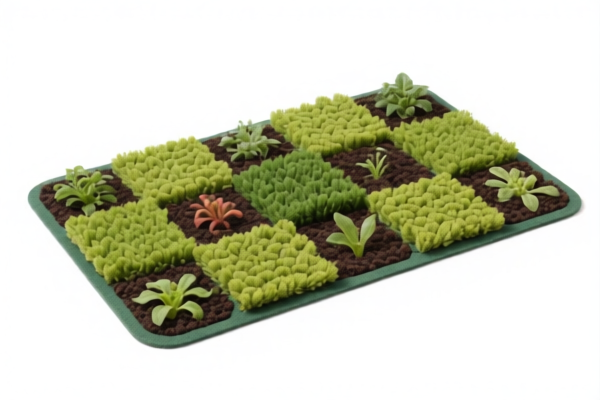
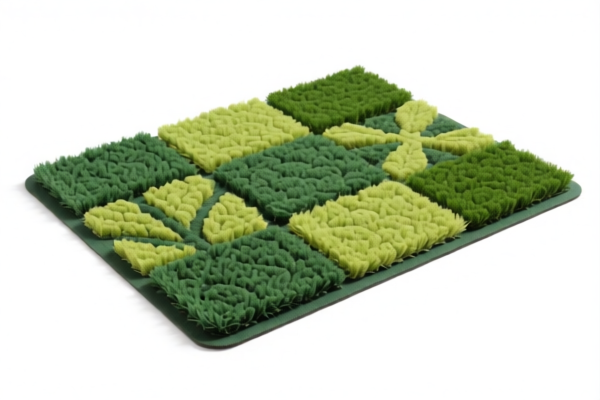
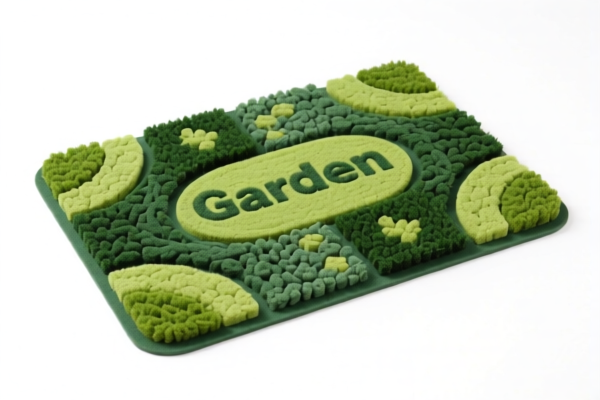
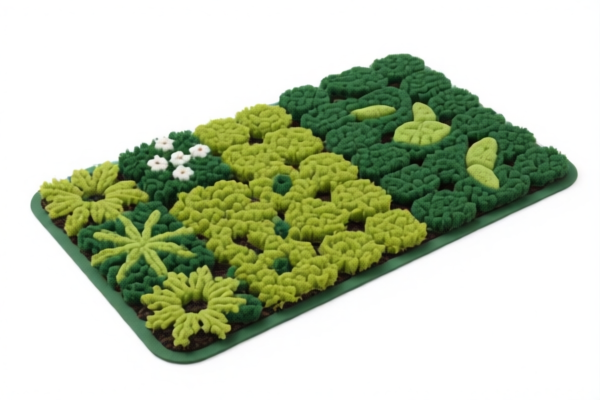
AI Analysis
☁️ Blue Cloud Shaped Feeding Mat: HS Code Guide & Customs Clearance Strategy (2026)
🌐 HS Code Reference & Customs Clearance Guide | 2026 Latest Tariff Analysis | Professional通关 Strategy
📌 I. Product Definition & Classification: Do You Really Understand "Feeding Mats"?
The "Blue Cloud Shaped Feeding Mat" is a functional item primarily used in households, nurseries, or cafes to protect surfaces during mealtime. In international trade, its classification strictly depends on the raw material composition, not its shape or color.
There are three distinct material paths, leading to vastly different tariff outcomes:
1. Plastic/Silicone Based: Classified under Chapter 39 (Articles of Plastics).
2. Textile/Silicone Based: Classified under Chapter 63 (Other Made-Up Articles).
3. Paper/Fiber Based: Classified under Chapter 48 (Paper and Paperboard).
⚠️ Key Distinction Point:
- If the mat is 100% Silicone or Plastic → Chapter 39
- If the mat has a Fabric backing + Silicone top or is Textile-based → Chapter 63
- If the mat is Disposable Paper/Fiber → Chapter 48
📦 II. HS Code Classification Details (2026 Latest Tariff Authority Comparison)
Based on the provided data, here are the three possible HS Codes for your Blue Cloud Shaped Feeding Mat, categorized by material:
| HS Code | Product Description | Material Basis | Classification Logic |
|---|---|---|---|
3926.90.10.00 |
Other articles of plastics: Mats, pads, and similar items | Plastic or Silicone | Classified as "Other Plastic Articles" specifically for mats/pads. |
6307.90.75.00 |
Other made-up articles: Backstop category | Silicone or Textile | Classified as "Other Made-Up Articles" (footing/backstop category), often for mixed textile/silicone products. |
6307.90.98.91 |
Other made-up articles: Mats, pads, and similar items | Silicone or Rubber | Classified as "Other Made-Up Articles" specifically for mats/pads made of silicone/rubber. |
4823.90.80.00 |
Paper, paperboard, cardboard...: Other articles of paper | Paper, Fiber, or Similar | Classified as "Other Paper Articles" of specific size/shape. |
🔍 Important Reminder:
- Shape (Cloud) and Color (Blue) do NOT determine the HS Code. Only Material does.
- If the mat is Solid Silicone, it likely falls under3926.90.10.00(Plastic/Silicone) or6307.90.98.91(Rubber/Silicone Made-up).
- If it is Disposable, it is4823.90.80.00.
- Do not guess! Provide material composition to customs.
💰 III. 2026 Latest Tariff Rate Breakdown (Including Surtaxes, Policy Surcharges)
✅ Applicable Country: United States (US)
✅ Country of Origin: China (CN)
✅ Effective Date: November 10, 2025 (and onwards)
🎯 1. 3926.90.10.00 – Articles of Plastic: Mats/Pads (Plastic/Silicone Base)
| Item | Content |
|---|---|
| Basic Tariff | 3.4% |
| Section 301 Surtax | +7.5% |
| Section 122 Surtax | +10% |
| Total Tariff Rate | 20.9% |
| Tax Calculation | CIF Value × 20.9% |
| De Minimis Exemption Eligible? | ❌ No (denied) |
| Legal Authority Path | Base Tariff → Section 301 → Section 122 |
📌 Explanation:
- Basic 3.4%: Standard MFN tariff for other plastic articles.
- Section 301 7.5%: USITC surtax for Chinese goods under Trade Act Section 301.
- Section 122 10%: Emergency surtax for national security/import relief (applies to China).
- Total 20.9%: This is a high-cost category for plastic/silicone mats.
🎯 2. 6307.90.75.00 – Other Made-Up Articles (Silicone/Textile Base)
| Item | Content |
|---|---|
| Basic Tariff | 4.3% |
| Section 301 Surtax | +0.0% |
| Section 122 Surtax | +10% |
| Total Tariff Rate | 14.3% |
| Tax Calculation | CIF Value × 14.3% |
| De Minimis Exemption Eligible? | ❌ No (denied) |
| Legal Authority Path | Base Tariff → Section 122 |
📌 Note:
- Section 301 is 0% for this specific subheading (6307.90.75.00). This is a major advantage.
- However, Section 122 (10%) still applies.
- Total 14.3% is significantly lower than the plastic category (20.9%).
- Crucial: This applies only if classified as "Made-up Articles" (e.g., textile-backed silicone mats).
🎯 3. 6307.90.98.91 – Other Made-Up Articles: Mats/Pads (Silicone/Rubber Base)
| Item | Content |
|---|---|
| Basic Tariff | 7.0% |
| Section 301 Surtax | +7.5% |
| Section 122 Surtax | +10% |
| Total Tariff Rate | 24.5% |
| Tax Calculation | CIF Value × 24.5% |
| De Minimis Exemption Eligible? | ❌ No (denied) |
| Legal Authority Path | Base Tariff → Section 301 → Section 122 |
📌 Warning:
- This is the highest tariff rate (24.5%).
- Although it is a "Made-up Article" (Chapter 63), it attracts both Section 301 (7.5%) and Section 122 (10%).
- Avoid this code unless your product is strictly defined as "Rubber/Silicone Mat" under this specific subheading.
🎯 4. 4823.90.80.00 – Paper Articles (Disposable Mats)
| Item | Content |
|---|---|
| Basic Tariff | 0.0% |
| Section 301 Surtax | +25.0% |
| Section 122 Surtax | +10% |
| Total Tariff Rate | 35.0% |
| Tax Calculation | CIF Value × 35.0% |
| De Minimis Exemption Eligible? | ❌ No (denied) |
| Legal Authority Path | Base Tariff → Section 301 → Section 122 |
📌 Critical Alert:
- Even with 0% basic tariff, the Section 301 surtax (25%) makes this the most expensive option.
- Do not use this code for reusable silicone/plastic mats. Only for 100% Paper/Fiber disposable mats.
🛠️ IV. Customs Clearance Practical Advice (Avoid Pitfalls)
✅ 1. Required Documentation Checklist (None Missing)
| Document | Must Provide | Explanation |
|---|---|---|
| ✅ Product Specification Sheet | ✔️ | Must explicitly state Material Composition (e.g., "100% Silicone," "80% Cotton/20% Silicone," "Paper"). |
| ✅ Product Photos | ✔️ | Clear images of the mat, showing texture, thickness, and any labels. |
| ✅ Commercial Invoice | ✔️ | Clearly describe as "Silicone Feeding Mat" or "Paper Placemat." Do not use vague terms like "Household Item." |
| ✅ Packing List | ✔️ | List net weight, gross weight, and dimensions. |
| ✅ Certificate of Origin (CO) | ✔️ | To prove country of origin (China). |
| ✅ Third-Party Lab Report | ✔️ | FDA, LFGB, or Prop 65 compliance reports for food-contact silicone. |
✅ 2. Declaration Tips (Key Mantra)
🔥 "Material Determines Code, Code Determines Tax!"
| Scenario | Correct HS Code | Wrong Action | Consequence |
|---|---|---|---|
| 100% Silicone Mat | 3926.90.10.00 (20.9%) |
Misdeclare as 6307.90.75.00 (14.3%) |
Underpayment of tax + Penalties! |
| Textile-Backed Silicone Mat | 6307.90.75.00 (14.3%) |
Misdeclare as 3926.90.10.00 (20.9%) |
Overpayment of tax (but safer) |
| Disposable Paper Mat | 4823.90.80.00 (35.0%) |
Misdeclare as 3926.90.10.00 |
Heavy Penalties for fraud |
| Silicone/Rubber Mat (Made-up) | 6307.90.98.91 (24.5%) |
Use 6307.90.75.00 |
Underpayment + Penalties |
📌 Strategic Tip:
- If your mat is Silicone-Backed Fabric, aim for6307.90.75.00(14.3%). It is the most cost-effective option.
- If your mat is 100% Silicone, you are stuck with3926.90.10.00(20.9%).
✅ 3. Special Case Handling
| Situation | Handling Advice |
|---|---|
| OEM Custom Cloud Design | Provide design file + material spec to avoid classification as "General Plastic Article" with higher scrutiny. |
| Food-Grade Silicone | Ensure FDA/LFGB certification is on file. Customs may inspect for chemical safety. |
| Mixed Materials | If >50% by weight is textile, argue for Chapter 63. If >50% is silicone, argue for Chapter 39. |
| Drop Shipping (De Minimis) | ❌ NOT ELIGIBLE. All codes above deny de minimis exemption. Every shipment is subject to full tariff. |
🌍 V. Global Market Comparison (2026 Latest)
| Country/Region | Recommended HS Code | Tariff (China Origin) | Certification Required | Notes |
|---|---|---|---|---|
| 🇺🇸 USA | 3926.90.10.00 or 6307.90.75.00 |
14.3% – 20.9% | FDA, Prop 65 | High Surtaxes Apply |
| 🇨🇳 China | 3926.90.10.00 |
3.4% | CCC (if applicable) | No Section 301/122 |
| 🇪🇺 EU | 3926.90.10 |
4.5% (Varies) | REACH, LFGB | No Section 301/122 |
| 🇬🇧 UK | 3926.90.10 |
4.5% | UKCA, REACH | No Section 301/122 |
| 🇯🇵 Japan | 3926.90.10 |
3.9% | PSE, Food Sanitation | No Section 301/122 |
📌 Conclusion:
- USA is the most expensive market due to Section 301 and Section 122.
- EU/UK/Japan have stable, lower tariffs.
- Optimize for USA: Try to classify as6307.90.75.00(14.3%) if your product allows (e.g., textile-backed).
📌 VI. Common Mistakes & Pitfalls (Blood Lessons)
❌ Mistake 1: Calling it "Baby Product" to get lower tariff
👉 Consequence: No special "Baby Product" tariff exists. It falls under general materials.
❌ Mistake 2: Misdeclaring Silicone as "Plastic" to avoid Chapter 63
👉 Consequence: If caught, penalties for misclassification + back taxes.
❌ Mistake 3: Ignoring Section 122 (10%)
👉 Consequence: Underestimating total landed cost by 10%. Budget accordingly!
❌ Mistake 4: Using "Feeding Mat" without material spec on Invoice
👉 Consequence: Customs will ask for clarification, causing delays and storage fees.
✅ Correct Practice:
"100% Food-Grade Silicone Feeding Mat, Cloud Shape, Blue, Model XYZ, FDA Compliant"
🎯 VII. Conclusion: Professional Declaration Saves Money!
🎯 Remember the Mantra:
🔹 "Silicone = 20.9%, Textile-Backed = 14.3%, Paper = 35.0%"
🔹 "Section 122 is always 10%, Section 301 varies by code!"
🔹 "Clear material declaration avoids customs delays!"
📌 Pro Tip:
If your feeding mat is 100% Silicone, consider redesigning with a textile backing to qualify for 6307.90.75.00 (14.3%) instead of 3926.90.10.00 (20.9%). Savings: 6.6% on every shipment!
📣 Immediate Action:
📞 Consult your customs broker with material composition docs.
🚀 Optimize your HS Code to minimize tariffs.
💼 Your profit margin depends on accurate classification!
✨ Professional Clearance Starts with Accurate Classification!
💼 Every cent counts in international trade!
Customer Reviews
About HS Code Classification
The Harmonized System (HS) is an internationally standardized nomenclature developed by the World Customs Organization (WCO) to classify traded products. Over 200 countries use the HS system as the basis for customs tariffs, trade statistics, and import/export regulations.
Each HS code follows a hierarchical structure:
- Chapter (2 digits) — Broad category of goods (e.g., Chapter 84: Machinery and Mechanical Appliances)
- Heading (4 digits) — More specific grouping within the chapter
- Subheading (6 digits) — Internationally standardized breakdown, used by all WCO member countries
- National subdivisions (8-10 digits) — Country-specific extensions for further classification, such as US HTSUS 10-digit codes
Correct HS code classification is essential for smooth customs clearance, accurate duty payment, and compliance with trade regulations. Misclassification can lead to customs delays, overpayment of duties, or penalties.
When importing from CN to US, the applicable tariff rates may include:
- Most-Favored-Nation (MFN) rate — The standard duty rate applied to WTO members
- General rate — Applied to countries without trade agreements
- Trade remedy duties — Additional tariffs such as Section 301 (anti-dumping), Section 232 (national security), or countervailing duties
The information provided on this page is for reference purposes only. For official classification, please consult with your local customs authority or a licensed customs broker.