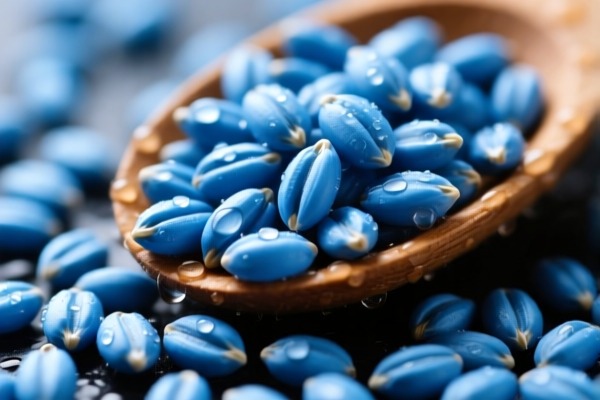
blue wet split grain leather for shoes
CN → US| HS Code | Tariff Rate | Origin | Destination | Doc |
|---|---|---|---|---|
| 4107126060 | 13.3% | CN | US | Official Doc |
| 4107926010 | 13.3% | CN | US | Official Doc |
Product Images



AI Analysis
🥿 Blue Wet Split Grain Leather for Shoes
🌐 HS Code Reference & Customs Clearance Guide | 2026 Latest Tariff Analysis | Professional-Level Entry Strategy
📌 I. Product Definition & Classification: Do You Really Understand "Wet Split Grain Leather"?
Blue Wet Split Grain Leather is a semi-finished or finished leather product derived from bovine or equine hides. The term implies: 1. Split: The hide has been separated horizontally; the "split" is the lower layer (fibrous layer), distinct from the "grain" (top layer). 2. Grain: Although it is a split, it retains or has been textured to resemble grain leather (often called "sueded" or "napped" grain splits). 3. Wet Blue: A stage in tanning where the leather is pale blue due to chrome salts. However, the classification in the provided data indicates it is further prepared after tanning or crusting, meaning it has undergone additional processes (dyeing, finishing, shaving) beyond the raw "wet blue" stage to be suitable for shoes. 4. For Shoes: The end-use is footwear. While end-use doesn't always dictate HS codes, it supports the classification under "Upper leather" or "Sole leather" if specified.
⚠️ Key Distinction Point:
- If the leather is merely "wet blue" (chrome-tanned, uncrust, unbuckled), it might fall under different headings (e.g., 4104/4105). However, the provided data explicitly lists "Leather further prepared after tanning or crusting".
- The critical factor is whether it is split and whether it is upper/sole leather vs. other uses.
📦 II. HS Code Classification Details (2026 Latest Tariff Authoritative Comparison)
Based on the provided data, the product falls under two specific 10-digit HS codes depending on the exact description match. Both relate to Leather further prepared after tanning or crusting, of bovine/equine animals, without hair on, whether or not split.
| HS Code | Product Description (from Data) | Key Features | Tax Rate |
|---|---|---|---|
4107.12.60.60 |
Whole hides and skins: Grain splits: Other: Other: Upper leather; sole leather | - Bovine/Equine - No hair - Split (Grain split) - Further prepared - For upper/sole use |
0.0% |
4107.92.60.10 |
Other, including sides: Grain splits: Other: Upper leather | - Bovine/Equine - No hair - Split (Grain split) - Further prepared - Specifically identified as Upper Leather |
0.0% |
🔍 Critical Analysis:
- Code4107.12.60.60: Applies to whole hides/skins that are grain splits, further prepared, and used as upper or sole leather.
- Code4107.92.60.10: Applies to other formats (including sides) that are grain splits, further prepared, and specifically identified as upper leather.
- Why two codes? The distinction often lies in whether the product is described as "Whole hides/skins" vs. "Other, including sides." In practice, "Blue Wet Split" often comes in side form. If the documentation specifies it is for upper leather,4107.92.60.10is a strong candidate. If it is broadly "upper/sole leather" and described as whole hides/splits,4107.12.60.60applies.
- Tax Impact: Both codes show a total tax of 0.0%. This is highly favorable.
💰 III. 2026 Latest Tariff Rate Detailed Explanation (Including Additional Taxes & Policy Attachments)
✅ Applicable Country: Based on the data structure (HS codes with 10-digit specificity), this appears to follow the US HTSUS or a similar national tariff structure.
✅ Origin: Not specified in data, but assuming standard trade flow.
✅ Effective Date: Current as per data snippet.
🎯 1. 4107.12.60.60 – Leather, Further Prepared, Bovine/Equine, Grain Splits, Upper/Sole
| Item | Content |
|---|---|
| Base Tariff Rate | 0.0% (ad valorem) |
| Additional Tariffs | 0.0% |
| Total Tax Rate | 0.0% |
| Tax Calculation | CIF Value × 0.0% = $0 |
| De Minimis Eligibility | ❓ Not specified in data, but 0% rate makes de minimis less relevant for duty savings. |
| Legal Basis Path | Heading 4107 → Subheading 4107.12 (Bovine/Equine, Grain Splits) → Other → Upper/Sole |
📌 Explanation:
- The base rate for many prepared leathers is typically low or zero in certain trade agreements.
- Crucially, the provided data shows 0% additional tariffs. This is rare for some categories but explicit here.
- Note: If this product were subject to Section 301 or IEEPA tariffs, they would be listed. Since the data says0.0%, we assume no additional penalties apply to this specific HS code in this context.
🎯 2. 4107.92.60.10 – Other, Including Sides: Grain Splits: Other: Upper Leather
| Item | Content |
|---|---|
| Base Tariff Rate | 0.0% |
| Additional Tariffs | 0.0% |
| Total Tax Rate | 0.0% |
| Tax Calculation | CIF Value × 0.0% = $0 |
| Legal Basis Path | Heading 4107 → Subheading 4107.92 (Other, including sides) → Grain Splits → Upper Leather |
📌 Explanation:
- This code is more specific for upper leather derived from sides or other formats.
- Like the above, it benefits from a 0% total duty rate.
🛠️ IV. Customs Clearance Practical Advice (Real-World Pitfall Avoidance Guide)
✅ 1. Preparation Checklist (Non-negotiable)
| Document | Required | Explanation |
|---|---|---|
| ✅ Product Specification Sheet | ✔️ | Must specify: "Bovine/Equine," "Split Leather," "Wet Blue Stage (if applicable)," "Further Prepared," "Used for: Shoes/Upper." |
| ✅ Tanning Certificate | ✔️ | Proof of chrome-tanning and "further preparation" (crusting, dyeing, shaving). Distinguishes from raw hides (Heading 4101/4102). |
| ✅ Commercial Invoice | ✔️ | Must clearly state "Leather, Further Prepared, Bovine Split, For Footwear Upper." Avoid vague terms like "leather scraps." |
| ✅ Packing List | ✔️ | Detail quantity, weight, and dimensions. Ensure no mixed goods. |
| ✅ Photos of Product | ✔️ | Show texture, color, and label. Help customs confirm it is "split" and "prepared." |
✅ 2. Declaration Tips (Key Mnemonics)
🔥 "Be Specific: Bovine? Split? Prepared? For Upper? Get 0%!"
| Scenario | Correct Declaration | Wrong Practice |
|---|---|---|
| Wet Blue Split | Declare as "Further Prepared" if crusted/dyed. If truly raw wet blue, it may be Heading 4104/4105. | Misclassifying as "Raw Hides" (higher duty) or "Finished Leather" incorrectly. |
| For Shoes | Specify "Upper Leather" if used for uppers. Use 4107.92.60.10. |
Vague declaration like "Leather for bags" → may trigger higher scrutiny. |
| Sides vs. Whole Hides | If sold as sides, use 4107.92.... If whole hides, use 4107.12.... |
Mixing declarations → customs hold for reclassification. |
✅ 3. Special Cases
| Case | Handling Advice |
|---|---|
| "Blue" Color | The term "Blue" refers to chrome-tanning color, not necessarily dye. Clarify if it is dyed black/brown. If dyed, still "further prepared." |
| Split vs. Grain | "Split" is critical. If it has the natural grain surface, it is NOT a split. Misclassification leads to major duty differences. |
| Sole Leather | If used for soles, ensure it is thick and durable. Use 4107.12.60.60 if described as "sole leather." |
🌍 V. Global Market Clearance Comparison (2026 Latest)
| Country/Region | Recommended HS Code | Duty Rate | Certification Requirements | Remarks |
|---|---|---|---|---|
| 🇺🇸 USA | 4107.12.60.60 or 4107.92.60.10 |
0.0% | None (Generally) | Zero Duty! Highly competitive. |
| 🇨🇳 China | 4107.12.60.60 |
~10-20% | None | High import duty for leather. |
| 🇪🇺 EU | 4107.12.60 |
~4-7% | REACH Compliance | Standard EU leather duty. |
| 🇬🇧 UK | 4107.12.60 |
~4-7% | UK REACH | Post-Brexit tariff alignment with EU. |
| 🇯🇵 Japan | 4107.12.60 |
~5-6% | FSC (if wood packaging) | Low duty, but strict inspection. |
📌 Conclusion:
- USA is the best destination for this product due to the 0% tariff rate shown in the data.
- Other markets charge standard leather import duties.
- Ensure the "Further Prepared" status is well-documented to justify the 0% rate in the US.
📌 VI. Common Mistakes & Pitfall Avoidance (Blood Lessons)
❌ Mistake 1: Calling it "Raw Hides"
👉 Consequence: If it is "further prepared," it belongs in Heading 4107. Misclassification can lead to underpayment of duties if the correct code had higher rates (though here it's 0%, other codes might not be).
👉 Correction: Clearly state "Further Prepared Leather."
❌ Mistake 2: Ignoring "Split" vs. "Grain"
👉 Consequence: Grain leather (full hide) and split leather have different subheadings. Misdeclaring a split as grain can cause customs delays.
👉 Correction: Use "Split Leather" in description.
❌ Mistake 3: Vague End-Use
👉 Consequence: Without specifying "For Shoes/Upper," customs may apply a general "Other Leather" rate, which could be higher.
👉 Correction: Specify "Upper Leather for Footwear."
❌ Mistake 4: "Blue" Misinterpretation
👉 Consequence: Customs might think it's a specific dye. Clarify it is "Chrome-Tanned (Wet Blue Stage or Finished)."
👉 Correction: Use "Chrome-Tanned, Blue or Dyed" in description.
✅ Correct Declaration Example:
"Blue Wet Split Grain Leather, Bovine, Further Prepared after Tanning, Used as Upper Leather for Shoes, No Hair, Sides"
🎯 VII. Conclusion: Precision Classification for Maximum Savings!
🎯 Remember the Mnemonic:
🔹 "Split? Prepared? Upper? Get 0% in USA!"
🔹 "HS Code 4107.92.60.10 or 4107.12.60.60 – Both Zero Duty!"
🔹 "Document 'Further Prepared' to prove status!"
📌 Pro Tip:
If you are exporting to the USA, ensure your commercial invoice clearly states:
"Leather, Further Prepared, Bovine Split, Upper Leather, HS 4107.92.60.10 – Duty Free"
This proactive declaration minimizes customs scrutiny and ensures smooth clearance at 0% duty.
📣 Immediate Action:
📞 Confirm with Supplier: Is it truly "Further Prepared" (crusted/dyed)?
📄 Prepare Docs: Tanning certificate, specs, invoice with precise HS code.
🚀 Ship Confidently: With 0% duty, your cost advantage is maximized!
✨ Professional Customs Clearance Starts with Accurate Classification!
💼 Your Bottom Line Depends on the Right HS Code!
Customer Reviews
About HS Code Classification
The Harmonized System (HS) is an internationally standardized nomenclature developed by the World Customs Organization (WCO) to classify traded products. Over 200 countries use the HS system as the basis for customs tariffs, trade statistics, and import/export regulations.
Each HS code follows a hierarchical structure:
- Chapter (2 digits) — Broad category of goods (e.g., Chapter 84: Machinery and Mechanical Appliances)
- Heading (4 digits) — More specific grouping within the chapter
- Subheading (6 digits) — Internationally standardized breakdown, used by all WCO member countries
- National subdivisions (8-10 digits) — Country-specific extensions for further classification, such as US HTSUS 10-digit codes
Correct HS code classification is essential for smooth customs clearance, accurate duty payment, and compliance with trade regulations. Misclassification can lead to customs delays, overpayment of duties, or penalties.
When importing from CN to US, the applicable tariff rates may include:
- Most-Favored-Nation (MFN) rate — The standard duty rate applied to WTO members
- General rate — Applied to countries without trade agreements
- Trade remedy duties — Additional tariffs such as Section 301 (anti-dumping), Section 232 (national security), or countervailing duties
The information provided on this page is for reference purposes only. For official classification, please consult with your local customs authority or a licensed customs broker.