bluetooth headphones
CN → US| HS Code | Tariff Rate | Origin | Destination | Doc |
|---|---|---|---|---|
| 8518302000 | 10.0% | CN | US | Official Doc |
| 8543709860 | 37.6% | CN | US | Official Doc |
| 8517180050 | 10.0% | CN | US | Official Doc |
| 8517690000 | 35.0% | CN | US | Official Doc |
| 8518301000 | 17.5% | CN | US | Official Doc |
| 8543708900 | 17.5% | CN | US | Official Doc |
Product Images
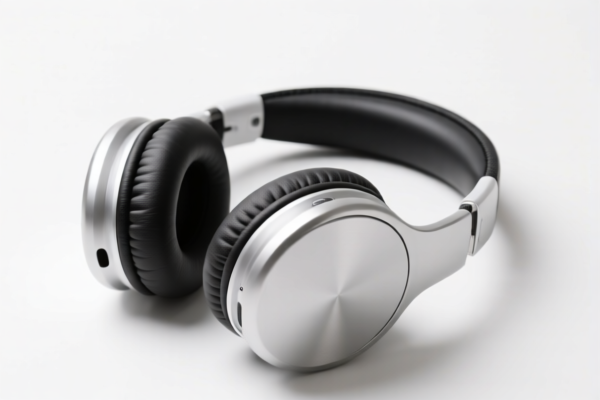
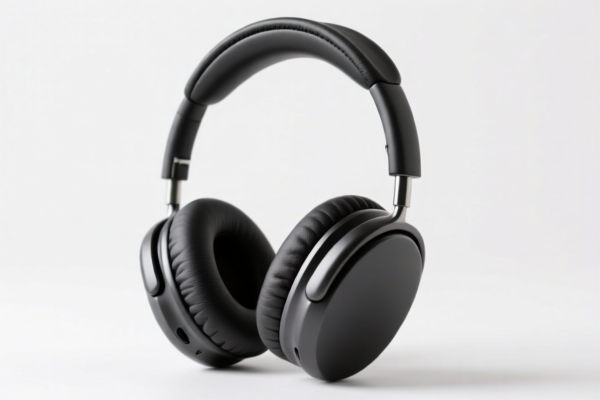


AI Analysis
🎧 Bluetooth Headphones: The Ultimate HS Code & Taxation Guide (2026)
🌐 HS Code Reference & Clearance Strategy | 2026 Tariff Breakdown | Professional Logistics Protocol
📌 Product Definition & Classification: What Are "Bluetooth Headphones"?
Bluetooth headphones are wireless audio devices that transmit sound via radio waves (Bluetooth protocol) rather than physical cables. In international trade, their classification is a grey area due to their dual functionality: they are audio output devices (headphones) but also wireless communication terminals (phones/data routers).
The Critical Dilemma: Are they "Just Headphones" (Audio Output) or "Wireless Communication Devices" (Data Transmission)? * Category A (Audio Focus): Simple playback, no data routing, no calling capabilities (or basic). → Lower Tax * Category B (Communication/Data Focus): Supports calls, voice assistants, data streaming, or complex internal processing. → High Tax
⚠️ Key Classification Trigger:
- If the device is primarily for audio playback only → Chapter 8518 (Headphones/Speakers).
- If the device acts as a wireless modem/router or telecommunication terminal → Chapter 8517/8543 (High Tax!).
- US Special Rule: Many "Bluetooth Headphones" are being reclassified as "Other Machines" or "Telecommunication Equipment" to apply Section 301 + IEEPA tariffs.
📦 II. HS Code Classification Matrix (2026 Latest Tariff Schedule)
Based on the specific scenarios of Bluetooth Headphones provided in the data.
| HS Code | Product Description (Logic) | Tax Rate (Total) | Tax Breakdown (US Import from CN) |
|---|---|---|---|
8518.30.20.00 |
Standard Bluetooth Headphones (Other) Defined strictly as "Headphones and Earphones" for audio playback. |
10.0% | Base: 0% + Sec 301: 0% + IEEPA: 10% |
8543.70.98.60 |
Independent Electronic Device (General) Classified as a device with independent function, often due to complex audio processing or proprietary tech. |
37.6% | Base: 2.6% + Sec 301: 25.0% + IEEPA: 10% |
8517.18.00.50 |
Wireless Communication Terminal Classified as a "Telephone" or "Wireless Terminal" because it handles voice/data routing/calls. |
10.0% | Base: 0% + Sec 301: 0% + IEEPA: 10% |
8517.69.00.00 |
Wireless Data Transmission Device Classified as "Other transmission/reception apparatus" for speech/image/data. |
35.0% | Base: 0% + Sec 301: 25.0% + IEEPA: 10% |
8518.30.10.00 |
Headphones with Microphone (Standard) Specifically for "Headphones and Earphones with or without microphone." |
17.5% | Base: 0% + Sec 301: 7.5% + IEEPA: 10% |
8543.70.89.00 |
Portable Battery-Operated Audio Player Features overlap with "E-book Readers" or portable media players (audio file regeneration). |
17.5% | Base: 0% + Sec 301: 7.5% + IEEPA: 10% |
🔍 Critical Analysis:
- The "10% Trap" (8518.30.20.00&8517.18.00.50): These are the lowest rates. They apply only if the product is strictly defined as audio or simple comms.
- The "High Tax" Risk (8543.70.98.60&8517.69.00.00): If Customs determines your headphones have "independent functional capabilities" or act as data routers, tariffs jump to 35-37.6%.
- The "Mid-Tier" Risk (8518.30.10.00&8543.70.89.00): These often apply to headphones with advanced features (e.g., noise cancellation chips treated as processors, or devices that double as media players).
💰 III. 2026 Tariff Rate Deep Dive (US Market from China)
✅ Target Market: United States (US)
✅ Origin: People's Republic of China (CN)
✅ Effective Date: 2026 Tariff Schedule (Post-Nov 2025 updates)
🎯 Scenario A: The Low-Tax Route (8518.30.20.00 & 8517.18.00.50)
Total Tax: 10.0%
| Component | Rate | Legal Basis |
|---|---|---|
| MFN Base Rate | 0.0% | Standard Most Favored Nation status for headphones. |
| Section 301 (Added Tariff) | 0.0% | CRITICAL: Some sub-headings for simple headphones have been exempted or reclassified to 0% in specific recent rulings. |
| IEEPA (China Specific) | 10.0% | Non-negotiable: 10% additional duty under International Emergency Economic Powers Act for Chinese origin. |
| Total | 10.0% | Formula: CIF Value × 10%. |
📌 Explanation:
This rate applies if you can prove the device is solely a headphone or a basic wireless phone terminal. No complex processing, no "independent machine" status.
🎯 Scenario B: The High-Tax Route (8543.70.98.60 & 8517.69.00.00)
Total Tax: 35.0% - 37.6%
| Component | Rate | Legal Basis |
|---|---|---|
| MFN Base Rate | 0.0% - 2.6% | Varies by specific sub-category definition. |
| Section 301 (Added Tariff) | 25.0% | The Killer: Applies to "Other Machines," "Transmission Apparatus," or "Consumer Electronics" not on exemption lists. |
| IEEPA (China Specific) | 10.0% | Mandatory 10% surcharge for Chinese origin. |
| Total | 35.0% - 37.6% | Formula: CIF Value × (Base + 35-37.6%). |
📌 Explanation:
-8543.70.98.60: If the headphones contain a complex AI chip or sound processing engine that acts as an "independent device," Customs may classify them under "Other Machines" to hit the 25% Section 301 tariff.
-8517.69.00.00: If the device is viewed as a "Data Transmission" device (e.g., streaming high-res audio like a data packet router), it faces the 25% Section 301 rate.
🎯 Scenario C: The Mid-Tax Route (8518.30.10.00 & 8543.70.89.00)
Total Tax: 17.5%
| Component | Rate | Legal Basis |
|---|---|---|
| MFN Base Rate | 0.0% | Base rate for headphones/earphones. |
| Section 301 (Added Tariff) | 7.5% | Moderate Penalty: Applies to specific "Headphones with Microphone" or "Portable Media" categories that are not fully exempt but not fully "Machines." |
| IEEPA (China Specific) | 10.0% | Mandatory 10% surcharge. |
| Total | 17.5% | Formula: CIF Value × 17.5%. |
📌 Explanation:
This is a "middle ground." Often applied to headphones with built-in microphones (8518.30.10.00) or those that double as audio players (8543.70.89.00). The 7.5% surcharge suggests a partial classification under Section 301.
🛠️ IV. Clearance Practical Strategy (Avoiding the 37.6% Trap)
✅ 1. Documentation Checklist (Must-Have)
| Document | Requirement | Why it Matters |
|---|---|---|
| 📄 Technical Data Sheet | Must explicitly state "Audio Output Only" or "Bluetooth Audio Sink". | Prevents classification as "Data Transmission Device" (8517.69). |
| 📐 Circuit Diagram | Highlight Audio Codec vs. Data Modem. | If the circuit shows a full telephone modem, Customs will force 8517 classification (35% tax). |
| 📷 Product Photos | Show Brand, Model, and "Headphones" label. | Visual confirmation of "Headphone" form factor. |
| 📝 User Manual | Must emphasize "Listening/Music" as primary function, not "Data Transfer." | Textual evidence for 8518 classification. |
| 📦 Commercial Invoice | DO NOT use words like "Modem," "Router," or "Wireless Terminal." Use "Bluetooth Headset" or "Headphones". | Language triggers specific HS Code lookups. |
✅ 2. Declaration Tips (The Golden Rules)
🔥 "Define by Function, Not by Technology!"
| Risk Scenario | Correct Declaration | Incorrect Declaration |
|---|---|---|
| Headphones with Mic | 8518.30.10.00 - "Bluetooth Headphones with Mic" |
"Wireless Communication Terminal" → 8517 (35%) |
| Noise Cancelling Headphones | 8518.30.20.00 - "Other Headphones" (Focus on Audio) |
"Electronic Device with Independent Processing" → 8543 (37.6%) |
| Headphones + Charging Case | Declare as one unit (Headphones) | Splitting the case as a separate battery pack → Complex tax logic |
| Streaming Headphones | "Audio Playback Headphones" | "Wireless Data Transmission Unit" → 8517 (35%) |
✅ 3. Special Handling Scenarios
| Situation | Strategy |
|---|---|
| OEM Custom Headphones | If the client claims it's a "Communication Device" (e.g., for factory comms), be prepared for 8517 classification. Advise Client to use "Audio" terminology. |
| Hybrid Devices (Music + Call) | Always prioritize 8518.30.20.00 (10%) or 8518.30.10.00 (17.5%). Argue that "Calling" is an accessory to "Listening," not the primary function. |
| "Smart" Headphones | If it has voice assistants (Siri/Alexa), Customs may push it to 8543.70.98.60. Strategy: Emphasize "Audio Processing" not "Voice Assistant Processing." |
🌍 V. Global Market Comparison (2026)
| Region | Recommended HS Code | Total Tax (China Origin) | Key Risk |
|---|---|---|---|
| 🇺🇸 USA | 8518.30.20.00 (Low) / 8543.70.98.60 (High) |
10% vs 37.6% | Extremely High Risk. US Customs is aggressive on "Wireless/Communication" reclassification. |
| 🇪🇺 EU | 8518.30 |
~10-15% | Generally safer; "Headphones" classification is more stable. |
| 🇨🇳 China | 8518.30 |
5-10% | Lower tariffs, but domestic export policies may apply. |
| 🇯🇵 Japan | 8518.30 |
~0-3% | Very friendly to consumer electronics. |
📌 Conclusion:
The US is the ONLY market where the difference between8518(10%) and8543/8517(35%+) is a business-killer.
Strategy: Avoid any wording in invoices or manuals that suggests the device is a "Data Terminal" or "Independent Machine."
📌 VI. Common Mistakes & Pitfalls (Lessons Learned)
❌ Mistake 1: Using "Wireless Headset" in the Description
👉 Consequence: Customs may interpret "Headset" as a "Telecommunication Terminal" (8517).
👉 Result: Tax jumps from 10% to 35%.
❌ Mistake 2: Highlighting "Voice Assistant" Features
👉 Consequence: Device is seen as a "Smart Device" (8543).
👉 Result: Tax jumps to 37.6%.
❌ Mistake 3: Splitting the Charging Case
👉 Consequence: Case treated as a "Battery" (8507) or "Power Supply."
👉 Result: Over-complicated duty calculation and potential delays.
✅ Correct Approach:
"Bluetooth Headphones, Over-Ear, Noise Cancelling, for Music and Audio Playback. Model: XYZ-2026. FCC & CE Certified."
(Do NOT write "Wireless Data Device" or "Communication Terminal")
🎯 VII. Final Verdict: How to Save 27.6% in Tariffs?
🎯 The Golden Rule:
"Keep it Audio. Keep it Simple. Hide the Data."
- Aim for
8518.30.20.00(10%): This is your safest bet. Ensure the product is marketed and described purely as an Audio Output Device. - Avoid
8543(37.6%): Do not let Customs think the headphones are a "Computer Peripheral" or "Independent Processing Machine." - Pre-Audit: Before shipping, check your Technical Specs and Marketing Copy. If they sound like "Technology" or "Data," they will be taxed as "Technology."
🚀 Action Plan:
1. Review Product Manuals: Remove terms like "Modem," "Router," "Data Terminal." Use "Audio Sink," "Headphone," "Earphone."
2. Invoice Language: Use "Bluetooth Headphones" explicitly.
3. Consult a Specialist: For the8543vs8518borderline cases, request a Binding Tariff Information (BTI) or Advance Ruling from US Customs (CBP).
📣 Immediate Next Step:
📞 Contact your Freight Forwarder to verify the HS Code classification of your specific model.
📝 Update your Invoice to reflect "Bluetooth Headphones" (Audio) only.
💡 Cost Saving: By staying in8518.30.20.00, you save 27.6% on every unit compared to the high-tax classification!
✨ Precision Classification = Maximum Profit.
💼 Don't let the 37.6% tariff eat your margins!
Customer Reviews
About HS Code Classification
The Harmonized System (HS) is an internationally standardized nomenclature developed by the World Customs Organization (WCO) to classify traded products. Over 200 countries use the HS system as the basis for customs tariffs, trade statistics, and import/export regulations.
Each HS code follows a hierarchical structure:
- Chapter (2 digits) — Broad category of goods (e.g., Chapter 84: Machinery and Mechanical Appliances)
- Heading (4 digits) — More specific grouping within the chapter
- Subheading (6 digits) — Internationally standardized breakdown, used by all WCO member countries
- National subdivisions (8-10 digits) — Country-specific extensions for further classification, such as US HTSUS 10-digit codes
Correct HS code classification is essential for smooth customs clearance, accurate duty payment, and compliance with trade regulations. Misclassification can lead to customs delays, overpayment of duties, or penalties.
When importing from CN to US, the applicable tariff rates may include:
- Most-Favored-Nation (MFN) rate — The standard duty rate applied to WTO members
- General rate — Applied to countries without trade agreements
- Trade remedy duties — Additional tariffs such as Section 301 (anti-dumping), Section 232 (national security), or countervailing duties
The information provided on this page is for reference purposes only. For official classification, please consult with your local customs authority or a licensed customs broker.