board game
CN → US| HS Code | Tariff Rate | Origin | Destination | Doc |
|---|---|---|---|---|
| 9504909080 | 17.5% | CN | US | Official Doc |
| 4901990093 | 17.5% | CN | US | Official Doc |
| 9503000090 | 10.0% | CN | US | Official Doc |
| 3926909989 | 22.8% | CN | US | Official Doc |
| 9504906000 | 10.0% | CN | US | Official Doc |
| 4901990092 | 17.5% | CN | US | Official Doc |
Product Images


AI Analysis
🎲 Board Games: The Ultimate Global Trade & Customs Guide (2026 Edition)
🌐 HS Code Classification & Customs Clearance Strategy | Latest 2026 Tariff Breakdown
📌 I. Product Definition: What Exactly is a "Board Game"?
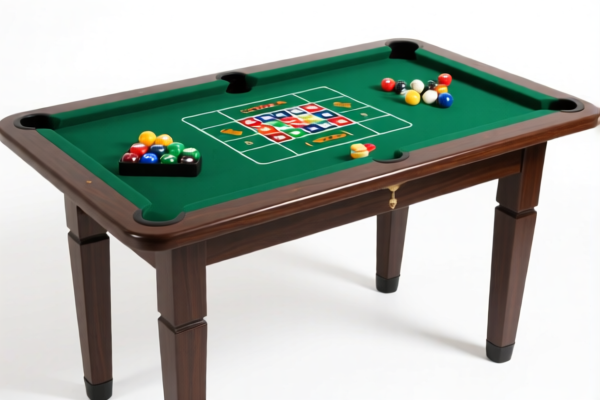
A Board Game is a complex commodity often consisting of a physical game board, playing pieces, cards, dice, instruction manuals, and sometimes plastic storage boxes or wooden accessories.
In international trade, a single "Board Game" product often triggers multiple HS Code classifications depending on which component or aspect is being declared. Customs authorities look at the primary function and material composition:
- The Game Mechanics: If the focus is on the game board and pieces as a "toy" or "game," it falls under Toys (Chapter 95).
- The Printed Matter: If the focus is on the cards, rulebooks, and manuals, it can be classified as Printed Books/Maps (Chapter 49).
- The Plastic Components: If declared by its raw material (e.g., a specific plastic die or figurine), it falls under Plastic Articles (Chapter 39).
⚠️ Critical Insight:
Unlike simple electronics, board games often face a "Dual Nature" in customs. A single shipment might contain both "Toys" and "Printed Matter," leading to different tax rates (10% vs. 17.5% vs. 22.8%). Correct classification is the difference between a smooth clearance and a seized shipment!
📦 II. HS Code Classification Details (2026 Latest Tariff Schedule)
Based on the provided data, here is the authoritative breakdown for Board Games:
| HS Code | Product Description & Logic | Primary Use | Total Tax Rate |
|---|---|---|---|
| 9504.90.90.80 | Tabletop Games: Fits the description of games played on a table or in a living room. | General Board Games | 17.5% |
| 4901.99.00.93 | Printed Matter: Includes printed cards, rulebooks, and paper booklets. | Game Components (Paper) | 17.5% |
| 9503.00.00.90 | Toys: Classified as "Other Toys" not specified elsewhere. | Children's Toys / Play Sets | 10.0% |
| 3926.90.99.89 | Plastic Products: Components made of plastic (figures, dice, tiles). | Material-specific Parts | 22.8% |
| 9504.90.60.00 | Board Games (Specific): Matches specific definitions like Chess, Checkers, etc. | Strategic Board Games | 10.0% |
| 4901.99.00.92 | Other Printed Matter: General printed paper media. | Manuals & Inserts | 17.5% |
💰 III. 2026 Tariff Rate Deep Dive (China to Global)
✅ Applicable Context: Based on the provided data structure (China-origin goods subject to Section 301 & IEEPA-style levies). ✅ Effective Date: Current 2026 Tariff Regime.
🎯 1. The "Game & Toy" Category (Low Tax)
- Codes:
9503.00.00.90,9504.90.60.00 - Total Tax: 10.0%
- Breakdown:
- Base Tariff: 0.0%
- Additional Tariff (Section 301): 0.0%
- 122-Term Tariff: 10%
- Analysis: This is the most favorable rate for board games classified purely as toys or specific board games. The "Additional Tariff" is 0%, but a specific 10% penalty (122-term) is applied.
🎯 2. The "Printed Matter" Category (High Tax)
- Codes:
4901.99.00.93,4901.99.00.92 - Total Tax: 17.5%
- Breakdown:
- Base Tariff: 0.0%
- Additional Tariff (Section 301): 7.5%
- 122-Term Tariff: 10%
- Analysis: If customs officials prioritize the paper component (e.g., the rulebook or cards) over the game itself, the tax jumps to 17.5%. The 7.5% Additional Tariff is the key driver here.
🎯 3. The "Tabletop Game" & "Plastic Parts" Category (Highest Risk)
- Code A:
9504.90.90.80(Tabletop Games)- Total Tax: 17.5%
- Breakdown: Base 0% + Additional 7.5% + 122-Term 10%.
- Code B:
3926.90.99.89(Plastic Articles)- Total Tax: 22.8%
- Breakdown:
- Base Tariff: 5.3%
- Additional Tariff: 7.5%
- 122-Term Tariff: 10%
- Analysis:
9504.90.90.80hits the same high rate as printed matter (17.5%).3926.90.99.89is the most expensive classification at 22.8%. This occurs if the shipment is valued heavily on plastic components (figures, tiles) and is subject to the base tariff plus the double layer of additional taxes.
🛠️ IV. Customs Clearance Strategy (Practical Avoidance Guide)
✅ 1. Material Preparation Checklist
To ensure the correct HS Code (and lowest tax rate) is accepted:
| Document | Requirement | Strategic Importance |
|---|---|---|
| Product Specification Sheet | ✔️ Must list materials (Paper, Plastic, Wood, Cardboard). | Helps prove if it's a "Toy" (9503) or "Plastic" (3926). |
| Component Breakdown | ✔️ Separate inventory of Cards, Dice, Board, Box. | Prevents the "Plastic Parts" classification (22.8%) by separating high-value plastic items. |
| Usage Description | ✔️ "Family Board Game" vs. "Educational Toy". | Supports classification under 9503.00.00.90 (10% tax) rather than generic plastics. |
| Commercial Invoice | ✔️ Clear itemization of values per component. | Critical for avoiding "Mixed Classification" audits. |
| Photos/Labeling | ✔️ Show the game being played, not just the plastic pieces. | Visual proof of "Game" function (9504/9503) vs. "Material" function (3926). |
✅ 2. Declaration Best Practices (The "Golden Rules")
🔥 Rule of Thumb: "Prioritize the Function, Not the Material!"
| Scenario | Recommended HS Code | Tax Rate | Why? |
|---|---|---|---|
| Complete Game Set (Board + Cards + Pieces) | 9503.00.00.90 (Toy) or 9504.90.60.00 (Board Game) |
10.0% | The primary function is "Play/Toy." Do not let the plastic pieces dominate the classification. |
| Bulk Cards / Rulebooks Only | 4901.99.00.93 |
17.5% | Purely paper products attract the 7.5% Additional Tariff. |
| Loose Plastic Figures / Dice Sold Separately | 3926.90.99.89 |
22.8% | ⚠️ WARNING: If sold separately, this triggers the Base Tax (5.3%) + Additional (7.5%) + 122-Term (10%). |
| General "Tabletop Game" | 9504.90.90.80 |
17.5% | A broader category that attracts the 7.5% Additional Tariff. Use specific 9504.90.60.00 if possible. |
✅ 3. Strategic Tax Optimization Tips
- Bundle vs. Separate:
- DO: Sell the full "Game Box" as one unit under
9503.00.00.90(10%). - DON'T: Sell the plastic figures or dice separately from the game box. This forces them into
3926.90.99.89(22.8%).
- DO: Sell the full "Game Box" as one unit under
- Avoid the "Additional Tariff" Trap:
- The 7.5% Additional Tariff applies to
9504.90.90.80and4901.99.00.93. - The 10% "122-Term" Tariff applies to ALL categories in this dataset.
- Strategy: If possible, prioritize
9503.00.00.90or9504.90.60.00to avoid the 7.5% Additional Tariff, saving you 7.5% on every dollar!
- The 7.5% Additional Tariff applies to
- Material Separation:
- If your product has significant plastic value, ensure the "Game" nature is emphasized in the marketing and packaging to stay in the 10% "Toy" bracket, not the 22.8% "Plastic" bracket.
🌍 V. Quick Comparison: Where are the Pitfalls?
| Category | HS Code | Tax | Risk Level | Action |
|---|---|---|---|---|
| Pure Toy/Game | 9503.00.00.90 / 9504.90.60.00 |
10% | 🟢 Low | Best Option. Declare as Toy/Game. |
| Printed Matter | 4901.99.00.93 / 92 |
17.5% | 🟡 Medium | Avoid if possible. Only declare if selling books/cards only. |
| General Tabletop | 9504.90.90.80 |
17.5% | 🟡 Medium | Less specific; try to use 9504.90.60.00. |
| Plastic Components | 3926.90.99.89 |
22.8% | 🔴 High | Avoid! Only declare if selling loose plastic parts. |
📌 VI. Common Mistakes & "Red Flags"
❌ Mistake 1: Declaring a Board Game as "Plastic Toys" * Result: Tax jumps from 10% to 22.8% due to the Base Tariff (5.3%) + Additional Tax (7.5%) + 122-Term (10%). * Fix: Always declare as "Board Game" or "Educational Toy" (9503/9504).
❌ Mistake 2: Mixing Printed Cards with Game Play * Result: Customs may split the value. If the rulebook is valued separately, it gets hit with 17.5% tax. * Fix: Ensure the invoice describes the entire game set as a single unit for play.
❌ Mistake 3: Ignoring the "122-Term" Tariff * Result: Expecting 0% or 7.5% and being shocked by 22.8%. * Fact: The 122-Term (10%) is applied to ALL listed HS Codes in this dataset. You cannot avoid this 10% penalty.
🎯 VII. Final Verdict & Action Plan
The Goal: Minimize tax exposure from 22.8% down to 10%.
- Primary Declaration: Use
9503.00.00.90(Toys) or9504.90.60.00(Specific Board Games) for the complete game set.- Why: 10% Total Tax (No 7.5% Additional Tariff).
- Secondary Declaration: If selling Rulebooks/Maps separately, use
4901.99.00.93(17.5%). - Avoid: Never declare plastic components separately as
3926.90.99.89unless they are sold as raw materials.
🚀 Pro Tip: "Structure your shipment so the Game is the hero, not the Plastic or the Paper." This ensures you land in the 10% bracket, saving you 7.5% to 12.8% in taxes per shipment!
✅ Ready to Ship? Ensure your commercial invoice clearly states: "Board Game, Educational Toy, Complete Set (Board, Cards, Pieces), Model XYZ". Avoid vague terms like "Plastic Game Parts" or "Paper Books."
Disclaimer: Customs regulations vary by destination country. This guide is based on the provided 2026 data context. Always consult a licensed customs broker for final clearance.
Customer Reviews
About HS Code Classification
The Harmonized System (HS) is an internationally standardized nomenclature developed by the World Customs Organization (WCO) to classify traded products. Over 200 countries use the HS system as the basis for customs tariffs, trade statistics, and import/export regulations.
Each HS code follows a hierarchical structure:
- Chapter (2 digits) — Broad category of goods (e.g., Chapter 84: Machinery and Mechanical Appliances)
- Heading (4 digits) — More specific grouping within the chapter
- Subheading (6 digits) — Internationally standardized breakdown, used by all WCO member countries
- National subdivisions (8-10 digits) — Country-specific extensions for further classification, such as US HTSUS 10-digit codes
Correct HS code classification is essential for smooth customs clearance, accurate duty payment, and compliance with trade regulations. Misclassification can lead to customs delays, overpayment of duties, or penalties.
When importing from CN to US, the applicable tariff rates may include:
- Most-Favored-Nation (MFN) rate — The standard duty rate applied to WTO members
- General rate — Applied to countries without trade agreements
- Trade remedy duties — Additional tariffs such as Section 301 (anti-dumping), Section 232 (national security), or countervailing duties
The information provided on this page is for reference purposes only. For official classification, please consult with your local customs authority or a licensed customs broker.