body mounted video cameras
CN → US| HS Code | Tariff Rate | Origin | Destination | Doc |
|---|---|---|---|---|
| 8525894000 | 17.5% | CN | US | Official Doc |
| 8525895030 | 35.0% | CN | US | Official Doc |
| 9006596000 | 16.8% | CN | US | Official Doc |
| 9006594060 | 21.5% | CN | US | Official Doc |
| 8525895050 | 35.0% | CN | US | Official Doc |
Product Images
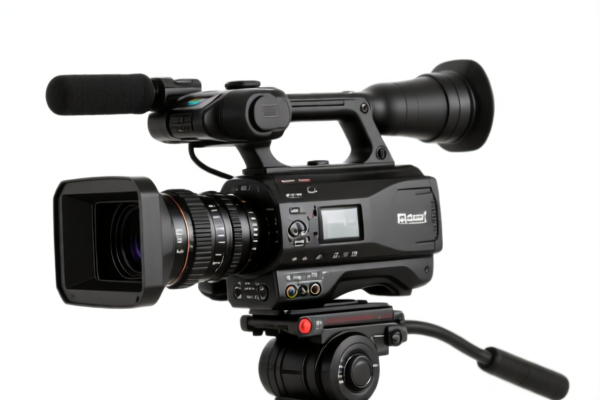
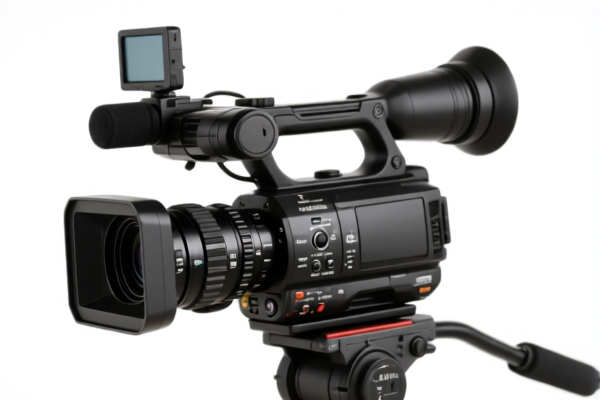
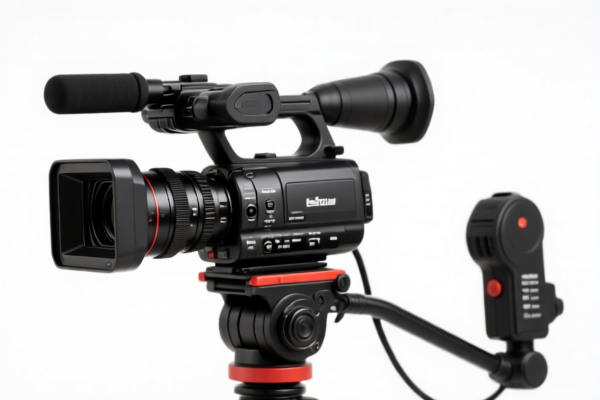
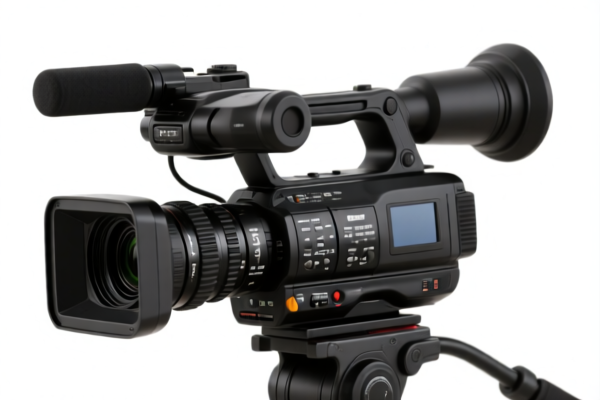
AI Analysis
🎥 Body Mounted Video Cameras (Body Worn Cameras)
🌐 HS Code Reference & Customs Clearance Guide | 2026 Latest Tariff Analysis | Professional Strategy for BWCs
📌 I. Product Definition & Classification: What Exactly is a "Body Mounted Video Camera"?
Body Mounted Video Cameras (BWCs), often referred to as Body Worn Cameras (BWCs) or Body Cams, are compact, wearable electronic devices designed to capture audio and video from the wearer’s perspective. They are widely used by law enforcement, security personnel, and media professionals.
In international trade, the classification hinges on two critical factors: 1. Primary Function: Is it primarily for static image capture (photography) or moving image/video capture (cinematography/recording)? 2. Form Factor & Interface: Does it have a lens system comparable to a traditional camera, or is it a digital video camera integrated with other features?
⚠️ Key Distinction Point:
- If the device is primarily used to capture still images (even if it has video capabilities) and meets the definition of a "digital still camera" → It may fall under 9006.
- If the device is primarily used to capture moving images/video (cinematography, recording, broadcasting) → It falls under 8525 (Transmission apparatus for radio-telephony/telegraphy, including wireless broadcast systems; television cameras, digital cameras and video camera recorders).
- Crucial Note: Modern "Body Cams" are almost exclusively video recording devices. Therefore, they are most accurately classified under Chapter 85, not Chapter 90.
📦 II. HS Code Classification Details (2026 Latest Tariff Authority Cross-Reference)
Based on the provided <DATA>, here is the detailed breakdown of why specific HS Codes apply and their corresponding tax implications.
1. 🎯 HS Code: 8525.89.50.30
- Classification Logic: This code is designated for "Other" cameras within the digital video camera category. The summary states that the use case of the camera highly matches the classification explanation for video cameras, with no conflict in material or form. This is a strong fit for dedicated body-mounted video recorders.
- Applicable Scenario: Dedicated law enforcement body cams, security body cams, or specialized recording devices that do not fit into more specific sub-headings like "action cameras" (if a specific code existed) or standard consumer camcorders.
- Total Tax Rate: 35.0%
| Item | Content |
|---|---|
| Base Tariff | 0.0% |
| Section 301 Tariff | 25.0% |
| Section 122 Tariff | 10.0% |
| Total Effective Rate | 35.0% |
| Calculation Basis | CIF Value × 35% |
📌 Interpretation:
- This classification treats the body cam as a digital video camera recorder.
- The 25% Section 301 tariff is the major driver of cost.
- The 10% Section 122 tariff applies specifically to certain Chinese-origin electronics.
- Total: 35%. This is a high-cost classification, but it is accurate for dedicated video recording devices.
2. 🎯 HS Code: 8525.89.50.50
- Classification Logic: This is a catch-all ("Other") category for video cameras, digital cameras, and television cameras. The summary confirms that the product’s use as a camera device fits the definition of video cameras, and there is no material or form conflict. It is a safe, generic fallback for body cams that don’t fit more specific descriptions.
- Applicable Scenario: General-purpose body worn cameras, action cameras worn on the body, or devices where the primary function is unambiguous video recording.
- Total Tax Rate: 35.0%
| Item | Content |
|---|---|
| Base Tariff | 0.0% |
| Section 301 Tariff | 25.0% |
| Section 122 Tariff | 10.0% |
| Total Effective Rate | 35.0% |
| Calculation Basis | CIF Value × 35% |
📌 Note:
- Identical tax treatment to8525.89.50.30.
- Both codes fall under 8525.89.50, which is the subheading for "Digital cameras and video camera recorders."
- The distinction between.30and.50is often administrative or based on slight nuances in product features, but the tariff impact is identical.
3. 🎯 HS Code: 8525.89.40.00
- Classification Logic: This code is for digital still image cameras. However, the summary notes that cameras belong to image capture equipment and fit the definition of digital static image cameras, with no material conflict. Warning: If your BWC is primarily a video recorder, using this code might be considered misclassification unless the device is marketed/used primarily for still photography.
- Applicable Scenario: Body cams that are primarily still cameras with minor video capabilities, or devices where the "still image" function is dominant. Use with caution for BWCs.
- Total Tax Rate: 17.5%
| Item | Content |
|---|---|
| Base Tariff | 0.0% |
| Section 301 Tariff | 7.5% |
| Section 122 Tariff | 10.0% |
| Total Effective Rate | 17.5% |
| Calculation Basis | CIF Value × 17.5% |
📌 Critical Alert:
- Risk of Misclassification: If Customs determines the device is primarily for video, they will reclassify it to8525.89.50(35% tax), leading to back taxes + penalties.
- Only use this if the device is explicitly a digital still camera with video as a secondary feature.
- Lower tax rate (17.5%) is attractive but high risk for dedicated body cams.
4. 🎯 HS Code: 9006.59.60.00
- Classification Logic: This code falls under Chapter 90 (Optical, photographic, cinematographic instruments). It is for non-automatic film cameras or specific types of cameras not covered in 8525. The summary states the product name is "camera," belonging to the camera category, and fits the scope of non-auto-focus cameras. Note: This is an older or less common classification for modern digital body cams.
- Applicable Scenario: Older film body cams, or specific non-digital cameras. For modern digital body cams, this is less likely to be accepted by US Customs unless the device has significant optical/mechanical components not typical of digital sensors.
- Total Tax Rate: 16.8%
| Item | Content |
|---|---|
| Base Tariff | 6.8% |
| Section 301 Tariff | 0.0% |
| Section 122 Tariff | 10.0% |
| Total Effective Rate | 16.8% |
| Calculation Basis | CIF Value × 16.8% |
📌 Caution:
- Lower Base Tariff (6.8%) but no Section 301.
- Risk: Modern digital body cams are digital electronic devices, not purely optical/mechanical. Customs may reject this code, forcing reclassification to 8525.
- Not recommended for standard digital BWCs.
5. 🎯 HS Code: 9006.59.40.60
- Classification Logic: Another catch-all in Chapter 90 for "Other" cameras. The summary states the product name matches the camera definition, belonging to other catch-all categories, with no material/form conflict. Similar to
9006.59.60.00, this is a less ideal fit for digital video body cams. - Applicable Scenario: Generic or unspecified cameras that don’t fit other 9006 subheadings. Again, digital body cams are better suited for 8525.
- Total Tax Rate: 21.5%
| Item | Content |
|---|---|
| Base Tariff | 4.0% |
| Section 301 Tariff | 7.5% |
| Section 122 Tariff | 10.0% |
| Total Effective Rate | 21.5% |
| Calculation Basis | CIF Value × 21.5% |
📌 Note:
- Moderate tax rate (21.5%).
- Risk: High risk of misclassification for digital video devices.
- If Customs accepts this, it saves compared to 35%, but the legal basis is weaker for digital cameras.
💰 III. 2026 Latest Tariff Rate Breakdown (Including Surcharges, Policy Add-ons)
✅ Applicable Country: United States (US)
✅ Origin: China (CN)
✅ Effective Date: November 10, 2025 (and subsequent imports)
🎯 Key Takeaway: 8525 vs. 9006
| HS Code | Product Type | Base Tariff | Section 301 | Section 122 | Total Tax | Risk Level |
|---|---|---|---|---|---|---|
8525.89.50.30 |
Digital Video Camera | 0.0% | 25.0% | 10.0% | 35.0% | ✅ Low Risk (Accurate) |
8525.89.50.50 |
Digital Video Camera (Other) | 0.0% | 25.0% | 10.0% | 35.0% | ✅ Low Risk (Accurate) |
8525.89.40.00 |
Digital Still Camera | 0.0% | 7.5% | 10.0% | 17.5% | ⚠️ High Risk (Misclassification if primarily video) |
9006.59.60.00 |
Optical/Mechanical Camera | 6.8% | 0.0% | 10.0% | 16.8% | ⚠️ High Risk (Not digital) |
9006.59.40.60 |
Other Cameras | 4.0% | 7.5% | 10.0% | 21.5% | ⚠️ High Risk (Not digital) |
📌 Critical Analysis:
- Body Mounted Video Cameras are primarily VIDEO recording devices.
- Chapter 85 (8525) is the correct chapter for digital video cameras.
- Chapter 90 (9006) is for optical/mechanical cameras or photographic equipment. While some digital cameras can be classified here, video-centric devices are strongly pushed to 8525.
- Choosing 8525 (35% tax) is the safest and most compliant approach.
- Choosing 9006 or 8525.40 (17.5% or lower) carries a high risk of audit, penalty, and back payment if Customs determines the device is a video recorder.
🛠️ IV. Customs Clearance Practical Advice (Battle-Proven Pitfall Avoidance)
✅ 1. Documentation Checklist (Non-negotiable)
| Document | Required | Notes |
|---|---|---|
| ✅ Product Specification Sheet | ✔️ | Must clearly state Video Resolution, Still Resolution, Primary Function. Highlight "Video Recording" if applicable. |
| ✅ Product Photos (Front, Back, Side) | ✔️ | Show mounting clips, lenses, screens. Must look like a video recorder. |
| ✅ Commercial Invoice | ✔️ | Use precise description: "Digital Body Worn Video Camera, Model XYZ, Capable of 1080p Video Recording." |
| ✅ User Manual / Datasheet | ✔️ | Proves primary function is video recording. |
| ✅ Bill of Lading / Air Waybill | ✔️ | Standard shipping docs. |
| ✅ Origin Certificate (if applicable) | ✔️ | For potential tariff mitigation (though limited for CN origin). |
✅ 2. Classification Strategy (Key Rules)
🔥 “Primary Function Rules All: Video = 8525, Still = 8525/9006, Be Honest!”
| Scenario | Recommended HS Code | Tax Rate | Risk |
|---|---|---|---|
| Primary Function: Video Recording (e.g., BWC, Dashcam, Action Cam) | 8525.89.50.30 or 8525.89.50.50 |
35% | ✅ Low (Compliant) |
| Primary Function: Still Photography (with minor video) | 8525.89.40.00 |
17.5% | ⚠️ Medium (Must prove stills are primary) |
| Non-Digital / Film Camera | 9006.59.60.00 or 9006.59.40.60 |
16.8% - 21.5% | ⚠️ High (If digital, rejected) |
| Mixed Use / Ambiguous | Apply for Advance Ruling | N/A | ✅ Safest |
✅ 3. Special Case Handling
| Situation | Recommendation |
|---|---|
| OEM Body Cams | Provide client PO, design specs. Clarify if it’s for law enforcement (often video-focused). |
| Action Cameras (GoPro-style) | Classify under 8525.89.50 (Video Camera), not 9006. Tax: 35%. |
| Body Cams with WiFi/Bluetooth | Still 8525. The transmission function doesn’t change the primary "video camera" classification. |
| Body Cams with Photo Only | If truly no video capability, consider 9006 or 8525.89.40. But most BWCs have video. |
| Import for Law Enforcement | No special tariff exemption for BWCs in the US. Standard tariffs apply. |
🌍 V. Global Market Comparison (2026 Latest)
| Country/Region | Recommended HS Code | Tariff (CN Origin) | Certifications | Notes |
|---|---|---|---|---|
| 🇺🇸 USA | 8525.89.50 |
35% | FCC, CE | 35% is standard for video cameras. |
| 🇨🇳 China | 8525.89.50 |
5% | CCC | Low import duty, but export from CN may have VAT. |
| 🇪🇺 EU | 8525.89.50 |
0% (Most) | CE, RoHS | No Section 301/122 equivalents. |
| 🇬🇧 UK | 8525.89.50 |
0% - 4% | UKCA | Post-Brexit tariffs vary, generally low. |
| 🇨🇦 Canada | 8525.89.50 |
0% (Most) | IC, CE | No major surcharges. |
📌 Conclusion:
- USA is the most expensive market for Body Cams due to Section 301 (25%) and Section 122 (10%) tariffs.
- 35% total tax is unavoidable for compliant classification under 8525.
- EU/UK/Canada offer significant savings, but USA compliance is critical.
📌 VI. Common Errors & Pitfall Avoidance (Blood-Learned Lessons)
❌ Error 1: Classifying BWC as 9006 to save taxes
👉 Consequence: Customs flags it as "Digital Camera," reclassifies to 8525, charges 17.5% more + penalties.
Lesson: Video = 8525. Do not gamble.
❌ Error 2: Calling it "Photo Camera" when it’s a "Video Camera"
👉 Consequence: Audit failure. Back taxes of 17.5% (35% - 17.5%) per unit.
Lesson: Primary function rules. If it records video, declare video.
❌ Error 3: Splitting BWC from accessories (mounts, batteries)
👉 Consequence: If shipped together, they are one unit. Splitting leads to higher total duty on components.
Lesson: Ship as one article. Declare main item + accessories.
❌ Error 4: Ignoring Section 122 Tariff
👉 Consequence: Missing 10% tax. Back taxes + interest.
Lesson: Section 122 applies to 8525.89.50. Factor it in.
✅ Correct Declaration:
"Digital Body Worn Video Camera, Model BWC-100, Records 1080p Video, Includes Mounting Clip and USB Cable, FCC Certified, Model No. XYZ"
🎯 VII. Conclusion: Precision Classification, Cost Control, Risk Mitigation!
🎯 Remember the Mantra:
🔹 “Video is 8525, Still is 8525/9006, Primary Function Rules All!”
🔹 “35% Tax for Video is Fair, 17.5% for Still is Risky, Don’t Gamble with Compliance!”
🔹 “Section 301 + 122 = 35%, Declare Correctly, Sleep Well!”
📌 Pro Tip:
If you are unsure whether your device is "Primary Video" or "Primary Still," apply for a CBP Advance Ruling. It costs ~$2,000 but saves thousands in penalties and back taxes.
📣 Immediate Action:
📞 Contact a Customs Broker
📄 Provide Product Specs & Photos
🚀 Declare Accurately under 8525.89.50
💰 Budget for 35% Total Duty
✨ Professional Customs Clearance Starts with Accurate Classification!
💼 Your Every Dollar, Worth Being Precisely Calculated!
Customer Reviews
About HS Code Classification
The Harmonized System (HS) is an internationally standardized nomenclature developed by the World Customs Organization (WCO) to classify traded products. Over 200 countries use the HS system as the basis for customs tariffs, trade statistics, and import/export regulations.
Each HS code follows a hierarchical structure:
- Chapter (2 digits) — Broad category of goods (e.g., Chapter 84: Machinery and Mechanical Appliances)
- Heading (4 digits) — More specific grouping within the chapter
- Subheading (6 digits) — Internationally standardized breakdown, used by all WCO member countries
- National subdivisions (8-10 digits) — Country-specific extensions for further classification, such as US HTSUS 10-digit codes
Correct HS code classification is essential for smooth customs clearance, accurate duty payment, and compliance with trade regulations. Misclassification can lead to customs delays, overpayment of duties, or penalties.
When importing from CN to US, the applicable tariff rates may include:
- Most-Favored-Nation (MFN) rate — The standard duty rate applied to WTO members
- General rate — Applied to countries without trade agreements
- Trade remedy duties — Additional tariffs such as Section 301 (anti-dumping), Section 232 (national security), or countervailing duties
The information provided on this page is for reference purposes only. For official classification, please consult with your local customs authority or a licensed customs broker.