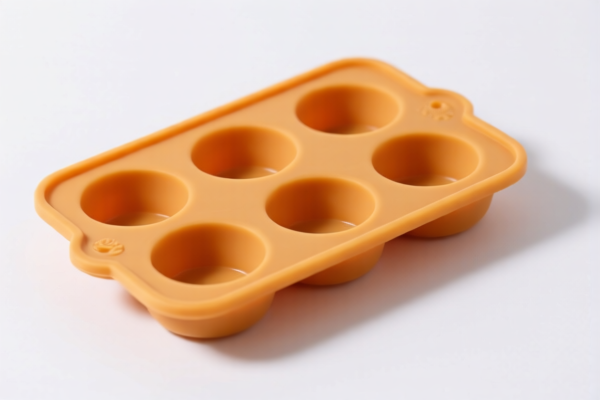
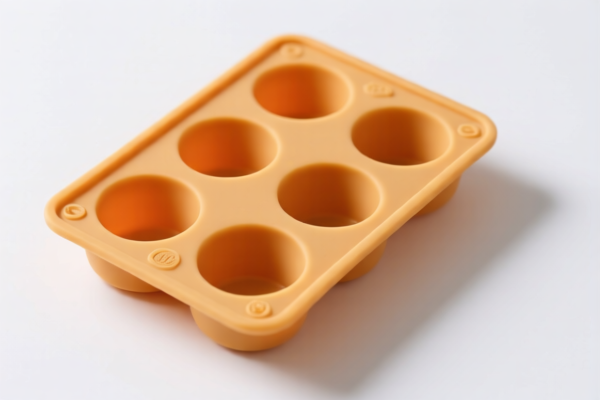
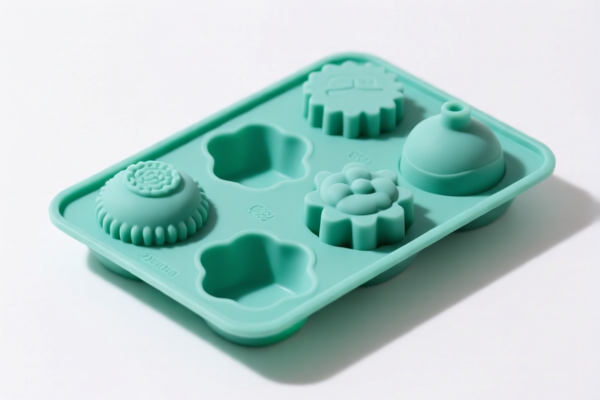
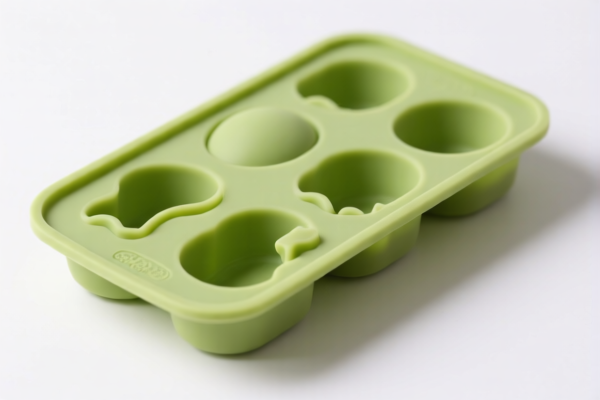
bookmark silicone mold
CN → US| HS Code | Tariff Rate | Origin | Destination | Doc |
|---|---|---|---|---|
| 3926904000 | 12.8% | CN | US | Official Doc |
| 3926909989 | 22.8% | CN | US | Official Doc |
Product Images
AI Analysis
🍞 Bookmark Silicone Mold (Silicone Baking Molds for Crafts & Baking)
🌐 HS Code Reference & Customs Clearance Guide | 2026 Latest Tariff Analysis | Professional Clearance Strategy
📌 I. Product Definition & Classification: What is a "Silicone Mold"?
A Bookmark Silicone Mold is typically a flexible, food-grade or craft-grade silicone rubber product used to cast shapes (such as bookmarks, coasters, jewelry, or small decorative items) from materials like epoxy resin, polymer clay, chocolate, or soap.
In international trade, these items are classified under Chapter 39 (Plastics and Articles Thereof) because the primary material is silicone rubber, which is a plastic. Specifically, they fall under Heading 3926 ("Other articles of plastics...").
⚠️ Critical Distinction:
- If the item is a finished mold (shaped, usable for casting) → It is classified as an "Article of Plastic" (3926.90).
- If the item is raw silicone sheets or blocks → It would be classified under Heading 3952 (Primary Forms).
- Note: Even if marketed as "craft" or "kitchen" accessories, as long as it is a finished silicone product not elsewhere specified, it falls under 3926.90.
📦 II. HS Code Classification Details (2026 Latest Tariff Authority Comparison)
Based on the provided data, there are two specific HS Codes under Chapter 39 that apply to "Other articles of plastics." The classification depends on the specific nature and intended use of the mold, particularly whether it is considered an "imitation gemstone" (rare for molds, but possible if the mold creates gemstones and is itself classified by output? No, molds are inputs) or just a generic plastic article.
However, looking at the provided <DATA>, the descriptions are slightly ambiguous but standard for US HTSUS subheadings:
| HS Code | Product Description | Applicability for Silicone Molds | Reasoning |
|---|---|---|---|
3926.90.40.00 |
Other articles of plastics: Other: Imitation gemstones | ❌ Unlikely | Silicone molds are tools to create items, not "imitation gemstones" themselves. Unless the mold is itself a decorative piece shaped like a gem (very rare), this code is incorrect. |
3926.90.99.89 |
Other articles of plastics: Other: Other Other | ✅ Most Likely | This is the residual category for plastic articles not specified elsewhere. Silicone molds (for baking, crafting, resin) are general "articles of plastics" and do not fit into specific subheadings like tableware (3924) or office supplies (3926.10/20). Therefore, they default to this "Other" category. |
🔍 Key Insight:
- Silicone molds are almost universally classified under 3926.90.99 (or similar residual codes like 3926.90.99.99 in some years, but here we have3926.90.99.89).
- The code3926.90.40.00is specifically for imitation gemstones (finished jewelry items), not the molds used to make them. Do not confuse the product made with the tool used.
💰 III. 2026 Latest Tariff Rate Breakdown (Detailed Tax Clauses)
✅ Applicable Country: United States (US)
✅ Origin: China (CN)
✅ Effective Date: Based on current trade data (2025-2026 context)
🎯 1. 3926.90.99.89 —— Other Plastic Articles (Silicone Molds)
| Item | Content |
|---|---|
| Base Tariff Rate | 5.3% (Ad Valorem) |
| Section 301 Additional Tariff | +7.5% (Specific to this HS Code for Chinese Origin) |
| Total Tariff Rate | 12.8% |
| Tax Calculation | CIF Value × 12.8% |
| De Minimis Eligibility | ✅ Yes (If value < $800 per shipment, may enter duty-free under Section 321, subject to policy changes) |
| Legal Authority Path | USITC:3926.90.99.89 → Trade Relations: China (Section 301) |
📌 Explanation:
- The 5.3% is the standard Most Favored Nation (MFN) rate for general plastic articles.
- The 7.5% is the Section 301 additional duty imposed on specific plastic goods from China. Note: Not all plastic items are subject to 301 duties; this 7.5% applies specifically to subheadings in the 3926.90.99 range for certain Chinese goods.
- Total Cost Impact: For every $1,000 USD of silicone molds, you pay $128 USD in duties.
🎯 2. 3926.90.40.00 —— Imitation Gemstones (Incorrect for Molds)
⚠️ Warning: Do not use this code unless you are importing finished imitation jewelry made of plastic/resin, not molds.
- Total Tax: 0.0%
- Risk: Misclassification can lead to seizure, fines, and penalties for customs fraud. The difference in tax (0% vs 12.8%) is significant, but the legal risk of under-declaring is far higher.
🛠️ IV. Customs Clearance Practical Advice (Proven Pitfall Avoidance)
✅ 1. Required Documentation Checklist
| Document | Mandatory? | Description |
|---|---|---|
| ✅ Commercial Invoice | ✔️ | Must clearly state: "Silicone Molds for Resin/Baking/Crafts," not just "Plastic Products." |
| ✅ Packing List | ✔️ | Detail the number of molds, material (100% Food-Grade Silicone or Non-Food Grade). |
| ✅ Product Photos | ✔️ | Show the mold in use or empty. Must clearly show it is a mold, not a jewelry piece. |
| ✅ Material Safety Data Sheet (MSDS) | ✔️ | If marketed as "Food Grade," FDA compliance documents may be requested by CBP or FDA. |
| ✅ Country of Origin Certificate | ✔️ | Critical for proving Chinese origin to apply the correct 7.5% Section 301 rate (or seek exemption if applicable). |
✅ 2. Declaration Tips (Key Mantra)
🔥 "Mold, Not Jewel; Silicone, Not Stone; Declare Use Clearly!"
| Scenario | Correct Declaration | Incorrect Declaration | Consequence |
|---|---|---|---|
| Importing Silicone Molds | "Silicone Baking/Craft Molds, HS 3926.90.99.89" | "Plastic Jewelry" or "Imitation Gems" | High risk of audit; 0% vs 12.8% discrepancy triggers investigation. |
| Importing Finished Resin Jewelry | "Plastic Imitation Gemstones, HS 3926.90.40.00" | "Silicone Molds" | Correct tax (0%), but if actually molds, penalty for misclassification. |
| Food-Grade Silicone Molds | Mention "FDA Compliant" in specs | Ignore material safety | May be held up by FDA/CBP for safety checks. |
✅ 3. Special Circumstances Handling
| Situation | Handling Advice |
|---|---|
| Food-Grade vs. Craft-Grade | If for baking, ensure FDA 21 CFR 177.2600 compliance. CBP may request lab tests. |
| Set of Molds | Declare as a single unit if sold together, or individually if sold separately. Ensure total value is accurate. |
| Sample Shipments | Under $800, may qualify for Section 321 De Minimis (0% duty, no formal entry). Mark as "Sample" but ensure it's legitimate. |
| Chinese Origin | The 7.5% additional tariff applies. No exemptions for silicone molds currently unless under specific GSP programs (which are largely suspended for China). |
🌍 V. Global Market Comparison (2026 Latest)
| Country/Region | Recommended HS Code | Tariff Rate | Certification Required | Notes |
|---|---|---|---|---|
| 🇺🇸 USA | 3926.90.99.89 |
12.8% (5.3% + 7.5%) | FDA (if food-grade) | Section 301 duty applies. |
| 🇨🇳 China | 3926.90.99.89 |
~10-15% (Import) | CCC (if certain types) | For importing into China. |
| 🇪🇺 EU | 3926.90.99 |
0% (Most Favored Nation) | REACH, LFGB (food) | No additional tariffs. Strict chemical regulations. |
| 🇬🇧 UK | 3926.90.99 |
0% | UKCA | Post-Brexit tariffs are generally low for plastics. |
| 🇨🇦 Canada | 3926.90.99 |
0% | Health Canada | CUSMA allows duty-free entry. |
📌 Conclusion:
- The USA is the most expensive market for silicone molds from China due to the 7.5% Section 301 surcharge.
- EU, UK, Canada, and Australia offer 0% tariffs, making them more competitive for Chinese silicone mold exporters.
📌 VI. Common Mistakes & Pitfall Avoidance (Lessons Learned)
❌ Mistake 1: Classifying silicone molds as "Imitation Gemstones" (3926.90.40.00) to pay 0% tax.
👉 Consequence: Customs will reject the declaration. The mold is a tool, not a jewelry item. This is misclassification fraud.
❌ Mistake 2: Ignoring the "Food-Grade" claim.
👉 Consequence: If you claim "Food Grade" but cannot provide FDA compliance documents, the shipment may be detained by FDA/CBP.
❌ Mistake 3: Failing to declare Section 301 liability.
👉 Consequence: Under-declaring duties by 7.5% leads to penalties and back-taxes upon audit.
✅ Correct Practice:
"Silicone Resin Casting Molds, 100% Silicone, Not for Food Use, HS 3926.90.99.89, Origin China"
🎯 VII. Conclusion: Professional Declaration Saves Money and Time
🎯 Remember the Mantra:
🔹 "Molds are Tools, Not Gems; 12.8% is the Truth for China; 0% is the Goal in EU!"
🔹 "De Minimis under $800 is your Friend; Keep Papers Ready!"
📌 Pro Tip:
If you are importing small quantities (under $800) for personal use or small business samples, utilize the Section 321 De Minimis entry to avoid duties entirely. For bulk imports, budget for the 12.8% total duty.
📣 Immediate Action:
📞 Verify Material Grade: Is it Food-Grade or Craft-Grade?
📋 Prepare FDA Documents if applicable.
🚀 Declare Correctly: Use3926.90.99.89for molds to ensure smooth clearance.
✨ Professional Customs Clearance Starts with Accurate Classification!
💼 Your Profit Margin Depends on Precision!
Customer Reviews
About HS Code Classification
The Harmonized System (HS) is an internationally standardized nomenclature developed by the World Customs Organization (WCO) to classify traded products. Over 200 countries use the HS system as the basis for customs tariffs, trade statistics, and import/export regulations.
Each HS code follows a hierarchical structure:
- Chapter (2 digits) — Broad category of goods (e.g., Chapter 84: Machinery and Mechanical Appliances)
- Heading (4 digits) — More specific grouping within the chapter
- Subheading (6 digits) — Internationally standardized breakdown, used by all WCO member countries
- National subdivisions (8-10 digits) — Country-specific extensions for further classification, such as US HTSUS 10-digit codes
Correct HS code classification is essential for smooth customs clearance, accurate duty payment, and compliance with trade regulations. Misclassification can lead to customs delays, overpayment of duties, or penalties.
When importing from CN to US, the applicable tariff rates may include:
- Most-Favored-Nation (MFN) rate — The standard duty rate applied to WTO members
- General rate — Applied to countries without trade agreements
- Trade remedy duties — Additional tariffs such as Section 301 (anti-dumping), Section 232 (national security), or countervailing duties
The information provided on this page is for reference purposes only. For official classification, please consult with your local customs authority or a licensed customs broker.