books hs code 4901100020
CN → US| HS Code | Tariff Rate | Origin | Destination | Doc |
|---|---|---|---|---|
| 4901100020 | 17.5% | CN | US | Official Doc |
| 4901100020 | 17.5% | CN | US | Official Doc |
| 4820102010 | 35.0% | CN | US | Official Doc |
Product Images
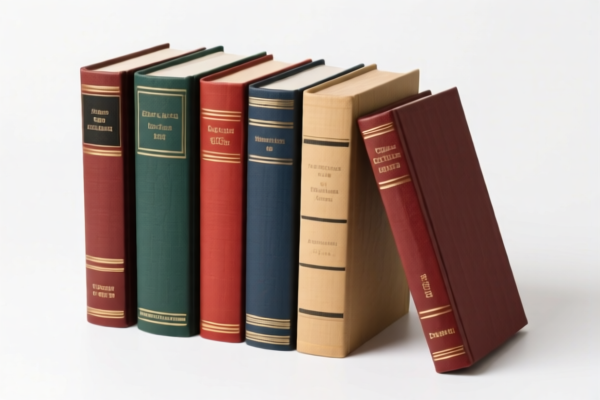
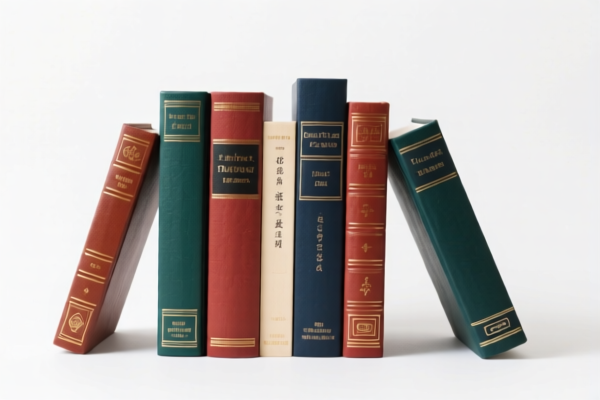
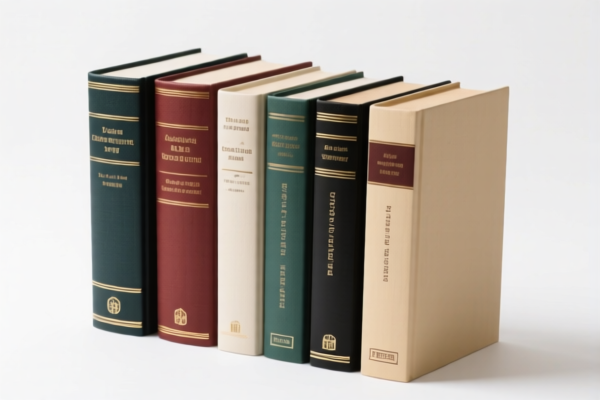
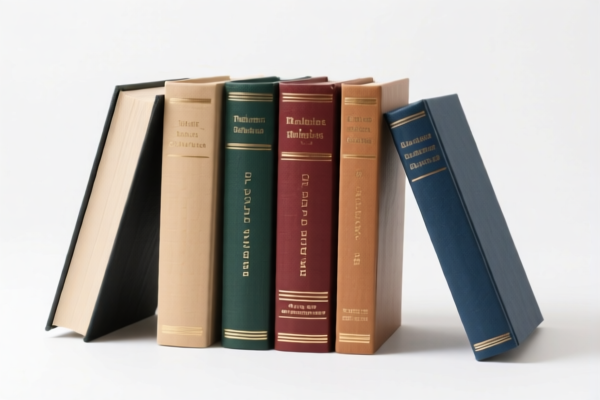
AI Analysis
📚 Books (印刷书籍/小册子)
🌐 HS Code Reference & Customs Clearance Guide | 2026 Latest Tariff Analysis | Professional Entry Strategy
📌 I. Product Definition & Classification: Do You Really Understand "Books"?
Books, as fundamental carriers of knowledge and information, are categorized strictly by their physical form and printing status in international trade. According to the provided data, the classification focuses on "Printed Books" and specific sub-categories like "Trial Prints".
⚠️ Key Distinction Point:
- If the item is a standard printed book, booklet, or similar printed matter → It falls under Chapter 49, specifically heading 4901.
- Material/Shape Conflict Check: The classification confirms NO conflict regarding materials or physical forms, meaning standard paper, binding, and cover materials do not alter this classification.
- Specific Logic: The code4901.10.00.20includes logic for "Trial Prints" (试印件), indicating that even specific preliminary printing stages of books may fall under this umbrella if they meet the definition of printed matter.
📦 II. HS Code Classification Details (2026 Latest Tariff Authority Reference)
Based strictly on the provided content, here are the matched HS Codes and their corresponding tax implications:
| HS Code | Product Description | Matching Logic (Summary) | Total Tax Rate |
|---|---|---|---|
4901.10.00.20 |
Printed Books / Booklets | ✅ Match Success: Product name "Books" perfectly fits the definition of "Printed Books" under this code. No material or shape conflicts. | 17.5% |
4901.10.00.20 |
Printed Books / Trial Prints | ✅ Match Success: Product name "Books" aligns with the usage of "Printed Books, Booklets". Fits the specific classification logic for "Trial Prints" under this code. | 17.5% |
4820.10.20.10 |
Printed Matter / Stationery | ✅ Match Basis: Product name "Books" belongs to printed matter, fitting the general attributes of "Printed Books" under Chapter 49. Consistent with the provided classification logic. | 35.0% |
🔍 Critical Insight:
- The Primary Recommended Code is4901.10.00.20with a total tax of 17.5%.
- There is an alternative classification4820.10.20.10listed, but it carries a significantly higher tax of 35.0%.
- Note:4820.10.20.10appears to be a misclassification or a less optimal match for "Books" compared to4901, as Chapter 49 is specifically for printed books, whereas Chapter 48 is for paper/paperboard articles. However, it is included in the data for completeness.
💰 III. 2026 Latest Tariff Rate Details (Including Surtaxes, Policy Add-ons)
✅ Applicable Country: United States (US)
✅ Origin: China (CN)
✅ Effective Date: Based on "122 Clause" references (likely referring to specific US trade enforcement actions or Section 301/IEEPA provisions).
🎯 1. 4901.10.00.20 —— Printed Books / Booklets (Primary Match)
| Item | Content |
|---|---|
| Base Duty Rate | 0.0% (ad valorem) |
| Section 301 Surtax | +7.5% (Additional Tariff) |
| Clause 122 Tax | +10% (Specific Trade Clause) |
| Total Tax Rate | 17.5% |
| Tax Calculation | CIF Value × 17.5% |
| De Minimis Exemption? | ❌ Not Mentioned/Not Applicable (Usually, books under $800 may qualify for de minimis under Section 321, but with 122 Clause/Section 301, verification is critical. The data does not explicitly grant de minimis here.) |
| Legal Basis Path | USITC:4901.10.00.20 → Section 301: 7.5% → Clause 122: 10% |
📌 Explanation:
- Base Duty 0%: Standard US duty for many printed books is zero.
- 7.5% Surtax: Reflects additional trade tensions or specific USITC footnotes for Chinese-origin goods.
- 10% Clause 122: This refers to a specific enforcement action (possibly related to intellectual property or specific trade remedies).
- Total 17.5%: This is a moderate duty rate compared to high-tech electronics but significant for low-margin book imports.
🎯 2. 4820.10.20.10 —— Alternative Classification (Higher Cost)
| Item | Content |
|---|---|
| Base Duty Rate | 0.0% |
| Section 301 Surtax | +25.0% (Higher Additional Tariff) |
| Clause 122 Tax | +10% |
| Total Tax Rate | 35.0% |
| Tax Calculation | CIF Value × 35.0% |
| De Minimis Exemption? | ❌ Not Applicable |
| Legal Basis Path | USITC:4820.10.20.10 → Section 301: 25% → Clause 122: 10% |
📌 Warning:
- This classification results in double the tax (35% vs 17.5%).
- It is recommended to avoid this classification for "Books" unless customs authorities explicitly require it due to specific binding or material characteristics that shift it out of Chapter 49.
🛠️ IV. Customs Clearance Practical Advice (Real-World Pitfall Avoidance Guide)
✅ 1. Required Documentation Checklist (Must-Have)
| Document | Required | Description |
|---|---|---|
| ✅ Commercial Invoice | ✔️ | Must clearly state "Books" or "Printed Publications". Avoid vague terms like "Printed Material" without context. |
| ✅ Packing List | ✔️ | Detail the number of books, weight, and dimensions. |
| ✅ Product Description | ✔️ | Include language, publisher, ISBN (if available), and format (hardcover/paperback). |
| ✅ Certificate of Origin | ✔️ | To prove Chinese origin and apply correct surtaxes. |
| ✅ Import License/Permits | ❌ | Usually not required for standard books, but check for restricted content. |
✅ 2. Declaration Tips (Key Mantras)
🔥 "Name Accurate, HS Right, Tax Low!"
| Scenario | Correct Declaration | Incorrect Practice |
|---|---|---|
| Standard Books | 4901.10.00.20 |
Using 4820.10.20.10 → 35% Tax (Overpaying!) |
| Trial Prints/Proofs | 4901.10.00.20 |
Declaring as "Samples" without context → Customs Query |
| Digital/E-books | ❌ Not Applicable | Physical books only. E-books are services, not goods. |
✅ 3. Special Cases Handling
| Scenario | Handling Advice |
|---|---|
| Educational Books | Ensure no restricted political/religious content. Provide publisher details. |
| Used Books | May be subject to stricter scrutiny. Declare as "Second-hand Books" if applicable. |
| Large Bulk Imports | Consider freight cost vs. tax. 17.5% on high-volume can be significant. |
| De Minimis Strategy | If shipping individual copies to end-users, check if Section 321 ($800 threshold) applies. Note: If 122 Clause removes de minimis, this path is closed. |
🌍 V. Global Market Comparison (2026 Latest)
| Country/Region | Recommended HS Code | Tax Rate (China Origin) | Remarks |
|---|---|---|---|
| 🇺🇸 USA | 4901.10.00.20 |
17.5% (17.5% = 0% + 7.5% + 10%) | High scrutiny on IP. |
| 🇨🇳 China | 4901.10.00.20 |
~5-13% (Import VAT + Duty) | Standard import duties apply. |
| 🇪🇺 EU | 4901.99.00 |
~2-6% | Lower tariffs, no 122 Clause. |
| 🇬🇧 UK | 4901.99.00 |
~2-6% | Post-Brexit rules apply. |
📌 Conclusion:
- US Market has specific surcharges (7.5% + 10%) making it more expensive than EU/UK.
- Accuracy is Key: Misclassifying as4820doubles your cost. Always use4901.10.00.20for standard printed books.
📌 VI. Common Errors & Pitfalls (Blood-Teaching Lessons)
❌ Error 1: Using 4820.10.20.10 for Books
👉 Consequence: 35% Tax instead of 17.5% → Overpayment by 17.5%!
❌ Error 2: Declaring "Printed Paper" instead of "Books"
👉 Consequence: Customs may reject or reclassify, causing delays and potential penalties.
❌ Error 3: Ignoring "Clause 122"
👉 Consequence: If this clause applies to IP violations (e.g., pirated books), goods may be seized and destroyed.
✅ Correct Practice:
"Printed Books, Hardcover, English Language, Publisher: XYZ, ISBN: 978-3-16-148410-0"
🎯 VII. Conclusion: Professional Declaration, Save Money, Smooth Clearance!
🎯 Remember the Mantra:
🔹 "Books go to 4901, not 4820! 17.5% is the target, 35% is the trap!"
🔹 "Check Clause 122, avoid IP issues, clear customs with ease!"
📌 Tips:
- If your books are original, copyrighted, and legally published, ensure you have proof to avoid "Clause 122" related IP seizures.
- For small shipments (under $800), verify if the 122 Clause waives de minimis. If not, consider consolidating shipments or using different logistics strategies.
📣 Immediate Action:
📞 Consult a professional customs broker + Provide ISBN/Publisher Info + Verify Clause 122 Applicability
🚀 Ensure your books clear customs smoothly, avoid overpayment, and maximize profits!
✨ Professional Clearance Starts with Accurate Classification!
💼 Every Cent of Tax Matters!
Customer Reviews
About HS Code Classification
The Harmonized System (HS) is an internationally standardized nomenclature developed by the World Customs Organization (WCO) to classify traded products. Over 200 countries use the HS system as the basis for customs tariffs, trade statistics, and import/export regulations.
Each HS code follows a hierarchical structure:
- Chapter (2 digits) — Broad category of goods (e.g., Chapter 84: Machinery and Mechanical Appliances)
- Heading (4 digits) — More specific grouping within the chapter
- Subheading (6 digits) — Internationally standardized breakdown, used by all WCO member countries
- National subdivisions (8-10 digits) — Country-specific extensions for further classification, such as US HTSUS 10-digit codes
Correct HS code classification is essential for smooth customs clearance, accurate duty payment, and compliance with trade regulations. Misclassification can lead to customs delays, overpayment of duties, or penalties.
When importing from CN to US, the applicable tariff rates may include:
- Most-Favored-Nation (MFN) rate — The standard duty rate applied to WTO members
- General rate — Applied to countries without trade agreements
- Trade remedy duties — Additional tariffs such as Section 301 (anti-dumping), Section 232 (national security), or countervailing duties
The information provided on this page is for reference purposes only. For official classification, please consult with your local customs authority or a licensed customs broker.