bookshelf
CN → US| HS Code | Tariff Rate | Origin | Destination | Doc |
|---|---|---|---|---|
| 9403200082 | 85.0% | CN | US | Official Doc |
| 4421919880 | 38.3% | CN | US | Official Doc |
| 7326908688 | 87.9% | CN | US | Official Doc |
| 7326903500 | 92.8% | CN | US | Official Doc |
| 3926100000 | 15.3% | CN | US | Official Doc |
Product Images
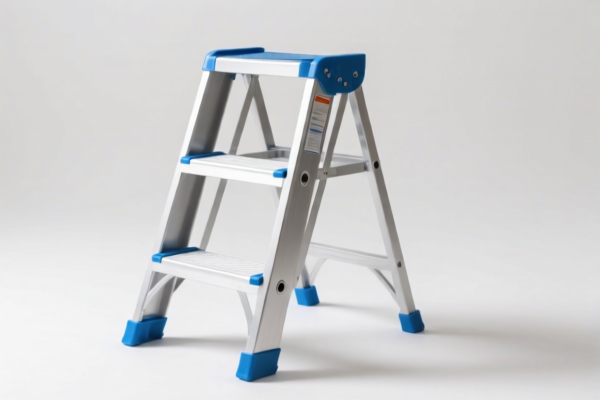


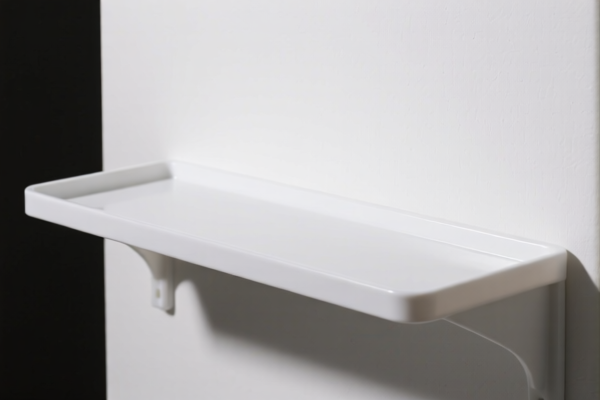
AI Analysis
📚 Bookshelf (Wooden or Metal Storage for Books & Media)
🌐 HS Code Reference & Clearance Guide | 2026 Taxation Breakdown | Professional Customs Strategy
📌 I. Product Definition & Classification: Do You Know Your Bookshelf?
A bookshelf is a versatile furniture item designed to store books, files, decorative objects, or media. In international trade, it is primarily classified under Chapter 94 (Furniture) if it is a standalone unit, or Chapter 44 (Wood) if it falls under "other articles of wood."
Two Main Categories:
1. Wooden Bookshelves: Made primarily of wood (solid, particleboard, MDF).
* Classification Logic: Falls under 9403.60 (Other wooden furniture) or 4421.99 (Other articles of wood) if not strictly "furniture" by definition (rare for standalone units).
2. Metal Bookshelves: Made of steel, aluminum, or other metals (often for industrial or commercial use).
* Classification Logic: Falls under 9403.20 (Metal furniture).
⚠️ Key Distinction:
- If the unit is wooden and designed for domestic or office use → 9403.60 (0% Base, +25% Supplementary).
- If the unit is metal (specifically steel racks/display shelves) → 9403.20 (0% Base, +50% Supplementary for Steel, +75% Total).
- Bamboo bookshelves: Often treated as wood but may fall under 4421.91 (Bamboo articles) depending on specific construction.
📦 II. HS Code Classification Details (2026 Official Tariff Data)
Based on your provided dataset, here are the specific classifications and tax implications for bookshelves:
| HS Code | Product Description | Material | Tax Detail (Base + Supplementary) | Total Tax |
|---|---|---|---|---|
| 9403.60.80.93 | Other wooden furniture (Bookshelves) | Wood | 0.0% + 25.0% | 25.0% |
| 9403.20.00.82 | Other metal furniture: Steel racks/shelves | Steel/Metal | 0.0% + 50.0% (Steel/Al/Cu) | 75.0% |
| 4421.91.98.80 | Other articles of wood: Of bamboo | Bamboo | 3.3% + 25.0% | 28.3% |
| 4421.99.98.80 | Other articles of wood: Other | Wood (Non-standard) | 3.3% + 25.0% | 28.3% |
🔍 Critical Analysis:
- Wooden Bookshelves are the most cost-effective under the 9403 category (only 25% total tax).
- Metal/Steel Bookshelves attract the highest penalty (75% total tax) due to the specific "Steel/Al/Cu" supplementary tariff clause.
- Bamboo Wood falls into a hybrid category with a higher base rate (3.3%) but the same supplementary tax.
💰 III. 2026 Tax Rate Breakdown & Policy Context
✅ Scope: Imports from China (CN) to USA (US) (Implied by "Supplementary Tax" context).
✅ 生效时间: 2025/2026 Period (Current Trade War Tariffs).
🎯 1. Wooden Bookshelves (HS: 9403.60.80.93)
The "Sweet Spot" for Furniture Imports
| Item | Content |
|---|---|
| Base Duty (MFN) | 0.0% |
| Section 301 Supplementary Tax | +25.0% |
| Total Effective Rate | 25.0% |
| Legal Basis | "Other furniture and parts thereof: Other wooden furniture" |
📌 Explanation:
- Wooden furniture enjoys a 0% base rate under standard MFN treatment.
- However, Section 301 tariffs add a flat 25% penalty on Chinese-origin goods.
- Result: A $10,000 bookshelf incurs $2,500 in tariffs.
🎯 2. Steel Racks & Shelving (HS: 9403.20.00.82)
The "High-Cost Trap"
| Item | Content |
|---|---|
| Base Duty (MFN) | 0.0% |
| Section 301 Supplementary Tax | +50.0% (Specific for Steel/Al/Cu) |
| Total Effective Rate | 75.0% |
| Legal Basis | "Counters, lockers, racks... Steel racks... (50% penalty applies)" |
📌 Explanation:
- Critical Warning: If your "bookshelf" is made of steel or classified as a rack, the tax skyrockets to 75%.
- This is 3x higher than the wooden equivalent.
- Calculation: A $10,000 steel shelf = $7,500 in tariffs alone.
🎯 3. Bamboo & Other Wood Articles (HS: 4421.91/99)
The "Niche Material" Category
| Item | Content |
|---|---|
| Base Duty (MFN) | 3.3% |
| Section 301 Supplementary Tax | +25.0% |
| Total Effective Rate | 28.3% |
| Applicability | Bamboo products or wood items not strictly defined as "furniture." |
🛠️ IV. Customs Clearance & Practical Strategy
✅ 1. Classification Strategy: Avoid the 75% Trap
| Scenario | Correct HS Code | Risk of Misclassification |
|---|---|---|
| Standard Wooden Bookshelf | 9403.60.80.93 (25%) |
Low risk if material is clearly wood. |
| Steel Bookshelf / Racking System | 9403.20.00.82 (75%) |
High Risk. Must verify "Steel" component >50%. |
| Bamboo Bookshelf | 4421.91.98.80 (28.3%) |
Often confused with wood furniture; requires bamboo proof. |
| Disassembled Parts | 4421.99.98.80 (28.3%) |
If sold as "kit" without assembly instructions. |
🔥 Golden Rule:
"Don't call it a rack if it's a bookshelf, and don't use steel if you want 25% tax!"
If possible, use wood composites (MDF/Plywood) instead of steel for the main frame to save 50% in taxes.
✅ 2. Documentation Checklist
| Document | Purpose |
|---|---|
| Material Certificates | Prove if the unit is 100% Wood, Steel, or Bamboo. |
| Construction Diagrams | Show if it is a "furniture" unit (9403) or a "rack" (9403.20). |
| Assembly Instructions | Proves it is a "Bookshelf" and not a "Racking System" for industrial storage. |
| Country of Origin (CO) | Crucial for verifying China-origin penalties. |
✅ 3. Special Handling for "Rack" vs. "Furniture"
- Furniture (9403): Designed for general use in homes/offices. Has shelves, sides, top, and back.
- Racks/Steel Shelving (9403.20): Industrial strength, open-back, often used in warehouses. Triggers the 50% steel penalty.
⚠️ Action Item: If importing a steel bookshelf, consider re-designing with wooden side panels or MDF shelves to shift the classification to 9403.60 (25% tax).
🌍 V. Market Comparison & Cost Impact (2026)
| Product Type | HS Code | Base Tax | Supplementary | Total Tax | Cost Impact on $10k |
|---|---|---|---|---|---|
| Wooden Bookshelf | 9403.60.80.93 |
0% | 25% | 25% | +$2,500 |
| Steel Bookshelf | 9403.20.00.82 |
0% | 75%* | 75% | +$7,500 |
| Bamboo Bookshelf | 4421.91.98.80 |
3.3% | 25% | 28.3% | +$2,830 |
> Note: The 75% for steel includes the base 0% + 50% steel penalty + 25% general 301 penalty.
📌 VI. Common Pitfalls & Solutions
❌ Mistake 1: Calling a Steel Bookshelf "Furniture"
👉 Risk: Customs may reclassify as "Steel Racks" → Tax jumps to 75%.
✅ Fix: Ensure product photos show "wooden components" or restructure design.
❌ Mistake 2: Confusing Bamboo with Wood
👉 Risk: Bamboo has a 3.3% base duty, adding 3.3% to the cost.
✅ Fix: Accept the slight increase or source non-bamboo wood.
❌ Mistake 3: Importing as "Parts" (4421.99)
👉 Risk: If disassembled, it may fall under "Other articles of wood" with 28.3% tax.
✅ Fix: Assemble before shipping if possible, or accept the 28.3% rate.
🎯 VII. Conclusion: Smart Sourcing for Bookshelves
📢 Strategic Advice:
- Choose Wood: Opt for wooden bookshelves (9403.60.80.93) to keep tariffs at 25%.
- Avoid Steel: Do not import steel bookshelves unless absolutely necessary (75% tax is prohibitive).
- Verify Materials: If the product is bamboo, expect 28.3%.
- Pre-Audit: Request an Advance Ruling from US Customs if the material composition is ambiguous (Wood vs. Steel).
🚀 Final Tip:
"For every $1,000 of steel bookshelf, you pay $750 in tax. For wood, you pay $250. The difference? $500 saved on a single unit. Material matters more than style!"
✨ Clearance Success: Start with the right HS Code, verify the material, and watch your profits grow!
💼 Your Bookshelf, Your Budget: Optimize Your Tax Today!
Customer Reviews
About HS Code Classification
The Harmonized System (HS) is an internationally standardized nomenclature developed by the World Customs Organization (WCO) to classify traded products. Over 200 countries use the HS system as the basis for customs tariffs, trade statistics, and import/export regulations.
Each HS code follows a hierarchical structure:
- Chapter (2 digits) — Broad category of goods (e.g., Chapter 84: Machinery and Mechanical Appliances)
- Heading (4 digits) — More specific grouping within the chapter
- Subheading (6 digits) — Internationally standardized breakdown, used by all WCO member countries
- National subdivisions (8-10 digits) — Country-specific extensions for further classification, such as US HTSUS 10-digit codes
Correct HS code classification is essential for smooth customs clearance, accurate duty payment, and compliance with trade regulations. Misclassification can lead to customs delays, overpayment of duties, or penalties.
When importing from CN to US, the applicable tariff rates may include:
- Most-Favored-Nation (MFN) rate — The standard duty rate applied to WTO members
- General rate — Applied to countries without trade agreements
- Trade remedy duties — Additional tariffs such as Section 301 (anti-dumping), Section 232 (national security), or countervailing duties
The information provided on this page is for reference purposes only. For official classification, please consult with your local customs authority or a licensed customs broker.