booster pads
CN → US| HS Code | Tariff Rate | Origin | Destination | Doc |
|---|---|---|---|---|
| 4016910000 | 37.7% | CN | US | Official Doc |
| 4016996050 | 37.5% | CN | US | Official Doc |
| 3926909950 | 22.8% | CN | US | Official Doc |
| 9404902090 | 23.5% | CN | US | Official Doc |
| 9404909670 | 17.3% | CN | US | Official Doc |
Product Images
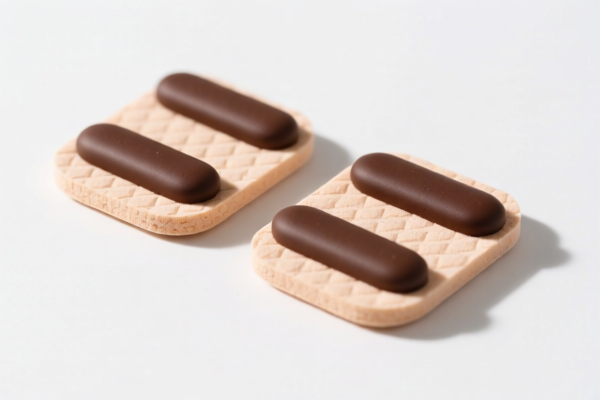
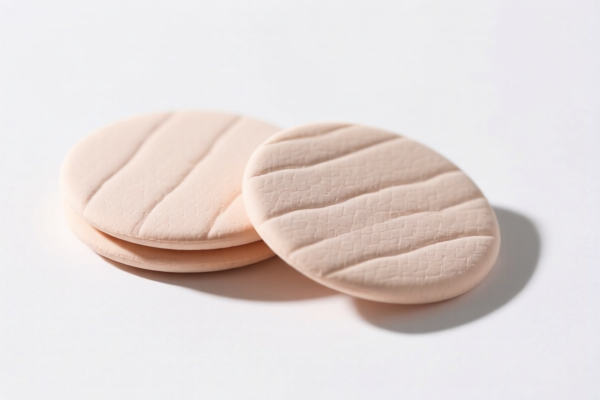
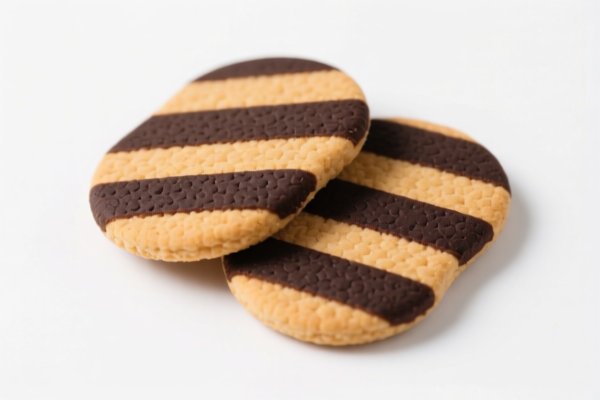
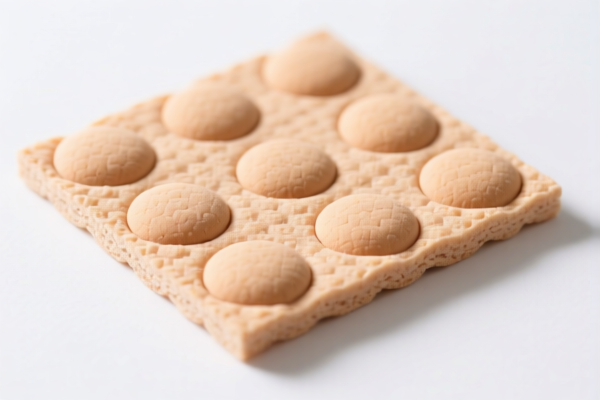
AI Analysis
🚀 Booster Pads (助推垫) – HS Code Classification & Customs Clearance Guide
🌐 HS Code Reference & Customs Strategy | 2026 Latest Tariff Analysis | Professional Clearance Strategy
📌 Product Definition & Classification: What Exactly Are "Booster Pads"?
"Booster Pads" is a generic functional term. In international trade, the classification depends entirely on the material, structure, and intended use. Since the input "Booster Pads" lacks specific material details, Customs authorities rely on deductive reasoning based on common industry practices.
The four most likely HS Code classifications are detailed below, ranging from rubber products to furniture components.
📦 II. HS Code Classification Details (2026 Latest Tariff Authority Match)
| HS Code | Product Description | Key Matching Logic (Based on <DATA>) |
Estimated Total Tax Rate |
|---|---|---|---|
4016.91.00.00 |
Other articles of vulcanized rubber other than hard rubber: Mats, mats and flooring, mats and matting | Logic: The term "Pad" matches the form. "Booster" implies function. By common sense, such pads are often rubber-based (e.g., for industrial or athletic boosting). No obvious material conflict. | 37.7% |
4016.99.60.50 |
Other articles of vulcanized rubber other than hard rubber: Other | Logic: Form is a rubber gasket/pad. Since the material isn't explicitly stated, the "Other" category is used as a fallback. Assumes no conflict with metal/plastic. | 37.5% |
3926.90.99.50 |
Other articles of plastics and articles of other materials of headings 3901 to 3914: Other | Logic: "Pad" matches medical/transport pad forms. "Booster" function suggests medical or logistics scenarios. Assumed to be plastic material by default. | 22.8% |
9404.90.20.90 |
Made up bedding and similar furnishing: Other | Logic: Form is a "pad." Use falls under bedding or similar furniture. Matches pillows/cushions. Assumed to contain filling or sponge material (common for comfort pads). | 23.5% |
9404.90.96.70 |
Made up bedding and similar furnishing: Other | Logic: Form is a "pad." No material conflict. Based on the "Other" fallback rule for bedding/furniture components. | 17.3% |
🔍 Critical Note:
- Rubber vs. Plastic vs. Textile/Filling: The difference in tax rate is massive (17.3% to 37.7%).
- US Specifics: All rates above include Base Tariff, Section 301 Additional Tariff (25%), and 122 Clause Tariff (10%).
- Deductive Principle: Since "Booster Pad" is vague, Customs will inspect the actual material composition. If it’s rubber, go to4016; if plastic,3926; if filled textile,9404.
💰 III. 2026 Latest Tariff Rate Breakdown (Detailed Tax Clauses)
✅ Applicable Country: United States (US)
✅ Origin: China (CN)
✅ Effective Date: Current rules apply (including Section 301 & IEEPA 122)
🎯 1. Rubber-Based Classification (High Tax)
HS Code: 4016.91.00.00 (Rubber Mats/Pads)
| Item | Detail |
|---|---|
| Base Tariff | 2.7% |
| Section 301 Additional Tariff | +25.0% (USITC Footnote) |
| 122 Clause Tariff (IEEPA) | +10.0% (Specific to certain Chinese imports) |
| Total Effective Rate | 37.7% |
| Calculation | CIF Value × 37.7% |
| De Minimis Exemption? | ❌ No (Deny de minimis) |
| Legal Path | IEEPA:9903.01.25 → USITC:4016.91.00.00 → FOOTNOTE:301 |
HS Code: 4016.99.60.50 (Other Rubber Articles)
| Item | Detail |
|---|---|
| Base Tariff | 2.5% |
| Section 301 Additional Tariff | +25.0% |
| 122 Clause Tariff (IEEPA) | +10.0% |
| Total Effective Rate | 37.5% |
| Calculation | CIF Value × 37.5% |
| De Minimis Exemption? | ❌ No |
📌 Explanation:
- Rubber products (4016) face the highest combined tax burden.
- The 25% Section 301 is standard for most Chinese rubber goods.
- The 10% 122 Clause is a specific additional levy that applies to this category.
🎯 2. Plastic-Based Classification (Medium Tax)
HS Code: 3926.90.99.50 (Plastic Articles)
| Item | Detail |
|---|---|
| Base Tariff | 5.3% |
| Section 301 Additional Tariff | +7.5% |
| 122 Clause Tariff (IEEPA) | +10.0% |
| Total Effective Rate | 22.8% |
| Calculation | CIF Value × 22.8% |
| De Minimis Exemption? | ❌ No |
| Legal Path | IEEPA:9903.01.24 → USITC:3926.90.99.50 |
📌 Note:
- Plastic goods often enjoy a lower Section 301 rate (7.5% vs 25% for rubber).
- If your "Booster Pad" is made of PP, PE, or PVC, this is the likely code.
🎯 3. Furniture/Bedding Classification (Low Tax)
HS Code: 9404.90.20.90 (Other Bedding/Furnishings)
| Item | Detail |
|---|---|
| Base Tariff | 6.0% |
| Section 301 Additional Tariff | +7.5% |
| 122 Clause Tariff (IEEPA) | +10.0% |
| Total Effective Rate | 23.5% |
| Calculation | CIF Value × 23.5% |
HS Code: 9404.90.96.70 (Other Bedding/Furnishings)
| Item | Detail |
|---|---|
| Base Tariff | 7.3% |
| Section 301 Additional Tariff | 0.0% |
| 122 Clause Tariff (IEEPA) | +10.0% |
| Total Effective Rate | 17.3% |
| Calculation | CIF Value × 17.3% |
📌 Note:
-9404.90.96.70offers the lowest total tax (17.3%) because it has 0% Section 301 rate.
- This applies if the pad is considered a furniture accessory (e.g., chair cushion, bed topper) rather than an industrial/rubber part.
- Material Assumption: Typically filled with foam, cotton, or fiber, not solid rubber or hard plastic.
🛠️ IV. Customs Clearance Practical Advice (Pitfall Avoidance)
✅ 1. Documentation Checklist (Mandatory)
| Document | Required? | Reason |
|---|---|---|
| ✅ Product Specifications | YES | Must clearly state Material Composition (e.g., "100% Silicone Rubber" vs. "Polyurethane Foam"). |
| ✅ Material Safety Data Sheet (MSDS) | YES | To confirm chemical composition and rule out restricted materials. |
| ✅ Product Photos (Clear) | YES | Show texture: Is it solid (rubber/plastic) or soft/filled (textile/foam)? |
| ✅ Intended Use Statement | YES | "For industrial machinery boosting" (→ Rubber) vs. "For office chair comfort" (→ Bedding). |
| ✅ Commercial Invoice | YES | Description must match HS Code logic. Avoid generic "Booster Pad" without material. |
| ✅ Packing List | YES | Weight and dimensions to verify valuation. |
✅ 2. Declaration Strategy (Key Tactics)
🔥 "Material First, Use Second, Code Follows!"
| Scenario | Recommended HS Code | Why? | Risk if Wrong |
|---|---|---|---|
| Solid Rubber Pad (e.g., for car jack, gym equipment) | 4016.91.00.00 or 4016.99.60.50 |
Material is vulcanized rubber. | High tax (37.7%) + potential penalty for misclassification. |
| Plastic Pad (e.g., non-slip grip, medical tray liner) | 3926.90.99.50 |
Material is plastic. | Lower tax (22.8%) is correct. |
| Filled Pad (e.g., knee pad, chair cushion, bed pad) | 9404.90.96.70 |
Form is "pad/cushion," use is furniture/bedding. | Lowest tax (17.3%). Best for cost-saving if eligible. |
📌 Critical Tip:
- Do NOT declare "Booster Pad" without specifying material.
- If it’s a chair cushion, use9404.90.96.70to save 20%+ in taxes.
- If it’s a machine part, it’s likely rubber/plastic (4016or3926).
✅ 3. Special Cases & Exceptions
| Situation | Handling Advice |
|---|---|
| Hybrid Material (e.g., Rubber outer, Foam inner) | Declare based on essential character. If rubber dominates, use 4016. |
| Medical Booster Pads | If for medical diagnosis/treatment, check for Ch. 90 exemptions. However, most are still 3926 or 9404. |
| Promotional Samples | Below $800 (De Minimis) may be tax-free, but Section 301 does NOT apply only if under $800 per recipient per day. Check current IEEPA rules. |
| Pre-Ruling Request | Highly recommended for high-value shipments. Submit to CBP for a Binding Ruling to avoid post-clearance audits. |
🌍 V. Global Market Comparison (2026)
| Country/Region | Recommended HS Code | Est. Tax (China Origin) | Key Certification | Note |
|---|---|---|---|---|
| 🇺🇸 USA | 9404.90.96.70 |
17.3% | None | Lowest tax if classified as bedding/furniture. |
| 🇺🇸 USA | 4016.91.00.00 |
37.7% | None | Highest tax for rubber. |
| 🇪🇺 EU | 4016.99 |
~5-7% | REACH, RoHS | No Section 301 equivalent. |
| 🇨🇳 China | 4016.91 |
~5-10% | CCC (if applicable) | Lower import tariffs. |
📌 Conclusion:
- US Market: Classification strategy is critical. "Bedding/Furniture" (9404) saves significant tax vs. "Rubber" (4016).
- EU Market: Tariffs are more uniform; material declaration is still key for REACH compliance.
📌 VI. Common Mistakes & Pitfalls (Lessons Learned)
❌ Mistake 1: Declaring "Booster Pad" as 3926 when it’s actually rubber.
👉 Consequence: Underpayment of tax + penalty. Rubber is taxed higher than plastic.
❌ Mistake 2: Declaring a medical device as "Furniture" (9404).
👉 Consequence: Customs may reject for misclassification if it’s clearly a medical instrument.
❌ Mistake 3: Ignoring the 122 Clause.
👉 Consequence: Missing the 10% additional tariff leads to customs hold and fines.
❌ Mistake 4: Not specifying material in the description.
👉 Consequence: Customs will inspect physically, causing delays.
✅ Correct Declaration Example:
"Polyurethane Foam Booster Pad for Office Chair, No Rubber Content, Model BP-100"
→ HS Code:9404.90.96.70(Tax: 17.3%)
🎯 VII. Conclusion: Professional Declaration, Cost Optimization!
🎯 Key Takeaways:
🔹 "Material is King, Use is Queen."
🔹 "Rubber = High Tax (37%), Plastic = Medium (23%), Bedding = Low (17%)."
🔹 "Always specify 'No Rubber' or 'Foam Filled' to avoid the 301 Tariff trap."
📌 Pro Tip:
If your product is a chair cushion or bed pad, insist on 9404.90.96.70 for the lowest tax rate (17.3%).
If it’s an industrial rubber part, prepare for 37.7%.
Pre-clearance ruling is highly recommended for mixed-material products.
📣 Immediate Action:
📞 Consult a licensed customs broker.
📄 Provide material composition certificate.
🚀 Optimize your HS Code to save up to 20% in duties!
✨ Smart Classification, Maximized Profit!
💼 Every percent saved is pure margin.
Customer Reviews
About HS Code Classification
The Harmonized System (HS) is an internationally standardized nomenclature developed by the World Customs Organization (WCO) to classify traded products. Over 200 countries use the HS system as the basis for customs tariffs, trade statistics, and import/export regulations.
Each HS code follows a hierarchical structure:
- Chapter (2 digits) — Broad category of goods (e.g., Chapter 84: Machinery and Mechanical Appliances)
- Heading (4 digits) — More specific grouping within the chapter
- Subheading (6 digits) — Internationally standardized breakdown, used by all WCO member countries
- National subdivisions (8-10 digits) — Country-specific extensions for further classification, such as US HTSUS 10-digit codes
Correct HS code classification is essential for smooth customs clearance, accurate duty payment, and compliance with trade regulations. Misclassification can lead to customs delays, overpayment of duties, or penalties.
When importing from CN to US, the applicable tariff rates may include:
- Most-Favored-Nation (MFN) rate — The standard duty rate applied to WTO members
- General rate — Applied to countries without trade agreements
- Trade remedy duties — Additional tariffs such as Section 301 (anti-dumping), Section 232 (national security), or countervailing duties
The information provided on this page is for reference purposes only. For official classification, please consult with your local customs authority or a licensed customs broker.